Aveline Kirana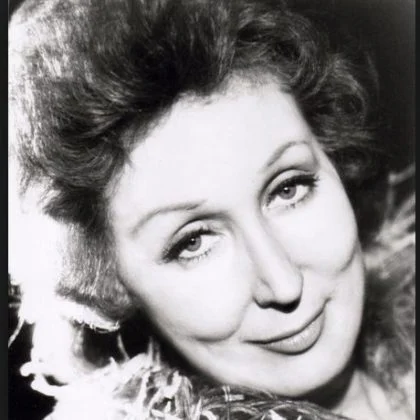
The world of opera has lost a towering figure with the passing of American mezzo-soprano Mignon Dunn, who died at the age of 98. Dunn, a celebrated artist whose career spanned decades and continents, was renowned for her powerful voice, dramatic intensity, and her significant contributions as a vocal educator. Born Mignon Elmore Dunn on June 17, 1928, in Memphis, Tennessee, she spent her formative years in Tyronza, Arkansas, a background that would later inform the grounded authenticity she brought to many of her operatic roles.
Dunn’s journey into the demanding world of opera began with dedicated study under the tutelage of notable mentors Karin Branzell and Beverley Peck Johnson. These foundational years of rigorous training prepared her for a professional debut that would set the stage for a remarkable career. On September 8, 1955, she stepped onto the stage of the New Orleans Opera, embodying the fiery and iconic title role of Georges Bizet’s Carmen. This electrifying performance was not merely a debut; it was a powerful declaration of intent, showcasing a vocal prowess and dramatic acumen that would soon captivate major opera houses worldwide.
Following her triumph in New Orleans, Dunn’s talent quickly propelled her to greater prominence. She became a featured artist with the Lyric Opera of Chicago and the New York City Opera, establishing herself as a leading interpreter of a diverse repertoire. Her ascent culminated in an invitation to the prestigious Metropolitan Opera, where she made her debut in 1958. Over the ensuing decades, Dunn would become a cherished presence at the Met, gracing its stage in over 650 performances. Her tenure there was marked by memorable portrayals in some of opera’s most demanding and celebrated works, including Modest Mussorgsky’s Boris Godunov, Richard Strauss’s Elektra and Salome, Giuseppe Verdi’s Luisa Miller and Il trovatore, Leoš Janáček’s Jenůfa, Richard Wagner’s Lohengrin and Die Walküre, Alberto Franchetti’s La Gioconda, and Richard Wagner’s Parsifal, among a vast array of other masterpieces. Her final engagement with the Metropolitan Opera in 1994 saw her deliver a chilling performance as Klytämnestra in Strauss’s Elektra, a role that perfectly showcased her mature vocal power and dramatic depth.
A Repertoire of Power and Nuance
Mignon Dunn’s artistry was defined by her ability to inhabit a wide spectrum of mezzo-soprano roles, from the regal and vengeful to the tragically flawed. Among her signature portrayals, Amneris in Verdi’s Aida stood out for its vocal brilliance and emotional complexity. She was equally celebrated as Azucena in Verdi’s Il trovatore, a role that demands both formidable vocal stamina and profound dramatic insight. Her interpretation of Eboli in Verdi’s Don Carlo was another highlight, capturing the character’s passionate and often conflicted nature.
Dunn’s versatility extended to her acclaimed dual performances as Laura and La Cieca in Ponchielli’s La Gioconda, a feat requiring distinct vocal colors and dramatic shifts. She also brought depth and pathos to the Princess in Cilea’s Adriana Lecouvreur and the heart-wrenching Santuzza in Mascagni’s Cavalleria rusticana. Beyond the Italian repertoire, Dunn possessed a particular affinity for French opera. She delivered captivating performances as Dalila in Saint-Saëns’ Samson et Dalila, Giulietta in Offenbach’s The Tales of Hoffmann, and Dulcinée in Massenet’s Don Quichotte.
Perhaps her most indelible role was that of Carmen. Dunn sang this pivotal character over 400 times across four different languages, a testament to her profound understanding and mastery of Bizet’s enduring work. Her Carmen was not merely a vocal exhibition but a deeply nuanced portrayal of a complex woman, earning her international acclaim and solidifying her reputation as one of the era’s definitive Carmens.
A Global Presence on the Operatic Stage
Mignon Dunn’s artistry transcended national borders, captivating audiences in opera houses across the globe. Her extensive international engagements included performances at the legendary Teatro alla Scala in Milan, the Wiener Staatsoper in Vienna, and the Teatro Colón in Buenos Aires. In the United States, she was a regular fixture at the San Francisco Opera, the New York City Opera (where she had a significant early career), and the Santa Fe Opera. Her performances also enriched the operatic landscapes of the Opera Company of Boston, Miami Opera, and the Opera Theatre of Saint Louis.
Internationally, Dunn graced the stages of the Royal Opera, Covent Garden, in London, the Opéra de Paris, the Bolshoi Theatre in Moscow, the Deutsche Oper Berlin, and the Arena di Verona, among numerous other esteemed venues. This global reach underscores the universal appeal of her talent and the significant impact she had on the international opera scene for nearly half a century.
A Legacy Beyond the Stage: Mentoring Future Generations
Beyond her illustrious performing career, Mignon Dunn cultivated a profound and enduring legacy as a vocal educator. Her pedagogical philosophy was deeply rooted in her own extensive experience, offering invaluable guidance to aspiring singers. She held distinguished teaching positions at several leading institutions, including the University of Texas at Austin, the University of Illinois, and Northwestern University. She also contributed her expertise to the faculty at Brooklyn College.
From 1985 until her retirement in December 2023, Dunn was an integral part of the voice faculty at the Manhattan School of Music. During her nearly four decades at the prestigious institution, she mentored countless students, shaping the careers of a new generation of opera singers. Her commitment to teaching was as passionate as her operatic performances, leaving an indelible mark on the development of young vocal talent.
Honors and Recognition
Mignon Dunn’s immense contributions to the art form were recognized with numerous accolades. She received an Honorary Degree from Rhodes College in Memphis, Tennessee, a poignant acknowledgment of her roots and her artistic achievements. The Manhattan School of Music bestowed upon her the President’s Medal for Distinguished Faculty Service, celebrating her dedication to education. In 2014, she was honored with the Sherrill Milnes Voice Award, recognizing her "outstanding contribution in teaching and mentoring the next generation of opera singers." Furthermore, she received the VERA Award from The Voice Foundation, an organization dedicated to the science and art of voice. These awards collectively highlight not only her performing excellence but also her profound impact as a mentor and educator.
A Recorded Legacy
The artistic achievements of Mignon Dunn are preserved through a notable discography. Her recordings include a rendition of Verdi’s Rigoletto alongside Beverly Sills, a testament to her collaborations with other legendary artists. She also featured in recordings from the Metropolitan Opera archives, capturing her powerful presence in the company’s grand productions. Further significant recordings include Ponchielli’s La Gioconda and Verdi’s La Forza del Destino, offering listeners enduring examples of her vocal artistry and dramatic interpretation. These recordings serve as invaluable resources for understanding her distinctive voice and her profound contribution to the operatic canon.
[Insert YouTube video player for a notable performance, e.g., Carmen excerpt or a scene from Elektra.]
[Insert YouTube video player for another performance or a masterclass clip, if available and relevant.]
The passing of Mignon Dunn marks the end of an era for American opera. Her voice, her stage presence, and her dedication to nurturing future talent have left an indelible mark. She will be remembered not only for her extraordinary career as a performer but also for her profound influence as a teacher and mentor, ensuring that her legacy will continue to resonate within the world of music for years to come.