Aveline Kirana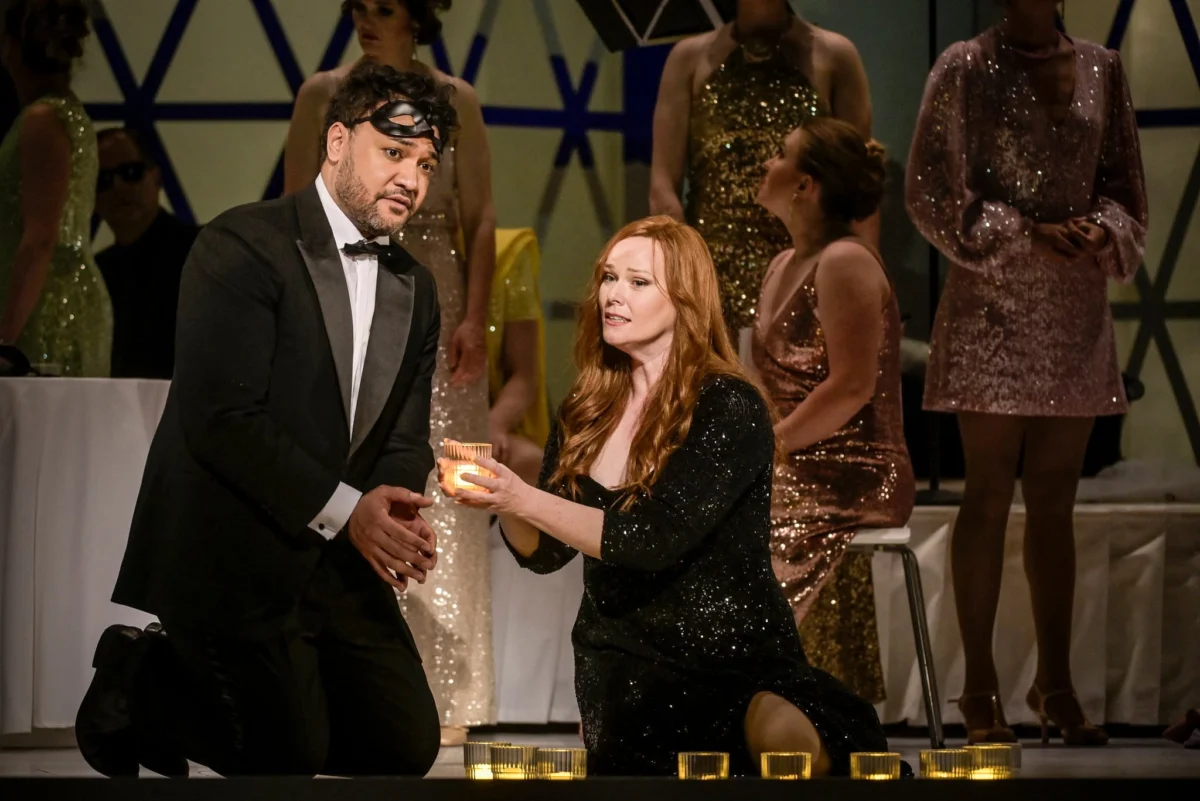
The Théâtre des Champs-Élysées, in collaboration with Opéra Grand Avignon and the Insula Orchestra, has unveiled a new production of Wolfgang Amadeus Mozart’s beloved Singspiel, Die Entführung aus dem Serail (The Abduction from the Seraglio). This ambitious staging, directed by Florent Siaud, endeavors to confront and deconstruct the inherent Orientalist biases and potential harms embedded within Mozart’s 1782 work. Rather than merely presenting the opera’s narrative, Siaud’s vision seeks to excavate its underlying power structures and challenge its historical context through a contemporary lens.
A Reimagined Orient: Shifting Context, Revealing Domination
Stage Director Florent Siaud, in his program notes, articulates a deliberate approach to addressing the operatic "Orient," a construct he acknowledges as fundamental to the work’s fabric. "The imaginary presence of the Orient is so fundamental to the structure that erasing it would feel artificial," Siaud explains. "We have chosen, instead, to shift its context." This directorial philosophy manifests most strikingly in the set design, which eschews traditional exoticism for a stark aesthetic drawing inspiration from the architectural vernacular of contemporary Mediterranean museums. This choice immediately reorients the audience’s perception, moving away from a passive, romanticized "other" and towards a more analytical space.
The production’s core thematic inquiry, as outlined by Siaud, centers on the pervasive nature of domination. "Domination is revealed through the control exerted over sculptures, souls, and female bodies," he states. "For the Orient here is not merely a backdrop; it is a dramaturgical and philosophical mechanism." This conceptual framework elevates the opera beyond a simple rescue narrative, transforming it into an exploration of who wields power, who succumbs to it, and the profound human cost involved. The direction of actors, the intricate interplay of gazes, and the subtle choreography of stage positioning are all meticulously crafted to underscore this central question of tacit domination.
Historical Context and Mozart’s "Turkish" Fascination
Mozart’s Die Entführung aus dem Serail, with a libretto by Friedrich Bretzner adapted by Gottlieb Stephanie, premiered in 1782. The opera is set in 18th-century Turkey and tells the story of Pasha Selim, who has acquired three Europeans as slaves, having been captured by pirates. The plot follows the attempts of Belmonte to rescue his beloved Konstanze and her maid, Blonde, along with Belmonte’s servant, Pedrillo, from Selim’s seraglio. The narrative, however, has long been scrutinized for its portrayal of Pasha Selim, whose actions, often labeled as "enlightened clemency," can be interpreted as a manifestation of harmful abuse of power and capricious madness.
The historical circumstances surrounding the opera’s creation are also significant. Die Entführung aus dem Serail was initially intended for a premiere celebrating the Russian Grand Duke Paul, coinciding with a period of significant Ottoman defeats for Russia. The decade preceding the opera’s premiere saw major events such as the Russian victory over the Ottomans and, crucially, the Ottoman defeat at the Siege of Vienna in 1683. This historical backdrop fueled a widespread fascination with "Turkish" themes in European art and music. Mozart himself embraced this trend, notably in his celebrated "Piano Sonata No. 11," its final movement, "Alla Turca," becoming synonymous with musical exoticism and a certain levity that, in the context of Die Entführung, can be seen as reinforcing Orientalist tropes and farcical perceptions of the East.
The staging of such a work in the 21st century thus presents a complex challenge. As the production’s framing suggests, there is a risk of perpetuating what might be termed "entertaining propaganda" or a contemporary veneer of "philosophical enlightenment" that glosses over the problematic underpinnings of the original. The Théâtre des Champs-Élysées production aims to navigate this minefield by critically engaging with the material, rather than simply reproducing it.
Musical Execution and Sound Design: Precision Meets Disquiet
Under the baton of Laurence Equilbey, the Insula Orchestra delivered a performance characterized by precision and a palpable respect for Mozart’s original intentions and notations. Equilbey’s conducting ensured that the musical integrity of the Singspiel remained paramount, providing a solid foundation for the production’s more experimental elements.
The integration of Sound-Effect Artist Samuel Hercule on stage right proved to be a notable addition, amplifying the farcical elements and gestures inherent in the stage choreography with considerable aplomb. Hercule’s sonic contributions, while enhancing the theatricality, also served to highlight the often-absurdist nature of the opera’s plot and its characters’ predicaments.
However, the production’s attempts to modernize and allegorize certain scenes also introduced moments of profound disquiet. The inclusion of sounds associated with alcohol consumption—clinking and pouring into glasses—while women, clad in sequined mini-dresses, were seated at separate small tables, and, disturbingly, appeared to be consuming cocaine on stage, undeniably contributed to the critique of the opera’s inherent disturbances. The choreography depicting a group of female sex workers engaging in a form of numbing or escapist behavior, set within a contemporary context, was presented as a low point by some observers, raising questions about the ethical implications of such staging choices. This choice, intended to highlight themes of exploitation and despair, was seen by some as gratuitous and potentially exploitative in itself.
Further challenging the audience’s sensibilities, a scene depicting Osmin, the Pasha’s overseer, bound and gagged by these same sex workers, was intended to reassert the power dynamics within the seraglio. Ante Jerkunica’s portrayal of Osmin, positioned on a low table amidst a group of white leather couches, was described as resembling a "beast-for-the-feast," a visual metaphor that, while striking, ultimately failed to land with the intended impact for some critics.
The finale employed black and white video projections, displaying the faces of the characters as Uli Kirsch, as Selim, made his final decision regarding "clemency." This visual strategy aimed to dissect the work under a philosophical microscope, but was perceived by some as lacking genuine substance or value. The argument presented is that merely zooming in on a problem does not equate to realizing a solution. Moreover, the act of contemporizing one of Mozart’s demonstrably problematic works—particularly one that debuted shortly before the equally complex The Magic Flute—was seen by some as potentially exacerbating the issues rather than resolving them, adding fuel to an ongoing discourse about the operatic canon.
Cast Highlights: Navigating Complex Roles
Soprano Jessica Pratt, as Konstanze, delivered a performance of considerable vocal stamina, navigating the demanding role with impressive vocal control. Her rendition of the aria "Martern aller Arten" showcased her brilliant vocal range, with the poignant final phrase, "Zuletzt befreyt mich doch der Tod" ("In the end, death sets me free"), resonating with a deep sense of despair. Despite her vocal prowess, there was a perceived lack of presence and chemistry with her surroundings, an observation that some attributed to the challenging nature of embodying a character within this particular Singspiel rather than any deficiency on Pratt’s part. It was as if she were detached from her physical self, a reflection, perhaps, of the opera’s oppressive themes.
Amitai Pati as Belmonte presented an elusive performance, and the romantic connection between him and Pratt was never fully realized. Pati’s voice and acting offered a gentle counterpoint to the heavy subject matter he was tasked with conveying, providing a more subdued and introspective portrayal of the rescuer.
Ante Jerkunica’s interpretation of Osmin was striking. Dressed in a dark suit and often sporting dark sunglasses, he adopted the demeanor of a mafia boss, embodying the role of the stealthy keeper and surveyor of the seraglio. Jerkunica’s vocal projection was solid, and his acting commanded attention, particularly in scenes where Osmin objectifies and judges the women entering or being considered for Pasha Selim’s "brothel." This portrayal explicitly highlighted the "man in power over women" dynamic that the production sought to interrogate.
Brenton Ryan as Pedrillo contributed a strong characterization within a role that was significantly recontextualized. His costume, at one point a cowboy-clown motif, leaned heavily into the farcical delusion of the character, an element that, for some, occasionally distracted from the musical performance.
Manon Lamaison as Blonde injected a vital dose of life and energy into her role, making the most of the material provided. Lamaison’s vocal performance mirrored Blonde’s spirit and determination to escape the seraglio’s oppressive environment, offering a vibrant contrast to Konstanze’s more resigned demeanor.
Uli Kirsch as Selim portrayed the Pasha with an aloofness that, combined with stern yet erratic commands, created a sense of confusion regarding the production’s ambivalent intent. The notion of celebrating clemency, as presented in the opera, proved to be a complex and perhaps contradictory element. Mozart’s Singspiel, as this production demonstrated, contains layers of meaning that extend beyond superficial understanding, exposing the points at which the traditional operatic canon begins to falter or diverge.
Broader Implications: The Enduring Challenge of Orientalism in Opera
The Théâtre des Champs-Élysées production of Die Entführung aus dem Serail serves as a potent case study in the ongoing efforts to re-evaluate and reinterpret canonical operatic works that are now understood to contain problematic cultural biases. The staging’s commitment to interrogating Orientalism, rather than simply performing it, is a commendable artistic endeavor. However, the production’s effectiveness in achieving this goal remains a subject of debate among audiences and critics.
The critical response suggests that while the intention to philosophize and deconstruct the opera’s Orientalist underpinnings was clear, the execution led to a polarizing experience. Some found the contemporary reinterpretations to be illuminating, offering fresh perspectives on power dynamics and exploitation. Others felt that the staging veered into gratuitous territory, obscuring the musical brilliance of Mozart’s score and failing to provide a cohesive or satisfying resolution to the complex issues it raised.
This production underscores a broader trend in opera: the imperative to engage critically with historical works in light of contemporary ethical and social understandings. The challenges faced by Siaud and his team highlight the delicate balance required when adapting material that, while artistically significant, is also a product of its time and reflects the prejudices of that era. The discourse surrounding Die Entführung aus dem Serail at the Théâtre des Champs-Élysées is not merely about one opera; it is a microcosm of the larger conversation within the performing arts about representation, historical context, and the responsibility of artists to confront uncomfortable truths embedded within beloved masterpieces. The enduring legacy of such productions will likely be measured by their contribution to this ongoing dialogue and their ability to provoke thoughtful engagement with the complexities of art and culture.