 Kholidah
The landscape of the South Korean entertainment industry, particularly the K-pop sector, has long been characterized by a high degree of image management and strict adherence to societal norms. However, a recent social media update from Lee Dong-jun, a former member of the boy group GHOST9 now known professionally as Brad, has ignited a widespread conversation regarding LGBTQ+ visibility within the industry. Through a video shared on his personal Instagram account, the former idol provided a candid look into his past life under a major label, culminating in a statement that many fans and observers have interpreted as a public coming out.
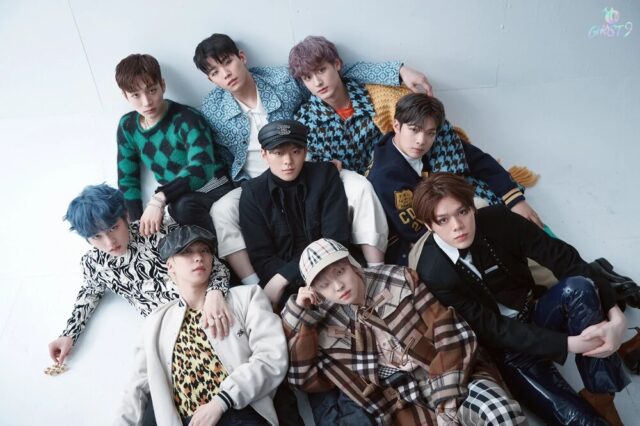
Lee Dong-jun first entered the public eye as a member of GHOST9, a group launched by Maroo Entertainment in September 2020. At the time of their debut, GHOST9 was positioned as a high-concept performance group, releasing their first mini-album, "Pre Episode 1: Door," with the lead single "Think of Dawn." The group initially consisted of nine members, several of whom had gained prior recognition through survival programs like Mnet’s "Produce X 101" and the project unit TEEN TEEN. Despite a promising start and a consistent release schedule, the group’s lineup underwent significant changes just one year later. In September 2021, Maroo Entertainment announced that Dongjun and fellow member Taeseung would be departing the group to pursue individual paths.
Following his departure, Dongjun took a hiatus from the limelight before re-emerging in 2025 under the moniker Brad. His return to the music scene was marked by the release of the digital single "Invade Day," a project that signaled a shift toward a more independent and experimental artistic identity. While his musical output remained the primary focus of his professional life, his recent digital presence has taken a more personal turn, leading to the current discourse surrounding his sexual orientation.
The Social Media Update and Linguistic Nuance
The catalyst for the current discussion was a short video, or "reel," posted to Brad’s Instagram account. The video followed a popular social media format where creators contrast their current lifestyle with their previous professional experiences. In the video, Brad detailed the rigors and restrictions he faced during his tenure as a K-pop idol. He listed several things he lacked during that period, including a personal smartphone, scheduled days off, and financial stability.
However, the final item in his list—"no boyfriend"—accompanied by an eggplant emoji, caught the immediate attention of the global K-pop community. Observers noted that Brad specifically mentioned the absence of a boyfriend without making any reference to a girlfriend, a distinction that is often significant in the context of coming out within the heteronormative framework of the Korean idol industry. The use of the eggplant emoji, frequently utilized in digital slang to represent male genitalia, added a layer of explicit clarity to the statement that many interpreted as an intentional declaration of his attraction to men.
The nonchalant delivery of the statement has been a point of particular interest. Unlike formal press releases or high-stakes interviews often associated with public figures revealing personal details, Brad’s update was integrated into a casual commentary on his daily life. This "low-key" approach is increasingly common among younger generations of former idols who utilize social media to bypass traditional gatekeepers and speak directly to their audience.
Chronology of GHOST9 and Dongjun’s Career Transition
To understand the weight of this development, it is necessary to examine the trajectory of GHOST9 and Dongjun’s role within the group. GHOST9 was Maroo Entertainment’s first major boy group following the success of soloist Park Ji-hoon. The group was marketed with a complex "GLEEZ" universe, featuring animated characters and a futuristic aesthetic. Dongjun, known for his vocal ability and visual appeal, was an integral part of the original nine-member formation.
The timeline of GHOST9’s evolution is as follows:
- September 2020: GHOST9 debuts with "Pre Episode 1: Door."
- December 2020: Release of "Pre Episode 2: W.ALL."
- March 2021: Release of "Now: Where We Are, Here."
- June 2021: Release of "Now: When We Are in Love."
- September 2021: Maroo Entertainment announces the departure of Dongjun and Taeseung. The agency stated the decision was made after "extensive discussions" regarding their future careers.
- November 2021: GHOST9 reorganizes as a seven-member group and releases "Now: Who We Are Face."
- 2022–2024: Dongjun remains largely out of the public eye, focusing on personal development and musical training.
- 2025: Dongjun re-debuts as a soloist under the name Brad with the single "Invade Day."
- July 2026: Brad posts the Instagram video referencing his lack of a "boyfriend" during his idol years.
This chronology highlights the transition from a highly controlled corporate environment to the autonomy of a solo artist. The restrictions Brad mentioned—lack of phones and money—are well-documented "standard" practices for trainees and rookie idols in South Korea, designed to ensure total focus on the group’s success.
Contextualizing LGBTQ+ Visibility in South Korea
The reaction to Brad’s post cannot be separated from the broader societal context of South Korea. While the country has seen a gradual shift in attitudes toward LGBTQ+ individuals, particularly among younger demographics, it remains a conservative society in many respects. Legal protections against discrimination based on sexual orientation are still largely absent, and same-sex marriage is not recognized.
In the entertainment industry, being openly queer has historically been viewed as a significant career risk. For years, the industry operated under a "don’t ask, don’t tell" unofficial policy. However, the last decade has seen a slow increase in visibility:
- Holland: Debuted in 2018 as the first openly gay K-pop idol, releasing the song "Neverland" which featured a same-sex kiss.
- Som Hye-in: A former "Idol School" contestant who came out as bisexual in 2019.
- MRSHLL: An openly gay R&B artist active in the Korean music scene.
- Maman: An early example of an idol who came out in the mid-2000s but faced significant professional backlash.
Brad’s apparent coming out adds to a growing list of "ex-idols" who have found the freedom to speak about their identities only after leaving the strict confines of the major agency system. For many, the "idol" persona is a curated image that leaves little room for personal truth, making the post-idol career a period of significant self-discovery and public honesty.
Analysis of Fan and Public Reactions
The response from the international fan community has been overwhelmingly supportive, though marked by a sense of "expected surprise." On platforms such as X (formerly Twitter) and Reddit, fans shared the video with captions celebrating his bravery. One viral post noted that many fans had long suspected his orientation, using the metaphor of a "fork found in a kitchen" to suggest that the revelation felt natural and unsurprising to those who follow him closely.
However, the discourse has also touched upon the concept of "queerbaiting." Some netizens questioned whether the mention of a boyfriend was a sincere revelation or a strategic move to gain social media engagement. Queerbaiting—the practice of hinting at same-sex romance without ever depicting it to attract a queer audience—is a sensitive topic in K-pop, where "fan service" often involves homoerotic subtext between group members.
Despite these occasional skeptics, the majority of the community has defended Brad, pointing out that for an individual to explicitly use the word "boyfriend" and the associated emoji in a personal vlog is a far cry from the scripted fan service seen in variety shows. As of the time of writing, the post remains on his profile, and Brad has not issued a retraction or a clarifying statement, which many take as a confirmation of the original interpretation.
Implications for the K-pop Industry
Brad’s candidness serves as a critique of the "idol system" itself. By listing "no boyfriend" alongside "no phone" and "no money," he categorized the suppression of his personal identity and romantic life as a form of deprivation similar to the lack of basic communication tools or financial compensation. This framing suggests that the industry’s dating bans and image requirements do not just prevent "scandals," but actively suppress the fundamental human experiences of the artists.
From a professional standpoint, this event underscores the shifting power dynamics between agencies and artists. In the past, an agency might have successfully suppressed such a statement or forced a retraction. In the era of direct-to-consumer social media, an artist with a smartphone and an Instagram account has the power to redefine their public narrative in seconds.
Furthermore, the "ex-idol" phenomenon is becoming a sub-genre of content in itself. Former trainees and idols are finding success by pulling back the curtain on the "dark side" of K-pop. Brad’s video is part of this trend, providing a "tell-all" glimpse that resonates with fans who are increasingly concerned with the mental health and labor rights of their favorite performers.
Official Responses and Future Outlook
As is common in these situations, Maroo Entertainment has not issued a statement regarding the social media activity of their former artist. Having severed contractual ties years ago, the agency has no legal or professional obligation to comment on Brad’s personal life. Similarly, Brad’s current representation has remained silent, allowing the artist’s own words to stand as the primary source of information.
The impact on Brad’s solo career remains to be seen. While some conservative domestic fans may react negatively, the international K-pop audience—which constitutes a massive portion of the global market—has shown a high degree of loyalty to idols who are authentic and transparent. In the long term, being "out" could allow Brad to explore themes in his music and art that were previously inaccessible to him, potentially carving out a niche as a unique voice in the Korean indie or solo pop scene.
As the discussion continues to unfold, Brad’s social media update stands as a notable moment in the ongoing evolution of K-pop. It reflects a generation of artists who are less willing to compromise their identities for the sake of a manufactured image and a global audience that is increasingly ready to support them for who they truly are. Whether this leads to more active idols feeling comfortable enough to come out remains a question for the future, but for now, Brad’s "nonchalant" declaration has made a significant impact on the industry’s cultural conversation.