 Johan Budi

The modern contemporary jazz landscape continues to undergo a profound transformation as artists increasingly look beyond traditional Western structures, embracing global folk traditions, cross-genre orchestration, and evocative sonic storytelling. Three distinct releases arriving from international ensembles—Afrit Nebula’s What Next?, Sarah Heneghan’s Tiny Sacred Gaps, and Kyle Saulnier’s project under the moniker thèriot titled The Other—demonstrate the genre’s expansive trajectory. Recorded across different creative hubs from Hastings to Sheffield and Vermont, these albums collectively highlight how contemporary bandleaders are redefining improvisation, instrumentation, and thematic composition in the mid-2020s.
Global Traditions Meet Modern Improvisation in Afrit Nebula’s What Next?
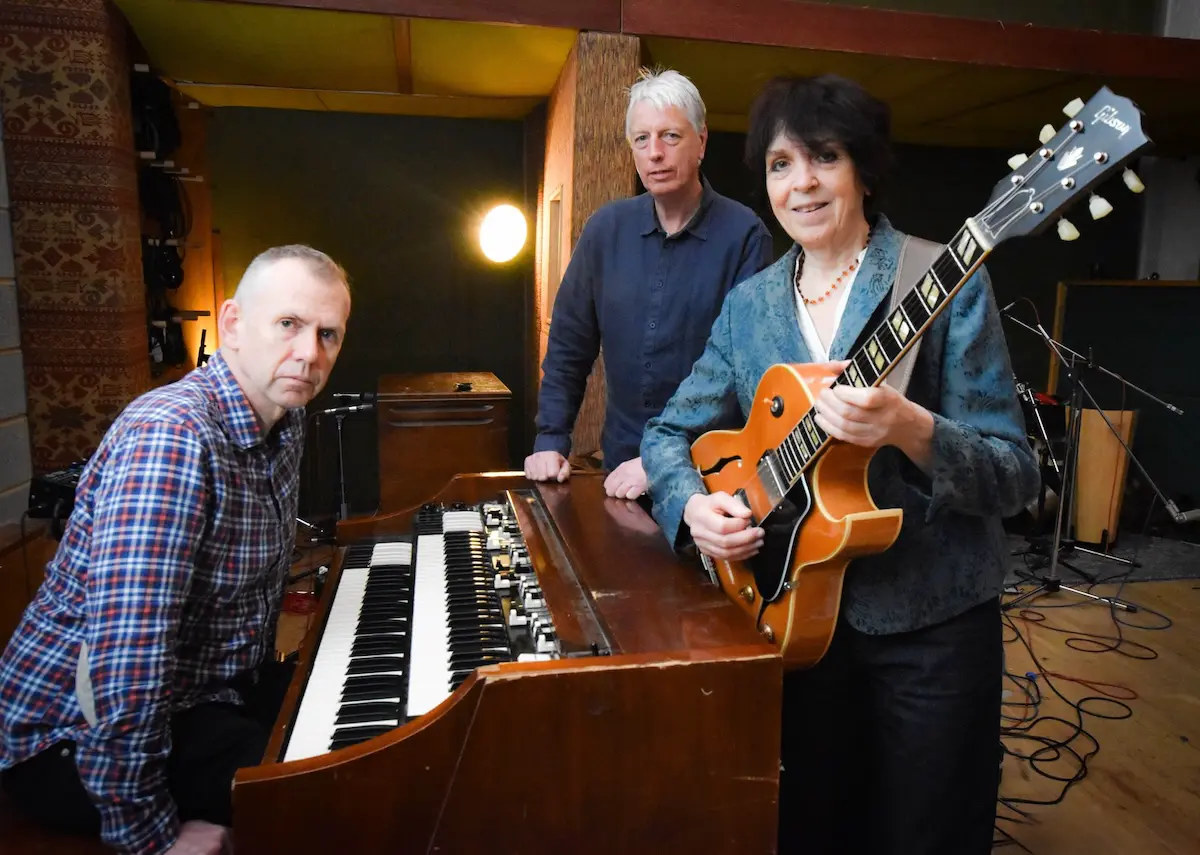
Rooted in the foundational principles of jazz, contemporary musicians have frequently sought to expand their sonic palettes by incorporating non-Western rhythmic patterns, cyclical rather than linear compositional progressions, and universal harmonic languages. The Hastings- and St. Leonards-based ensemble Afrit Nebula, spearheaded by the creative partnership of Elaine and Ken Edwards, represents a compelling evolution of this ethos. Drawing heavily on Middle Eastern musical traditions, the group’s latest full-length release, What Next?, cements their reputation as boundary-pushing world-jazz practitioners.
For this project, the core duo is joined by renowned Israeli drummer, percussionist, and guitarist Yair Katz, whose extensive international background anchors the album’s intricate rhythmic architecture. Recorded between May and August 2026 in Hastings and released via Reality Street (catalog number 007), What Next? places an immediate and consistent emphasis on rhythm. The title track, driven primarily by the piano, utilizes traditional instruments not merely for melodic delivery, but as sources of percussive color and texture. These arrangements incorporate subtle elements of minimalism, successfully avoiding the exactitude or sterile clinicalism often associated with strict systems music.
The album’s tracklist comprises nine distinct pieces running at a total duration of 61 minutes and 52 seconds. While none of the tracks are overlong, each is given sufficient temporal space to thoroughly develop thematic ideas and establish distinct atmospheric environments. The pieces featuring Elaine Edwards on soprano saxophone emerge as major highlights of the recording. Here, repeated phrases fluidly dance and cascade from the horn, executing minor yet striking rhythmic shifts that alter the momentum of the compositions.
Historical Resonance and Folk Adaptations
Afrit Nebula’s dedication to historical and cultural storytelling is prominently displayed in tracks such as Tres Morillas and Si Verías. Tres Morillas is constructed upon a traditional 15th-century Spanish song, for which the iconic poet Federico García Lorca later provided lyrical framing concerning Moorish women from Jaén. The ensemble’s interpretation plays as a complex narrative of personal and cultural loss, touching subtly upon historical themes of appropriation by Christian forces.
Conversely, Si Verías functions as a Sephardic Jewish folk song exploring themes of perception and perspective, with its title translating directly to "If you saw, you would see." On this track, Ken Edwards’ electric bass and Elaine Edwards’ soprano saxophone effectively shadow one another, creating a tightly wound counterpoint. Vocal contributions are scattered dynamically across the album: Katz leads on Everyone Knows (Koolam Yod’im), the entire ensemble joins forces for communal chanting on Si Verías, and Ken Edwards supplies the lyrics for Kati Kati. The latter track evokes the idiosyncratic, folk-driven stylistic quirks of the historic Incredible String Band, enhanced significantly by prominent flute arrangements and mbira-like percussive textures that lend the piece a distinctly African resonance.
Further expanding their stylistic boundaries, Talking Magic pairs Katz’s dynamic drumming with Elaine’s soprano sax as it intertwines with unintelligible vocal utterances, culminating unexpectedly in a stark, blues-inflected phrase. The group’s versatility is further underscored by Elaine’s intimate solo piano piece, Death Of The Mayfly, and a remarkably attractive, modernized chamber arrangement of Claudio Monteverdi’s classic Nymph’s Lament.
Landscapes, Locomotion, and Regional Identity in Sarah Heneghan’s Tiny Sacred Gaps
Shifting the geographical focus northward to Sheffield, UK, Sheffield-based drummer, electronic artist, and guitarist Sarah Heneghan presents her independent release, Tiny Sacred Gaps. The album’s official press release describes the recorded works as evocative of sweeping landscapes, extended train journeys, and the perpetually shifting moods of both coastal and rural countryside. Through careful arrangements and imaginative juxtapositions of sound, Heneghan successfully realizes this ambitious programmatic imagery across a tight 35-minute and 51-second runtime.
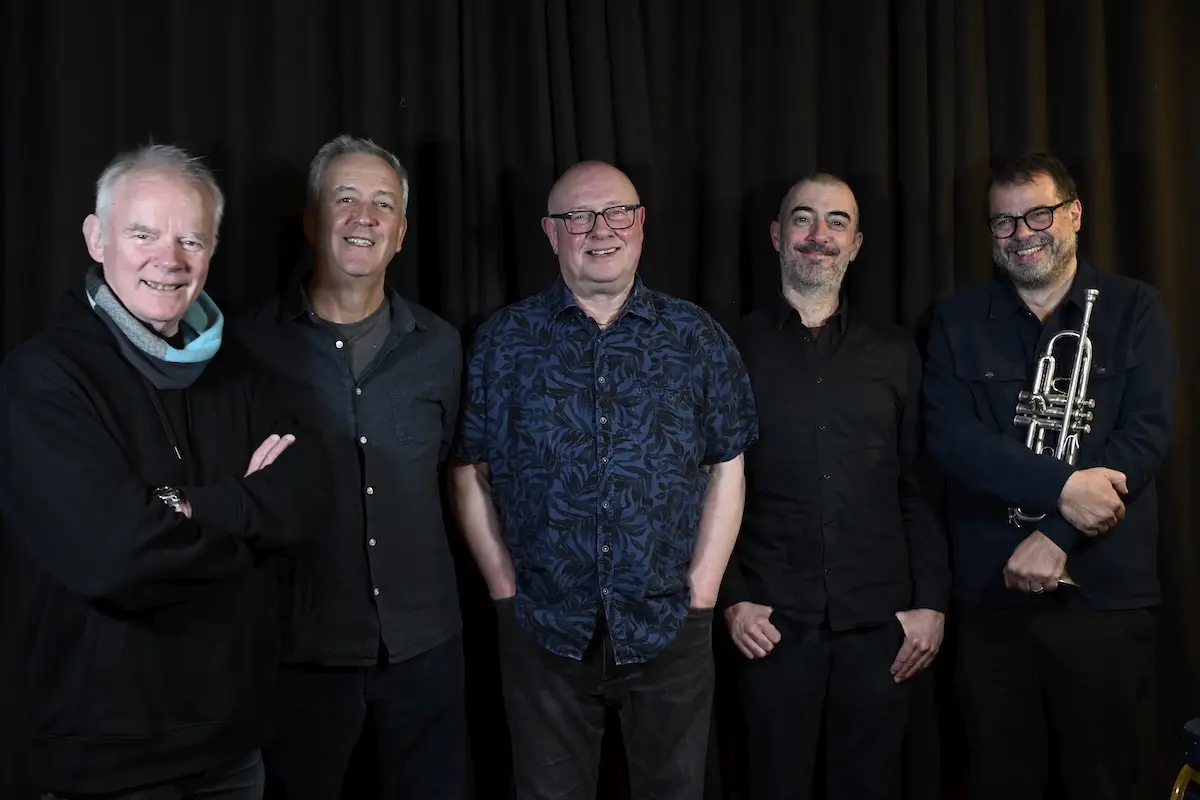
The structural anchor of the album relies heavily on repeated, cyclical piano figures laid down by keyboardist Ben Gaunt. Over these foundations, trumpeter and flugelhornist Charlotte Keeffe weaves clear, highly imaginative melodic lines. While tempos occasionally shift and supplementary sonic layers are introduced, these recurrent motifs successfully establish and sustain a unified atmospheric mood. This technique is particularly pronounced on key tracks including It Flows Back To You, Wings & Locomotion, Light Poles, and The Rhondda Line.
Contrasting dynamic shifts define pieces like Heath, which begins as an introspectively gentle interlude before pivoting deliberately into a more assertive, forceful movement underpinned by Heneghan’s dramatic snare and cymbal work. This piece shares a slightly anthemic cadence with Water Never Leaves, a multi-layered composition whose deepening harmonic tones draw the listener into a slow, ominous progression.
Thematic and Geographic Context of the Rhondda Valley
Heneghan’s percussion style throughout the album consistently utilizes her collaborators as a structural pivot. She darts, scuttles, and pivots energetically behind and around the piano and horn lines. At other moments, her rapid rhythmic articulation collaborates directly with Gaunt’s piano to mimic the mechanical acceleration and momentum of a moving train. This rhythmic mimicry serves as the programmatic thesis of the entire album, underscored explicitly by Train (Interlude), which employs electronic textures to contextualize the surrounding acoustic arrangements.
Critical analysis of the album’s thematic underpinnings suggests a direct artistic portrait of the Welsh drummer’s homeland. The compositions heavily evoke the scenic rail line running from Cardiff up the valley toward Treorchy—a geography defined by a stark visual contrast between the natural beauty of the Welsh hills and the socio-economically depressed, disadvantaged post-industrial communities embedded within the valleys. The underlying sadness inherent in Light Poles, the gentle melancholia of Water Never Leaves, and the brief bursts of electronic chaos on The Rhondda Line offer listeners an impressionistic, deeply personal glimpse into this regional landscape.
Cinematic Strings and Horns: Kyle Saulnier’s thèriot Project and The Other
Moving across the Atlantic to Burlington, Vermont, composer and musician Kyle Saulnier—performing under the mononym thèriot—delivers an ambitious, genre-blending recording titled The Other. Released via ks.theory (KST-011) following recording sessions in March 2025, the album represents a striking amalgamation of contemporary classical string orchestration and modern jazz horn interplay, executed with the assistance of a stellar lineup of respected New York and regional musicians.
The core sonic identity of the record rests upon the powerful interaction between the string section—featuring Brooke Quiggins on violin, Matthew LaRocca on viola, and Samuel Quiggins on cello—and the brass section. The emotional weight of the strings is displayed most effectively on The Darkest Hour, a piece serving as a direct musical reference to the James Baldwin poem that opens with the famous line, "The darkest hour is just before the dawn." Here, the rich, dense harmonic wall produced by the string trio acts as an atmospheric introduction and a dramatic backdrop for an extended, soaring flugelhorn solo executed by Nadje Noordhuis.
Throughout the album, thèriot demonstrates a willingness to push the ensemble into freer, more avant-garde territories. This approach yields a potent mixture of raw emotional expression and fractured structural motifs, frequently evoking deep feelings of isolation, urban alienation, and nocturnal darkness. Conversely, the sparing use of vibraphone during quieter passages introduces a contrasting softness, imparting a contemplative and occasionally mysterious ambience that offsets the more aggressive, rock-oriented passages scattered across the record.
Narrative Arc and Vocal Contributions
In its moments of high-energy propulsion, the full ensemble generates an exhilarating, cinematic portrait of an urban landscape, functioning much like an advanced film score that dynamically follows a shifting narrative arc. Several compositions are distinguished by the contributions of baritone saxophonist, bass clarinetist, and flutist Andrew Gutauskas. Gutauskas navigates diverse stylistic terrains with ease, ranging from the slow, atmospheric exhaustion of Fathers And Sons—where he constructs a meticulously paced solo—to the upbeat, driven funk grooves of The Other Part 2.
The album’s emotional range is further broadened by the distant, echoing textures of I Know The End, which incorporates the lonely, evocative vocals of Francesca Blanchard. Spanning a total duration of 50 minutes and 19 seconds across tracks such as The Other Part 1, The Sweetest, and The Sound Of Silence, thèriot’s latest project stands as a testament to the viability of merging chamber music instrumentation with large-ensemble jazz improvisation.
Broader Implications for the Contemporary Jazz Ecosystem
Taken together, these three releases—Afrit Nebula’s cross-cultural explorations, Sarah Heneghan’s topographic and impressionistic drumming narratives, and thèriot’s cinematic string-and-horn fusions—illustrate a vibrant period of health and experimentation within independent jazz and improvised music. By dissolving traditional boundaries separating jazz from Middle Eastern folk traditions, British regional soundscapes, and American contemporary classical composition, artists in 2026 are successfully broadening the genre’s demographic and artistic reach. As audiences increasingly demand music that bridges disparate cultural and stylistic narratives, these albums establish a high benchmark for conceptual depth and technical execution in modern recorded music.