Nayara Elvina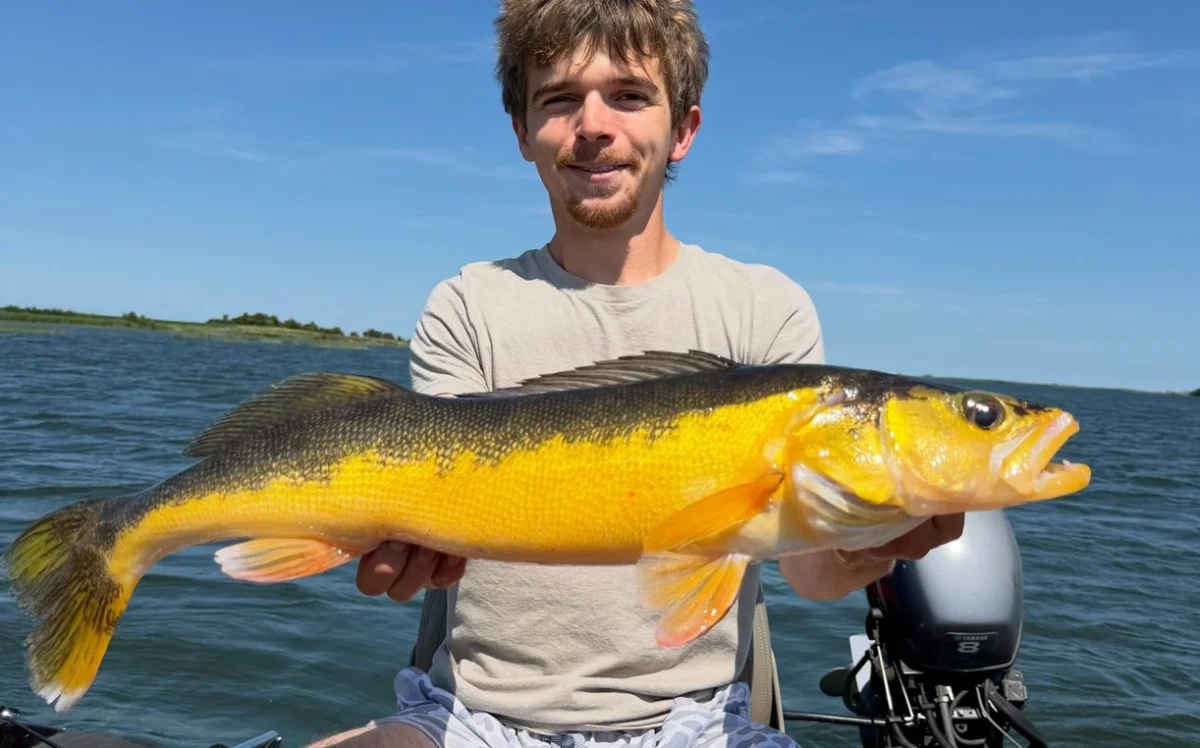
In an event described by local anglers as a once-in-a-lifetime occurrence, a North Dakota fisherman recently landed a rare "golden" walleye, a specimen characterized by a vibrant yellow hue resulting from a rare genetic mutation. Ethan Bear, a 21-year-old resident of Jamestown, North Dakota, successfully reeled in the fish during a recreational outing with friends. The catch, which occurred in a North Dakota lake that remains undisclosed to protect the local ecosystem, has garnered significant attention from the angling community and fisheries biologists alike due to the extreme rarity of the fish’s pigmentation and its remarkable survival into adulthood.
The specimen, estimated to be between 25 and 30 inches in length, represents a biological anomaly known as xanthism. While standard walleyes (Sander vitreus) typically display olive, gold, and white tones designed for camouflage in murky or rocky environments, this specific individual was almost entirely bright yellow. Following a brief documentation of the catch through photography and video, Bear and his companions opted to release the fish back into the water to ensure the continued presence of its unique genetic lineage within the lake’s population.
The Chronology of the Catch
The event took place during a routine fishing trip in early 2024. Ethan Bear, an experienced angler familiar with the regional waters of North Dakota, was targeting walleye—a staple species for the Midwest’s freshwater fishing industry. According to social media records and reports from the scene, the group had already experienced a productive day, securing several standard walleyes of varying sizes.
The catch of the golden walleye occurred as the light conditions began to shift, a period typically favored by the species due to their light-sensitive eyes. Upon reeling in the fish, the group immediately recognized its distinctiveness. Unlike the typical mottled green and gold patterns that provide walleye with their name—derived from their pearlescent, "glassy" eyes—this fish lacked the dark pigments necessary for standard coloration.
After confirming the health of the fish and documenting its measurements, Bear ensured the specimen was properly revived before releasing it. The decision to keep the location of the catch confidential is a common practice among conservation-minded anglers to prevent "over-pressuring" specific habitats when a rare or record-breaking fish is discovered.
Biological Analysis: The Science of Xanthism
The striking appearance of the golden walleye is not indicative of a new species but is rather the result of a rare genetic condition called xanthism. In the realm of ichthyology, xanthism is a pigment mutation that results in the absence of certain dark pigments—specifically melanins—while allowing yellow pigments (xanthophores) to dominate the fish’s appearance.
Under normal circumstances, a walleye’s scales contain a complex arrangement of pigments. The interaction of these pigments typically allows the fish to reflect blue light, which, when combined with yellow pigments, creates the characteristic olive-green hue that serves as camouflage. In a fish affected by xanthism, the molecular structure required to produce or display the blue-reflecting pigments is missing. Consequently, the fish appears in a brilliant, solid gold or orange state.
Fisheries experts and biologists from regional conservation departments estimate the probability of encountering a true golden walleye at between 1 in 1 million and 1 in 10 million. This rarity is compounded by the laws of natural selection. Because walleyes are predatory fish that often inhabit clear or semi-turbid waters, their survival depends heavily on their ability to remain undetected by larger predators, such as northern pike or avian hunters like ospreys and eagles. A bright yellow fish acts as a "neon sign" in the water, making it an easy target from a young age. The fact that Bear’s catch reached a length of 25 to 30 inches suggests the fish survived for several years, likely a decade or more, despite its lack of natural camouflage.
Context of North Dakota Fisheries
North Dakota is home to some of the most robust walleye populations in the United States. The state’s Department of Game and Fish manages several world-class fisheries, including Lake Sakakawea, Devils Lake, and the Missouri River system. These bodies of water are characterized by diverse underwater topography, including sand bars, gravel beds, and submerged timber, which provide ideal spawning and hunting grounds for walleye.
The walleye is the official state fish of South Dakota and holds similar cultural and economic importance in North Dakota. The species is highly sought after not only for the challenge of the catch but also for its status as premium "table fare." In the Midwest, walleye fishing is a multi-million-dollar industry, supporting local bait shops, guide services, and tourism sectors.
Data from the North Dakota Game and Fish Department indicates that walleye populations have remained stable due to stringent management practices, including size limits and creel limits. The emergence of a rare specimen like the golden walleye serves as a testament to the health and diversity of the state’s aquatic ecosystems. While mutations like xanthism are random, a fishery must be healthy enough to support a large enough population for such rare genetic outliers to appear and survive.
Comparative Genetic Mutations in Freshwater Fish
While xanthism is among the rarest color mutations, it is not the only one observed in North American freshwater species. Anglers occasionally report other variations:
- Melanism: The opposite of xanthism, where an overabundance of melanin causes the fish to appear jet black.
- Leucism: A condition resulting in partial loss of all types of pigmentation, often leading to white or pale patches, though the eyes remain a normal color (unlike albinism).
- Blue Walleye: Historically, a sub-species or color variant known as the "blue walleye" existed in the Great Lakes, particularly Lake Erie, before being declared extinct in the mid-20th century. Today, occasional "blue-tinted" walleyes are caught, though these are usually attributed to a specific protein in the fish’s mucus rather than the extinct sub-species.
The occurrence of Ethan Bear’s golden walleye is often compared to the "piebald" mutation in deer or the "blue lobster" in the Atlantic, both of which capture public imagination due to their visual departure from the norm.
Implications for Conservation and Citizen Science
The catch-and-release of the golden walleye by Ethan Bear has been lauded by conservationists. By returning the fish to the water, the angler allowed the potential for the xanthismic genes to remain in the breeding pool. Although xanthism is a recessive trait and does not guarantee that offspring will also be golden, maintaining genetic diversity is a cornerstone of modern wildlife management.
Furthermore, the documentation of this catch highlights the evolving role of "citizen science" in fisheries management. With the ubiquity of high-quality smartphone cameras and social media, rare biological events that might have once gone unnoticed are now recorded and shared with the scientific community. This data allows biologists to track the frequency of mutations and the health of specific year-classes of fish.
Official responses from angling associations have emphasized the importance of ethical handling during such encounters. To ensure a successful release, it is recommended that rare specimens are kept in the water as much as possible, handled with wet hands to protect their slime coat, and supported ventrally to avoid internal organ damage.
Economic and Recreational Impact
The publicity surrounding the golden walleye catch provides a significant boost to North Dakota’s reputation as a premier destination for trophy fishing. According to the American Sportfishing Association, freshwater angling contributes billions of dollars to the U.S. economy annually. In states like North Dakota, where outdoor recreation is a vital part of the cultural identity, "viral" catches like Bear’s encourage a new generation of anglers to engage with the sport.
The social media engagement generated by the photos and videos of the golden walleye serves as a modern marketing tool for state tourism. It showcases the quality of the Missouri River system and surrounding lakes, potentially increasing license sales and local spending in rural communities.
Conclusion
The landing of a 1-in-million golden walleye by Ethan Bear stands as a significant moment in recent North Dakota angling history. It represents a rare intersection of genetic anomaly, predatory survival, and ethical sportsmanship. As the fish continues its life in the depths of its undisclosed home, the story serves as a reminder of the mysteries still present within well-traveled waters. For the scientific community, it provides a vivid example of xanthism in a mature specimen, while for the public, it offers a glimpse into the hidden diversity of the natural world. Through the act of catch-and-release, the legacy of the golden walleye remains preserved, contributing to the ongoing narrative of North Dakota’s rich outdoor heritage.