 Nayara Elvina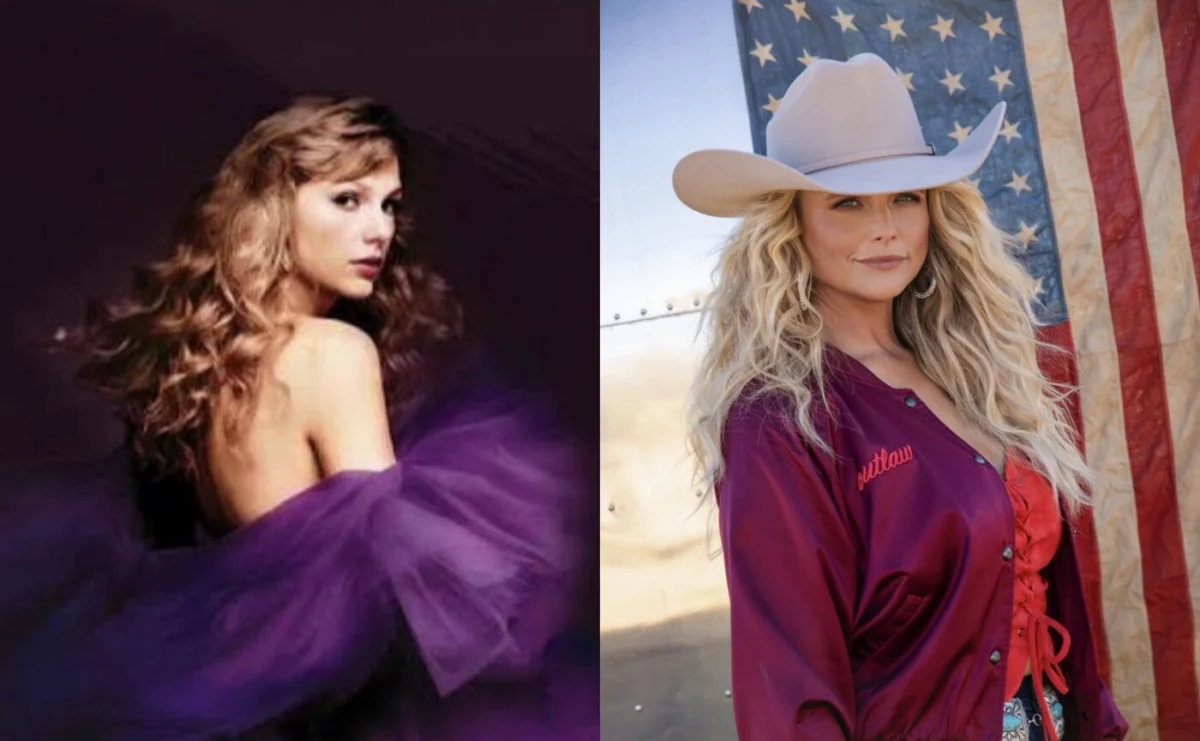
The Nashville Songwriters Hall of Fame (NaSHOF) has officially revealed its highly anticipated list of nominees for the induction class of 2026, highlighting a diverse group of 12 songwriters who have fundamentally shaped the landscape of contemporary music. This year’s selection process identifies elite talent across two distinct categories: the Songwriter/Artist category and the Songwriter category. Among the high-profile names appearing on the ballot are global icon Taylor Swift, country superstar Miranda Lambert, and the critically acclaimed Chris Stapleton, alongside a roster of legendary behind-the-scenes tunesmiths responsible for decades of radio hits. The announcement marks the beginning of a rigorous voting period that will culminate in the induction of three new members—one from the Songwriter/Artist category and two from the Songwriter category—at the annual Hall of Fame Gala held later this year.
The Songwriter/Artist Nominees: A Study in Commercial and Critical Dominance
The Songwriter/Artist category features four individuals who have not only written the foundations of their own careers but have also influenced the broader musical culture through their distinct voices and lyrical prowess. This year’s nominees—Taylor Swift, Miranda Lambert, Chris Stapleton, and Phil Vassar—represent a cross-section of Nashville’s evolution from the late 1990s through the modern era.
Taylor Swift’s nomination comes as little surprise to industry analysts, given her unprecedented trajectory from a teenage country prodigy to a global pop phenomenon. Since her debut in 2006, Swift has maintained a reputation as a songwriter first and foremost. Her Nashville roots are deeply embedded in her early catalog, which earned her significant accolades within the country genre. Swift has secured three Grammy Awards specifically for her songwriting: Best Country Song for "White Horse" in 2010 and "Mean" in 2012, as well as Best Song Written for Visual Media for "Safe & Sound," featured in The Hunger Games soundtrack. Her inclusion in this class follows her recent achievement as the youngest woman ever inducted into the national Songwriters Hall of Fame, further solidifying her status as a generational talent.
Miranda Lambert, another titan of the modern country era, enters the 2026 nomination cycle during a period of sustained chart success. Lambert is currently experiencing a massive commercial resurgence with her hit "Choosin’ Texas," a collaboration with Ella Langley. The track has demonstrated remarkable longevity, recently marking its 13th week at the summit of the all-genre Billboard Hot 100 chart. Lambert’s career has been defined by her ability to blend grit with vulnerability, evidenced by her self-penned or co-written hits such as "Kerosene," "Gunpowder & Lead," "Over You," and "Vice." Her nomination reflects a career-long commitment to the craft of storytelling that resonates with both traditionalists and modern listeners.
Chris Stapleton’s presence on the ballot underscores his dual legacy as a powerhouse vocalist and a prolific writer for other artists. Long before his 2015 solo breakthrough with the album Traveller, Stapleton was one of Nashville’s most sought-after songwriters. His portfolio includes massive hits for his peers, such as Luke Bryan’s "Drink A Beer," Josh Turner’s "Your Man," and Kenny Chesney’s "Never Wanted Nothing More." As a solo artist, Stapleton has continued his streak of songwriting excellence, winning three Grammys for Best Country Song for the tracks "White Horse," "Broken Halos," and "Cold." His dominance at the ACM and CMA Awards over the past decade has made him a central figure in the Nashville establishment.
Phil Vassar rounds out the Songwriter/Artist category, representing the era of the late 1990s and early 2000s where he bridged the gap between piano-driven pop-country and traditional storytelling. Vassar’s career is unique in that he achieved massive success as a writer for others before launching a successful solo career. His writing credits include Jo Dee Messina’s "Bye, Bye" and "I’m Alright," Collin Raye’s "Little Red Rodeo," and Tim McGraw’s "My Next Thirty Years." As a performer, Vassar topped the charts with his own compositions like "Just Another Day In Paradise" and "In A Real Love," proving his versatility across the industry.
The Songwriter Category: The Architects of the Nashville Sound
While the Songwriter/Artist category often garners the most public attention, the Songwriter category recognizes the "architects" of the industry—those who work primarily behind the scenes to craft the hits that define country radio. The eight nominees for 2026 include Jim Beavers, Shawn Camp, Rodney Clawson, Dallas Davidson, Marv Green, Lee Thomas Miller, Neil Thrasher, and Chris Tompkins.
Jim Beavers has been a mainstay on the charts for two decades, known for his ability to write high-energy, relatable anthems. His work with Dierks Bentley, including "5-1-5-0" and "Watching Airplanes," helped define the sound of modern country in the 2010s. Similarly, Shawn Camp has long been a respected figure in the Nashville community, often bridging the gap between bluegrass, Americana, and mainstream country. Camp’s credits include "Two Pina Coladas" for Garth Brooks and "Nobody But Me" for Blake Shelton, demonstrating a range that spans from lighthearted beach tunes to soulful ballads.
Rodney Clawson and Dallas Davidson represent the "hit factory" era of Nashville songwriting. Clawson has been a primary collaborator for Jason Aldean and Florida Georgia Line, contributing to the "bro-country" movement with a sharp ear for hooks. Davidson, a member of the famed "Peach Pickers" songwriting trio, has penned over 20 number-one hits, including Luke Bryan’s "That’s My Kind of Night" and "Rain Is a Good Thing." Their influence on the commercial viability of country music over the last 20 years is immense.
Marv Green and Lee Thomas Miller bring a more traditional, emotive approach to the ballot. Green is the hand behind Lonestar’s cross-genre smash "Amazed" and George Strait’s "It Just Comes Natural." Miller is best known for his poignant collaborations with Brad Paisley, such as "The Impossible" and the critically acclaimed "In Color" by Jamey Johnson, the latter of which is often cited as one of the best-written country songs of the 21st century.
Finally, Neil Thrasher and Chris Tompkins represent the power-ballad and rock-infused side of the genre. Thrasher has been a frequent collaborator for Jason Aldean and Rascal Flatts, while Tompkins is the writer behind Carrie Underwood’s era-defining "Before He Cheats" and Tyler Hubbard’s recent solo successes. Each of these eight nominees meets the Hall of Fame’s strict "20-year rule," which requires that a nominee’s first significant hit must have occurred at least two decades prior to their nomination.
Chronology and the 20-Year Rule
The Nashville Songwriters Hall of Fame maintains some of the most rigorous entry requirements in the music industry. The "20-year rule" serves as a filter to ensure that only those with proven longevity and a sustained impact on the genre are considered for induction. For the 2026 class, this means every nominee had their first major professional success no later than 2006.
This timeline is particularly relevant for nominees like Taylor Swift, whose self-titled debut album was released in October 2006. Her immediate eligibility upon hitting the 20-year mark underscores the speed at which she achieved "legend" status within the industry. For veterans like Phil Vassar or Marv Green, the nomination is a recognition of a career that has spanned multiple shifts in musical trends, from the neo-traditionalism of the late 90s to the digital streaming era of today.
The selection process involves a nominating committee of industry peers, followed by a vote from the Hall of Fame’s existing members and its Board of Directors. The transition from nominee to inductee is a multi-step journey that concludes with the "Class of 2026" being honored at the Nashville Songwriters Hall of Fame Gala. This event is traditionally held at the Music City Center in downtown Nashville and serves as the primary fundraiser for the Nashville Songwriters Foundation.
Industry Implications and Broader Impact
The induction of songwriters into the Nashville Songwriters Hall of Fame is more than a ceremonial gesture; it is a vital part of preserving the history of "Music City." Unlike other music centers that may focus on celebrity and performance, Nashville has historically branded itself as a "songwriter’s town." The Hall of Fame serves as a permanent record of the individuals who provided the intellectual property that fueled the multi-billion-dollar country music industry.
The 2026 class is particularly significant because it highlights the increasing overlap between the country and pop genres. The inclusion of Taylor Swift, who has successfully navigated both worlds, suggests that the Nashville Songwriters Hall of Fame is expanding its view of what constitutes a "Nashville songwriter." It acknowledges that while an artist may move into the pop sphere, their foundational craft and their impact on Nashville’s economy and reputation remain indelible.
Furthermore, the nomination of writers like Chris Stapleton and Miranda Lambert—who are still at the peak of their performing careers—demonstrates the narrowing gap between the "backroom" songwriter and the "frontman." In previous generations, the roles were often strictly divided. Today, the most successful artists are frequently those who maintain control over their lyrical content, a trend that this year’s ballot clearly celebrates.
As the voting process begins, industry insiders anticipate a highly competitive race. With only one slot available for the Songwriter/Artist category and two for the Songwriter category, the 2026 induction will inevitably leave out several deserving candidates. However, the nomination itself remains one of the highest honors in the profession, signaling that a writer has reached the upper echelon of their craft.
The final results of the voting will be announced in the coming months, with the formal induction ceremony scheduled for late autumn. This event will not only honor the three new inductees but will also celebrate the 56-year history of an institution dedicated to the "song," the element that Nashville considers the true star of the show. For the 12 nominees, the path to the Hall of Fame represents the culmination of decades of work, thousands of demo tapes, and the enduring power of a well-written story.