Indra Aziz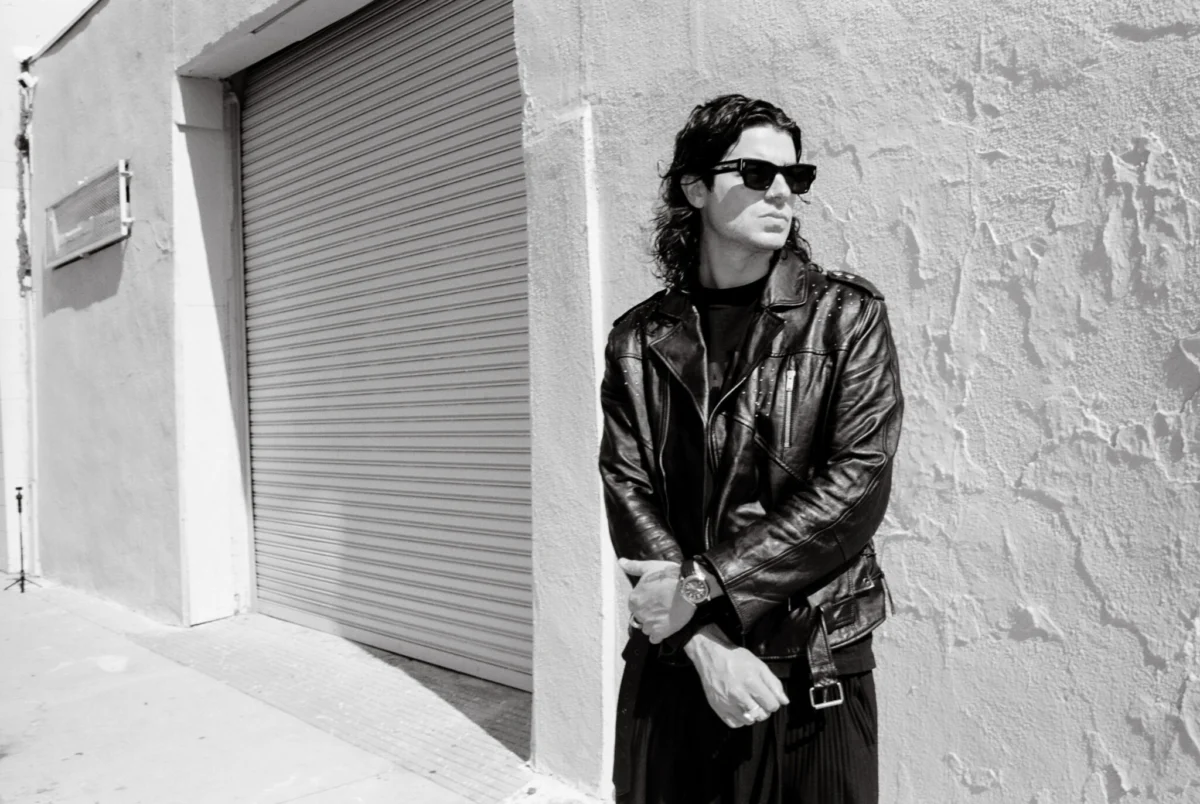
Los Angeles-based musician and producer Rett Smith has officially entered a bold new artistic chapter with the launch of his electronic music alias, Tin Lung. Released via Lavoir Records on September 16, 2026, the project’s self-titled debut, EP 1, marks a distinct and deliberate pivot away from the guitar-driven rock repertoire that has defined much of Smith’s career to date. Recorded entirely within the confines of his private Los Angeles workspace, Tularosa Sound, the four-track collection represents an uncompromising commitment to hardware-only production methods, deliberately bypassing contemporary software plugins and artificial intelligence generation tools in favor of pure analog circuitry.
The four-track release serves as an introductory transmission for a broader body of work, preceding a full-length studio album scheduled for commercial release in March 2027. For industry observers and long-time followers of Smith, the transition underscores a significant widening of his sonic palette, drawing on heavy atmospheric textures, rhythmic industrial dissonance, and deeply secluded studio experimentation.
Background Context of the Artist and the Project
Rett Smith is no stranger to diverse musical environments. Prior to the formation of Tin Lung, Smith built a reputation traversing the landscapes of alternative rock and contemporary production. His diverse career background includes notable collaborative studio work, most prominently contributing guitar arrangements to producer Hudson Mohawke’s acclaimed 2022 album, Cry Sugar. Despite these varied ventures, Smith’s creative core has long remained rooted in traditional instrumentation.
The conception of Tin Lung, however, represents a subterranean shift in his creative output. According to the artist, the electronic textures found on EP 1 are not a sudden stylistic experiment, but rather the manifestation of a lifelong internal catalogue. Smith described the creation of the project as an exercise in sonic seclusion, pointing to a deeply personal process of artistic rebirth.
"Tin Lung is my music in its purest form," Smith stated regarding the project. "I’ve been creating nonstop in sonic seclusion, a creative rebirth, and the most free I’ve ever felt as an artist. This music isn’t new to me, I’ve lived inside it for decades; it’s only new as my output."
The Ideology of the All-Hardware Era
At the center of the Tin Lung narrative is a strict adherence to physical hardware. In an era dominated by in-the-box digital audio workstations (DAWs), software synth emulation, and automated composition aids, Smith made the conscious decision to restrict his workflow to physical machines. EP 1 was constructed utilizing a strictly analog signal path, utilizing hardware synthesizers, drum machines, and outboard processing units housed at Tularosa Sound.
This methodology places Tin Lung in conversation with a rich lineage of electronic music pioneers who prioritized the unpredictability and warmth of physical electronics over pristine digital perfection. By removing software instruments and artificial intelligence entirely from the equation, Smith has fashioned a physical limitation that paradoxically breeds creative liberation. The workflow requires live takes, manual patch cabling, and hardware sequencing, imbuing every transient and decay with the organic flaws inherent to vintage and modern analog gear.
Sonic Profile and Aesthetic Influences
Artistically, the soundscape of EP 1 occupies a desolate, cavernous niche. Music critics and early listeners have noted immediate stylistic parallels to foundational electronic acts that prioritized mood and texture over conventional song structures. The project sits comfortably at the stylistic intersection of Burial’s rain-slicked, dystopian ambient garage; Boards of Canada’s nostalgic, tape-saturated analog memoryscapes; and the deconstructed, brutalist industrial flair of early Arca.
The cavernous mixing and mastering choices amplify these touchstones. Following the recording sessions at Tularosa Sound, the master stems were sent across the Atlantic to Abbey Road Studios in London. There, they were finalized by frequent collaborator Stefan Brown, a mastering engineer renowned for his ability to preserve dynamic range and subtle sonic micro-details within complex electronic arrangements. The resulting master maintains a heavy, tactile low-end and a claustrophobic yet expansive stereo field, reinforcing the dystopian undertones of the source material.
Chronology of Production and Release
The timeline leading up to the release of EP 1 reflects a calculated, methodical approach to brand reinvention and music distribution:
- Pre-2026: Decades of private experimentation with electronic sound design, synthesis, and hardware accumulation, largely kept outside of Smith’s public rock-oriented releases.
- 2022–2025: Collaborative interlude, including guitar contributions to Hudson Mohawke’s Cry Sugar, alongside the gradual formulation and acoustic tuning of Tularosa Sound in Los Angeles.
- Early 2026: Intensive recording sessions for Tin Lung, culminating in the completion of a four-track analog EP free of software assistance.
- Mid-2026: Final audio mastering completed by Stefan Brown at Abbey Road Studios in London.
- September 16, 2026: Official commercial release of EP 1 via Lavoir Records, marking the public debut of the Tin Lung moniker.
- March 2027 (Anticipated): Scheduled release of Tin Lung’s debut full-length studio album, expanding upon the sonic foundation laid by the four introductory tracks.
Broader Industry Implications and Commercial Outlook
The debut of Tin Lung arrives at a fascinating juncture in the modern music industry. As generative artificial intelligence systems begin to flood digital streaming platforms with automated, low-cost audio content, a distinct counter-movement has emerged among independent musicians and boutique record labels. Audiophiles and underground music consumers are increasingly placing a premium on human agency, physical provenance, and tangible analog processes.
By leaning explicitly into an all-hardware, human-crafted methodology, Rett Smith and Lavoir Records are tapping into this growing demand for authenticity. The absence of AI and software plugins is not merely a technical constraint; it functions as an ideological statement. In a marketplace saturated by hyper-compressed, software-generated perfection, the slightly frayed edges and organic instability of analog machinery offer a distinct competitive advantage in cultural capital.
Furthermore, the strategic decision to release a four-track EP as an introductory "transmission" rather than an immediate full-length album allows the market time to digest the stylistic pivot. It serves as a bridge between Smith’s established rock audience and a new demographic of electronic music enthusiasts who frequent the fringes of ambient, industrial, and dystopian beat culture.
As the industry looks ahead to the anticipated full-length album in March 2027, the initial reception of EP 1 will serve as a crucial bellwether for Smith’s long-term viability in the electronic space. Early indicators suggest that the project has successfully captured the attention of tastemakers, positioning Tin Lung as a compelling new entity to watch within the contemporary underground electronic ecosystem. Listeners and industry professionals alike can stream the four-track release across major digital platforms now as the countdown to next year’s full-length record officially begins.