Nayara Elvina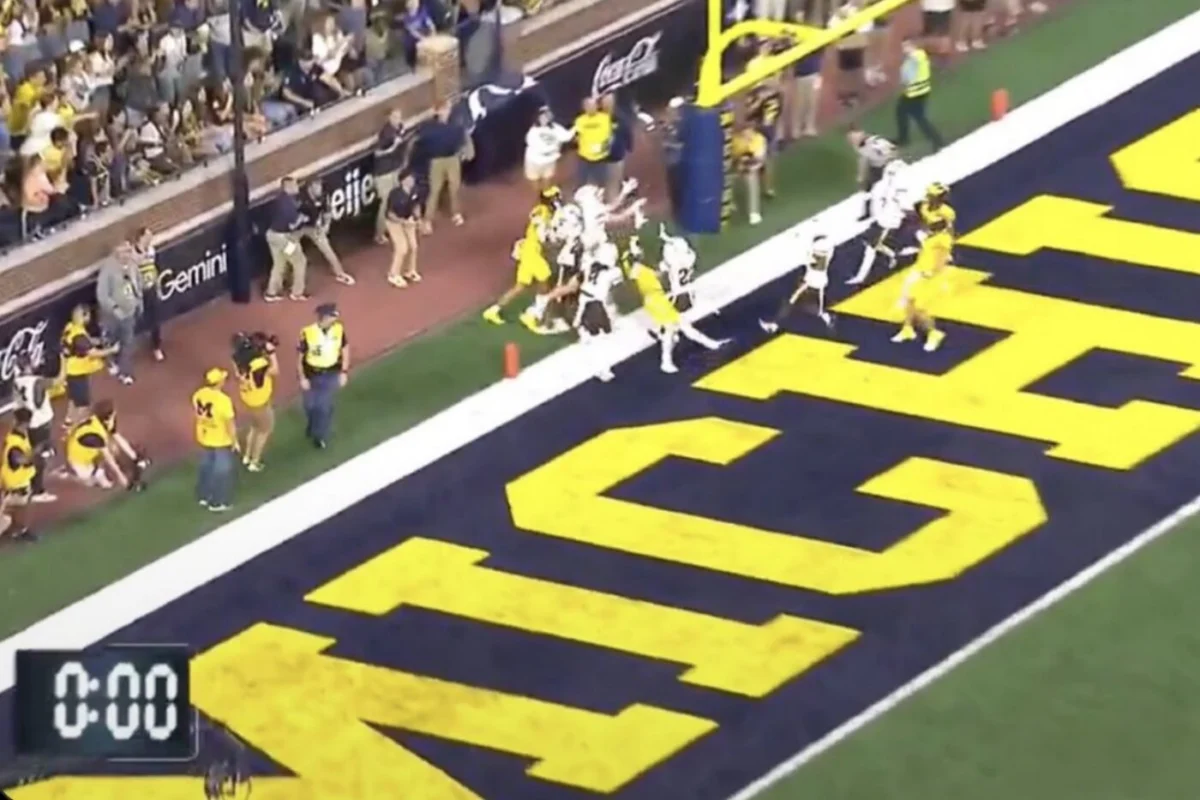
The National Collegiate Athletic Association Football Bowl Subdivision Oversight Committee has officially declined to overturn or alter the final game result of the Week 1 matchup between the Michigan Wolverines and the Western Michigan Broncos. The decision follows a formal appeal submitted by the Mid-American Conference, which argued that officiating errors during the game’s final moments directly influenced the outcome and deprived Western Michigan of a historic upset. Although the oversight committee acknowledged that the officiating crew failed to adhere strictly to established instant replay protocols, it maintained that the governing body lacks the regulatory authority to retroactively change the outcome of a completed collegiate athletic contest.
The controversy centers on a September 2026 game at Michigan Stadium in Ann Arbor, where the Western Michigan Broncos entered the contest as 28-point underdogs against the 16th-ranked Wolverines. Throughout the afternoon, the Broncos outperformed expectations, mounting a resilient defensive and offensive effort that kept them competitive against their heavily favored in-state opponents. With just one minute and fifteen seconds remaining in the fourth quarter, Western Michigan executed a successful field goal drive to take a 12-7 lead. This left the Wolverines with a narrow window of slightly over a minute to travel the length of the field and score a touchdown to avert what would have stood as one of the most significant upsets in the history of college football.
The final sequence of the game generated intense scrutiny across the sports world due to a rapid succession of dramatic plays, video reviews, and clock adjustments. With no remaining timeouts and only nine seconds left on the game clock, Michigan quarterback Bryce Underwood launched a desperate Hail Mary pass toward the end zone. The ball was overthrown, sailing out of bounds past the back of the end zone as the game clock expired, which initially signaled the end of regulation and touched off celebration among Western Michigan players and coaches on the field.
However, game officials immediately halted the post-game field invasion, announcing that the final play was under official review. Following a video review period, the referee crew determined that exactly one second remained on the game clock when a Western Michigan defender made contact with the ball while positioned out of bounds, which under NCAA rules stops the clock. Given the reinstated single second, Michigan was awarded one final untimed play. On the subsequent attempt, Underwood completed a touchdown pass to the front of the end zone, securing a narrow 13-12 victory for the Wolverines as time expired for a second time.
In the immediate aftermath of the contest, broadcast feeds displayed a stadium clock angle suggesting that time had fully expired before the initial pass hit the ground, leading to widespread public debate over the validity of the reversal. In response to mounting criticism, the Big Ten Conference issued a detailed technical statement defending the officiating decision. According to the Big Ten, the review crew utilized a direct, synchronized camera feed of the official game clock rather than standard broadcast footage.
The conference statement explained that eighty-five minutes prior to kickoff, all video replay feeds—including the dedicated camera monitoring the stadium game clock—were synchronized using a technical strobe system to ensure absolute alignment. The review officials determined that Western Michigan’s defender started his jump from an established out-of-bounds position and made contact with the ball with one second remaining. Citing NCAA Football Rule 4-2-3-a, the conference noted that an uncontrolled ball becomes dead and stops the clock when it touches a player or object out of bounds.
Despite the initial acceptance of this explanation by conference leadership, the Mid-American Conference subsequently reversed its position after conducting an internal review of the officiating mechanics. The MAC submitted formal appeals to both the NCAA FBS Oversight Committee and the College Football Playoff administration. The conference argued that the referees committed a procedural error by failing to use the designated program-feed clock during the replay review, asserting that adherence to the proper protocol would have yielded no additional time and preserved Western Michigan’s 12-7 victory. The MAC requested that governing bodies officially recognize Western Michigan as the game’s winner for the purposes of national rankings, power evaluations, and postseason selection deliberations.
The response from the NCAA FBS Oversight Committee addressed both the validity of the conference’s procedural complaints and the limitations of its own jurisdiction. In its formal ruling, the committee confirmed that the officiating crew did not correctly follow the precise administrative steps outlined in the instant replay manual. The committee explicitly stated that had the standard replay protocols been executed without error, the sequence of events would have concluded differently, directly acknowledging the impact of the procedural misstep on the game’s final ledger. Nevertheless, the committee emphasized that current NCAA governance structures do not provide a mechanism for governing bodies to alter game scores or official win-loss records after the conclusion of regulation play.
Adding further complexity to the officiating dispute, independent media analysis has emerged to support the accuracy of the final ruling regardless of the procedural flaws cited by the MAC. Fan-recorded video footage from the stands captured a synchronized perspective of the field and the scoreboard clock during the initial Hail Mary attempt. Analysts reviewing the independent footage noted that the ball made contact with a defender precisely as the clock transitioned from one second to zero, suggesting that the ultimate decision to place one second back on the clock was factually correct, even if the communication and execution of the replay review fell short of required standards.
The ruling leaves Western Michigan without a revised record, despite validation from the oversight committee that procedural errors altered the competitive trajectory of the final seconds. For the Mid-American Conference and its member institutions, the decision highlights ongoing concerns regarding the consistency, transparency, and technological execution of instant replay reviews in major college football. As college athletics continue to integrate advanced timing mechanisms and synchronized broadcast technologies, the incident serves as a significant case study for the FBS Oversight Committee regarding the need for strict adherence to replay protocols and clearer jurisdictional frameworks for post-game appeals.