 Johan Budi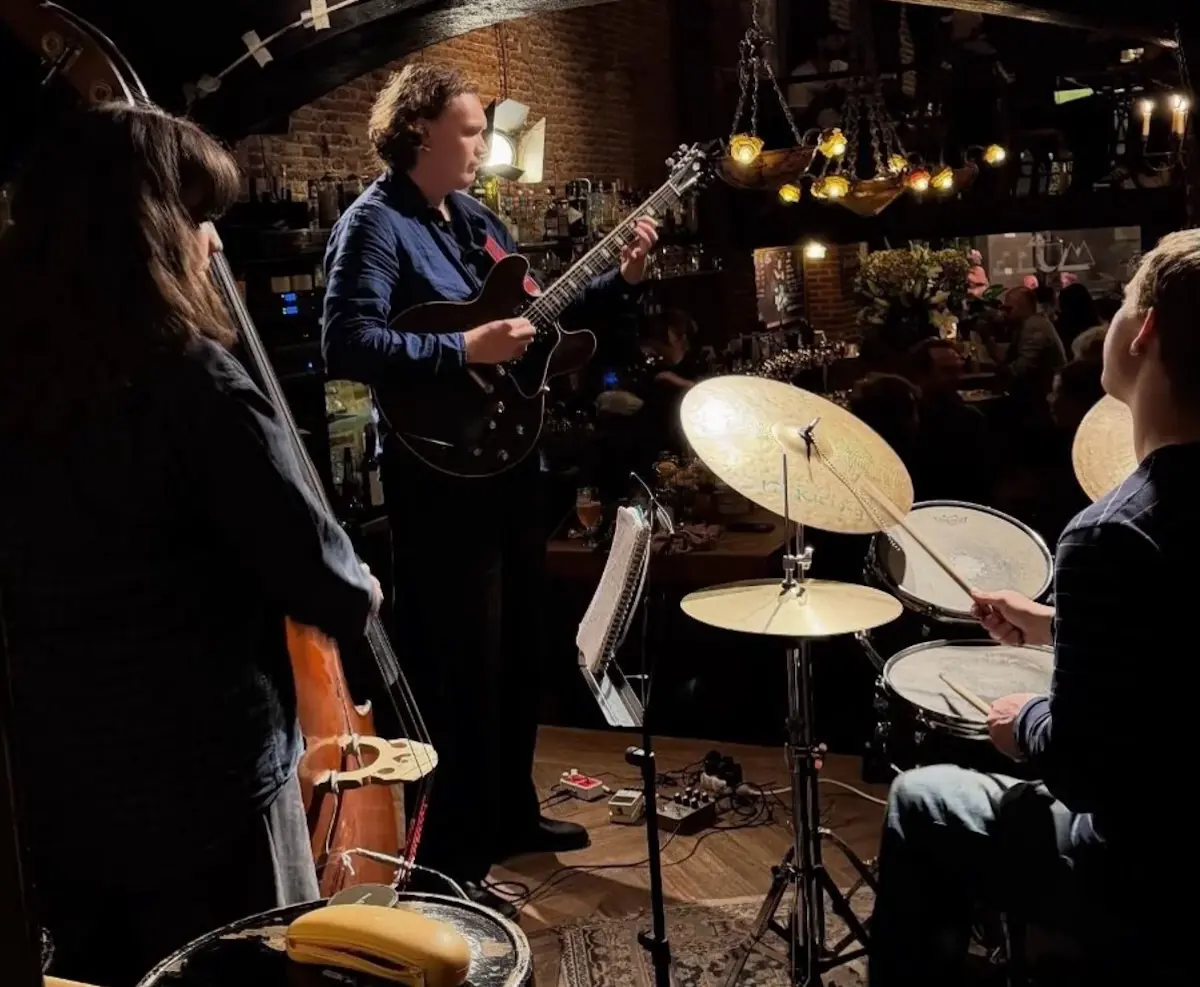
The contemporary jazz landscape in 2025 continues to demonstrate a remarkable breadth of artistic expression, bridging the gap between emerging virtuosity and the seasoned reflections of established masters. Three recent releases—Joachim Lyche’s Primal Heuristics, Chuck Bergeron’s Bass & Face, and Steve Swallow’s Winter Songs—collectively illustrate the evolving priorities of the genre. From the cognitive-science-inspired improvisations of a young Norwegian guitarist to the pedagogical and collaborative duets of a veteran bassist, and finally the atmospheric chamber-jazz of an ECM legend, these albums offer a cross-section of the technical and emotional possibilities inherent in modern jazz composition.
Joachim Lyche Trio: Primal Heuristics and the Cognitive Approach to Improvisation
The debut album from 27-year-old Norwegian guitarist Joachim Lyche, titled Primal Heuristics, introduces a fresh perspective to the European jazz scene. The title itself refers to the mental shortcuts and intuitive leaps that human beings use to make rapid decisions. In the context of musical improvisation, Lyche explores the tension between academic over-thinking and the visceral, "in-the-moment" reactions required during a live performance.
Background and Musical Philosophy
Lyche, a product of the rigorous Scandinavian music education system, demonstrates a technical command that belies his age. Recorded across two sessions in Asker, Norway—May 1–2 and October 31, 2025—the album captures a trio that prioritizes fluidity over rigid structure. The ensemble features Uma Morelia Bustos Reksten on bass and Bendik Johnk on drums. This lineup adheres to the classic guitar trio format but injects it with a contemporary energy that draws from both American bop and Nordic atmospheric styles.
The influence of jazz luminaries such as Staffan William-Olsson, Bjørn Vidar Solli, and Frode Kjekstad is evident in Lyche’s clean, articulate tone. However, critics have also noted a lineage connecting his playing to Joe Pass, particularly in his sophisticated phrasing and ability to maintain a brisk tempo without sacrificing melodic clarity.
Technical Analysis and Track Highlights
Primal Heuristics runs for approximately 38 minutes, a concise duration that mirrors the "shortcut" philosophy of its title. The album includes six original compositions and two reinterpretations of jazz standards: John Coltrane’s "Lazy Bird" and Joe Henderson’s "Punjab."
- Rhythm and Interaction: Bendik Johnk’s drumming is a standout feature, providing what has been described as a "skiffle-like" quality—a rhythmic bounce that adds a sense of urgency and folk-like simplicity to the tracks.
- Harmonic Language: Lyche’s original pieces, such as "BIP" and "Spring Song," showcase his ability to weave complex harmonic structures into accessible, swinging narratives.
- The Covers: The trio’s take on "Lazy Bird" serves as a benchmark for their technical proficiency, navigating Coltrane’s demanding changes with a sense of playful ease.
Broader Implications
The emergence of the Joachim Lyche Trio signifies the continued vitality of the Norwegian jazz export. By signing with Losen Records (catalog number Los 322-2), Lyche joins a roster that has been instrumental in bringing Nordic jazz to a global audience. The album suggests that the next generation of jazz musicians is increasingly interested in the intersection of psychology and performance, seeking to strip away the "over-thought" layers of modern composition to find a more primal, immediate connection with the listener.
Chuck Bergeron: Bass & Face – The Challenges of the Minimalist Duet
In contrast to the trio format of Lyche, Chuck Bergeron’s Bass & Face (subtitled Duets With Ten Premier Vocalists) explores the intimate and often difficult terrain of the bass-and-voice duo. Bergeron, a respected bassist and educator known for his long-standing contributions to the Florida jazz scene and the University of Miami, has compiled a series of recordings that span several years of collaboration.
Chronology and Concept
The album is a retrospective mosaic, featuring recordings from as early as 2005, with more recent sessions in October 2023, the spring of 2024, and March 2025. This timeline allows for a diverse array of vocal talents, including the late Kevin Mahogany, Sheila Jordan, and Janis Siegel. The project was released under Summit Records (SMT 852), a label frequently associated with high-level instrumental pedagogy and virtuosity.
Critical Evaluation of the Format
The primary challenge of a bass-vocal duet is the inherent harmonic limitation. Without a piano or guitar to provide full chords, the bassist must outline the harmony, provide the rhythmic pulse, and interact with the vocalist simultaneously. Bergeron acknowledges this constraint, noting that the bass is "a little more limited" in its harmonic breadth compared to other chordal instruments.
- Vocal Range: The album features ten vocalists, which provides variety in tone but, according to some analysts, results in a certain "sameness" in track structure. The typical arrangement involves a "smoky" introductory bass line followed by the vocal entry, often incorporating scat singing or witty lyrical delivery.
- Key Performances: The recordings featuring Kevin Mahogany are widely considered the highlight of the collection, showcasing a deep, resonant synergy that overcomes the minimalist instrumentation.
- Instrumental Expansion: Ironically, the most acclaimed track on an album titled Bass & Face is the instrumental finale, a duet with pianist Phil Strange. This track highlights Bergeron’s melodic sensitivity and suggests that his bass playing often shines brightest when supported by a harmonic anchor.
Supporting Data and Legacy
At 66 minutes, the album is a significant document of Bergeron’s career. It serves as a study in accompaniment, illustrating how a master bassist can adapt his style to suit different vocal timbres—from the legendary Sheila Jordan’s avant-garde leanings to the more traditional swing of Pete McGuinness. Despite the perceived repetition in format, the album is a valuable resource for students of jazz bass and vocalists looking to understand the nuances of minimalist arrangement.
Steve Swallow: Winter Songs – A Master’s Reflection
The third significant release in this contemporary trifecta is Winter Songs by Steve Swallow. As his first album as a leader in over a decade, and his return to the prestigious ECM label (ECM 2879), the album carries significant weight in the jazz community. Swallow, a pioneer of the electric bass in jazz, has spent the last several years contributing to projects by John Scofield and his long-time partner, the late Carla Bley.
Context and Compositional Intent
Recorded in New York in September 2024, Winter Songs is described by Swallow as a "elemental" necessity. The music was written during a period of personal reflection, and that sense of "taking stock" permeates the nine tracks, titled simply "One" through "Nine." The album features a "chamber-jazz" ensemble consisting of:
- Steve Swallow: Electric Bass
- Mike Rodriguez: Trumpet
- Chris Cheek: Tenor Saxophone
- Gil Goldstein: Piano
- Steve Cardenas: Guitar
- Adam Nussbaum: Drums
Analysis of the ECM Aesthetic
The album adheres to the "ECM sound"—transparent, atmospheric, and meticulously recorded. Unlike the brisk swing of the Lyche trio or the vocal-focused duets of Bergeron, Winter Songs is an exercise in restraint. The compositions are intricate yet undemanding, allowing the ensemble to function as a single, cohesive unit.
- Subtlety over Solos: There is a notable absence of competitive soloing. Instead, the musicians—many of whom are Swallow’s long-term collaborators—focus on texture and mood.
- The Trumpet’s Role: Mike Rodriguez provides a melancholy, lyrical voice that defines the album’s emotional core, particularly in the opening tracks where the melody is introduced with a whisper-like delicacy.
- Swallow’s Presence: Swallow himself remains largely in the background, providing the subtle, idiosyncratic electric bass lines that have been his trademark for decades. His playing here is less about technical display and more about providing a steady, comforting foundation for his peers.
Broader Impact and Implications
Winter Songs represents a shift toward "late-style" jazz—music that is unconcerned with current trends or technical bravado, focusing instead on the emotional power of understated connection. At 42 minutes, it is a focused statement on the beauty of aging within a creative discipline. The album has been received as a profound contribution to the chamber-jazz subgenre, reinforcing Swallow’s status as one of the most influential composers and instrumentalists in the history of the music.
Conclusion: The State of Jazz in 2025
The release of these three albums—Primal Heuristics, Bass & Face, and Winter Songs—highlights the multi-generational dialogue currently taking place within the jazz world.
- Joachim Lyche represents the future: a 27-year-old using cognitive concepts to refresh the guitar trio format, emphasizing the "primal" need for spontaneity.
- Chuck Bergeron represents the educational and collaborative pillar: a veteran showing how the instrument can serve as a companion to the human voice, while also documenting a career’s worth of friendships.
- Steve Swallow represents the philosophical peak: a master returning to his roots to produce music that is as essential as the air, focusing on reflection and the quiet strength of a well-traveled musical life.
Together, these recordings demonstrate that whether through the brisk swing of a debut or the quiet meditations of a veteran, jazz remains a vital medium for exploring the human experience. The technical data—ranging from the 38-minute burst of Lyche to the 66-minute retrospective of Bergeron—shows a genre that is comfortable with both brevity and expansiveness, provided the "heuristics" of the heart remain intact.