 Johan Budi
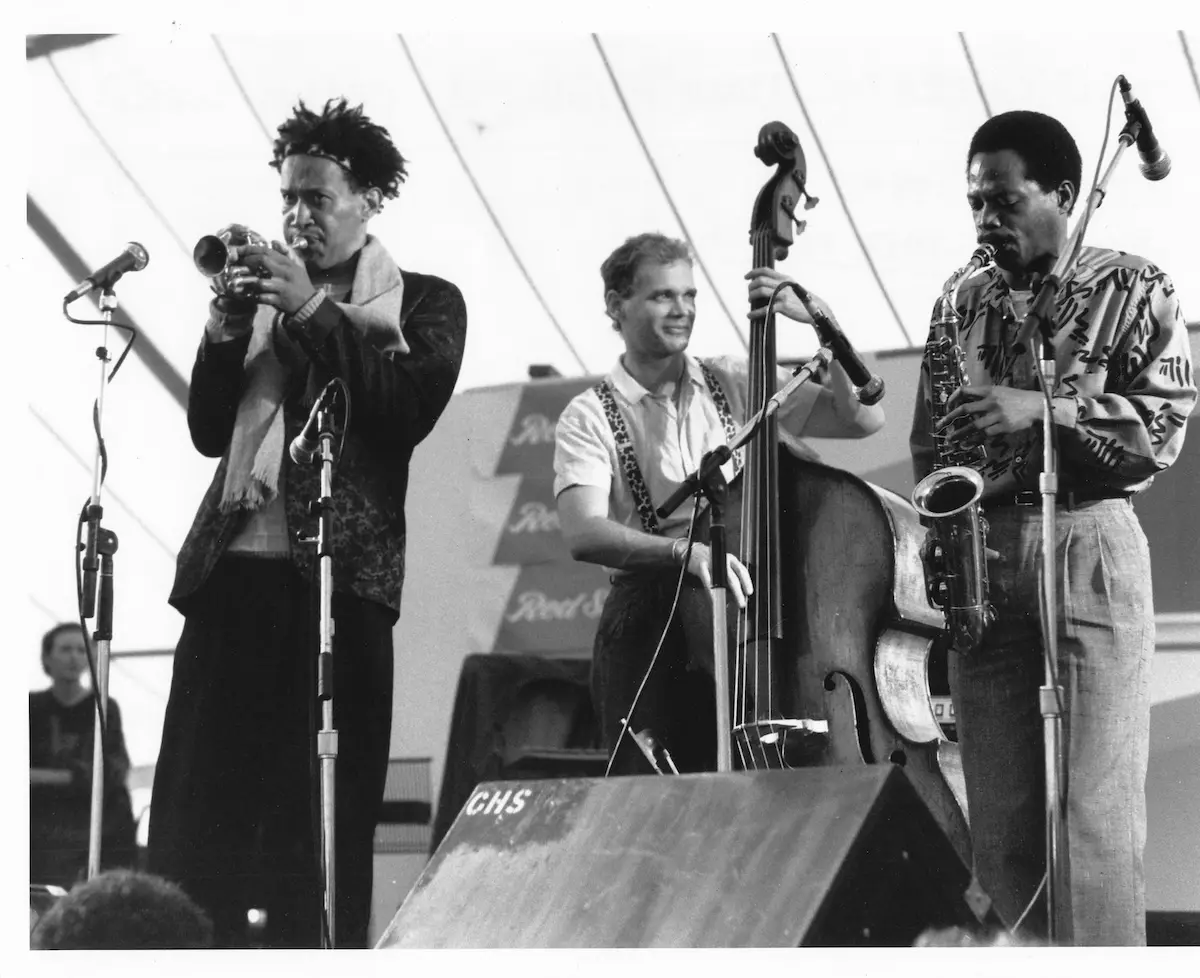
The international jazz community has received a historic archival release with the first global distribution of The Third World-Underground, a legendary 1972 live performance featuring pianist Dollar Brand—later known as Abdullah Ibrahim—alongside trumpeter Don Cherry and saxophonist/flutist Carlos Ward. Originally issued in 1974 exclusively in Japan through Trio Records, a label renowned among collectors for its discerning curation during the vinyl boom of the 1970s and 1980s, the recording preserves a vital milestone in the evolution of free-flowing avant-garde jazz. Recorded live at the renowned Jazzhus Montmartre in Copenhagen on November 14, 1972, the album captures three distinct musical visionaries at the height of their creative powers, bridging the gap between traditional African motifs, American bop heritage, and European free jazz sensibilities.
The release marks a significant moment for jazz historians and modern collectors alike. While Dollar Brand formally converted to Islam four years prior to this recording, adopting the name Abdullah Ibrahim, the 1974 Trio pressing credited him under his birth name, a nomenclature preserved in this new international reissue via Wewantsounds (catalog number WWSCD125). The physical and digital availability of this 40-minute performance brings long-overdue light to a collaborative chemistry that has largely existed as folklore among dedicated avant-garde enthusiasts.
Historical Context and Background of the 1972 Copenhagen Summit
To understand the weight of The Third World-Underground, one must examine the geopolitical and cultural landscape of jazz in the early 1970s. The global jazz ecosystem was undergoing a profound decentralization. American artists, facing shifting commercial trends and systemic racism at home, increasingly found receptive audiences, institutional support, and creative freedom in European cultural capitals. Copenhagen, anchored by venues like the Jazzhus Montmartre, functioned as a vital European hub for expatriate and touring American jazz innovators.
By November 1972, each of the trio’s members had carved out a distinct and influential path within modern improvised music:
- Dollar Brand (Abdullah Ibrahim): Born in Cape Town, South Africa, Brand had already established himself as a singular voice who synthesized the church hymns, traditional African rhythms, and jazz idioms of his homeland with the sophisticated harmonic architectures of Duke Ellington and Thelonious Monk. His fiercely individualistic piano style relied on percussive left-hand grounding and hypnotic, cyclical melodic cells.
- Don Cherry: A towering figure of the 1960s avant-garde, Cherry’s work alongside Ornette Coleman helped fracture conventional harmonic boundaries. Known for his pocket trumpet and expansive vocabulary, Cherry was a pioneer of global fusion, effortlessly integrating World music traditions into free improvisation.
- Carlos Ward: A versatile alto saxophonist and flutist whose career was significantly defined by his long-standing association with Brand. Ward possessed the technical acuity to navigate complex modal structures while maintaining an organic, blues-drenched lyricism.
The convergence of these three artists at the Jazzhus Montmartre was not merely a pickup band assembled for a single evening; it was a collision of kindred spirits exploring the concept of "Third World" consciousness—a cultural and political awakening that sought to unite diasporic artistic expressions outside the dominant Western commercial framework.
Chronological Breakdown of the Performance
The 40-minute concert plunges the listener immediately into the kinetic energy of the room, dispensing with standard warm-ups or expository introductions.
The set commences with Don’s Song, a composition by Cherry. Brand enters in full stride, hammering out a bold, uncompromising theme. Cherry responds in his signature fashion, unfurling two distinct solos. The second solo is particularly notable for its extended tones, punctuated by the trumpeter’s characteristic flutters and microtonal inflections. In a manner typical of the ensemble’s spontaneous fluidity, this high-intensity piece is abruptly halted to make way for Brand’s composition, Cherry.
Cherry functions as a medium-tempo meditation. Brand anchors the rhythmic and harmonic space with a hypnotic, repetitive figure that provides a steady foundation for the horns. Both Cherry and Ward lean into a relatively melodic route, demonstrating their deep respect for song form before engaging in a dynamic call-and-response dialogue with Brand’s keyboard.
The momentum shifts with Bra Joe From Kilimanjaro, a showcase for Brand’s formidable left hand. Serving as the rhythmic and harmonic rock of the piece, Brand’s piano work here is imbued with heavy blues undertones, percussive accentuations, and expansive harmonic excursions. True to the evening’s mercurial pacing, the performance executes another rapid transition into Jabulani-Easter Joy. Its jagged, angular opening serves as a launching pad for Cherry and Ward to engage in sharp, telepathic sparring built around the central theme.
The set concludes its shorter-form explorations with vocal contributions integrated into Waya-Wa-Egoli and Swazi. These tracks, alongside the stately, dignified lines of Wayeah-Wayeah-O—composed by Victor Ndilzwana rather than Brand, despite fitting seamlessly into the pianist’s aesthetic ecosystem—demonstrate the ensemble’s commitment to vocalized instrumentalism and ancestral reflection.
Track Listing and Technical Specifications
- Album The Third World-Underground
- Artists: Dollar Brand (piano, vocals); Don Cherry (trumpet, vocals, percussion); Carlos Ward (alto saxophone, vocals, percussion)
- Recorded: Jazzhus Montmartre, Copenhagen, Denmark, November 14, 1972
- Original Label: Trio Records (1974)
- Current Reissue Label: Wewantsounds (WWSCD125)
- Total Duration: 40:03
- Track List:
- Don’s Song
- Cherry
- Bra Joe From Kilimanjaro
- Jabulani-Easter Joy
- Waya-Wa-Egoli
- Swazi
- Wayeah-Wayeah-O
James Chadwick: Walrws
While the archival release of Dollar Brand offers a portal into the historical vanguard of jazz, contemporary ensembles continue to grapple with the age-old tradition of transforming popular song forms into vehicles for improvisation. Since the dawn of sound recording, jazz musicians have continuously trolled the commercial marketplace for pop material, applying varying degrees of surgical adjustment—ranging from subtle harmonic re-coloring to total structural deconstruction that renders the source material nearly unrecognizable.
Guitarist James Chadwick and his quintet enter this crowded stylistic lineage with Walrws, an album explicitly framed around the concept of "60s Pop Classics with a Jazz Twist." Out of the 13 selections comprising the 69-minute run time, seven are compositions by John Lennon and Paul McCartney. The remaining tracks draw from an immediately recognizable pool of 1960s popular culture, familiar even to casual listeners. The stated objective is ambitious: to rework, reharmonize, and imprint a personalized jazz sensibility onto foundational pop milestones that have already been visited by countless predecessors.
Critical Analysis and Ensemble Dynamics
Despite the familiarity of the source material, the execution on Walrws encounters substantial artistic hurdles. Led by Chadwick—who handles guitar duties and arrangements alongside Mark Sambell on piano, Aidan Thorne on bass, Liz Exell on drums, and Josh Heaton on tenor saxophone—the quintet struggles to consistently elevate the chosen source material beyond standard tribute-band territory.
Recorded over a two-day span in Abergavenny on September 3 and 4, 2025, and released via 33 Records (catalog number 33JAZZ321), the album exhibits a distinct lack of momentum in its ensemble passages. While the ambition to recontextualize canonical pop writing is clear, the resulting arrangements frequently sound cautious. The rhythm section lacks the driving forward momentum required to propel jazz-pop crossovers into engaging territory, while the soloing across the board tends to follow predictable, routine contours. Furthermore, when the core melodies are stated, they often lack the boldness and distinct interpretive authority necessary to make the listener forget the original recordings.
In an era where reimagining pop catalogs has been executed with breathtaking audacity by artists ranging from Brad Mehldau to The Bad Plus, Chadwick’s quintet relies on safer, more conventional harmonic choices. The interplay between piano and guitar occasionally hints at deeper texture, but the rhythm section’s overall reluctance to subvert the underlying pop structures limits the music’s potential reach.
Packaging and Track Sequencing Discrepancies
Adding to the critical reception of the physical release, reviewers have noted infrastructural oversight in the product’s presentation. The physical packaging of the CD features untidy and erratic track listings and spelling inconsistencies. For the sake of archival accuracy and critical clarity, the correct titles as they appear on the recording are listed below, correcting the orthographic errors found on the manufacturer’s original CD case.
Technical Specifications and Complete Track Listing
- Album Walrws
- Artist: James Chadwick Quintet
- Personnel: James Chadwick (guitar, arrangements); Mark Sambell (piano); Aidan Thorne (bass); Liz Exell (drums); Josh Heaton (tenor saxophone)
- Recorded: Abergavenny, September 3–4, 2025
- Label: 33 Records (33JAZZ321)
- Total Duration: 69:44
- Track List:
- I Am The Walrus (listed on release packaging as I Am The Walrys)
- Stand By Me
- Eleanor Rigby
- Daydream Believer
- Sound Of Silence
- Mr. Tambourine Man
- Blackbird
- Penny Lane
- God Only Knows
- Fool On The Hill
- I Feel Fine
- Strawberry Fields Forever
- Walk On By