Aveline Kirana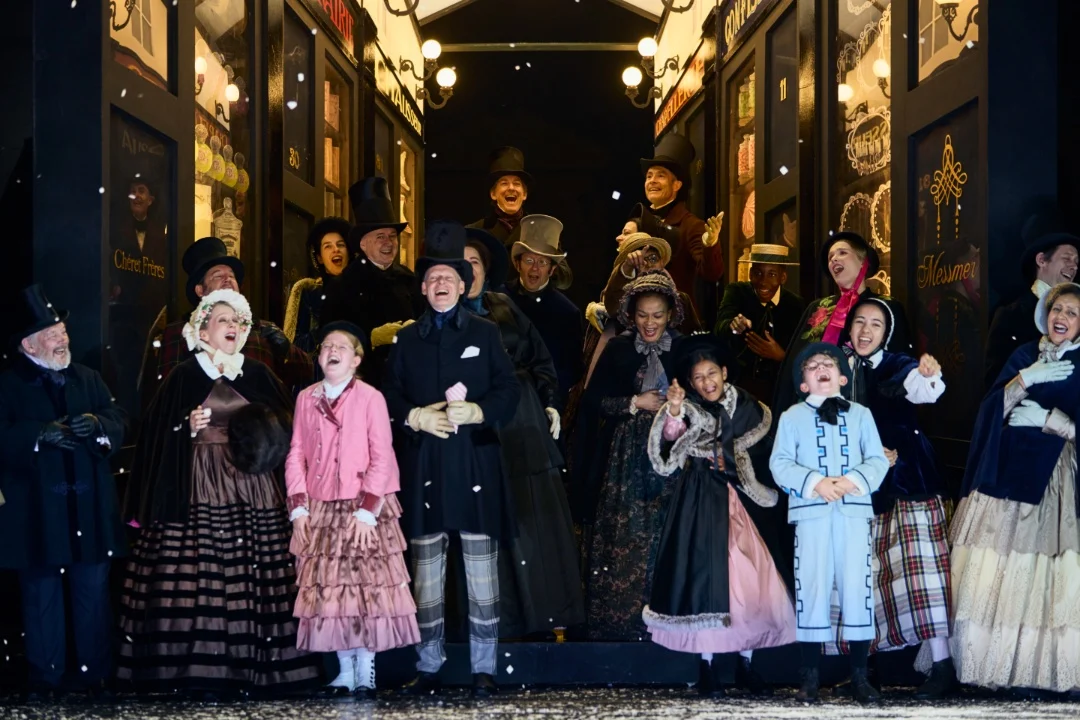
London, UK – [Current Date] – Richard Jones’s celebrated production of Giacomo Puccini’s enduring masterpiece, "La Bohème," is currently gracing the stage of the Royal Opera House at Covent Garden for its eighth revival, presenting a visually striking and vocally compelling experience. While undeniably a magnificent artistic achievement, this iteration of the beloved opera is not without its eccentricities, most notably a series of unconventional stage transitions that, for some audience members, disrupt the immersive theatrical illusion.
The production, first premiered in 1999, has become a staple of the Royal Opera House’s repertoire, lauded for its innovative staging and powerful interpretations. This latest run, however, continues to spark debate regarding its unique approach to set changes, a hallmark of Jones’s distinctive directorial style.
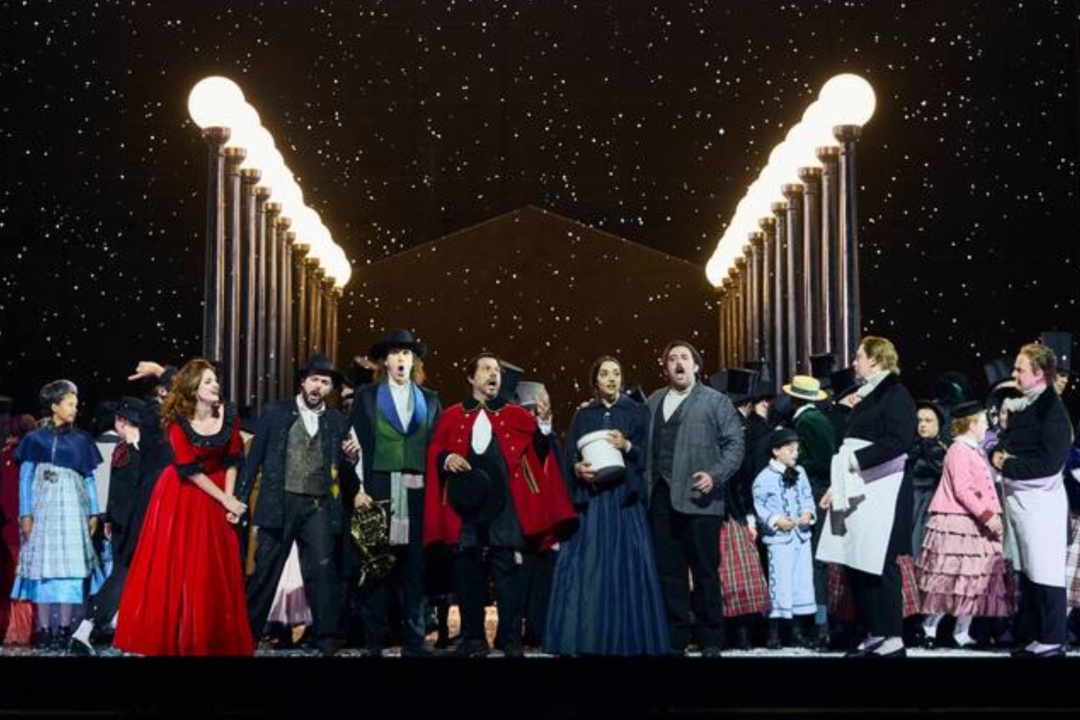
The Bohemian Garret: A Modernist Reimagining
Set designer Stewart Laing’s vision for the Parisian garret, the Bohemian protagonists’ humble abode, is a departure from traditional portrayals. Instead of a cramped, impoverished attic, the space is rendered as a clinically immaculate, ultra-modern loft conversion. Awkward crossbeams and an abundance of bright, almost harsh, stage lighting characterize this interpretation. This choice, while visually arresting, presents a curious juxtaposition with the opera’s narrative of impoverished artists struggling to make ends meet, barely able to afford a candle. The lighting, in particular, draws attention to itself, creating an ironic contrast when characters like Rodolfo and Mimì are depicted searching for a dropped key by mere moonlight, their candles extinguished. The poetic lyricism of Rodolfo’s "O soave fanciulla," invoking the soft glow of moonlight, is somewhat undercut by the pervasive, almost blinding, artificial illumination.
Unconventional Set Changes: A Disruptive Choice
The most contentious aspect of this production, and one that has consistently drawn criticism, lies in its approach to scene changes. At the conclusion of Act I, as Rodolfo and Mimì depart for the Latin Quarter, the entire garret set is visibly wheeled away by stagehands. This process is repeated at the end of Act III, where the set from that act is removed to make way for the return of the wooden garret for the final act. These transitions occur in full view of the audience, a deliberate artistic choice by the creative team.
The rationale behind this "exposed stagecraft," as some might term it, is often attributed to a desire to remind the audience of the theatrical artifice, thereby demystifying the performance and preventing complete immersion in a strictly realistic world. However, this reviewer, and potentially many in the audience, find that these lengthy, mechanically executed, and publicly displayed transitions detract significantly from the operatic magic and the emotional arc of the performance. The seamless flow of narrative and emotional engagement is, arguably, compromised when the inner workings of the theater are so overtly revealed. While the intent may be to enhance the appreciation of the theatrical process, the practical effect can be a jarring interruption to the dramatic momentum.
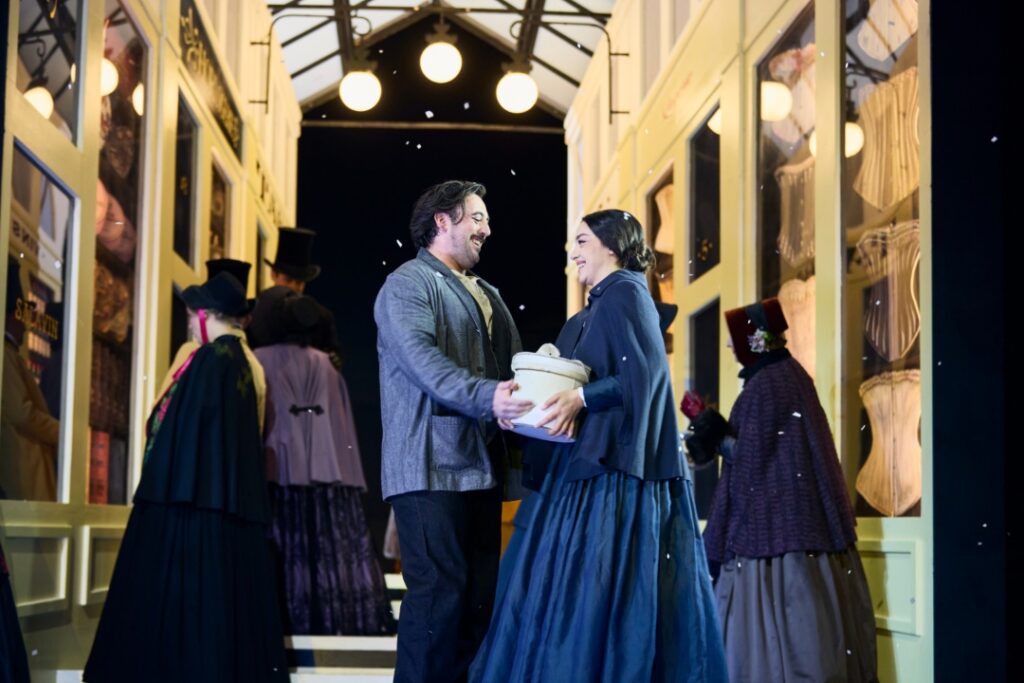
Act II: A Visual Masterpiece
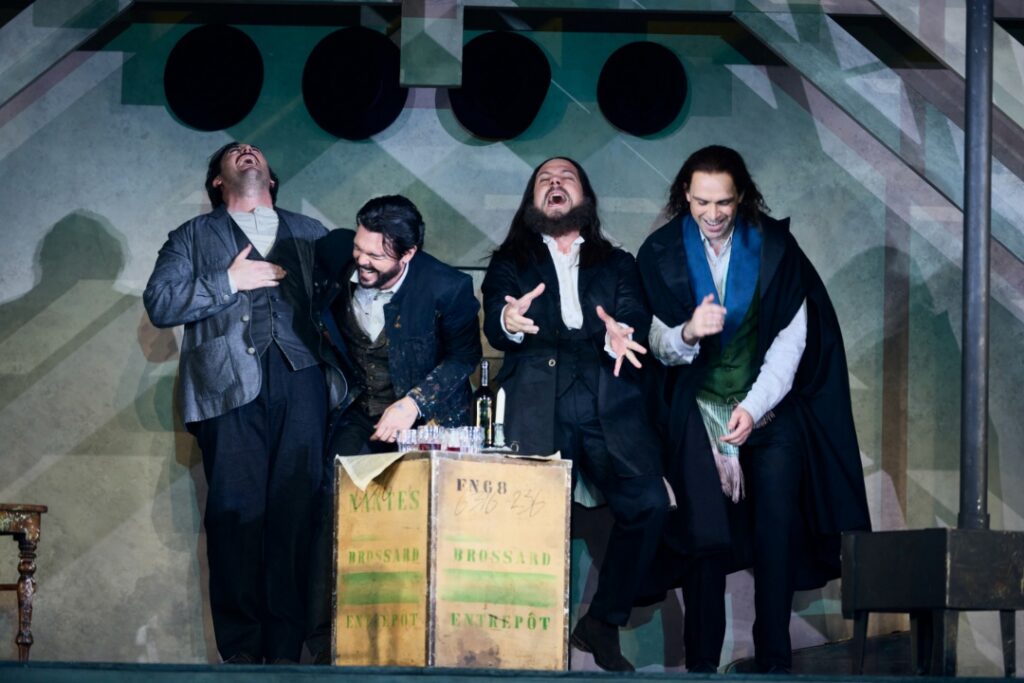
Despite the reservations regarding set transitions, Act II of the production emerges as a significant triumph. Stewart Laing’s design for this act is a testament to ingenuity and visual splendor. A series of mobile, three-dimensional constructions depicting Parisian shopping arcades are masterfully employed. These elements transition with remarkable fluidity, seamlessly revealing the bustling scene at the Café Momus. The act is a vibrant tapestry of color and dynamism, a visual feast for the eyes. Much of this success can be attributed to the revival movement director, Danielle Urbas, whose work imbues the scene with life and energy.
A notable enhancement in this revival is the increased prominence given to the children. Instead of mere background figures, they are integrated more fully into the action, particularly during the appearance of the toy seller Parpignol. Similarly, the military marching band, often a perfunctory addition in other productions, is effectively utilized here to amplify the overall performance. These thoughtful touches elevate Act II beyond a simple set piece, making it a truly engaging and memorable segment of the opera.
Vocal Prowess and Dramatic Depth: The Principals Shine
This revival sees a stellar cast delivering performances of exceptional caliber. In previous iterations of this production, critiques have sometimes focused on directorial choices or the artists’ interpretations. However, this time around, both the direction and the performers have reached a remarkable level of adeptness.
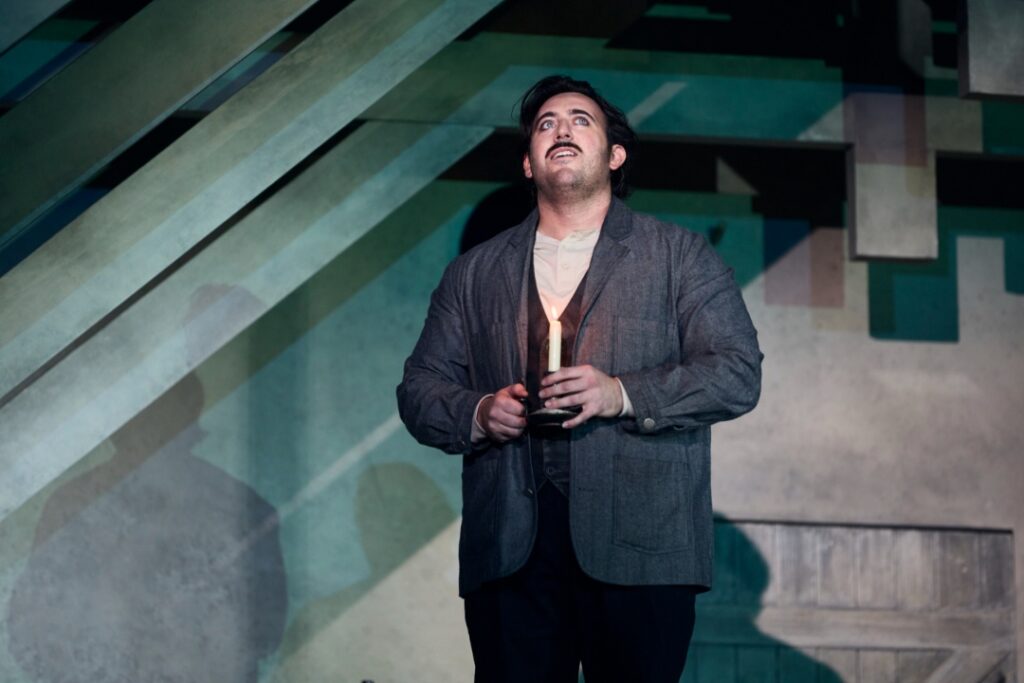
Freddie De Tommaso as Rodolfo: A Romantic Ideal
Freddie De Tommaso takes on the challenging role of Rodolfo, the romantic poet. While his vocal abilities are beyond question, his portrayal transcends mere technical proficiency, delving into the emotional core of the character. De Tommaso, known for his powerful performances as Cavaradossi and Pinkerton, brings a nuanced sensitivity to Rodolfo. His initial encounter with Mimì, where she collapses, is rendered with both charm and a touch of comical bewilderment as he utters, "Ed ora come faccio?" (Now what?), eliciting genuine mirth from the audience.
His performance in Act III is particularly poignant. His exchange with Mimì after her departure, conveying genuine hurt in his question, "Dunque è proprio finita?" (Is it truly over then?), avoids the common pitfall of many tenors who inflect this line with a mocking tone. De Tommaso imbues it with palpable anguish. His rendition of "Che Gelida Manina" is technically flawless, with the soaring "La Speranza" note ringing with beautiful clarity. The love duet is enchanting, but his final act duet with Marcello, "O Mimì, tu più non torni," is exceptionally moving, infused with a wistful timbre and a frequent, almost imperceptible, glottal sob that lends his delivery conviction, sentiment, and profound passion.
The final act, fraught with tragedy, provides De Tommaso with ample opportunity to showcase his dramatic prowess. He avoids melodrama, instead delivering a performance of profound emotional truth. As Mimì sings her final lines, he is visibly overcome with emotion. Upon discovering her death, his violent rejection of his consoling friends, and his desperate cradling of her lifeless form, are heart-wrenching and deeply affecting. This reviewer confesses to shedding tears, a testament to the power of his portrayal, a feat not easily achieved even after numerous viewings of "La Bohème." De Tommaso’s confession of having also been genuinely moved to tears after the performance underscores the profound emotional impact of Puccini’s score and the persuasive artistry of his Mimì.
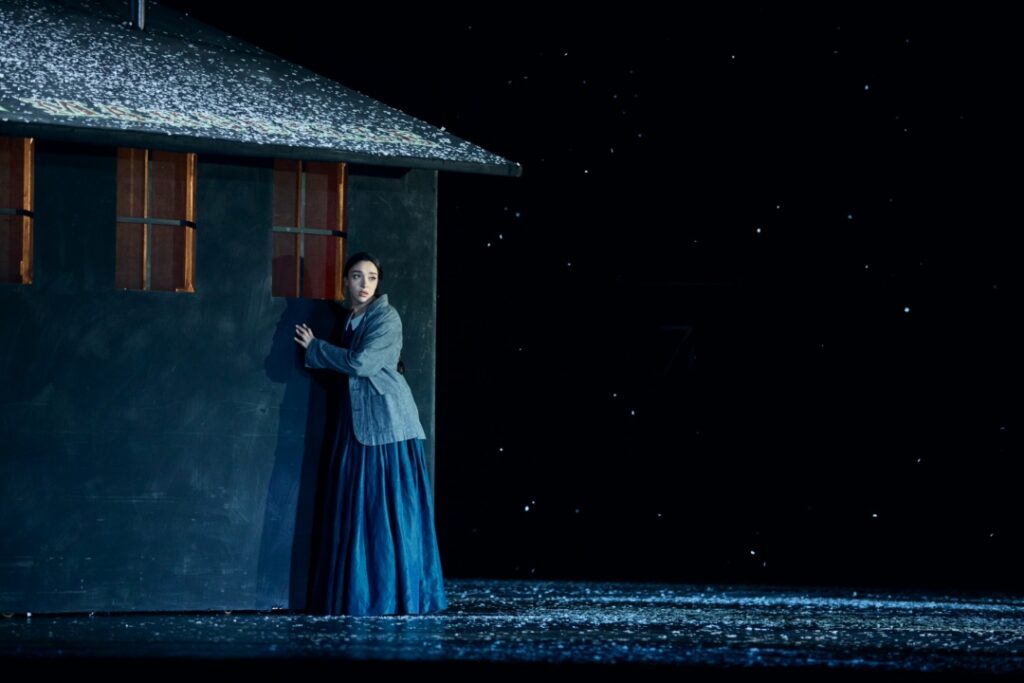
Juliana Grigoryan as Mimì: A Tender Portrayal
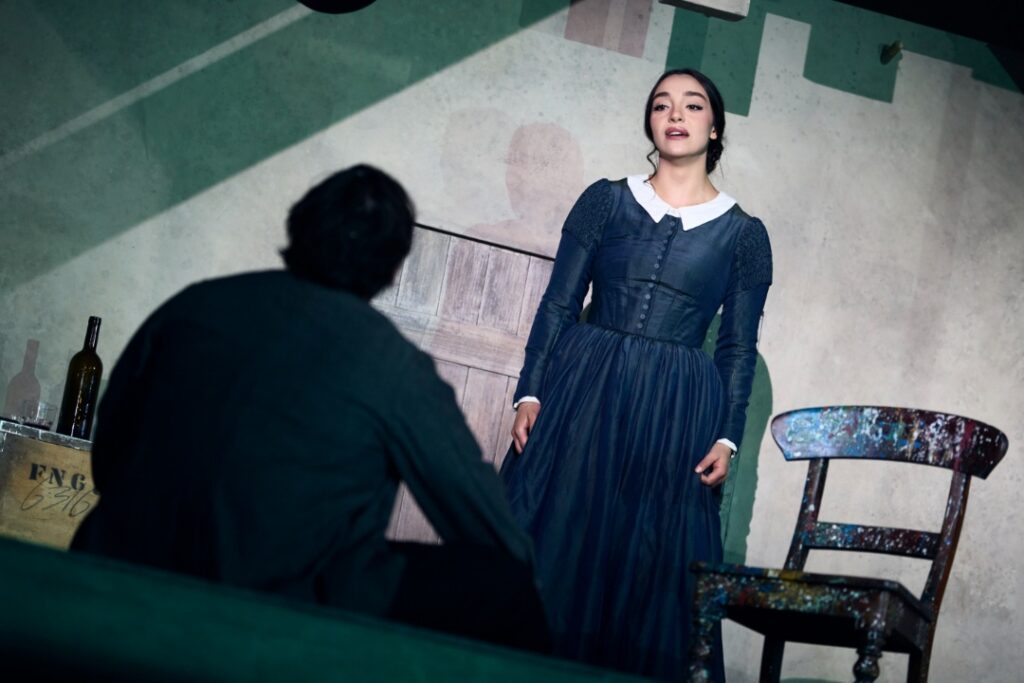
Juliana Grigoryan, a rising star since her Operalia win, embodies Mimì with exquisite vocal richness and dramatic vulnerability. Her warm, caressing tones in the middle register effortlessly ascend to high notes with precision, often producing ethereal sotto voci and diminuendos. Her vocal performance is matched by her expressive eyes, which convey intense emotion. Grigoryan carries herself with a convincing fragility, and crucially, her palpable connection with De Tommaso’s Rodolfo forms the bedrock of a believable and deeply affecting romance.
Her signature aria, "Sì. Mi chiamano Mimì," is exemplary. The line "che parlano d’amor, di primavere" is delivered with a soaring beauty, floating an exquisite celestial note on "primavere." Similarly, her rendition of "ma quando vien lo sgelo" is nothing short of supernal. In Act III, her "Addio… Dove lieta uscì" is particularly evocative, her forlorn appearance commanding empathy. The final line, "Addio, senza rancor," is sung with a sublime, soft timbre, the sustained "rancor" held transcendentally. Her contribution to the heart-rending beauty of the final act, particularly her whispered "Sono andati?" (Are they gone?), was a significant factor in the emotional impact of the performance. Grigoryan’s Mimì is, arguably, the definitive interpretation of the character.
A Supporting Cast of Brilliance
The ensemble cast further elevates this production, with each member delivering memorable performances.
Marina Monzó as Musetta: A Charismatic Force
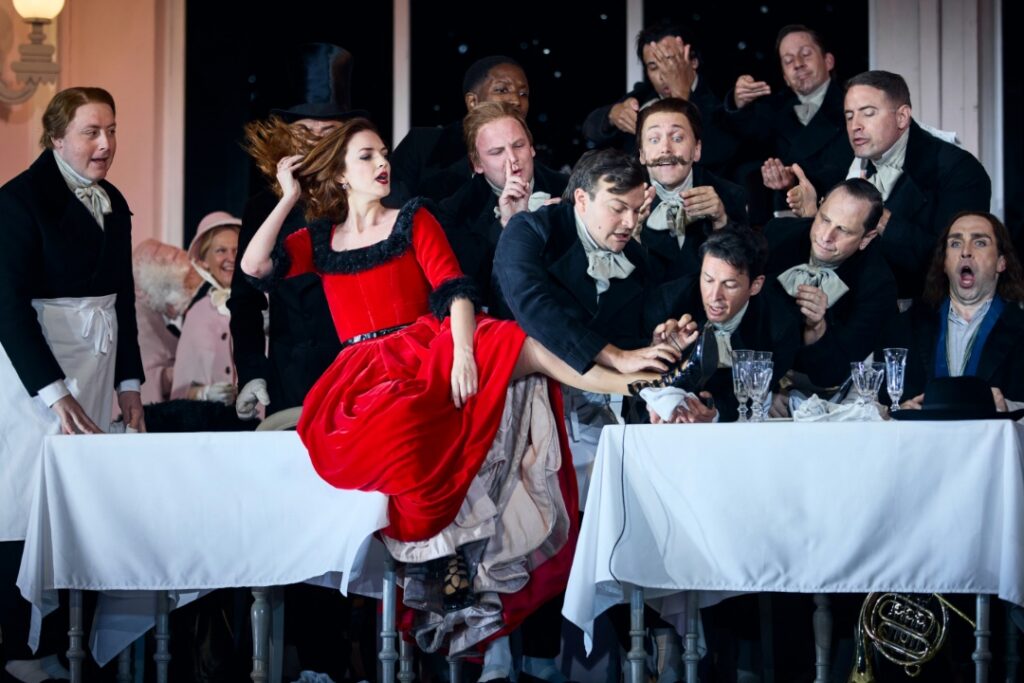
Spanish soprano Marina Monzó is a revelation as Musetta. Her performance is a captivating blend of humor and ebullience, radiating audacious charisma from her very first entrance. She is the undeniable lifeblood of Act II, exuding an irresistible charm even in her inebriated state. Her daring descent from table to table, culminating in the shedding of her silk undergarments onto Marcello’s head, is a moment of unforgettable theatricality. Her rendition of "Quando m’en vo’" is supremely sung, with the line "Ma ti senti morir!" delivered with a deliciously floated messa di voce. Monzó masterfully navigates Musetta’s contrasting facets, moving from her suitably antagonistic role in Act III’s squabble with Marcello to a sublimely angelic figure in the final act, leading the prayers for Mimì. This debut at the Royal Opera House has undoubtedly secured her future engagements.
Luca Micheletti as Marcello: A Mature Portrayal
Luca Micheletti, who previously impressed as Marcello at the Met, delivers an even more compelling performance in London. His singing is characterized by a wonderful, opulent limpidity and an incisive, dark tone. He commands the stage with authority, whether resisting Musetta’s advances in Act II, waxing lyrical on love and relationships in Act III, or delivering a meltingly resplendent duet with Rodolfo in the final act. His impressive breath control and dynamic stage presence are notable.
Modestas Sedlevičius as Schaunard: A Flamboyant Characterization
Latvian baritone Modestas Sedlevičius brings a delightful flamboyance to Schaunard. He bounds onto the stage with an infectious energy, hamming it up with his tales of acquiring food and drink for his bohemian companions. His performance in Act II is particularly lively, featuring dancing and heel clicks amidst the marching band. He sings with a polished, powerful instrument, exuding finesse that belies his outwardly clumsy and haphazard character.
Gianluca Buratto as Colline: A Bass of Remarkable Power
Gianluca Buratto’s portrayal of Colline is, in this reviewer’s estimation, the finest he has ever witnessed live. As a bass, Buratto possesses an astonishing reverberation and a remarkable, oaken, and sonorous tone. His rendition of the famous overcoat aria, "Vecchia zimarra," is a testament to his gifts. This aria, often challenging for basses to project adequately throughout a large auditorium, is delivered by Buratto with ease and unquestionable beauty, filling the space with a resonant sound that earned him hearty applause.
Supporting Roles: Benoît and Alcindoro
Eddie Wade’s portrayal of the licentious landlord Benoît is perfectly pitched, embodying the character with the demeanor of a Victorian gentleman and singing with crystal-clear diction and authority. Freddie Tong, as Alcindoro, Musetta’s embarrassed chaperone, also delivers a fitting performance.
Musical Excellence and Directional Triumphs
The Royal Opera Chorus, as expected, is magnificent, not only in their vocal contributions but also in their wholehearted acting. The children of the Youth Opera Company, under the guidance of the revival team, are a particular delight, demonstrating greater involvement and polish than in previous stagings.
Conductor Lorenzo Passerini masterfully guides the orchestra, coaxing out a magical performance. His judicious use of elongated pauses at key moments enhances the impact of the arias and ensembles. One of the most cherished moments of the opera, a wordless orchestral passage in the final act where three of the opera’s leitmotifs are interwoven as Rodolfo realizes Mimì is awake, is rendered under Passerini’s baton with heavenly beauty. This is, for this reviewer, among Puccini’s finest compositional passages.
The Power of Revival Direction
This production serves as a powerful example of how effective revival direction can transform an existing staging. While the original director, Richard Jones, conceived the initial vision, the contributions of revival director Simon Iorio, along with assistants Talia Stern and Ashley Pearson, have clearly elevated the production to new heights. The natural, authentic chemistry between the principal characters is palpable, making even the characters’ scribblings on the garret walls feel like natural expressions of youthful exuberance. The lewdness displayed by Musetta and Marcello in Act II and the boisterous ancillary characters in Act III all contribute to a more plausible and vibrant portrayal of the Barrière d’Enfer.
Ultimately, this iteration of "La Bohème" at Covent Garden is a triumph. It is a production that, despite its unconventional approach to stage transitions, succeeds through its exceptional vocal performances, visually compelling design in Act II, and insightful revival direction that allows the emotional core of Puccini’s masterpiece to resonate powerfully. The cast and creative team have delivered a production that is both artistically ambitious and deeply moving.

![Sijya announces Leather and Brass [Retrofitted] EP, shares Do I Know [Rachika Nayar Edit]: Listen](https://empire-music.net/wp-content/uploads/2026/09/sijya-announces-leather-and-brass-retrofitted-ep-shares-do-i-know-rachika-nayar-edit-listen.webp)