 Reynand Wu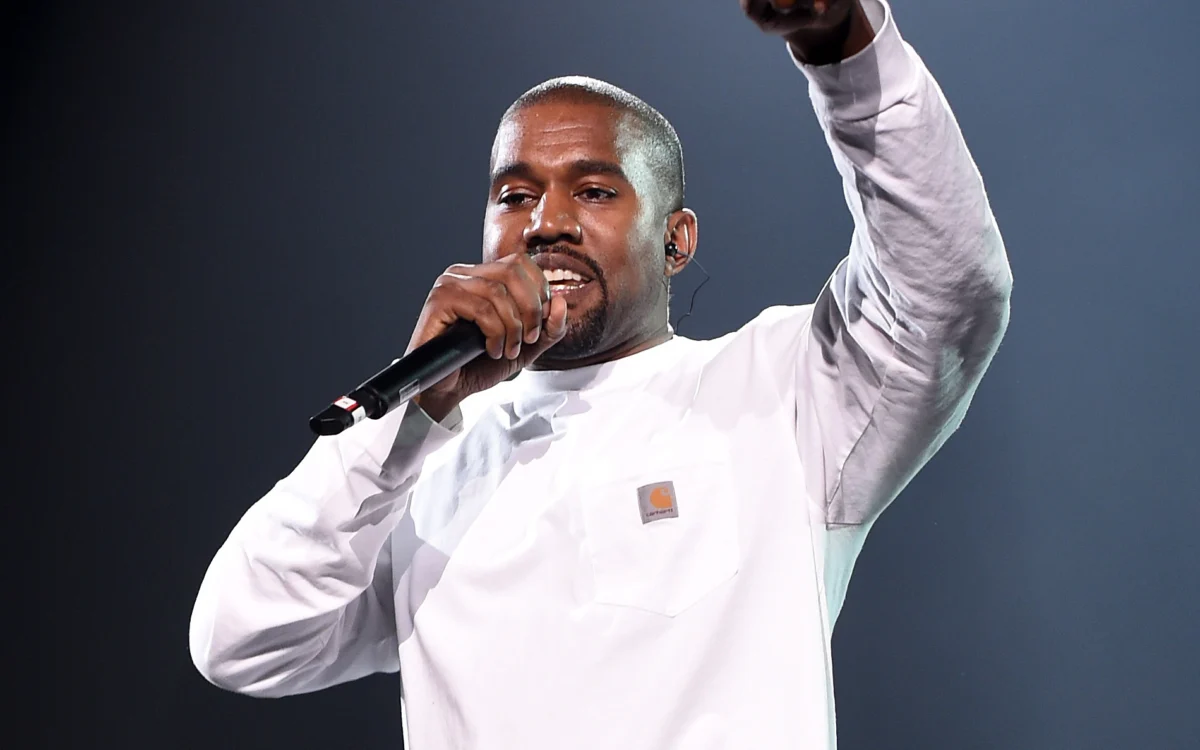
The ongoing discourse surrounding the Verzuz platform and the potential for a definitive, high-stakes soundclash reached a new peak this week when Kanye West addressed his own perceived invincibility in a competitive arena. During an unannounced appearance at the Hollywood Improv on Tuesday, April 7, the multi-hyphenate artist and producer definitively rejected the possibility of any contemporary artist successfully challenging his catalog in a hit-for-hit battle. When prompted by comedian Ocean Glapion regarding a potential worthy opponent, West’s response was characteristically concise: "Nobody."
This assertion, delivered with a signature smirk before an audience, serves as the latest chapter in a long-standing fan debate regarding which artist, if any, possesses a discography capable of standing toe-to-toe with the output of the Chicago-born icon. West’s confidence is rooted in the sheer volume and cultural ubiquity of his work, a catalog that has spanned over two decades and redefined the landscape of hip-hop and popular music.
The Context of the Hollywood Improv Appearance
The setting for West’s commentary was a comedy show hosted by Deon Cole, where the artist engaged in informal dialogue with Cole and Glapion. The appearance served as a rare, candid moment for West, who often navigates public discourse through social media or highly curated promotional cycles. Beyond his commentary on the Verzuz landscape, West offered updates on his creative output, specifically addressing the upcoming deluxe edition of his album Bully.
He further signaled a potential return to the skit-heavy interludes that defined his early career, jokingly inviting Deon Cole to record segments for the project. This gesture harks back to the influential work of DeRay Davis, whose contributions to The College Dropout and Late Registration became cultural touchstones, illustrating that while West remains focused on his current trajectory, he is acutely aware of the sonic identity that established his legendary status.
The Math Behind the Myth: Analyzing the Catalog
To understand the gravity of West’s claim, one must examine the empirical evidence of his discography. Since his 2004 debut, West has secured numerous number-one albums and a staggering collection of hits that have dominated global charts. During his recent sold-out performances at Inglewood’s SoFi Stadium, West showcased a marathon of tracks, yet the setlist notably omitted major commercial successes such as "Gold Digger" and "Touch the Sky."
The fact that West can curate a multi-hour performance while leaving out top-tier, Grammy-winning singles reinforces the argument that his "bench" of hits is deeper than most artists’ entire repertoires. In a Verzuz format, where participants are generally limited to 20 tracks, this depth provides a significant strategic advantage. Critics and fans often point to this surplus as the primary reason why a "fair" matchup is mathematically difficult to construct.
Chronology of the Verzuz Conversation
The concept of a "Kanye West Verzuz" has been a perennial subject of speculation since the platform, founded by Swizz Beatz and Timbaland, rose to global prominence in 2020.
- 2020-2021: As Verzuz became the definitive music event during the global pandemic, the internet began pairing West with various peers, most notably Drake.
- 2021: Swizz Beatz publicly stated that West was "ready" to face Drake in a battle. However, the project failed to manifest, largely due to the then-strained relationship between the two superstars.
- 2022-2024: Following the public resolution of the Drake-West rivalry, the conversation shifted toward the feasibility of a battle. Despite the thaw in relations, the logistical and ego-driven hurdles of such a massive production have kept it in the realm of hypothesis.
- 2025-2026: Recent discussions have shifted toward the legacy of the Watch the Throne era, with pundits comparing West’s solo work against the collaborative and solo catalogs of his mentor, JAY-Z.
The JAY-Z Factor and the Industry Consensus
While West dismisses all competition, the industry consensus remains split. The most frequently cited "worthy" adversary remains JAY-Z. The debate was recently revived on the Joe Budden Podcast, where a panel of experts analyzed the hypothetical showdown. The argument for JAY-Z relies on the strength of his "lead" tracks—the songs that carry the weight of an entire career—while the argument for West relies on the sheer density of his production and the evolution of his sound.
Antwan "Ish" Marby, representing the pro-West contingent, argued that while JAY-Z holds the title of the "greatest rapper ever," West’s catalog is better suited for the high-energy, hit-driven nature of a Verzuz battle. Conversely, commentators like B.Dot Miller and Joe Budden have maintained that in a pure head-to-head of career-defining hits, JAY-Z’s track record is peerless. This ongoing debate underscores the subjectivity of the format: is a Verzuz won on lyrical prowess, production value, or the sheer number of times a stadium audience sings along?
Broader Implications for the Verzuz Platform
Kanye West’s dismissal of the Verzuz format is not merely a statement of personal ego; it reflects the platform’s current struggle to attract the industry’s absolute "Tier 1" legends. The format, which was designed to celebrate the catalogs of iconic artists, has occasionally struggled with the ego-based politics of the music industry.
If artists of West’s caliber feel that "nobody" can beat them, they are effectively removing themselves from the competitive ecosystem. This creates a ceiling for the platform, which relies on the perception of an "even match" to generate the hype required for its massive viewership. Should Verzuz fail to secure the participation of figures like West, Drake, or JAY-Z, it may remain a celebratory platform for legendary R&B and hip-hop acts rather than becoming the ultimate competitive arena for the genre’s biggest icons.
Analysis of Artistic Legacy
The claim of "no competition" highlights a critical shift in how artists view their own legacies. In the modern era, the "Greatest of All Time" (GOAT) conversation has moved away from objective sales metrics toward the influence of an artist’s sound and their ability to sustain relevance across multiple decades. West has managed to reinvent his sound from the soul-sample-heavy production of the early 2000s to the industrial and experimental electronic sounds of his later years.
This versatility is his greatest asset in a hypothetical battle. He is not just competing with other rappers; he is competing with his own history of genre-defying production. Whether or not he ever steps onto a Verzuz stage, his public declaration serves as a reminder of his confidence in the enduring power of his catalog. As he prepares to release the deluxe version of Bully, the industry will be watching to see if his new material can add to a collection of hits that he believes is already beyond challenge.
Ultimately, the debate remains unresolved because it is rooted in personal preference rather than statistical superiority. Until such a clash occurs, the "nobody" answer provided by West remains the final word in his own narrative—a testament to the unwavering self-belief that has propelled his career from the studios of Chicago to the heights of global superstardom.