
 Nayara Elvina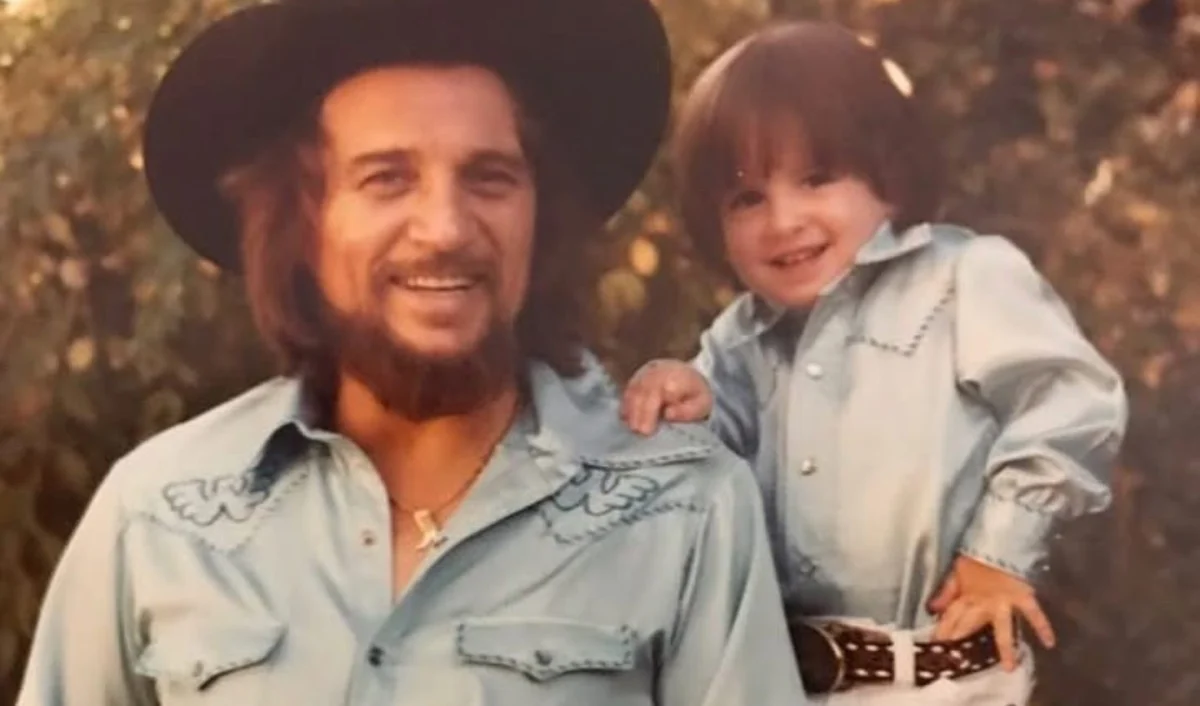
Waylon Jennings remains a cornerstone of American music, a central figure in the Outlaw Country movement that redefined the genre in the 1970s. However, behind the grit of his baritone voice and the rebellious spirit of his stage presence lay a profound and nearly ruinous struggle with substance abuse. For decades, Jennings was as famous for his drug consumption as he was for his chart-topping hits, at one point maintaining a cocaine habit that cost him upwards of $1,000 per day—a staggering sum by the standards of the late 1970s and early 1980s. The narrative of his eventual sobriety is not merely a tale of personal health, but a pivotal moment in country music history that allowed Jennings to reclaim his role as a father and preserve a musical legacy that continues to yield new discoveries decades after his passing.
The Economic and Physical Toll of the Outlaw Lifestyle
The "Outlaw" movement in country music was born from a desire for creative autonomy, as artists like Jennings, Willie Nelson, and Johnny Cash sought to break away from the rigid production standards of the Nashville establishment. This independence, while artistically fruitful, often coincided with a lifestyle of extreme excess. By the height of his career, Jennings’ addiction had become a defining characteristic of his daily existence.
Financial records and personal accounts from the era indicate that Jennings was spending approximately $365,000 annually on cocaine. When adjusted for inflation, this figure represents over $1.3 million in contemporary currency. This level of consumption was not an isolated phenomenon within his social circle; Jennings frequently noted that he and his close friend Johnny Cash were often caught in a cycle of mutual reinforcement regarding their drug use. The physical toll was equally severe, characterized by chronic sleep deprivation, erratic behavior, and a persistent state of being "scattered," a term Jennings frequently used to describe his inability to focus or remain present in the moment.
The Catalyst for Transformation: A Quiet Moment with Shooter
Despite the concerns of his wife, Jessi Colter, and the mounting financial pressures, the impetus for Jennings’ sobriety did not come from a medical crisis or a professional ultimatum. Instead, it was a quiet, domestic interaction with his young son, Shooter Jennings. In a 2001 interview for CMT Inside Fame, Jennings recounted a specific afternoon when a five-year-old Shooter sat beside him to color.
For over an hour, the child sat with his arm through his father’s, engaged in the simple task of drawing. For Jennings, this was a revelation. He realized that his constant state of intoxication had made such a simple, grounded connection impossible until that moment. The realization that his addiction was robbing his son of a present father served as the final straw. Jennings immediately approached Colter, declared his intention to quit, and handed over the remainder of his drug supply. The scene of Colter flushing the substances down the toilet while praising God marked the end of Jennings’ era of addiction and the beginning of a rigorous, self-imposed recovery process.
The Arizona Desert: A Radical Approach to Recovery
Unlike many of his contemporaries who sought professional help in clinical settings, Jennings chose a path that mirrored his "Outlaw" persona. Eschewing traditional rehabilitation centers or hospitals, he opted for a "cold turkey" approach. In 1984, Jennings cleared his professional calendar, cancelled all upcoming appearances, and retreated to a rented house in the Arizona desert.
This method of detoxification is widely regarded by medical professionals as dangerous, particularly for long-term users of high-dosage stimulants and other substances. The physical withdrawal process can lead to severe cardiovascular stress, psychological distress, and other life-threatening complications. However, Jennings’ resolve was absolute. He remained in the desert until the drugs were entirely out of his system and he felt he had regained control over his faculties. This period of isolation was successful; Jennings remained sober for the remainder of his life, a feat that allowed him to rebuild his career and, more importantly, his relationship with his family.
Shooter Jennings and the "Diamonds" Archival Project
The long-term impact of Jennings’ sobriety is currently being highlighted by his son, Shooter Jennings, who has become an accomplished musician and producer in his own right. Shooter recently appeared on CBS Sunday Morning to discuss his father’s legacy and the upcoming release of Diamonds, an archival album featuring never-before-heard recordings from the Waylon Jennings estate.
Shooter’s perspective on his father’s addiction is unique. Because Jennings achieved sobriety when Shooter was only five or six years old, the younger Jennings has no memory of the "scattered" version of his father. To him, Waylon was simply a "great dad" who had won a difficult battle. This lack of childhood trauma regarding his father’s substance abuse has allowed Shooter to approach his father’s musical archives with a sense of reverence rather than resentment.
The album Diamonds is scheduled for a physical release on November 13, with a digital streaming release following on December 11. The project is the result of years of meticulous work, as Shooter has spent considerable time in the studio restoring and mixing tapes that have sat in storage for decades. The title track, "Diamonds," features the legendary Glen Campbell on guitar, serving as a poignant reminder of the caliber of musicianship that defined Jennings’ inner circle.
Official Reactions and Broader Cultural Impact
The announcement of Diamonds and the candid discussions regarding Jennings’ sobriety have been met with significant interest from both the music industry and historians of American culture. Musicologists argue that Jennings’ decision to get clean in the mid-1980s was essential for the preservation of his voice and his later contributions to the Highwaymen—a supergroup consisting of Jennings, Willie Nelson, Johnny Cash, and Kris Kristofferson. Without his sobriety, the prolific output of the 1990s and the eventual preservation of his archives might never have occurred.
Shooter Jennings has stated that his primary motivation for the Diamonds project is to ensure that the public knows the man he knew—the sober, dedicated artist and father. "I want everybody to know the guy I know," Shooter remarked. "I feel like that should be my purpose in a way."
Chronology of Key Events
- 1970s – Early 1980s: Waylon Jennings becomes a leader of the Outlaw Country movement while struggling with a $1,000-a-day cocaine addiction.
- 1979: Shooter Jennings is born to Waylon Jennings and Jessi Colter.
- 1984: The turning point occurs during a coloring session with five-year-old Shooter. Jennings decides to quit drugs immediately.
- 1984: Jennings undergoes a self-imposed "cold turkey" detox in the Arizona desert.
- 1985 – 1995: Jennings experiences a career resurgence, forming the Highwaymen and continuing to record as a sober artist.
- 2001: Jennings reflects on his life and addiction in the CMT Inside Fame episode.
- February 13, 2002: Waylon Jennings passes away at age 64 due to complications from diabetes.
- 2024: Shooter Jennings announces the Diamonds archival project.
- November 13, 2024: Scheduled physical release of Diamonds.
- December 11, 2024: Scheduled streaming release of Diamonds.
Fact-Based Analysis of Implications
The story of Waylon Jennings’ recovery serves as a critical case study in the intersection of celebrity culture and substance abuse. It highlights the often-overlooked domestic catalysts for change that can outweigh professional or financial incentives. Furthermore, the technical work being done by Shooter Jennings on the Diamonds album underscores a growing trend in the music industry: the curation of "lost" archives by the children of legendary artists.
By taking the helm as producer, Shooter ensures that the integrity of his father’s sound is maintained while utilizing modern studio technology to bring the recordings to contemporary standards. The inclusion of Glen Campbell on the title track also serves as a historical document, capturing a moment of collaboration between two titans of the industry during a period when Jennings was reclaiming his life and art.
Ultimately, the release of Diamonds is more than just a marketing event; it is the culmination of a journey that began in a living room with a box of crayons. Jennings’ choice to prioritize his role as a father over his addiction not only saved his life in the 1980s but allowed for the continued enrichment of the American musical canon in the 21st century. As fans await the full album, the narrative remains focused on the man behind the music—a man who proved that the most "outlaw" act of all was the courage to change for the sake of his family.