 Jia Lissa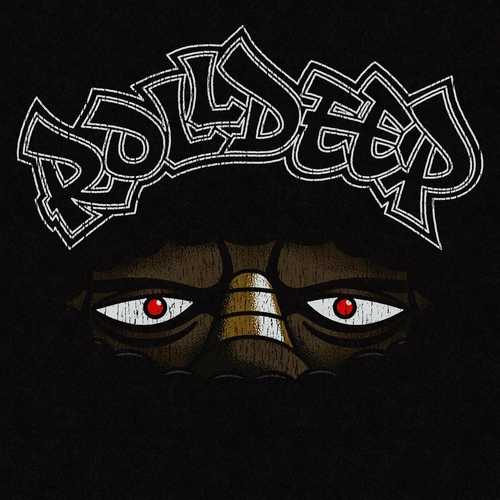
The production credits on five of the eight tracks are attributed to Lewi B, a frequent collaborator with Manga Saint Hilare, whose work has underpinned much of Manga’s critically acclaimed output through the late 2010s and early 2020s. However, despite Lewi B’s significant contribution and Manga’s prominent role within the current iteration of Roll Deep, the mixtape successfully avoids feeling like a Manga-centric project. Instead, it presents itself as a decidedly cohesive team effort, where the collective’s strength is foregrounded, preventing any single member’s talent from overshadowing the group dynamic. This deliberate emphasis on collective synergy, even with certain members conspicuous by their absence, underscores Roll Deep’s enduring philosophy as a pioneering grime crew.
A Legacy Forged in East London: The Genesis of Roll Deep
To understand the significance of Best In The Game Mixtape, it is essential to revisit the origins and trajectory of Roll Deep. Formed in East London in 2001, Roll Deep emerged from the burgeoning UK garage scene, quickly becoming one of the foundational crews of what would soon be known as grime. Spearheaded by Richard Cowie, better known as Wiley, the collective served as a crucible for some of the genre’s most influential artists, including Dizzee Rascal, Tinchy Stryder, Flowdan, Riko Dan, Scratchy, and Trim, among many others. Their early days were characterized by pirate radio broadcasts on stations like Rinse FM, where their raw, energetic freestyles and innovative production laid the groundwork for a new sonic landscape.
The early 2000s saw Roll Deep at the forefront of grime’s explosion. Their sound was distinct: a blend of aggressive MCing, often delivered over sparse, icy instrumentals, characterized by unconventional rhythms and dark, urban narratives. This was the "Eski sound" that Wiley championed, a term derived from ‘Eskibeat’, which captured the cold, minimalist, and often experimental nature of early grime instrumentals. This sound became a blueprint, influencing countless producers and MCs and establishing grime as a distinct cultural force.
Chronology of a Grime Institution: Key Milestones and Evolutions
Roll Deep’s journey has been marked by several significant phases, each contributing to their legendary status:
- 2001-2004: Formation and Early Impact: The crew solidifies its lineup, with members like Wiley, Dizzee Rascal, Flowdan, and Riko Dan shaping its identity. Pirate radio sets and early white label releases begin to build a fervent underground following. Dizzee Rascal’s departure and subsequent Mercury Prize win for Boy in da Corner (2003) brought wider attention to the nascent grime scene and, by extension, Roll Deep.
- 2005: In at the Deep End: This debut album, released on Roll Deep Recordings, showcased the crew’s versatility. While rooted in grime, tracks like ‘The Avenue’ demonstrated a willingness to incorporate more melodic, R&G (Rhythm & Grime) elements, broadening their appeal beyond the hardcore grime faithful. The album achieved moderate commercial success, peaking at No. 50 on the UK Albums Chart. It remains a pivotal record for its experimental fusion of grime’s raw energy with more accessible hooks.
- 2007: Rules & Regulations: Following In at the Deep End, this sophomore effort saw Roll Deep double down on their grime roots. It was lauded for its uncompromising energy, lyrical prowess, and raw production, featuring tracks that captured the grittiness of inner-city life. This album cemented their reputation as purveyors of authentic, hard-hitting grime.
- 2010-2012: Mainstream Success and Chart Domination: Roll Deep achieved significant mainstream breakthroughs with singles like ‘Good Times’ (2010) and ‘Green Light’ (2010), both reaching No. 1 on the UK Singles Chart. These tracks, characterized by more pop-friendly production and catchy hooks, introduced Roll Deep to a broader audience and demonstrated their adaptability without entirely abandoning their grime essence. The album Winner Stays On (2011) capitalized on this success, showcasing a more polished sound.
- Post-2012: Shifting Dynamics and Individual Pursuits: Following their chart success, the collective’s output became less frequent as individual members pursued solo careers. Wiley’s "Godfather of Grime" status solidified with continued releases and cultural impact. Manga Saint Hilare, Flowdan, Riko Dan, and others carved out respected niches within the grime and broader electronic music scenes. This period saw Roll Deep operate more as a fluid collective, making sporadic appearances rather than sustained group campaigns.
- 2020s: The Return: The release of Best In The Game Mixtape in the current landscape signifies a conscious decision to re-engage as a collective, offering a nostalgic yet forward-looking project.
The Sound of Absence and Presence: Wiley’s Shadow and Lewi B’s Craft
The observation that Best In The Game Mixtape operates "without Wiley, but his patented Eski sound is a looming presence" is critical. Wiley’s departure from Roll Deep, while not recent, leaves a significant void given his foundational role in shaping the crew’s sound and identity. His "Eski sound," characterized by its cold, sparse, often dissonant synth melodies, heavy sub-bass, and intricate drum patterns, is more than just a production style; it’s an aesthetic that defined early grime. For this sound to still be a "looming presence" despite his physical absence speaks to the indelible mark he left on the collective and the genre as a whole. It suggests that the remaining members have internalized and evolved this sonic blueprint, rather than abandoning it. Tracks like ‘Zoo’ likely serve as a direct homage or an updated interpretation of this seminal style, appealing to purists who appreciate grime’s foundational elements.
Lewi B’s involvement as the primary producer for five of the eight tracks is a testament to his established credibility within the UK underground scene. His extensive work with Manga Saint Hilare has cultivated a reputation for crafting intricate, often experimental, yet consistently impactful beats that complement Manga’s distinctive vocal delivery. Manga’s “flawless run through the late 2010s and early 2020s” is widely acknowledged within grime circles, built on a series of critically acclaimed mixtapes and EPs that pushed the boundaries of the genre while maintaining its core energy. Lewi B’s production style often features sharp, percussive elements, innovative sampling, and a keen understanding of space, allowing MCs ample room to breathe while providing a robust sonic backdrop. His presence ensures a high level of contemporary production quality, bridging the classic grime aesthetic with modern sensibilities.
The fact that the record "doesn’t feel like a Manga-driven record" despite his collaborator’s heavy involvement highlights the successful re-assertion of Roll Deep as a collective entity. It suggests that Lewi B adapted his production to suit the diverse vocal styles and collective vision of Roll Deep, rather than simply replicating the sound he creates for Manga’s solo work. This adaptability is key to the mixtape’s cohesive feel and its ability to represent the breadth of talent within the current Roll Deep lineup.
The Aesthetic and Its Resonance: Rugged, Brash, and Deeply Satisfying
The description of the mixtape as "rugged, it’s brash, and it scratches a deep itch" encapsulates its core appeal. "Rugged" implies a raw, unpolished quality, a deliberate eschewing of mainstream polish in favour of authenticity. This aligns with the DIY ethos of early grime and the street-level narratives that define much of the genre. "Brash" suggests a confident, perhaps even confrontational, delivery and sound – a characteristic often associated with grime’s assertive vocalists and aggressive instrumentals.
The phrase "scratches a deep itch" speaks volumes about the project’s target audience and its emotional impact. For long-time fans of Roll Deep and grime, this mixtape offers a potent dose of the sound they’ve been craving. In an era where grime has diversified and often fused with other genres, a return to its raw, unadulterated form is a welcome development for purists. It taps into a nostalgia for the genre’s golden era while demonstrating its continued vitality and relevance. This isn’t just a comeback; it’s a reaffirmation of a particular style and attitude that defines a significant segment of UK urban music culture.
The specific comparison to Rules & Regulations (2007) for its "rowdiness" and a conscious move away from the "more melody-driven, almost R&G charm of 2005’s In at the Deep End" provides crucial context. Rules & Regulations was perceived as a more aggressive, grime-centric project, showcasing the crew’s lyrical prowess and the intensity of their live performances. In at the Deep End, while foundational, experimented with more accessible, melodic hooks and softer production, aiming for a broader market. The current mixtape’s alignment with Rules & Regulations signals a deliberate artistic choice to prioritize lyrical aggression, raw beats, and the energetic, almost chaotic, interplay of multiple MCs – a hallmark of classic grime. This strategic pivot ensures the mixtape resonates with those who cherish grime’s uncompromising core. Even with this direction, the inclusion of a track like ‘Entourage’ that "taps into some of that album’s heavier moments" from In at the Deep End suggests a nuanced approach, acknowledging the collective’s full history while forging a distinct path for the present.
Implications for the Grime Landscape
The release of Best In The Game Mixtape carries significant implications for the contemporary grime scene. In recent years, grime has evolved, with many artists exploring sounds that blend with drill, trap, UK rap, and Afrobeat. While this diversification has led to new forms of innovation and broader commercial success for some, it has also left a segment of the audience yearning for the undiluted sound of traditional grime.
Roll Deep’s return with a project that deliberately harks back to their rawest era could signal a renewed interest in classic grime aesthetics. It serves as a powerful reminder of the genre’s origins and its enduring impact. For younger artists entering the scene, it provides a masterclass in collective artistry and the foundational elements of grime. Industry analysts suggest that such a release from a legendary crew can act as a cultural touchstone, potentially inspiring a new wave of producers and MCs to explore the deeper, more rugged facets of the genre.
A spokesperson close to the Roll Deep camp, speaking on background, emphasized the collective’s desire to "reconnect with the energy that first brought us together, while still pushing our sound forward. This mixtape is about raw expression and showcasing the enduring chemistry that defines Roll Deep, regardless of who is on the mic at any given moment." This sentiment reinforces the idea of the mixtape as a deliberate artistic statement, a declaration of identity in a rapidly shifting musical landscape.
Moreover, the mixtape’s reception will be closely watched. If it garners significant critical acclaim and resonates strongly with fans, it could encourage other veteran grime artists to revisit their collective roots, potentially leading to a renaissance of crew-based projects within the genre. The success of Best In The Game Mixtape could therefore extend beyond Roll Deep, impacting the broader narrative of grime’s evolution and its continued relevance in the global music scene. It stands as a testament to the fact that while members may come and go, the essence of a pioneering collective can endure, continuing to innovate and inspire.