Jia Lissa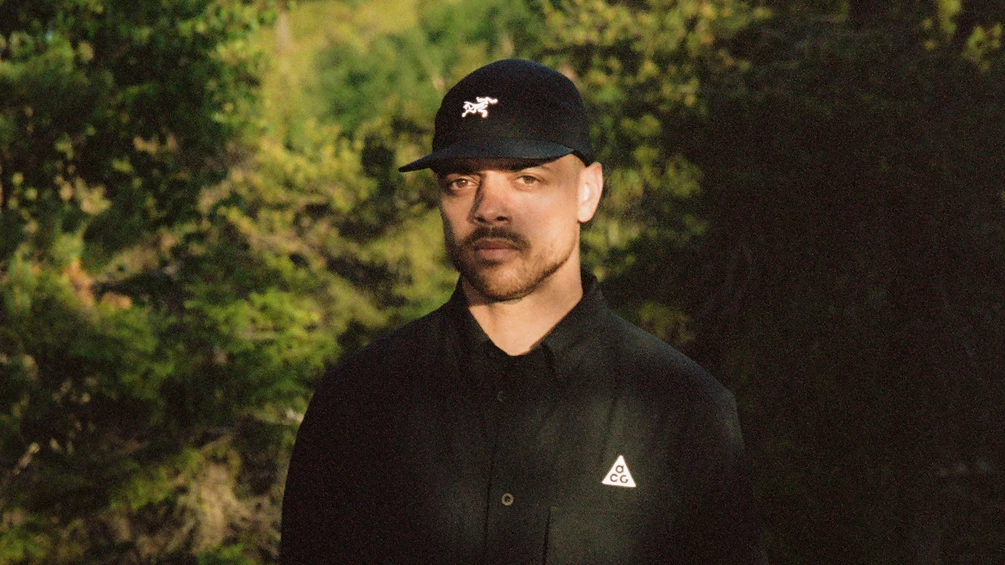
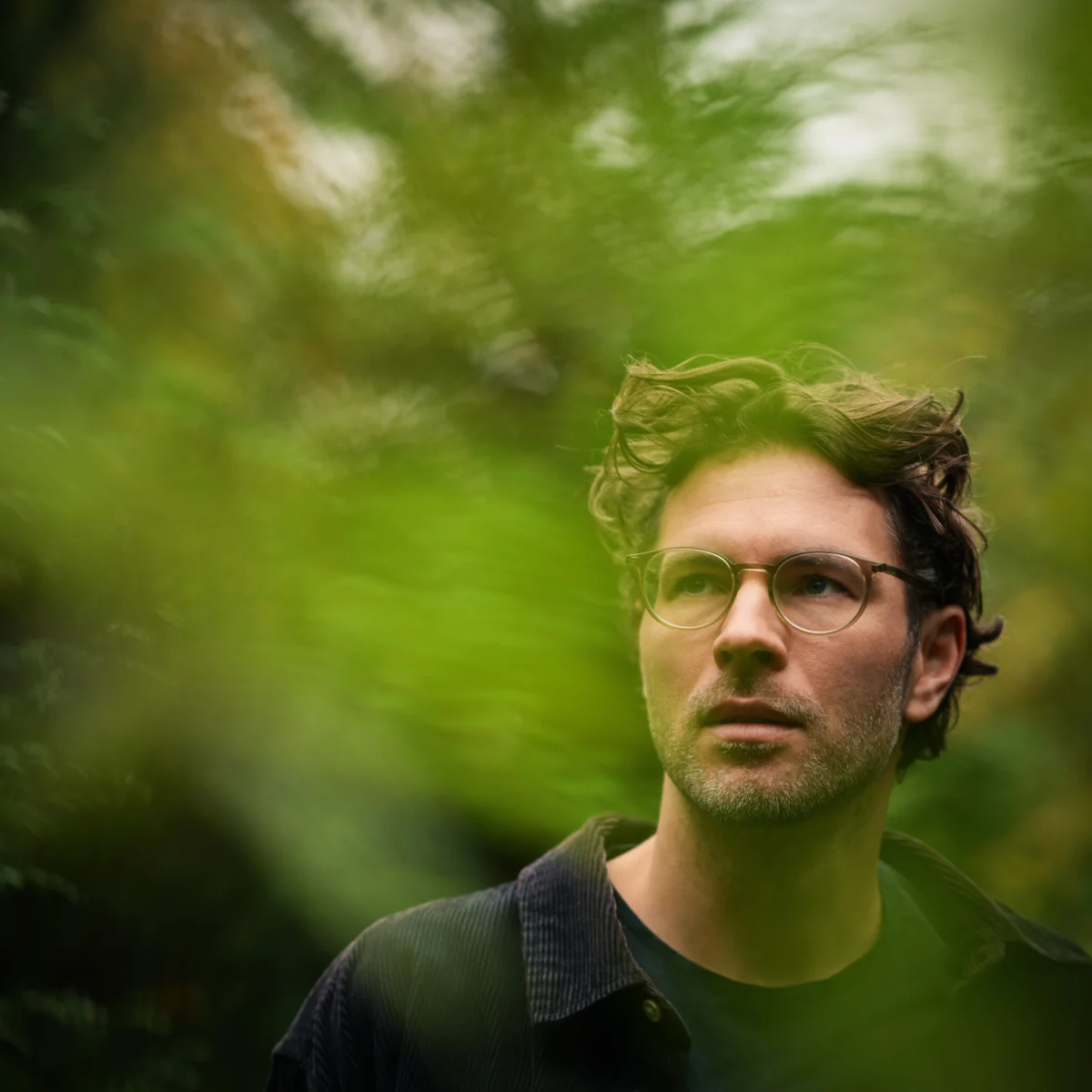
Dutch multidisciplinary artist Spekki Webu stands at the vanguard of contemporary electronic music, carving out a singular and intensely exploratory style that defies easy categorization. His latest album, ‘Bootstrap Paradox’, released in early June on New York’s Outer Orbit Records, exemplifies this audacious approach, recalibrating elements of ambient, trip-hop, and downtempo into a polychromatic swirl of deep, mind-bending techno. It is a work that not only challenges listeners’ perceptions but also solidifies Webu’s reputation as an artist relentlessly pushing sonic boundaries, often into realms of exhilarating disorientation. From his home in Delft, The Netherlands, Webu articulates a philosophy centered on artistic freedom and a deliberate disregard for conventional genre constraints, a stance that has become his defining characteristic in an increasingly commodified electronic music landscape.
The Genesis of a Multidisciplinary Vision: From DJ to Sonic Architect
Spekki Webu’s journey is one of continuous evolution, marked by a profound commitment to his craft. “I don’t really care if I’m confusing people,” he states, a sentiment that underpins his extensive and diverse output. His current endeavors encompass multiple albums in development, a rolodex of releases across various labels and sub-labels, ambitious augmented reality projects, and a sprawling network of collaborations, alongside a packed schedule of live club sets and festival appearances. This dizzying array of activities is not chaotic, but rather a testament to a meticulously cultivated, singular vision. Webu views this deliberate complexity as intrinsic to his music’s power. “I think the power with my music is that people can’t really get a grip on what it is,” he explains. “There’s so much different stuff going on that you can’t place it. It’s very fun to experiment in that way, because I don’t want to place it somewhere. I just want to let it speak.”
His passion for music and its surrounding culture is infectious, driven by an acute focus and a deep reverence that transcends pretension. While his sound may be avant-garde, Webu firmly believes it is universally accessible, an ethos he attributes to his formative experiences within the gabber scene. This connection to grassroots culture, combined with his ventures into visual art and abstract sound design, has led him to embrace a broader artistic identity. “I don’t see myself as a DJ anymore, you know?” he reflects, citing a pivotal conversation with fellow artist Jane Fitz. “Jane Fitz said to me a while ago, ‘You’re not a DJ. You’re a multidisciplinary artist.’ Now I understand that more, and it gives me much more freedom.” This recognition has been instrumental in his artistic liberation, allowing him to navigate diverse realms of sound and expression without the limitations of a singular role.
Roots in Resistance: Gabber, Free Tekno, and the Anti-Establishment Ethos
Spekki Webu’s unique sound is deeply informed by a rich tapestry of influences, rooted in the counter-cultural movements of electronic music. Born in New Orleans in the 1980s, his childhood was steeped in the vibrant sounds of his mother’s jazz and Afrobeat records. After relocating to Delft, The Netherlands, he frequented events and festivals, where he developed a fascination with the improvisational percussion of live musicians. This early rhythmic immersion laid the groundwork for his later embrace of electronic beats. His initial encounter with jungle music, introduced by a cousin’s boyfriend, proved instantly captivating, swiftly followed by a teenage immersion in the Thunderdome mixtape series, which drew him into the raw, high-energy world of Dutch hardcore and gabber.
While Thunderdome brought a degree of mainstream commercial success to the hardcore scene in The Netherlands during the 1990s, Webu was more profoundly drawn to the working-class roots and widely stigmatized gabber subculture. He attended his first rave at the age of 15, embarking on a ritual of weekend travels across the country and beyond, frequenting both licensed events and clandestine free parties. This period was crucial in shaping his anti-establishment spirit and his appreciation for music unconstrained by commercial pressures.
By the turn of the millennium, gabber was undergoing a fascinating evolution, with experimental offshoots pushing the sound in new, darker directions. Webu avidly credits artists like Hellfish & Producer and their influential Deathchant label, alongside Enzyme Records, Micron, and DJ Radium, as pivotal forces in shaping his developing tastes. These artists forged a “new wave of artists producing in a darker, more stripped back and more industrial way,” he recalls. This branch of gabber, intertwined with drum & bass, harder jungle, and speedcore, became known as ‘crossbreed’ – a distinct corner of hardcore that resonated deeply with him. He laments the misrepresentation of gabber today, emphasizing its much broader and more experimental history.
Webu’s approach resonates strongly with the outsider energy of the 1990s European free tekno movement and the notorious UK sound system Spiral Tribe, whose affiliated artists like R-Zac and 69DB pioneered a cerebral yet raw form of dance music. These movements prioritized liberation from commercial constraints, fostering improvisation and a direct connection between artists and audiences, often in illicit or unconventional spaces. Webu is adamant about acknowledging these historical precedents, asserting, “All the stuff in the past is very important and I always refer back to it, because I didn’t invent something new. I’m just trying to take a fresh approach to it.” This historical awareness grounds his future-facing sound in a rich lineage of sonic rebellion and experimentation.
Evolution of a Signature Sound: Thematic Depth and Genre-Fluid Exploration
Over time, Spekki Webu amassed a vast record collection, eventually yielding to persuasion to begin DJing himself. Collaborating with longtime friend and fellow Delft DJ Woody92, his local gigs gradually expanded to out-of-town sets and, ultimately, international bookings. With each performance, his genre-agnostic style matured, seamlessly blending comparatively lower-tempo experimental and club-oriented music into his typically high-speed framework. His creative impulses soon extended beyond curation, leading him to craft his own edits before “surrendering” to proper music production in 2019. His debut EP, the deep, dark, and driving ‘Euclidean Doorway’, arrived in 2023 on Seoul’s Beyond The Bridge label, marking his official entry into the production realm.
His releases across labels like Blue Hour Music, Amniote Editions, and his own Mirror Zone imprint showcase a thrillingly disorienting sound. Webu moves fluidly between tempos and draws from an expansive palette of influences, including ambient, IDM (Intelligent Dance Music), goa trance, and drone. While certain tracks retain the whipcrack pace of gabber and hardcore, they transcend mere aggression, instead employing psychedelic textures and intricate grooves to create a more nuanced, immersive experience. This deliberate ambiguity is a core tenet of his artistic practice. “People often come to me after a set and ask, ‘What style are you playing?’” he recounts. “I’m always like, ‘You can’t ask me this question!’ Two things I don’t think about anymore are genre and tempo. I just channel music or sound.”
Crucially, Spekki Webu’s sound stands in stark contrast to the big-room gloss and four-to-the-floor monotony that often characterizes contemporary techno. His approach is simultaneously cerebral and raw, imbued with an anti-hype spirit that harkens back to the outsider energy of the 90s. His 2025 LP, ‘Neural Network’, serves as a compelling case study of his thematic depth. Sonically and aesthetically, the album is steeped in the imagery of films like Blade Runner, directly inspired by a drive from rural Taiwan back into Taipei after performing at the acclaimed Organik Festival. “I was still coming down from a super intense acid trip,” he confesses. “Taiwan is one of my favourite countries, and the architecture in Taipei has this dystopian vibe, like you’re really in this cyberpunk movie. Obviously, I was out of my mind a little bit, but I felt like I was connected to this bigger cyborg network. We’re entering a period of AI taking over and human modification, so that’s where the album is coming from.”
‘Neural Network’ pulsates with Webu’s signature sound design and light-footed yet physically commanding percussion, navigating a non-linear path through peaks and troughs of surreal synthesis. It establishes a direct link to the early wave of free party tekno, where the objective was to evoke disorientation and disembodiment rather than the brutal annihilation often associated with faster dance music. This potent energy is also woven into his highly improvised live sets, performed both solo and in collaboration with other pioneers on the scene, creating the impression of a rapidly evolving organism – a mass of interconnected music that is never quite the same twice.
Mirror Zone: Cultivating Connections and Curating the Unconventional
In 2018, Spekki Webu established his Mirror Zone label, launching with a reissue of a little-known tribal house curio from 1994: ‘Beneath A Different Sun’ by Memphis. Stylistically slower and softer than the sound most listeners might have associated with Spekki Webu at the time, this release nonetheless hinted at the alien, otherworldly quality that would come to permeate his own music and curatorial choices in the years that followed. This initial offering signaled a departure from expectations and a commitment to exploring the fringes of electronic music.
Subsequent releases from cult names such as DJ Ungel and Vector Trancer further cemented Mirror Zone’s outsider ethos, which continues to drive the label today. Mirror Zone has since released new music from a host of underground psychedelic specialists, including Yasei, Synthbiont & Anassimandrus, and crp. Webu’s philosophy for the label extends beyond mere musical taste; it is deeply rooted in fostering genuine, real-life connections. This approach also extends to his Optic Portal and digital-only cycle bender sub-labels. “Everybody on the label is there because they came on my path for a certain reason,” he emphasizes, highlighting the personal and organic nature of his curatorial choices. This commitment to authentic relationships and a broad exploration of musical tastes has allowed Mirror Zone to carve out a unique niche, celebrating sounds that might otherwise remain undiscovered by a wider audience.
‘Bootstrap Paradox’: A Deep Dive into Temporal Looping and Sonic Heritage
As Spekki Webu’s sonic profile continues to mature and expand, his latest album, ‘Bootstrap Paradox’, stands as a prime example of his current artistic trajectory. The music within this eight-track LP possesses a distinctly different texture compared to his previous work, leaning into downtempo influences as much as it embraces breakbeat rhythms and deeper shades of techno. This approach evokes the genre-blending artistry of figures like Andrea Parker, Urban Tribe, and Carl Craig, skillfully treading the line between functional club music and introspective home listening. More explicitly, in Webu’s own words, the album draws deep inspiration from the lesser-known works of Swedish techno veteran Cari Lekebusch.
“I have a lot of these CDs in this crossover between techno and trip-hop or ambient,” he explains, detailing the foundation for the album’s richer, wider sound. A particularly vital inspiration was Lekebusch’s overlooked early 2000s album, ‘The Architect’. “This album has electro, downtempo, even some vocalist stuff, but also very slow deep house and dub techno. I’ve always carried that album close to my heart,” Webu states. This homage not only showcases his extensive musical knowledge but also his desire to reinterpret and expand upon seminal, yet often underappreciated, works.
In a remarkable full-circle moment, Spekki Webu managed to connect with Lekebusch himself, leading to studio sessions in The Hague that yielded “very weird, super experimental” results. Lekebusch’s influence culminates in his contribution to ‘Bootstrap Paradox’, providing a remix of the closing track, ‘Goodbye Paradise’, which serves as a poignant conclusion to the record. This collaboration underscores Webu’s dedication to building bridges across generations and styles within electronic music, drawing on established masters while forging his own path.
The album’s title itself, ‘Bootstrap Paradox’, alludes to a theoretical paradox in time travel where an object or information exists without ever being created, forming an infinite loop. This concept mirrors Webu’s artistic methodology, where historical influences are not merely replicated but re-contextualized and re-engineered into something new, creating a self-referential yet innovative sonic universe. The album embodies this temporal fluidity, presenting sounds that feel both deeply rooted in history and thrillingly future-forward.
Beyond the Booth: Augmented Realities and Strategic Artistic Trajectories
Every successive facet of Spekki Webu’s work seems to generate further personal connections and collaborations, setting the stage for his artistic output to grow exponentially, fueled by an avid work ethic. His creative curiosity is boundless; a mere mention of field recordings can prompt him to discuss a new geo-tagged sound archive project he is developing with a friend. This constant exploration and integration of new ideas are characteristic of his multidisciplinary approach.
Crucially, there is nothing random or chaotic about the many dimensions of his output. Even his hectic gig schedule, which will see him performing at prestigious events like Nous’klaer Festival in Rotterdam, rural in Japan, Final in Taipei, and Opera Festival in Sicily this summer, is carefully orchestrated. This strategic planning reflects a deep awareness of his artistic trajectory and the broader ecosystem of electronic music. “I’m trying to be aware of where my path is going,” he affirms. “I really think about everything in terms of playing with other people. With my agent, we really look into the future and see where to navigate. That’s very important for me, because I want to obviously stand by myself as much as possible. I’m just trying to do my thing, and not to look too much left or right.”
This deliberate approach to career navigation, coupled with his unwavering commitment to artistic integrity, positions Spekki Webu as a significant voice in contemporary electronic music. He embodies a spirit of independence and experimentation that challenges commercial norms, offering an alternative vision for artistic success built on authenticity and a profound connection to the culture he inhabits. His dedication to pushing boundaries, whether through sound design, conceptual album themes, or innovative projects like augmented reality integration, marks him as an artist whose influence is set to grow as he continues to unravel the complexities of his freeform psychedelia.
Charting the Future: A Deliberate Path in an Unpredictable Landscape
Spekki Webu represents a refreshing paradigm in electronic music – one where artistic freedom, historical reverence, and relentless innovation coalesce. His journey from gabber raves to the international stage, culminating in critically acclaimed albums like ‘Bootstrap Paradox’, underscores a profound dedication to sound exploration and a refusal to be confined by genre or expectation. As he continues to weave his intricate web of music, collaborations, and technological ventures, Spekki Webu is not just making music; he is crafting an immersive, multidisciplinary experience that invites listeners to embrace disorientation and discover new dimensions of sound. His deliberate, focused path in an often-unpredictable landscape ensures his continued evolution as a truly singular artist.