Nayara Elvina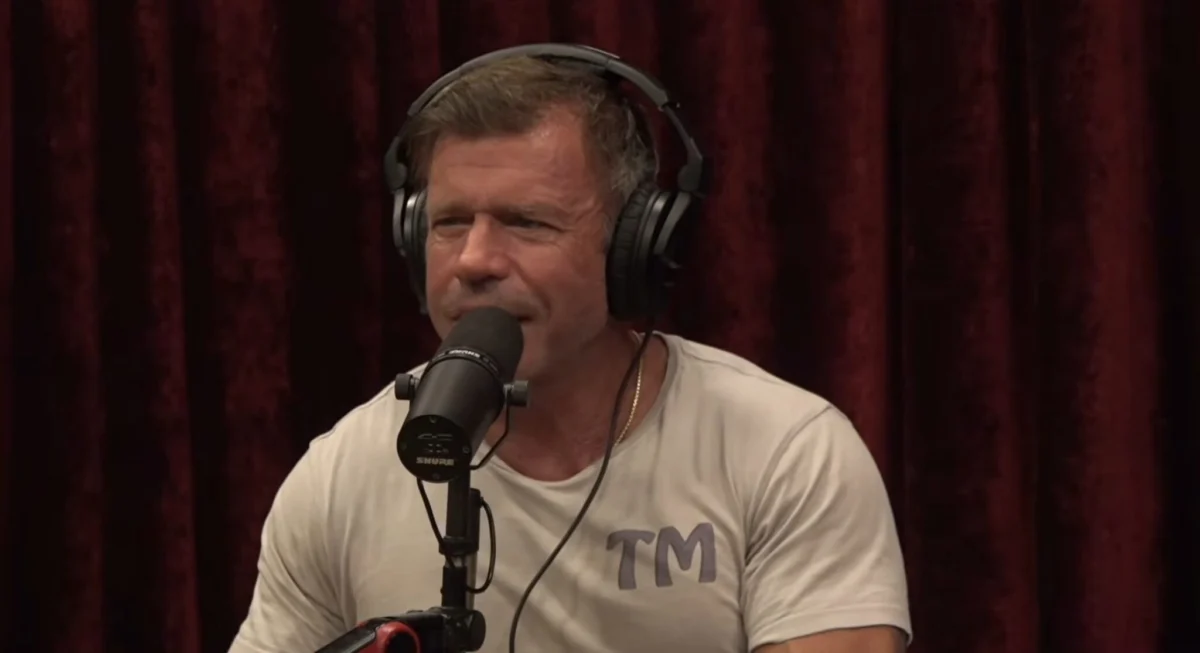
Taylor Sheridan, the prolific creator behind the television phenomenon Yellowstone and a growing roster of Paramount+ series, recently voiced sharp criticisms regarding the current state of California and the leadership of Governor Gavin Newsom. During a wide-ranging appearance on The Joe Rogan Experience, Sheridan characterized the governor’s approach to leadership as performative and disconnected from the practical realities of state management. The conversation, which occurred during episode #2517 of the popular podcast, touched upon themes of government efficiency, the decline of urban centers, and the philosophical differences between governing a state as a business versus an ideological platform.
Sheridan, who is currently managing a heavy production slate including Landman and the upcoming Yellowstone spin-off The Madison, appeared on the program to discuss his new book, How Not To Die In Prison: A Survival Guide. However, the dialogue quickly shifted toward the socio-political climate of the United States. When host Joe Rogan brought up the issue of financial waste and bureaucratic inefficiency in California, Sheridan responded with a critique of Governor Newsom, whom he referred to as a "car salesman" while mocking the governor’s public statements regarding the state’s health and population trends.
The Critique of California Leadership
The core of Sheridan’s argument centered on what he perceives as a shift from pragmatic governance to agenda-driven politics. In his exchange with Rogan, Sheridan used heavy sarcasm to address the governor’s claims about California’s status. He suggested that the state is being neglected because the leadership is more focused on national political aspirations and social agendas than the fundamental "blocking and tackling" of state administration.
"That f***ing car salesman, have you had that guy on?" Sheridan asked Rogan, referring to Newsom. "Doesn’t he have his own podcast? Because that state is running so well, the governor doesn’t need to govern… He’ll give you the stats. Statistically, people are moving there in record numbers."
The sarcasm regarding population numbers refers to a frequent point of contention between the Newsom administration and its critics. While the governor has often touted California’s economic resilience and its status as the world’s fifth-largest economy, United States Census Bureau data has shown a different trend in recent years. California’s population declined for the first time in its history following the 2020 Census, leading to the loss of a seat in the House of Representatives. Between 2020 and 2023, the state saw a net loss of hundreds of thousands of residents, many of whom migrated to states like Texas and Florida—a trend often dubbed the "California Exodus."
A Comparative Philosophy of Governance
To illustrate his view of what effective leadership should look like, Sheridan recounted a conversation he had with Steve Bullock, the former Democratic Governor of Montana. Sheridan reached out to Bullock during the early stages of writing Yellowstone to gain insight into the daily responsibilities and psychological weight of the office.
According to Sheridan, Bullock described the role of a governor not as a social architect, but as a "Chief Executive Officer" (CEO) of the state. Bullock reportedly told Sheridan that his primary duties involved managing infrastructure, city management, attracting business and tourism, and ensuring the state remains financially solvent. This pragmatic approach, Sheridan argued, is what is currently missing from the leadership of major urban-centric states like California.
Sheridan’s critique suggests that when leaders prioritize a "social agenda" over the basic mechanics of running a city or state, the quality of life for residents inevitably suffers. He specifically lamented the transformation of Los Angeles, a city where he spent a significant portion of his early career. He described the city as having once been a place where "dreams come true," but claimed it is now being "run into the ground" by leaders who are more concerned with ideological optics than public safety or urban maintenance.
Supporting Data on California’s Current Challenges
The criticisms leveled by Sheridan and Rogan reflect broader concerns that have been supported by various economic and social metrics over the last four years. While California remains a global leader in technology, entertainment, and agriculture, it faces significant headwinds that have fueled the narrative of "state decline" championed by figures like Sheridan.
- Migration Trends: According to the California Department of Finance, the state’s population fell by about 0.3% in 2022, continuing a downward trend that began during the COVID-19 pandemic. High housing costs and taxation are frequently cited as the primary drivers for middle-class residents leaving the state.
- Cost of Living: Data from the Council for Community and Economic Research consistently ranks California as one of the most expensive states in the country. The median home price in California remains significantly higher than the national average, making homeownership unattainable for a large segment of the workforce.
- Homelessness and Public Spending: California has spent approximately $24 billion over the last five years to address homelessness, yet the state’s homeless population has continued to grow, reaching an estimated 181,000 people in 2023. A recent state audit found that California failed to adequately track the effectiveness of this spending, providing fuel for critics who argue the state’s bureaucracy is inefficient.
- Business Relocations: Several high-profile corporations, including Tesla, Oracle, and Hewlett Packard Enterprise, have moved their headquarters from California to Texas in recent years. Sheridan himself, a native Texan, operates much of his production empire out of the Lone Star State, emphasizing a business-friendly environment that he feels California no longer provides.
Joe Rogan’s Perspective and the Media Landscape
Joe Rogan, who moved his own multi-million dollar podcast operation from Los Angeles to Austin, Texas, in 2020, echoed many of Sheridan’s sentiments. During the episode, Rogan revealed that Governor Newsom’s team has expressed interest in appearing on The Joe Rogan Experience, but Rogan has thus far declined the request.
Rogan noted a perceived inconsistency in the governor’s public stance toward him, stating, "He wants to be on. He talks a lot of sh*t about me. At first he was saying, ‘Joe Rogan is not a fan of me, but I’m a big fan of him.’" Rogan’s reluctance to host the governor stems from his skepticism regarding the authenticity of Newsom’s political communication, a sentiment that aligned with Sheridan’s "car salesman" characterization.
The intersection of entertainment figures like Sheridan and long-form podcasting platforms like Rogan’s has created a new venue for political discourse that bypasses traditional media gatekeepers. Sheridan’s work, particularly Yellowstone, is often credited with bridging the gap between "Red State" and "Blue State" audiences by focusing on themes of land ownership, family legacy, and skepticism of federal overreach. His comments on the podcast suggest that his creative output is deeply informed by these real-world frustrations with modern governance.
Broader Implications and Industry Impact
Sheridan’s vocal opposition to Newsom’s policies reflects a growing trend within the entertainment industry. While Hollywood has traditionally been a bastion of progressive politics, a segment of the industry’s most successful creators and executives has begun to push back against the regulatory and tax environment of California.
The "Sheridan-verse," which includes hits like Mayor of Kingstown and Tulsa King, is largely produced outside of the traditional Hollywood studio system’s geographic confines, often utilizing locations in Montana, Texas, and Oklahoma. This geographical shift is not merely aesthetic; it is a logistical and financial strategy that mirrors the migration of other industries away from the West Coast.
Furthermore, Sheridan’s critique of "agenda-driven" governance in urban areas points to a burgeoning debate over the future of American cities. As Los Angeles and San Francisco struggle with issues of retail theft, open-air drug use, and crumbling infrastructure, the narrative provided by influential figures like Sheridan can have a significant impact on public perception and, eventually, electoral outcomes.
Conclusion and Future Outlook
The interview on The Joe Rogan Experience serves as a high-profile example of the tension between California’s political establishment and the creative class that once served as its primary cultural export. By framing the issue as one of "management" versus "ideology," Taylor Sheridan has positioned himself as a prominent critic of the current California model.
As Governor Gavin Newsom continues to navigate his second term and potentially eye a future on the national political stage, he faces the challenge of reconciling his administration’s reported successes with the lived experiences and public criticisms of former residents and industry leaders. Whether Newsom will eventually find a platform to directly address these criticisms—perhaps even on Rogan’s podcast—remains to be seen. In the meantime, the data on migration and economic satisfaction suggests that the "car salesman" label, however hyperbolic, taps into a genuine sense of unease regarding the trajectory of the Golden State.
Sheridan’s busy schedule, which includes the conclusion of the original Yellowstone series and the launch of multiple new projects, ensures that his influence on the cultural zeitgeist will remain significant. As his shows continue to dominate streaming charts, his perspective on American life and leadership will likely continue to resonate with an audience that feels increasingly alienated from the traditional centers of power in Los Angeles and Sacramento.