 Nayara Elvina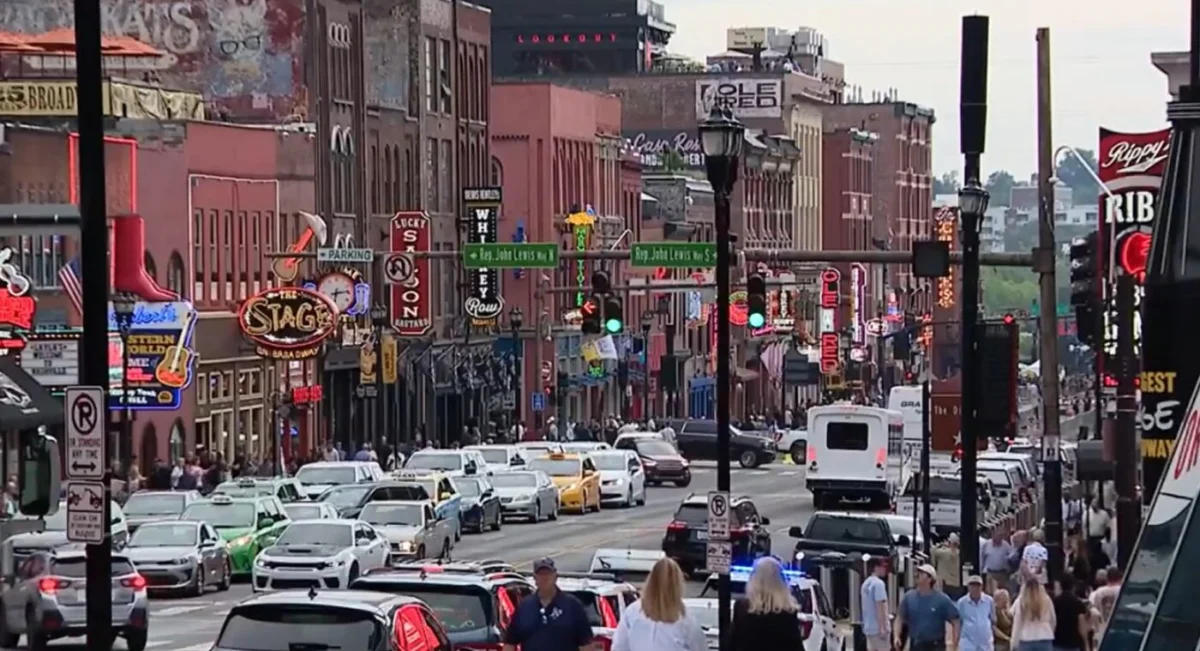
Nashville, Tennessee, is currently grappling with a logistical anomaly that has caught the attention of municipal leaders and public works officials: a staggering percentage of the waste collected in the city’s downtown core is comprised of liquid. As the city continues its trajectory as a premier global tourist destination, the infrastructure supporting its "Music City" reputation is showing signs of significant strain. Recent reports from the Metro Public Works waste commission indicate that approximately 70% of the weight found in downtown trash receptacles is liquid, a phenomenon that officials describe as a uniquely Nashville problem that complicates waste management and recycling efforts.
This discovery comes at a time when Nashville’s popularity has reached historic heights. In 2025, the city welcomed 17.4 million visitors, a figure that is projected to grow as Nashville prepares to host high-profile events, including the Super Bowl. While the influx of tourists brings billions of dollars in revenue to the local economy, it also brings a set of operational challenges that range from waste disposal inefficiencies to some of the most severe traffic congestion in the world.
The Liquid Waste Crisis: Data and Root Causes
The Metro Public Works waste commission recently highlighted a disturbing trend in the downtown Broadway district, the epicenter of Nashville’s nightlife and tourism. According to commission data, the sheer volume of liquid being discarded into traditional trash bins is creating a logistical bottleneck. When waste is 70% liquid, it creates several problems for the city’s sanitation infrastructure. First, the weight of the liquid causes trash bags to tear and bins to overflow more quickly than anticipated. Second, the liquid volume often exceeds the capacity of the collection trucks, leading to leaks and "garbage juice" spills on city streets. Finally, the presence of liquid heavily contaminates recyclable materials, often rendering entire loads of cardboard or plastic unprocessable.
Comparative analysis conducted by the commission suggests that this issue is not shared by other major "party" destinations in the United States. Cities such as New Orleans and Las Vegas, which also host millions of tourists annually in concentrated nightlife districts, do not report similar levels of liquid-to-solid waste ratios.
Industry analysts and municipal leaders point to Nashville’s specific alcohol ordinances as a primary driver of the problem. Unlike New Orleans or the Las Vegas Strip, Nashville does not allow for the open consumption of alcohol in most public spaces. On Lower Broadway, patrons are frequently required to finish or discard their beverages before exiting an establishment or entering another. This leads to a high frequency of "half-full" drinks—beers, cocktails, and sodas—being tossed into sidewalk trash cans.
Furthermore, the disposal practices of local businesses contribute to the saturation. Many bars and restaurants in the high-density district reportedly dump excess ice directly into trash bins rather than utilizing floor drains or specialized sinks. As the ice melts, it adds to the liquid weight, further exacerbating the problem.
Municipal Response and Proposed Engineering Solutions
In response to the data, Metro Nashville officials are exploring unconventional solutions to mitigate the impact of liquid waste. One proposed remedy involves the modification of downtown trash receptacles to include drainage holes. The intent is to allow liquids to bypass the solid waste stream and flow directly into the city’s wastewater or storm systems.
While this could theoretically reduce the weight of the trash and prevent truck overflows, it raises environmental and aesthetic concerns. Skeptics of the plan note that allowing sugary alcoholic beverages and organic waste liquids to drain onto the streets or into the sewer system could lead to increased odors and potential pest issues, particularly during the humid summer months.
Metro leaders are also considering a public awareness campaign targeted at both business owners and tourists. For businesses, the focus would be on proper ice disposal and the use of "strainer" bins that separate solids from liquids before they reach the curb. For tourists, the challenge is more complex, as it involves navigating the city’s strict open-container laws while encouraging responsible disposal.
Infrastructure Under Pressure: The 2025 Traffic Scorecard
The waste management issue is only one facet of Nashville’s growing pains. According to the INRIX 2025 Traffic Scorecard, Nashville has officially entered the ranks of the most congested cities on the planet. The study, which analyzed traffic patterns across 900 cities in 36 countries, ranked Nashville as one of the top 30 most congested cities globally. Within the United States, Nashville now sits among the top 15 most traffic-congested metropolitan areas.
The data reveals that the average Nashville commuter loses dozens of hours per year to traffic delays, a cost that translates into millions of dollars in lost productivity and increased fuel consumption. The congestion is particularly acute in the "Loop"—the interstate system surrounding the downtown core—where tourist traffic merges with daily commuter flows.
The rapid expansion of the city’s population, combined with a record-breaking number of visitors, has outpaced the development of public transit and road capacity. As Nashville prepares for the massive logistical undertaking of hosting a Super Bowl, urban planners are under pressure to find ways to move people more efficiently through a geographic "choke point" that was not originally designed for such high volumes of traffic.
The Authenticity Debate and the "Tourist Trap" Label
Beyond the physical infrastructure, Nashville is facing a crisis of identity. A recent study by InsureAndGo ranked Nashville as the fourth most prominent "tourist trap" city in the world, trailing only Chicago, Venice, and Las Vegas. The study assigned Nashville an "authenticity score" of just 3.8 out of 100, a figure that has sparked debate among residents and local business owners.
The report suggests that the very features that draw 17.4 million people to the city—the celebrity-owned bars, the neon lights of Broadway, and the omnipresent country music—are the same factors contributing to a perceived loss of soul. The "branded" nature of Lower Broadway, where massive venues owned by country music superstars overshadow smaller, historic honky-tonks, has led some critics to argue that the city has become a "caricature" of its former self.
"Branded bars and polished venues overshadow the more organic local music scene," the InsureAndGo report noted, echoing a sentiment often shared by long-term residents. The commercialization of the "Music City" brand has created a high-cost environment where $15 beers and expensive cover charges are the norm, further alienating the local population and leading to the "tourist trap" designation.
Economic Impact and Future Outlook
Despite the criticisms regarding authenticity and the logistical hurdles of waste and traffic, Nashville’s economic engine remains robust. The 17.4 million visitors in 2025 represent a vital source of tax revenue for both the city and the state of Tennessee. This revenue funds essential services, including the very public works departments currently tasked with solving the liquid waste problem.
However, the "3.8 out of 100" authenticity score and the global traffic rankings serve as a warning. Urban planners and tourism officials are beginning to recognize that sustainability in tourism requires more than just increasing visitor numbers; it requires maintaining a city that is livable for its residents and navigable for its guests.
The timeline for Nashville’s next decade is packed with high-stakes milestones. As the city moves toward the late 2020s, the focus will likely shift from pure growth to "managed growth." This includes potential investments in light rail or enhanced bus rapid transit (BRT) to alleviate the INRIX-documented congestion, as well as more sophisticated waste management technologies to handle the unique demands of a high-volume nightlife district.
Conclusion: Balancing Growth with Livability
Nashville’s "liquid problem" is a literal and metaphorical representation of a city overflowing with its own success. The 70% liquid waste statistic is a symptom of a regulatory and behavioral environment that has not yet adapted to the scale of modern Nashville.
As the city continues to attract record-breaking crowds and prepares for the global stage of the Super Bowl, the pressure to evolve is mounting. Whether through the installation of specialized drainage systems, the revision of open-container ordinances, or a massive overhaul of the transit system, Nashville’s leadership must address these "grey area" issues to ensure that Music City remains a viable destination—and a functional home—for decades to come. The challenge will be to fix the "leaks" in the system without losing the unique character that made the world want to visit Nashville in the first place.