 Nayara Elvina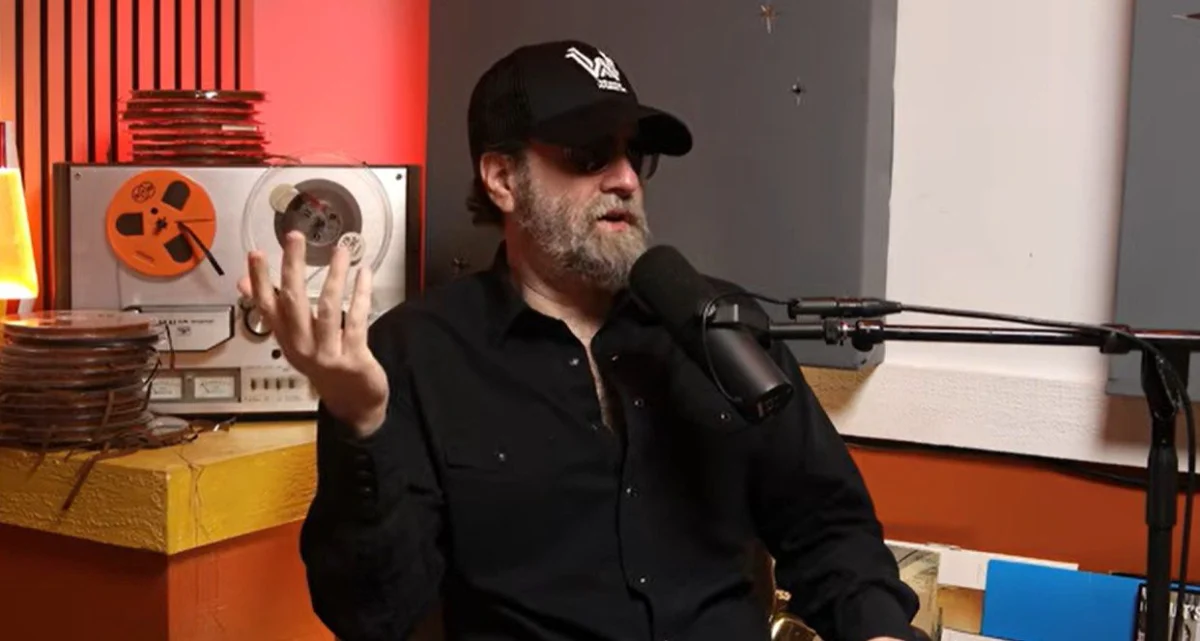
As the curtains prepare to close on one of modern country music’s most polarizing and satirical personas, Wheeler Walker Jr. is walking away on his own terms. The comedian and country artist, known for his unfiltered, blue-material lyricism and deadpan delivery, has officially announced his retirement with his final studio project, aptly titled Pullin’ Out. However, even as he prepares for his final bow—culminating in a landmark performance at Nashville’s historic Ryman Auditorium—the entertainer has made it clear that he wouldn’t mind leaving behind a permanent physical footprint in Music City, provided someone hands him the keys to a Lower Broadway honky-tonk.
During a recent, wide-ranging appearance on the Whiskey Riff Raff podcast, Walker delved deep into the motivations behind his retirement, his turbulent relationship with the modern Nashville establishment, his aversion to the commercialization of Lower Broadway, and his uncompromising views on the current state of country music. While his satirical career has always thrived on provoking the status quo, his retirement signals a genuine shift in how independent artists view the modern music landscape, marked by the rise of artificial intelligence, algorithmic gatekeeping, and corporate sanitization.
The Twilight of an Outlaw: Retirement and Pullin Out
The announcement of Pullin’ Out marks the conclusion of a decade-long crusade that began with Walker’s 2016 debut album, Redneck Sh*t. Produced by Grammy-winner Dave Cobb, that initial release shocked the Nashville establishment by debuting at No. 9 on the Billboard Top Country Albums chart entirely through grassroots marketing, viral social media presence, and word-of-mouth acclaim. Over the course of four subsequent studio albums—Ol’ Wheeler (2017), WWIII (2018), Sex, Drugs, & Country Music (2022), and Fuck You Bitch (2023)—Walker cultivated a fiercely loyal cult following while remaining entirely blacklisted by corporate country radio, major commercial streaming playlists, and mainstream industry trade organizations.
In his candid interview, Walker explained that the current climate of the music industry—overrun by algorithmic predictability, artificial intelligence integration, and risk-averse corporate strategies—makes it the ideal time to step away. Rather than compromise his artistic vision to fit into the modern Nashville mold, Walker chose to conclude his musical journey with a final project that embodies his anti-establishment ethos.
The chronology of his exit is punctuated by a symbolic final performance at the Ryman Auditorium, affectionately known as the "Mother Church of Country Music." For Walker, playing the Ryman carries immense gravitational weight, offering a stark contrast to the neon-lit, commercialized frenzy of Lower Broadway just a few blocks away. While the Ryman represents the sacred history of traditional country music—having hosted legends like Hank Williams, Johnny Cash, and Loretta Lynn—Broadway has transformed over the past decade into a sprawling, corporate-backed entertainment district dominated by celebrity-branded bars.
The Paradox of the Broadway Honky-Tonk
Lower Broadway in Nashville has undergone a dramatic real estate and cultural transformation over the past ten years. What was once a gritty strip of historic honky-tonks has evolved into a multi-million-dollar entertainment ecosystem dominated by lifestyle brands and mega-bars owned by mainstream country stars such as Luke Bryan, Jason Aldean, Miranda Lambert, Eric Church, and Jelly Roll. These establishments have become economic powerhouses, drawing millions of tourists annually and cementing Nashville’s reputation as the bachelorette party capital of the United States.
Yet, this rapid commercialization has faced significant backlash from traditionalists, local musicians, and purists who argue that the strip has lost its soul in favor of corporate conformity and overpriced drinks. Walker himself has frequently voiced his disdain for what Broadway has become, aligning himself with those who view the modern honky-tonk culture as antithetical to the authentic spirit of country music.
Ironically, despite his harsh critiques of the Nashville machine, Walker admitted during the podcast that he would readily accept a Broadway bar if it were offered to him on a silver platter. His motivation, true to form, is rooted as much in tongue-in-cheek defiance as it is in capitalist pragmatism.
"I like that you put it as a brand. Why don’t you tell someone on Broadway that it’s a brand? So I can get my own f***ing bar. I think I want to do it just because it would piss people off," Walker stated during the podcast.
He quickly clarified his selective standards, adding, "But I don’t actually want a f***ing bar next to Jelly Roll’s, you know? That’s lame. But if they gave it to me, I’d probably take it."
Unlike many celebrity owners who merely license their names and likenesses to hospitality corporations while rarely stepping foot inside the establishments, Walker insisted that he would actively frequent his own venue. He joked that if any bar owners were listening and looking to hand over the deeds to a lucrative Lower Broadway property, his doors would be open.
Industry Critique and Creative Integrity
Walker’s commentary on the Whiskey Riff Raff podcast extended far beyond real estate aspirations. Throughout his career, the artist has positioned his catalog as a form of unfiltered truth-telling in an industry he believes has grown increasingly sanitized. He criticized contemporary industry practices, warning legacy acts against predictable comebacks—specifically pointing to Florida Georgia Line—and drawing a sharp line between traditional musicianship and what he dismissively terms "laptop music."
Collaboration has also been largely absent from Walker’s discography, a deliberate choice born from past experiences. He addressed how previous collaborative efforts, most notably an unfulfilled or problematic interaction involving pop-country artist Maren Morris, ultimately backfired, reinforcing his preference for operating as a singular, independent creative force.
Walker characterizes his body of work not merely as comedy music, but as a genuine extension of the punk rock ethos: anti-authority, anti-establishment, and fundamentally opposed to the corporate gatekeepers who dictate what artists are allowed to say, sing, and record. This anti-establishment stance is precisely why he views his retirement not as a defeat, but as a definitive statement.
"My music will live on, but give me a f***ing bar. That can live on too. I’m done wanting to have a bar, even though I’d love to have it. I don’t want to play this corporate game," Walker reflected toward the conclusion of the interview.
Broader Implications for Independent Country Music
As Wheeler Walker Jr. prepares to release Pullin’ Out and walk away from the recording studio, music industry analysts are left evaluating the broader implications of his career. Operating almost entirely outside the traditional Nashville machinery, Walker proved that an artist could achieve commercial success on Billboard charts, sell out tours across the United States, and build a dedicated fanbase without a single major radio hit or corporate sponsorship deal.
His success paved a parallel lane for independent, outlaw, and red-dirt country artists who rejected the Nashville pop-country assembly line long before the mainstream media began taking notice of the broader independent boom led by artists like Tyler Childers, Zach Bryan, and Colter Wall. While Walker’s vehicle was satire and shock humor, his underlying critique of the Nashville music industry’s corporate bureaucracy resonated with millions of fans who felt alienated by mainstream radio formats.
Whether a Lower Broadway developer will actually heed Walker’s humorous plea and gift him a multi-story honky-tonk remains highly unlikely. Yet, the imagery of Wheeler Walker Jr.’s face illuminated in neon lights above Nashville’s most famous thoroughbred street serves as a fitting metaphor for his entire career: an audacious, disruptive presence daring the establishment to look him in the eye.
As the final notes of Pullin’ Out echo through the Ryman Auditorium, Wheeler Walker Jr.’s chapter in country music history draws to a close. Whether the industry likes it or not, the outlaw satirist has secured a permanent, untouchable legacy in American roots music—with or without a bar on Broadway.