Nayara Elvina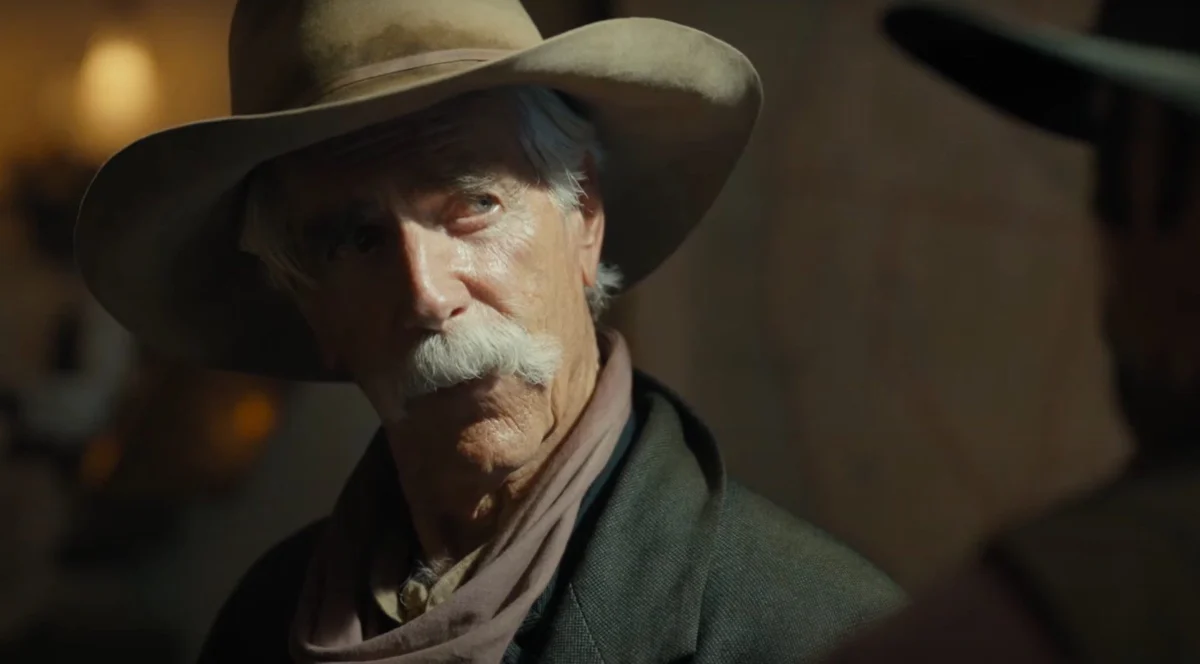
In a revealing interview on The Howard Stern Show, Taylor Sheridan, the prolific architect behind the expansive Yellowstone universe and several other high-profile television dramas, detailed a fundamental shift in his creative methodology. The writer-director explained that his approach to casting and script development has evolved from a traditional talent-search model to a bespoke system where scripts are crafted specifically for predetermined lead actors. Central to this discussion was a candid anecdote regarding legendary actor Sam Elliott, who initially disparaged Sheridan’s flagship series, Yellowstone, as a "cowboy soap opera" before eventually joining the creator’s cinematic fold.
The evolution of Sheridan’s process marks a significant departure from standard industry practices. Traditionally, showrunners develop a pilot script and then conduct extensive casting calls to find performers who inhabit the pre-written characters. Sheridan, however, revealed that his current success has granted him the leverage to reverse this sequence. By securing commitments from A-list talent before a single word is written, he is able to tailor the dialogue, pacing, and character arcs to the specific strengths and vocal cadences of the actors. This "actor-first" philosophy has been applied to several of his most recent projects, including the upcoming series The Madison, starring Michelle Pfeiffer, and the oil-industry drama Landman, starring Billy Bob Thornton.
The Evolution of the Sheridan Writing Methodology
Sheridan explained to Stern that the shift in his workflow was born out of both necessity and the luxury of his current industry standing. In the early stages of his career, particularly during the development of the initial seasons of Yellowstone, Sheridan followed the conventional path of writing a script and then searching for the right fit. However, as his reputation for delivering high-rated, culturally resonant content grew, so did his ability to attract high-caliber talent without a finished teleplay.
"I do things differently now than I did in the beginning," Sheridan told Stern. "I would write a script and then go try to find the actor that fits that role. I don’t do that anymore." He cited 1883, 1923, Special Ops: Lioness, and Landman as primary examples of this new strategy. For 1923, Sheridan famously secured Hollywood icons Harrison Ford and Helen Mirren before the scripts were finalized, allowing him to weave their specific screen personas into the fabric of the Dutton family history.
Regarding his most recent endeavor, The Madison, Sheridan noted that he met with Michelle Pfeiffer to discuss the themes and emotional core of the series before writing. This collaborative inception allows for a level of specificity that Sheridan believes elevates the final product. By knowing exactly who will deliver the lines, he can avoid generic characterizations and create roles that feel uniquely lived-in.
The Sam Elliott Confrontation and the Soap Opera Label
The most striking revelation of the interview involved Sheridan’s recruitment of Sam Elliott for the prequel series 1883. Elliott, an actor whose name is synonymous with the American Western genre, was not immediately enamored with Sheridan’s portfolio. When Sheridan initially reached out to the 81-year-old actor, Elliott expressed a blunt distaste for Yellowstone, the show that revitalized the Western for modern audiences.
According to Sheridan, Elliott described Yellowstone as a "cowboy soap opera," a critique that has occasionally been leveled against the show by television critics who point to its melodramatic plot twists and heightened familial conflicts. Rather than taking offense, Sheridan offered a surprising admission. He agreed with Elliott’s assessment, characterizing Yellowstone as a manifestation of his "punk rock" sensibilities—a provocative middle finger to the traditional television industry.
"I said, ‘You’re right,’" Sheridan recalled. "I’m not asking you to be on that. That’s the punk rock me throwing middle fingers at the industry and a lot of other sh*t. This is gonna be the grown-up me. I have a story I want to tell."
Sheridan proceeded to pitch the narrative arc of 1883, a gritty, existentialist journey following the first generation of Duttons as they traverse the Oregon Trail. The pitch, which focused on the harsh realities of westward expansion rather than the modern-day political maneuvering of Yellowstone, resonated with Elliott. The actor subsequently signed on to play Shea Brennan, a role that earned him significant critical acclaim and a Screen Actors Guild Award.
Chronology of the Sheridan-Verse and Production Expansion
To understand the scale of Sheridan’s influence, one must look at the rapid expansion of his television empire over the last six years. The timeline of his major projects illustrates a prolific output that few showrunners in history have matched:
- June 2018: Yellowstone premieres on Paramount Network, eventually becoming the most-watched cable drama in the United States.
- December 2021: 1883 premieres on Paramount+, marking the first expansion of the Yellowstone universe and proving the viability of high-budget Western prequels.
- November 2022: Tulsa King, starring Sylvester Stallone, debuts, expanding Sheridan’s reach into the crime genre.
- December 2022: 1923 premieres, starring Harrison Ford and Helen Mirren, further bridging the gap between 1883 and the modern era.
- July 2023: Special Ops: Lioness, an espionage thriller starring Zoe Saldaña and Nicole Kidman, premieres.
- November 2024: Landman, starring Billy Bob Thornton, debuts, focusing on the boomtowns of West Texas.
This timeline reflects a strategic move by Paramount Global to leverage Sheridan’s brand to drive subscriptions for its streaming service, Paramount+. Industry analysts have noted that Sheridan’s "actor-first" writing style is a key component of this strategy, as it provides a streamlined path for movie stars to transition into prestige television.
Supporting Data: The Economic and Critical Impact of the Sheridan Model
The financial stakes of Sheridan’s projects are immense. Yellowstone’s fifth season drew over 12 million viewers for its premiere, a figure virtually unheard of in the fragmented landscape of modern cable television. This massive audience has provided Sheridan with production budgets that rival major motion pictures. For instance, the production cost for 1923 was reportedly in the range of $30 million to $35 million per episode, largely due to the high salaries of its leads and the logistical challenges of filming on location in Africa and Montana.
The "soap opera" critique mentioned by Elliott is often contrasted with the critical reception of Sheridan’s prequels. While Yellowstone maintains a 73% average on Rotten Tomatoes, 1883 holds an 89% critical approval rating. Critics have frequently noted that while the flagship series leans into melodrama, the prequels function as more traditional, somber historical dramas. This distinction validates Sheridan’s "grown-up" pitch to Elliott, suggesting a conscious effort to diversify the tone of his various properties.
Official Responses and Industry Implications
While Sam Elliott has remained vocal about his lack of interest in the modern-day Yellowstone—once telling a podcast that the show was "too much like f***ing Dallas"—his continued collaboration with Sheridan on Landman suggests a deep professional respect for the creator’s writing when it deviates from the soap opera format.
Industry analysts suggest that Sheridan’s success has fundamentally altered the power dynamics between showrunners and networks. By delivering consistent hits, Sheridan has been granted a level of creative autonomy rarely seen since the era of Norman Lear or Aaron Spelling. His ability to bypass the traditional pilot process and write specifically for stars like Michelle Pfeiffer or Billy Bob Thornton creates a "closed-loop" production cycle that minimizes network interference.
Furthermore, Sheridan’s focus on rural American settings and blue-collar industries has tapped into a demographic often underserved by coastal-centric media. This has resulted in what some call the "Yellowstone Effect," where tourism and real estate interest in Montana and Texas have surged in direct correlation with the show’s popularity.
Broader Implications for the Future of Television
The Howard Stern interview highlights a broader trend in the "Peak TV" era: the importance of the "A-list" anchor. As streaming services compete for a limited pool of subscribers, the presence of a recognizable star is often more important than the premise of the show itself. Sheridan’s pivot to writing for specific actors is a logical response to this market reality.
However, this method also places an immense burden on the creator. Sheridan currently writes or co-writes nearly every episode of his various series, a workload that has led to rumors of production delays and creative exhaustion. Despite these challenges, the revelation that he is now writing "for the actor" suggests a desire to keep the process fresh and personally engaging.
In the case of Sam Elliott, Sheridan’s willingness to accept harsh criticism and pivot his pitch demonstrated a tactical humility that ultimately secured one of the most iconic performances in the modern Western genre. As Sheridan moves forward with The Madison and Landman, the industry will be watching to see if this bespoke writing style can continue to attract the world’s most elite talent while maintaining the massive viewership that has made him a cornerstone of modern entertainment.