 Mia Khoirunisa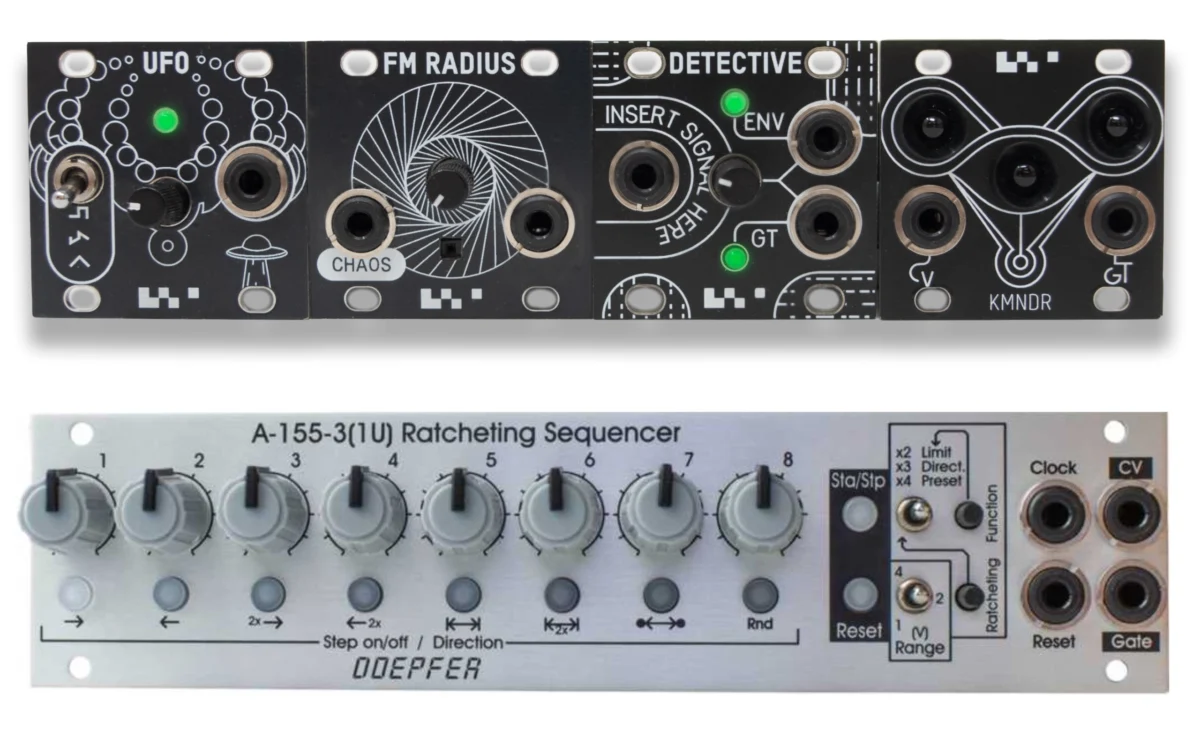
The single-height 1U Eurorack format is experiencing a substantial resurgence in the modular synthesizer market, driven by a wave of innovative utility and performance modules from boutique and legacy manufacturers alike. For years, the 1U row—historically utilized primarily for power distribution and basic audio-to-CV interfacing—was often treated as an afterthought in custom synthesizer builds. However, recent hardware developments from Koma Elektronik and industry pioneer Doepfer are redefining the space, transforming narrow horizontal strips of panel real estate into powerhouses for modulation, sequencing, and signal processing.
This renewed industry focus on the 1U format highlights a broader architectural shift in hardware design. Modular enthusiasts are increasingly looking to maximize spatial efficiency within portable cases without sacrificing the tactile, hands-on complexity that defines the Eurorack ecosystem. With newly available lineups hitting major global retailers, synthesizer users now have access to sophisticated tools that challenge the traditional boundaries of what a sub-standard row can achieve.
Main Facts and New Hardware Offerings
The current expansion of the 1U marketplace is anchored by two distinct hardware rollouts: a budget-friendly and unorthodox utility series from Berlin-based Koma Elektronik and a comprehensive foundational suite from German modular heavyweight Doepfer.
Koma Elektronik has introduced a diverse lineup of 1U modules that blend practical utility with leftfield performance controls. The standout releases include:
- KMNDR / 1U Kommander: An infrared motion controller that translates physical gestures into dynamic control voltage (CV) and gate signals.
- FM Radius (1U FM Radio): A voltage-controllable FM radio tuner designed to integrate broadcast audio and frequency modulation into patches.
- Detective (1U Envelope Follower): A compact envelope follower engineered to extract dynamic control voltage from external audio sources.
- UFO (LFO 1U): A versatile low-frequency oscillator offering three distinct waveforms within a minimal footprint.
Simultaneously, Doepfer has expanded upon the 1U ecosystem it initially previewed alongside its 7U performance cases. Rather than focusing solely on novelty, Doepfer’s catalog addresses the core infrastructure requirements of modern modular systems. The Doepfer 1U range incorporates a flexible dual VCA, a multi-purpose 6-input/2-output mixer configurable for mono or stereo routing, a compact minijack-based MIDI-to-CV interface, and two distinct modulation generators featuring switchable looping capabilities for attack/decay and dual decay/LFO functions.
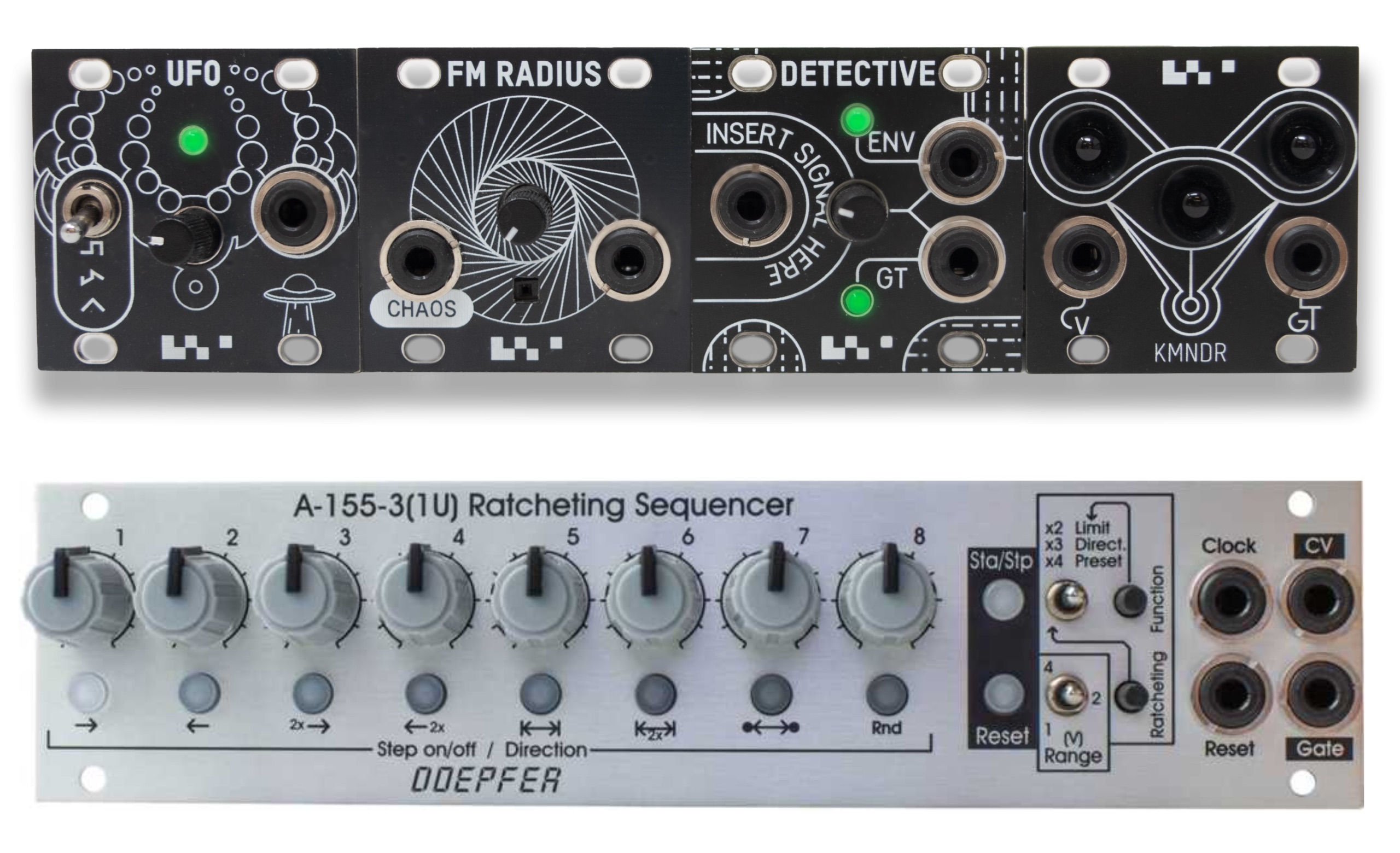
The highlight of the Doepfer release is the A-155-3, a mini ratcheting step sequencer adapted from the company’s legendary 3U sequencing architecture. Bringing ratcheting and advanced step sequencing to the 1U rail provides users with dense rhythmic control options previously restricted to standard-height modules.
Chronology and Development Timeline
The path toward the current 1U renaissance has evolved steadily over the past decade, shifting from fragmented, proprietary standards toward a more cohesive industry landscape.
Initially, the 1U format was plagued by incompatible mechanical standards and power pinout configurations. Different manufacturers—most notably Intellijel and Pulp Logic—championed competing sizes and connector types, creating friction for musicians mixing brands within a single case. Over time, standardization efforts and wider industry adoption stabilized the market, encouraging more developers to design specifically for the format.
The modern revival accelerated significantly during industry trade events, most notably the Superbooth convention in Berlin. During the exhibition, Doepfer formally demonstrated its commitment to the single-height format by pairing its new 7U enclosures with a dedicated suite of essential utility modules. This rollout signaled to the broader synthesizer community that established legacy brands recognized the long-term viability of the 1U row.
Following these initial trade show debuts, manufacturing pipelines cleared by late summer, resulting in the commercial availability of both the Doepfer 1U series and Koma Elektronik’s experimental lineup through international distributors such as Perfect Circuit and Thomann. Koma Elektronik further capitalized on the launch window by offering introductory promotional bundles through the end of September, driving early adoption among European and global modular practitioners.
Technical Analysis and Supporting Data
From an engineering perspective, designing for the 1U Eurorack format presents distinct challenges regarding component density, thermal management, and ergonomic layout. Standard Eurorack modules operate on a 3U height standard (approximately 133.4 millimeters), whereas 1U modules typically adhere to either the 0.75-inch (Intellijel standard) or 1U (Pulp Logic standard) vertical dimensions. Squeezing complex circuitry—such as envelope followers, multi-waveform LFOs, and multi-channel step sequencers—into these restricted panels requires the extensive use of surface-mount technology (SMT) and miniaturized jacks.
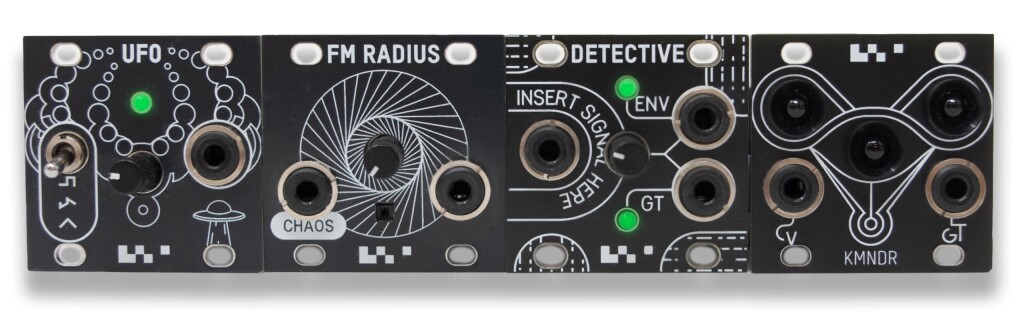
The inclusion of advanced features like infrared gesture sensing (seen in the Koma KMNDR) and multi-step ratcheting sequencing (featured in the Doepfer A-155-3) demonstrates how technological advancements in micro-controllers allow high-end performance features to inhabit spaces previously reserved for passive mults and power supplies. By condensing utilities like mixers and VCAs into the 1U row, users free up their primary 3U spaces for more demanding sound sources, such as complex digital oscillators and analog filters.
Broader Impact and Industry Implications
The expansion of the 1U format carries significant economic and workflow implications for the electronic music hardware sector. As modular synthesizers grow increasingly sophisticated, studio space and case portability remain primary constraints for musicians. By offloading utility tasks—mixing, voltage attenuation, envelope generation, and interface translation—into the 1U row, manufacturers are effectively expanding the usable canvas of every existing modular case on the market.
Furthermore, the participation of legacy manufacturers like Doepfer lends institutional validation to a format that was once viewed by traditionalists as an experimental niche. Coupled with the imaginative, budget-friendly offerings from independent developers like Koma Elektronik, the 1U market is fostering a competitive environment that encourages both utilitarian reliability and boundary-pushing sound design.
As these modules become staples in contemporary patches, the industry is likely to see continued investment in single-height engineering, cementing the 1U row as an essential operational tier of the modern modular synthesizer.