Aveline Kirana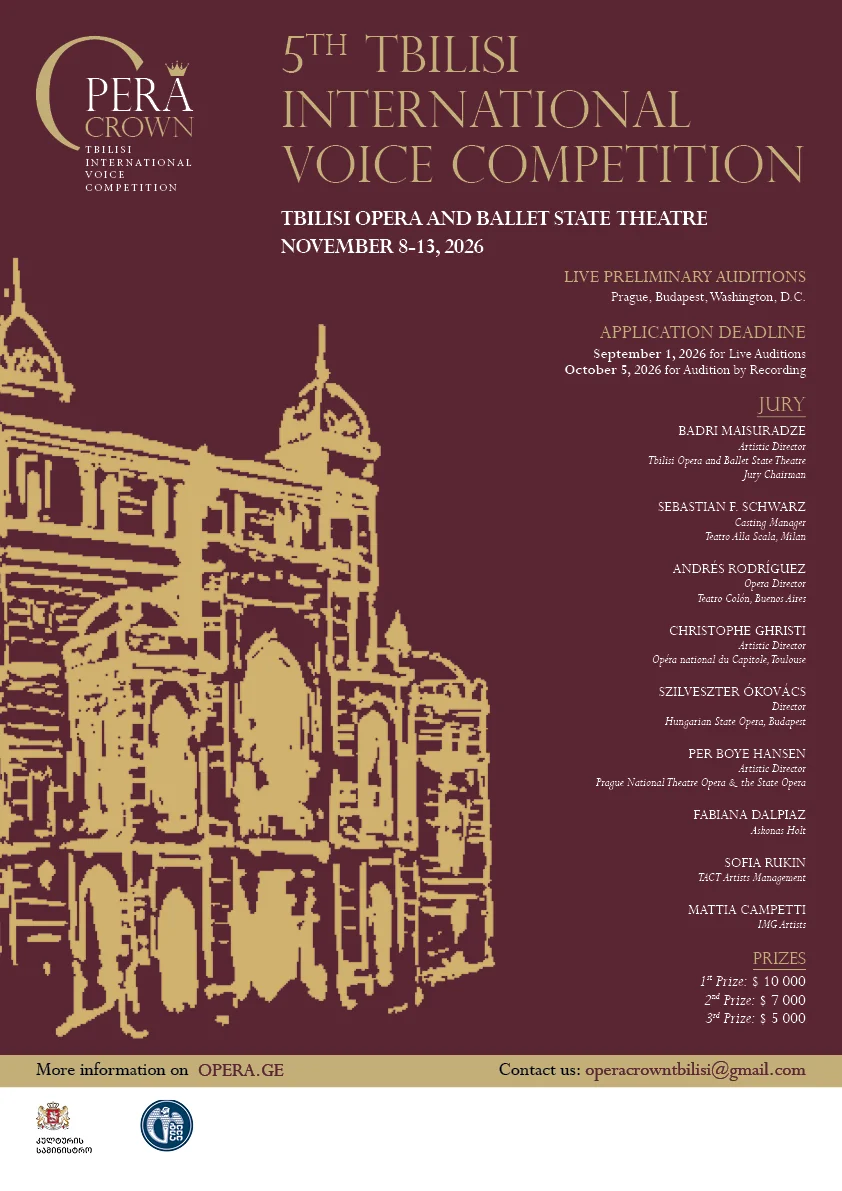
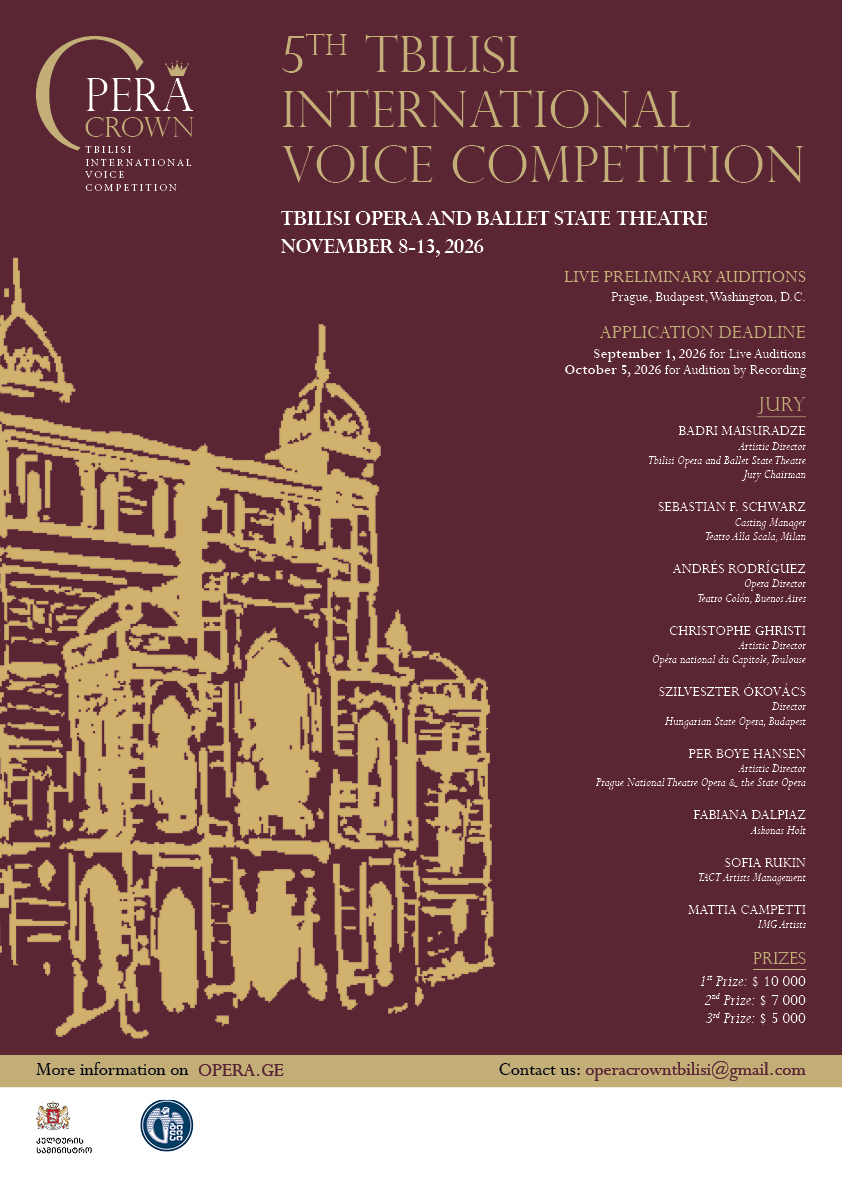
The prestigious Tbilisi Opera and Ballet State Theatre is gearing up to host the fifth edition of the Tbilisi International Voice Competition, widely recognized as the Opera Crown, from November 8 to 13, 2026. This highly anticipated event promises to be a significant platform for emerging operatic talent, drawing aspiring singers from across the globe to Georgia’s vibrant capital. The competition, established to foster and celebrate the future of opera, has rapidly gained international acclaim for its rigorous selection process, distinguished jury, and substantial prize offerings.
A Jury of Esteemed Operatic Luminaries
This year’s competition boasts an exceptionally strong and influential jury, a testament to the Opera Crown’s growing stature. Leading the panel as Jury Chairman is Badri Maisuradze, a figure of considerable authority and artistic vision as the Artistic Director of the Tbilisi Opera and Ballet State Theatre. His leadership will undoubtedly guide the competition with a deep understanding of operatic artistry and the demands of the professional stage.
Joining Maisuradze are several internationally renowned figures from the highest echelons of the opera world. Sebastian F. Schwarz, Casting Manager for the iconic Teatro alla Scala in Milan, brings his invaluable expertise in identifying and nurturing talent for one of the world’s most revered opera houses. His presence signifies a direct pipeline to major operatic opportunities for the competition’s winners.
Andrés Rodríguez, Opera Director of the esteemed Teatro Colón in Buenos Aires, contributes his experience from another leading South American opera institution. The Teatro Colón is celebrated for its grand productions and rich history, making Rodríguez’s perspective particularly significant.
Christophe Ghristi, Artistic Director of the Opéra national du Capitole in Toulouse, France, further strengthens the jury’s international reach. The Opéra national du Capitole is known for its commitment to contemporary and classical repertoire, offering a broad perspective on vocal excellence.
From Central Europe, Szilveszter Ókovács, Director of the Hungarian State Opera in Budapest, lends his leadership from a historic and vibrant opera house. The Hungarian State Opera has a long-standing tradition of operatic excellence, and Ókovács’s involvement underscores the competition’s appeal across diverse European operatic landscapes.
Rounding out the directorial representation is Per Boye Hansen, Artistic Director of the Prague National Theatre Opera and the State Opera. His dual role in Prague highlights his comprehensive understanding of operatic programming and artistic direction.
The jury is further augmented by a distinguished group of artist managers, whose insights are crucial in assessing not only vocal talent but also the potential for a successful professional career. Fabiana Dalpiaz of Askonas Holt, one of the world’s foremost artist management agencies, brings a wealth of experience in shaping the careers of leading opera singers. Sofia Rukin of TACT Artists Management and Mattia Campetti of IMG Artists, another major global talent agency, also contribute their expertise, ensuring a holistic evaluation of the participants’ potential. The collective experience and global network of these jury members position the Opera Crown as a critical stepping stone for aspiring singers.
A Global Reach: Preliminary Auditions and the Path to Tbilisi
The Opera Crown’s commitment to accessibility and inclusivity is demonstrated through its strategically located live preliminary auditions. Recognizing the financial and logistical challenges faced by international artists, the competition has organized auditions in key global cities. This year, aspiring singers will have the opportunity to showcase their talents in Prague, Budapest, and Washington, D.C. These locations not only offer convenient access for regional talent but also reflect the competition’s ambition to attract a truly international cohort.
The preliminary rounds serve as a crucial filter, allowing the jury to identify the most promising vocalists from a large pool of applicants. The success of these auditions in previous years has consistently brought diverse and exceptional talent to the final competition in Tbilisi. The selection process is designed to be thorough, ensuring that only the most refined and compelling voices advance to the main event.
Substantial Prizes and Career-Altering Opportunities
The financial incentives offered by the Opera Crown are substantial, reflecting the competition’s dedication to supporting the careers of young artists. The total prize pool for the 5th edition amounts to an impressive $22,000. This significant sum is distributed among the top contenders, with the first-place winner receiving $10,000, the second-place recipient awarded $7,000, and the third-place finalist securing $5,000.
Beyond the monetary rewards, the true value of the Opera Crown lies in the unparalleled exposure and networking opportunities it provides. The presence of casting directors from major opera houses and leading artist managers on the jury offers participants direct access to influential figures in the opera industry. For many, winning or even participating in the Opera Crown can be a transformative experience, leading to engagements, representation, and a significant boost to their burgeoning careers. The competition acts as a launchpad, connecting promising artists with the institutions and professionals who can shape their future.
Historical Context and Evolution of the Opera Crown
The Tbilisi International Voice Competition, Opera Crown, has steadily grown in prominence since its inception. The initiative was born from a desire to establish Georgia as a significant hub for operatic talent development and to provide a global stage for emerging singers. The Tbilisi Opera and Ballet State Theatre, with its rich history and architectural grandeur, offers an inspiring and fitting venue for such a prestigious event.
The competition’s trajectory has been marked by increasing international participation and a consistently high caliber of contestants. Each edition has seen a broadening of geographical representation, with singers from Europe, Asia, the Americas, and beyond vying for recognition. The evolution of the jury composition, mirroring the growing international appeal of the competition, further attests to its success. The inclusion of influential figures from La Scala, Teatro Colón, and leading artist management agencies in the early stages of the competition’s development would have been ambitious, but their consistent presence now highlights its established reputation.
The preliminary audition locations have also been strategically chosen to reflect the competition’s global aspirations. While the exact timeline for the establishment of these preliminary rounds is not detailed in the provided information, it is logical to infer that their introduction has been a gradual process, expanding as the competition’s reach and resources have grown. This phased approach to expansion suggests a well-planned and sustainable growth strategy.
Broader Implications for the Operatic Landscape
The Opera Crown’s influence extends beyond the immediate careers of its participants. By nurturing and identifying new talent, the competition plays a vital role in the ongoing vitality of the operatic art form. The opera industry, like many performing arts sectors, faces the continuous challenge of attracting new audiences and ensuring a pipeline of skilled artists to sustain its traditions while embracing innovation. Events like the Opera Crown contribute significantly to this objective by discovering singers who can captivate audiences for generations to come.
Furthermore, the competition’s focus on a diverse and international jury fosters cross-cultural understanding and collaboration within the opera world. The exchange of perspectives and artistic sensibilities among jury members from different operatic traditions can lead to a richer and more dynamic global opera scene. The presence of artist managers also signifies a direct link between emerging talent and the commercial aspects of the industry, potentially leading to new performance opportunities and engagements that might otherwise be difficult to secure.
The substantial prize money, while significant, is only one facet of the opportunity. The real prize is often the professional connections forged during the competition. A positive interaction with a casting director or a manager can open doors that money alone cannot. The Opera Crown’s success can be measured not just in dollars awarded, but in the number of past participants who have gone on to secure roles in major opera houses or secure long-term representation. This impact reverberates through the entire opera ecosystem, from the training institutions that nurture these singers to the opera houses that present their performances.
The ongoing success of the Opera Crown in Tbilisi solidifies the city’s position as a significant center for operatic arts and talent development. The event not only benefits individual artists but also contributes to the cultural prestige and economic vitality of Georgia. As the 2026 competition approaches, the opera world will be watching closely to see which new voices will emerge to grace its grandest stages. The tradition of excellence and the promise of discovery that define the Opera Crown ensure its continued importance in the global operatic calendar.



![Sijya announces Leather and Brass [Retrofitted] EP, shares Do I Know [Rachika Nayar Edit]: Listen](https://empire-music.net/wp-content/uploads/2026/09/sijya-announces-leather-and-brass-retrofitted-ep-shares-do-i-know-rachika-nayar-edit-listen.webp)