Aveline Kirana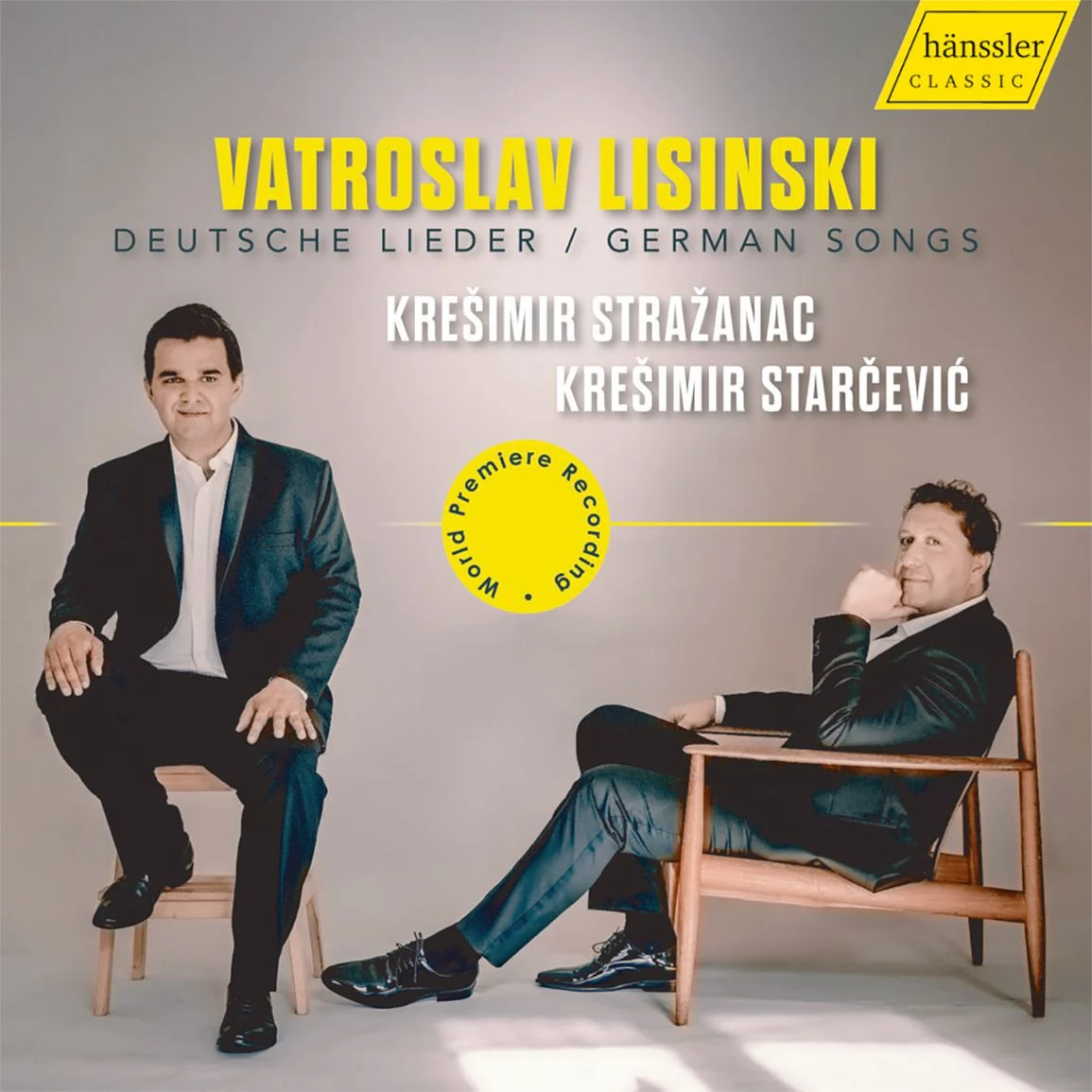
The life and work of Vatroslav Lisinski (1819-1854), a pivotal figure in Croatian cultural history, are being brought to the forefront with the release of a remarkable new recording. This album, featuring a Lisinski-only recital of German songs, marks the first time these compositions have been recorded, offering a fresh perspective on a composer recognized not only for his musical innovations but also as a fervent ideologue of the Illyrian movement. The Illyrian movement, a significant South Slavic campaign aimed at countering Austrian hegemony and fostering a unified South Slavic identity, placed Lisinski at the heart of a burgeoning national consciousness, much like his Italian counterparts during the Risorgimento. He stands as a quintessential "child of his time," embodying the Romantic era’s confluence of artistic expression and political fervor.
Lisinski is widely credited with composing the first Croatian national opera, "Ljubav i zloba" (Love and Malice), a landmark achievement that solidified his place in the nation’s cultural pantheon. His enduring legacy is further underscored by the prestigious Zagreb Concert Hall, which bears his name – a fact brought to light by Krešimir Strajanac, the baritone protagonist of this groundbreaking recital. The recording, produced by Hänssler Classic, meticulously explores eighteen of Lisinski’s Lieder, German-language art songs believed to have been composed between 1846 and 1851. This period places the songs firmly within the heart of European Romanticism, a cultural phenomenon that, arguably, represented the last truly pan-European artistic movement.
The Romantic Soul of Lisinski’s Lieder
The Lieder presented in this new recital resonate with the characteristic melancholy and introspective spirit of mid-century Romanticism. Lisinski’s compositions, though rooted in a distinctly Croatian context, are deeply aligned with the broader European artistic currents of the era. His exploration of themes of beauty through transience, a concept echoed in the works of poets like Percy Bysshe Shelley, is evident in the evocative titles of his songs. Titles such as "Liebe und Ferne" (Love and Distance), "Lebewohl" (Farewell), "Abreise" (Departure), "Einsame Träne" (Lonely Tear), and "Ins wärmere Land" (To Warmer Lands) immediately signal a preoccupation with longing, separation, and the ephemeral nature of human emotion.
Musically, these songs are characterized as small, intimate vignettes, deeply embedded within the German-Austrian Lied tradition. The influence of Franz Schubert, a titan of the genre, is palpable, even if not explicitly stated by the composer. Lisinski’s approach often involves a delicate balance of lyrical melody and expressive harmonic language, reminiscent of Schubert’s masterful storytelling through song. The piano accompaniment, in particular, serves as a crucial narrative element, often mirroring the emotional arc of the text and enhancing the overall dramatic impact.
A Detailed Examination of Musical Craftsmanship
One of the standout tracks, "Der blinde Fischer" (The Blind Fisherman), exemplifies Lisinski’s compositional ingenuity. The piece opens with rolling melodic figures that artfully evoke the sound of waves, establishing a vivid sonic landscape. The introduction of a piano ostinato, a recurring motif in Lisinski’s work, adds a layer of dramatic tension. This ostinato, a short, repeated melodic or rhythmic phrase, briefly shifts the mode and harmonic color before the water imagery returns. This technique, employed across several of the recorded songs, appears to have been a characteristic element of Lisinski’s compositional palette, demonstrating his skill in creating atmospheric and engaging musical settings for his texts.
The collaboration between baritone Krešimir Strajanac and his accompanist, Krešimir Starčević, on this recording is nothing short of exceptional. Building on the success of their previous joint recitals, such as "Blagoje Bersa: Lieder" and "Schwanengesang," their partnership on this Lisinski project is described as a flawless collaboration. They fully embrace and convey the esprit of post-Schubertian salon music, a style that combines sophisticated musicality with an accessible emotional directness.
Starčević’s piano accompaniment is noted for its precision and clarity. He defines the arpeggiated melodic contours with a delicate touch, allowing the vocal line to soar. Strajanac, meanwhile, showcases a remarkable vocal command, employing a warm yet agile timbre that navigates a wide spectrum of expressive nuances. In "Der Zufluchtsort" (The Place of Refuge), the performance masterfully translates the contrast between tension and repose through beautiful diminuendi and the judicious use of a voix mixte. The piano, in Lisinski’s conception, often acts as a narrator, a role that Starčević and Strajanac fully embody, though perhaps with less revolutionary intent than figures like Schubert or Hugo Wolf.
Strajanac’s vocal phrasing is consistently effortless and refreshingly free from rigid adherence to convention. In "An ein Mädchen" (To a Young Girl), subtle rhythmic variations are infused with a sense of nonchalance, adding a charming spontaneity to the performance. Conversely, "Das Paradies" (Paradise) adopts a more elegiac tone, its repeated question, "Wo ist Eden?" (Where is Eden?), revealing the depth of Strajanac’s inwardness. His rendition is reflective and tinged with nostalgia, yet it avoids despair. There is a radiant lightness in his voice, which aligns with Lisinski’s apparent preference for major keys, suggesting an underlying optimism even within melancholic themes.
Lisinski: A Romantic of Hope and Communicability
Unlike some of his more tormented Romantic contemporaries, Lisinski does not present as a full-fledged artiste maudit. His engagement with his obsessions does not lead to the shattering intensity found in Robert Schumann’s works, nor does it plumb the profound depths of Schubert’s most profound explorations of human suffering. Instead, Lisinski’s artistic plight remains remarkably communicable, imbued with a subtle yet persistent sliver of hope. This characteristic, while perhaps perceived by some as a limitation, is ultimately sublimated into a "delightful homage," a memorial of sorts, captured beautifully on this Hänssler Classic release.
The Historical Context: Illyrism and the Dawn of Croatian Nationalism
To fully appreciate the significance of Vatroslav Lisinski and this new recital, it is crucial to understand the historical milieu in which he operated. Lisinski, born Ignaz Fuchs in Zagreb (then part of the Austrian Empire), was a key figure in the Illyrian movement, a cultural and political endeavor that emerged in the 1830s and 1840s. The movement’s primary goal was to foster a sense of South Slavic unity and to assert a distinct South Slavic identity against the prevailing German and Hungarian cultural and political dominance within the Habsburg Monarchy.
The Illyrians advocated for a common literary language, a shared cultural heritage, and the political unification of South Slavic peoples. Lisinski, a composer of immense talent, became a crucial cultural ambassador for this cause. His opera "Ljubav i zloba," premiered in 1846, was not merely an artistic triumph; it was a powerful statement of Croatian national identity, utilizing a vernacular language and drawing upon national themes. This opera, along with his other compositions, served as a vital tool in the Illyrian movement’s efforts to awaken national consciousness and pride among the Croatian populace.
The period between 1846 and 1851, when Lisinski composed the German Lieder featured on this album, was a tumultuous time in European history. The Revolutions of 1848 swept across the continent, challenging established monarchies and fueling nationalist aspirations. While Lisinski’s primary focus was on developing a distinct Croatian musical language, his engagement with German Lieder demonstrates the interconnectedness of European musical thought and the composer’s desire to engage with the broader Romantic tradition. His use of German texts for these songs may have been a strategic choice, allowing him to reach a wider audience within the multi-ethnic Habsburg Empire and to engage with established musical forms and expressive conventions.
Chronology of Lisinski’s Life and the Illyrian Movement
- 1819: Vatroslav Lisinski is born in Zagreb.
- 1830s-1840s: The Illyrian movement gains momentum, advocating for South Slavic unity and cultural revival.
- 1840s: Lisinski studies music in Prague and Vienna, absorbing the influences of European Romanticism.
- 1846: Lisinski’s opera "Ljubav i zloba" (Love and Malice) premieres in Zagreb, hailed as the first Croatian national opera and a significant cultural event for the Illyrian movement.
- 1846-1851: Lisinski composes the German Lieder featured on the new Hänssler Classic recording. This period is marked by intense musical activity and continued engagement with the Illyrian cause.
- 1848: Revolutions erupt across Europe, including within the Habsburg Monarchy, intensifying nationalist sentiments.
- 1854: Vatroslav Lisinski dies at the young age of 35, leaving behind a significant legacy as a composer and a national ideologue.
- Posthumous: The Zagreb Concert Hall is named in his honor, solidifying his status as a national icon.
- 2023/2024: Hänssler Classic releases the first-ever recording of Lisinski’s German Lieder, performed by Krešimir Strajanac and Krešimir Starčević, sparking renewed interest in his broader compositional output.
Supporting Data and Analysis of Implications
The recording of Lisinski’s German Lieder provides valuable data for musicologists and historians seeking to understand the composer’s artistic development and his place within the broader European musical landscape. The fact that these songs, written in German, exist alongside his Croatian-language compositions highlights the complexities of cultural identity and artistic expression within the multilingual environment of 19th-century Central Europe.
The choice of German for these Lieder can be interpreted in several ways:
- Market Access: German was the lingua franca of much of the educated elite in the Habsburg Empire, offering Lisinski a potentially wider audience than purely Croatian compositions might have afforded him at the time.
- Artistic Apprenticeship: By composing in German, Lisinski was engaging directly with the established traditions of the German Lied, a genre that had reached extraordinary heights with composers like Schubert and Schumann. This allowed him to hone his skills and experiment with established forms and expressive techniques.
- Political Nuance: While a fervent Croatian nationalist, Lisinski was also a pragmatist. Engaging with German musical forms might have been a way to subtly assert his artistic legitimacy within the imperial framework, demonstrating that South Slavic artists could master and contribute to the dominant European musical discourse.
The implications of this recording are significant for several reasons. Firstly, it fills a crucial gap in the discography of Vatroslav Lisinski, offering listeners a more complete picture of his compositional output. Secondly, it challenges any narrow perceptions of Lisinski as solely a composer of Croatian national music, revealing him as a nuanced artist capable of engaging with universal Romantic themes through diverse linguistic and stylistic means. Thirdly, the exceptional performance by Strajanac and Starčević is likely to introduce Lisinski’s Lieder to a new generation of listeners, potentially sparking further scholarly research and performance opportunities for his lesser-known works.
Reactions and Broader Impact
While direct statements from contemporary figures related to the recording are not available in the provided text, the release itself represents a significant act of cultural preservation and promotion. The initiative by Hänssler Classic, in collaboration with artists like Strajanac and Starčević, underscores a growing global interest in rediscovering and re-evaluating composers who may have been historically marginalized or whose work has been underrepresented in mainstream classical music programming.
The broader impact of this recording extends beyond the realm of classical music. It contributes to a richer understanding of 19th-century nationalism and its relationship with artistic expression. By showcasing Lisinski’s engagement with German-language song, the recital subtly illustrates the complex interplay of cultural exchange and national identity formation that characterized the era. It reminds us that artistic movements are rarely insular and that composers, even those deeply committed to national causes, often draw inspiration from and contribute to a wider, international artistic dialogue. This recording serves as a testament to Lisinski’s enduring artistic spirit and his significant, yet often understated, role in shaping the cultural landscape of South Eastern Europe.