 Nayara Elvina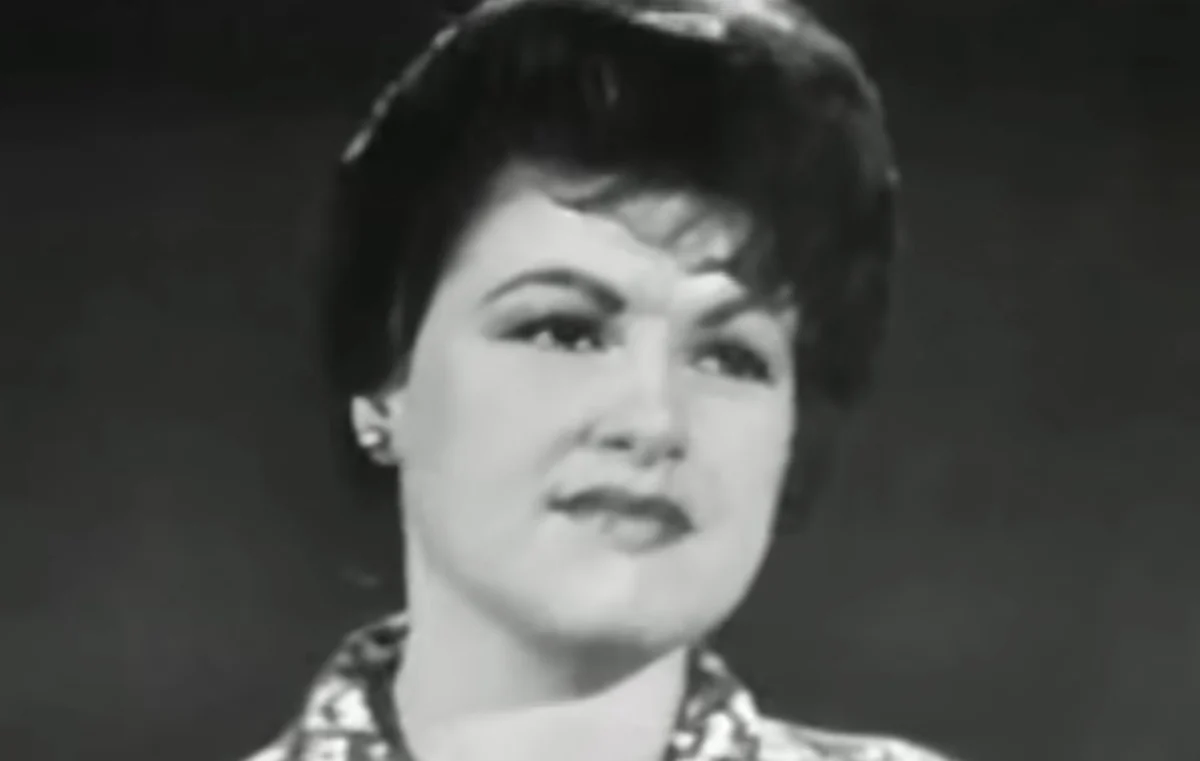
The history of American popular music is punctuated by figures whose influence transcends their lifespan, but few stories are as haunting or as enduring as that of Patsy Cline. Born Virginia Patterson Hensley in 1932, Cline did more than just sing country music; she redefined the genre, bridging the gap between honky-tonk and mainstream pop with a voice that was both technically flawless and emotionally devastating. However, the legacy of the woman behind hits like "Crazy" and "I Fall to Pieces" is inextricably linked to a series of eerie premonitions and near-death experiences that culminated in her tragic passing at the age of 30. On March 5, 1963, a private plane carrying Cline, fellow performers Cowboy Copas and Hawkshaw Hawkins, and pilot-manager Randy Hughes crashed in the woods near Camden, Tennessee, silencing one of the most significant voices in 20th-century music.
The Formative Crisis: A Voice Born of Illness
The narrative of Patsy Cline’s life is often framed by resilience, beginning with a life-threatening medical crisis in her youth. At the age of 13, Cline contracted a severe case of rheumatic fever. The illness was so debilitating that she was placed in an oxygen tent, and for several days, her survival was in doubt. In a 1957 interview, Cline reflected on this period as the moment her musical identity was forged. She noted that the fever and the subsequent throat infection fundamentally altered her vocal cords.
"I developed a terrible throat infection and my heart even stopped beating," Cline recalled. "The fever affected my throat and when I recovered, I had this booming voice." This transformation allowed her to transition from a standard juvenile singer to a powerhouse capable of the "Nashville Sound"—a sophisticated, string-heavy production style that required a vocalist with immense control and resonance. This early brush with death served as the first of three major incidents that shaped her belief that her time on Earth was destined to be short.
The Rise to Stardom and the 1961 Nashville Crash
By the early 1960s, Patsy Cline had achieved what few women in country music had managed: true crossover success. In 1961, "I Fall to Pieces" became a number-one hit on the country charts and a top-20 hit on the Billboard Hot 100. However, at the peak of this newfound fame, tragedy struck again. In June 1961, Cline and her brother, Sam Hensley Jr., were involved in a head-on collision in Nashville. The impact was so severe that two passengers in the other vehicle were killed.
Cline was thrown through the windshield, suffering a jagged gash across her forehead, a dislocated hip, and a broken wrist. Upon her arrival at the hospital, medical staff were skeptical of her chances for recovery. It was during this recovery period that Cline’s spiritual convictions and her sense of a "borrowed" life began to solidify. She told her husband, Charlie Dick, that she had experienced a divine intervention while unconscious, stating that Jesus had held her hand and told her it was not yet her time because there were "other things" for her to do. This event did not merely leave her with physical scars, which she famously covered with wigs and makeup, but it also instilled a sense of urgency in her professional and personal affairs.
The Weight of Premonition: Documenting the Inevitable
Following the 1961 accident, those closest to Cline began to notice a shift in her demeanor. She became increasingly preoccupied with the idea that she would not live to see old age. This was not merely a private anxiety but a conviction she acted upon with administrative precision. According to Stephen Miller’s biography, Johnny Cash: The Life of An American Icon, Cline confided her fears to June Carter Cash. During these conversations, Cline went as far as to provide June with written instructions regarding the care and upbringing of her children, Julie and Randy, in the event of her death.
This sense of impending doom was also reflected in her legal preparations. In April 1961, while aboard a Delta Airlines flight, Cline requested stationery from a flight attendant and drafted a holographic will. The document was remarkably detailed for a spontaneous writing; it outlined the distribution of her assets to her mother, Hilda Hensley, and specified her wishes for her children. Eerily, she even designated the clothing she wished to be buried in.
However, the will was ultimately fraught with legal complications. Despite her clear intentions to leave her estate to her mother, the document did not meet the strict legal requirements for a will in the state of Tennessee at the time. Consequently, upon her death, her estate was managed by her husband, Charlie Dick. This outcome was particularly poignant given that letters discovered after her death suggested Cline was planning to seek a divorce from Dick, whose marriage to her was often described as turbulent and characterized by frequent conflicts.
The Final Weeks: A Pattern of Generosity and Farewell
In the months leading up to March 1963, Cline’s behavior became what her close friend Loretta Lynn described as "frantic." In her memoir, Me & Patsy Kickin’ Up Dust, Lynn recounted how Cline began giving away her personal possessions with unusual frequency. While Cline had always been known for her generosity, the scale of her gifting in early 1963 felt like a systematic distribution of her legacy.
The sense of a countdown was also present in her professional interactions. Ray Walker, a member of The Jordanaires—the legendary vocal group that backed Cline on many of her recordings—recalled a haunting exchange with the singer just days before her final flight. When Walker wished her safe travels, Cline responded with a grim assessment of her history: "Honey, I’ve had two bad ones. The third one will either be a charm or it’ll kill me." This reference to her rheumatic fever and her 1961 car crash suggests that Cline viewed her life through a lens of three fated events.
The Fatal Flight: March 5, 1963
The events that led to the crash began with a benefit concert in Kansas City, Kansas, held to honor the memory of "Cactus" Jack Call, a local disc jockey who had died in a car accident. Cline, despite feeling ill with a cold, performed three shows on March 3. Heavy fog and inclement weather prevented the performers from flying out immediately after the show.
On the evening of March 5, the group prepared to depart from Fairfax Airport in a Piper PA-24 Comanche. The weather remained treacherous, with high winds and low visibility reported across the flight path toward Nashville. Fellow country star Dottie West, who was also in Kansas City, was so concerned about the weather that she urged Cline to drive back to Nashville with her and her husband. Cline famously declined, expressing a desperate need to get home to her children. Her final words to West were a chilling acceptance of fate: "Don’t worry about me, Hoss. When it’s my time to go, it’s my time."
The flight took off at approximately 6:07 PM. After a refueling stop in Dyersburg, Tennessee, the pilot, Randy Hughes, decided to continue the flight despite being warned of severe weather ahead. Hughes was not trained in instrument flight rules (IFR), meaning he relied on visual cues to fly. In the pitch-black darkness and heavy rain over the Tennessee wilderness, it is believed he became disoriented. At approximately 6:20 PM, the aircraft crashed into a heavily wooded area near Camden, Tennessee. There were no survivors.
Investigation and Official Findings
The Civil Aeronautics Board (CAB), the predecessor to the National Transportation Safety Board (NTSB), conducted an investigation into the crash. The final report cited pilot error and the pilot’s lack of experience with instrument flying in adverse weather conditions as the primary causes. The investigation revealed that the aircraft struck the trees at a high rate of speed in a nose-down attitude, suggesting a "graveyard spiral" often associated with spatial disorientation in low-visibility environments.
The news of the crash sent shockwaves through the music industry. Nashville, then a tight-knit community of artists and songwriters, was devastated. The loss was compounded by the deaths of Cowboy Copas and Hawkshaw Hawkins, both of whom were established stars of the Grand Ole Opry. However, it was the loss of Cline, who was at the absolute zenith of her career, that resonated most profoundly with the public.
The Enduring Impact on Country Music
Patsy Cline’s death at age 30 created a vacuum in the industry, but it also solidified her status as a martyr of the genre. In 1973, she became the first solo female artist to be inducted into the Country Music Hall of Fame. Her influence can be seen in the careers of nearly every female country artist who followed, from Reba McEntire and Wynonna Judd to k.d. lang and LeAnn Rimes.
The data regarding her posthumous success is staggering. Her Greatest Hits album, released four years after her death, has sold over 10 million copies and held the record for the longest-staying album on the Billboard country charts for decades. This enduring commercial success suggests that her music possesses a timeless quality that transcends the tragic circumstances of her death.
Analytically, the "Patsy Cline phenomenon" represents a intersection of talent and tragedy that is rare in music history. Her premonitions, while often viewed through a lens of mysticism, may also be seen as the heightened intuition of a woman who had twice survived the unsurvivable. She lived her final years with the clarity of someone who knew the value of every moment, a quality that is palpably felt in the emotional depth of her recordings.
Ultimately, the story of Patsy Cline is not just one of a life cut short, but of a woman who seemed to understand the cadence of her own destiny. While her career lasted only a few short years, the "other things" she was told she had to do were clearly accomplished. She didn’t just sing songs; she provided a blueprint for vocal excellence and emotional honesty that continues to guide the genre of country music more than sixty years after her final flight.