Nayara Elvina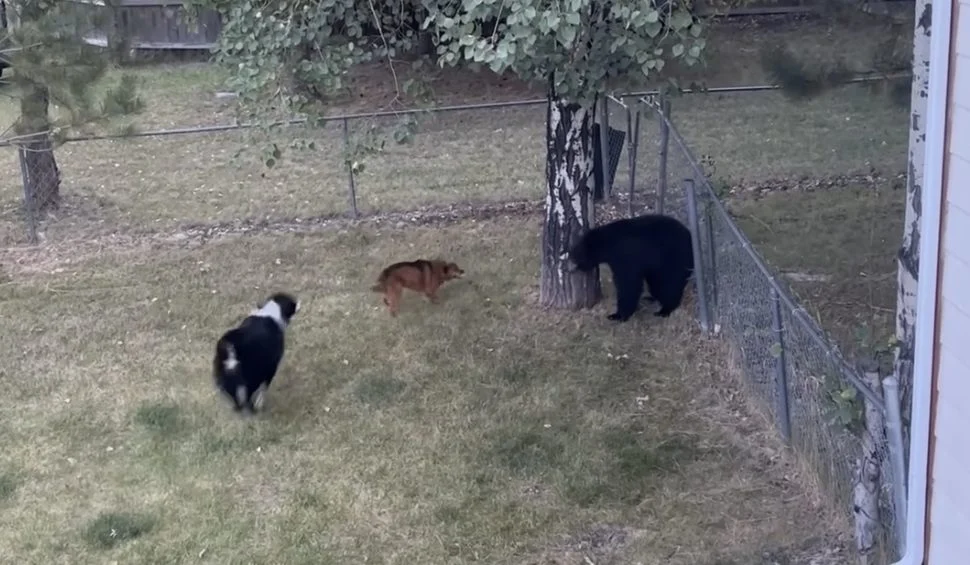
The intersection of urban development and wildlife habitats frequently produces unexpected encounters, but few are as confounding as a recent incident in Bozeman, Montana, where a sizable black bear found itself thoroughly outmatched by two domestic dogs. Captured on video by local resident Jeana Paulson, the footage highlights the complex behavioral dynamics that occur when opportunistic wildlife wanders into residential territories. While black bears are widely recognized as formidable apex predators equipped with the physical attributes to dominate most confrontations, this particular animal opted for a strategy of rapid retreat, demonstrating that survival in human-dominated landscapes often relies on avoiding unnecessary conflict.
Main Facts of the Bozeman Backyard Confrontation
The incident took place in a fenced residential backyard in Bozeman, Montana, a rapidly growing community nestled in the Gallatin Valley where wildlife encounters are increasingly common. The protagonist of the video—a healthy, medium-sized black bear—accidentally breached the perimeter of a residential property, seemingly lured by the sights and smells typical of suburban yards.
Upon entering the enclosure, the bear was immediately intercepted by the property’s resident canines: a pair of dogs named Alvin and, ironically, Bear. Despite the significant size disparity between the wild mammal and the domestic pets, the dogs launched an aggressive, vocal defense of their territory. Rather than asserting its dominance or acting with aggression, the black bear exhibited clear signs of distress and confusion, prioritizing a hasty exit over territorial posturing. The homeowner, Jeana Paulson, captured the entire episode on film while shouting in an attempt to command her dogs to retreat and urging the trapped wild animal to find a way out.
Chronology of the Event
The sequence of events unfolded rapidly, transforming a quiet suburban afternoon into a chaotic scene of canine vigilance and ursine panic.
The encounter began when the black bear successfully scaled or bypassed the perimeter fencing of the Bozeman property, likely searching for accessible food sources such as unsecured garbage, pet food, or fruit trees. Once inside, the animal inadvertently cornered itself against the boundaries of the yard.
Alvin and Bear, operating on instinctive territorial defense mechanisms, immediately detected the intrusion. Charging toward the massive visitor, the dogs unleashed a barrage of barks and relentless pestering, nipping at the bear’s heels and blocking its preferred pathways to escape.
As the commotion escalated, Paulson stepped in to manage her pets, shouting commands to de-escalate the situation. At one point, her voice rings out clearly on the recording, yelling, "Get out of here bear! Get the f*** out of here." Despite the human intervention, the dogs remained laser-focused on expelling the intruder.
Trapped and harried, the bear made several frantic attempts to locate an exit. It was repeatedly intercepted by the persistent canines, forcing the wild animal to pivot and seek alternative routes along the fence line. Demonstrating notable restraint, the bear chose flight over fight, refusing to engage the dogs physically despite possessing the lethal capability to do so. After a tense series of maneuvers, the bear finally located an opening, surged past the barking guardians, and successfully vaulted the fence to safety.
Supporting Data on Human-Wildlife Coexistence in Montana
Incidents involving black bears entering residential areas in Montana are thoroughly documented by state wildlife agencies, reflecting the ecological realities of the region. Bozeman and the surrounding Gallatin County are situated in prime black bear habitat, characterized by dense forested foothills transitioning into suburban neighborhoods.
According to Montana Fish, Wildlife & Parks (FWP), black bears are opportunistic omnivores whose diet consists of 80 to 90 percent vegetation, insects, and nuts. However, their acute sense of smell—estimated to be thousands of times more sensitive than that of a human—frequently draws them toward urban attractants. Residential neighborhoods offer high-calorie rewards, including unsecured garbage cans, backyard compost piles, chicken coops, and fruit-bearing trees.
Wildlife biologists note that spring and autumn are peak periods for bear activity. In the spring, emerging bears seek immediate nourishment after emerging from their winter dens, while autumn brings a state of hyperphagia, a biological imperative where bears consume massive amounts of calories to prepare for winter dormancy. During these windows, human-bear interactions in suburban zones spike significantly. Furthermore, data from FWP indicates that domestic dogs frequently act as a deterrent against large wildlife intrusions, though wildlife officials generally advise caution, as aggressive wildlife can occasionally inflict severe or fatal injuries on household pets.
Behavioral Analysis: Why the Bear Chose Retreat
From an ethological perspective, the bear’s behavior in the Bozeman video aligns with standard ursine survival strategies. In most scenarios, black bears are naturally timid animals that prefer to avoid conflict with humans and other large animals. Their primary instinct when startled or cornered is the "flight" response.
Dr. Lynn Rogers, a leading biologist specializing in black bear behavior, has frequently noted that black bears use posturing and bluff charges when threatened, but actual attacks on domestic animals or humans are statistically rare unless the bear is defending cubs, cornered with no avenue of escape, or habituated to human presence and food rewards. In this instance, the Bozeman bear was trapped in an unfamiliar, confined space. The unpredictable nature of the barking dogs—whose erratic movements and loud vocalizations signal high arousal—created a sensory overload for the wild animal.
By refusing to retaliate, the bear demonstrated a cost-benefit calculation inherent in wild predators: the energy expenditure and risk of injury from a minor skirmish with domestic dogs far outweighed the value of defending the residential yard. Predators are inherently risk-averse; sustaining a wound from a dog could compromise a bear’s ability to forage effectively in the wild, potentially leading to starvation.
Official Responses and Public Reaction
The viral circulation of the video on social media platforms generated widespread public commentary, dividing viewers on the nature of the interaction. While some internet users expressed sympathy for the startled bear, highlighting the vulnerability of wildlife pushed into urban peripheries, others focused on the humor of the situation, particularly the irony of a dog named Bear chasing an actual bear off the property.
Local wildlife authorities and animal control agencies use such viral incidents as educational opportunities to reinforce community guidelines regarding wildlife safety. FWP consistently issues advisories urging residents in bear-country municipalities to practice stringent attractant management. Key recommendations include:
- Securing all garbage in bear-resistant containers until the morning of collection.
- Removing bird feeders during active bear seasons.
- Storing pet food indoors and avoiding leaving livestock feed exposed.
- Installing electric fencing around backyard chicken coops and small orchards.
Regarding pet safety, officials emphasize that while dogs can successfully deter wildlife, they can also inadvertently provoke defensive attacks from more aggressive animals, such as grizzly bears or mountain lions, which may not flee as readily as a submissive black bear. Pet owners are advised to keep dogs leashed or closely supervised when letting them out into yards adjacent to wildland interfaces.
Broader Impact and Implications for Suburban Communities
The Bozeman incident serves as a microcosm of the broader challenges facing expanding municipalities in the American West. As human populations grow and residential developments encroach further into natural wildlife corridors, encounters between humans, domestic pets, and native fauna are bound to increase.
Urban sprawl fragments traditional migration and foraging routes, forcing animals to navigate human infrastructure in search of sustenance. When bears enter towns, they face numerous hazards, ranging from vehicular collisions and toxic ingestion of household waste to lethal removals by wildlife management agencies if they become habituated or a perceived threat to public safety.
The fortunate outcome of the Bozeman confrontation—where neither the bear nor the dogs sustained injuries—highlights the resilience of both wildlife and domestic animals in shared spaces. However, experts stress that relying on household pets to police property boundaries is an unreliable and potentially dangerous strategy for long-term coexistence.
Ultimately, the video of the overwhelmed black bear fleeing two determined dogs offers both comic relief and a sober reminder of the proximity of the wild. As communities like Bozeman continue to balance conservation with development, proactive measures by residents to secure attractants remain the most effective tool in preventing dangerous wildlife conflicts, ensuring that both local canines and wandering apex predators can navigate their overlapping worlds safely.