 Nayara Elvina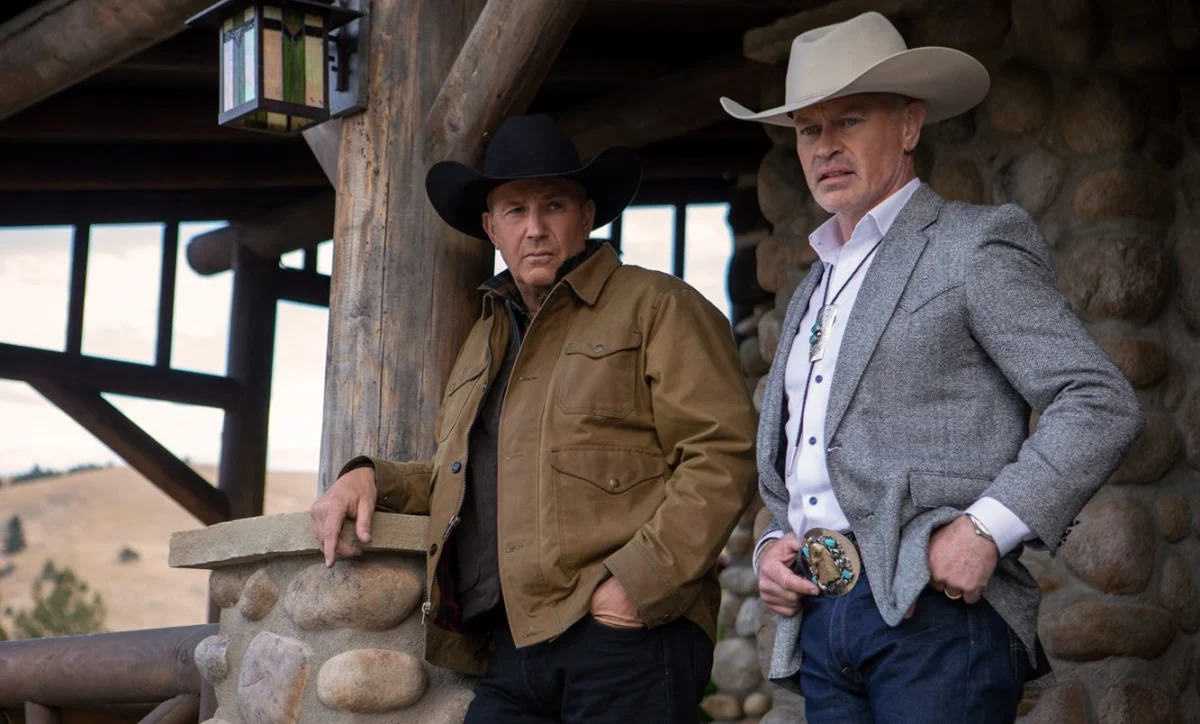
Actor Neal McDonough has built a prolific career playing some of television and film’s most memorable villains, lawmen, and authority figures. Yet, despite his extensive filmography and critical acclaim across multiple decades, there is one major hit series he has deliberately never watched: Taylor Sheridan’s neo-Western juggernaut, Yellowstone. McDonough, who delivered a chilling performance as the wealthy, ruthless businessman and antagonist Malcom Beck during the show’s explosive second season, has never pressed play on a single scene of his six-episode arc. While fans across the globe continue to dissect the high-stakes showdowns between Beck and Kevin Costner’s patriarch John Dutton, the actor remains entirely detached from the final product on screen.
The revelation, shared during a candid and introspective appearance on the Arroyo Grande podcast, sheds light on a deeply personal boundary McDonough maintains regarding his craft. Far from being a mere eccentric quirk shared by some performers, the actor’s refusal to watch his own work is rooted in a complex intersection of professional method acting, past personal struggles with alcohol, and a turbulent period in Hollywood where he faced severe industry blacklisting. For McDonough, revisiting his performances is not a celebration of his art, but rather an emotional portal that opens up chapters of his life he prefers to keep firmly in the past.
The Method Behind the Actor’s Detachment
To understand why McDonough avoids watching his own performances, one must examine his approach to the craft. As a deeply committed method actor, McDonough internalizes his characters to the point where the boundaries between reality and performance blur during the moment of creation. Consequently, seeing a frame of himself on screen triggers a flood of hyper-specific memories that go far beyond the visual image.
During his podcast interview, McDonough elaborated on the psychological weight of looking at his past work. He explained that if he were to look at a single frame from a project filmed decades ago, or even a few years prior during his stint on Yellowstone, he would instantly recall the exact internal monologue he was experiencing at that precise second. He would remember the specific songs playing in his head to get into character, the logistical details of where he was walking, and the emotional headspace he occupied during production.
For an actor who has experienced significant personal growth and overcome profound professional hardships, opening that mental time capsule can be an intensely painful experience. Rather than seeing Malcom Beck, the ruthless Montana cattle baron and militia leader, McDonough sees the exact personal turmoil he was navigating off-camera during that specific phase of his life.
The Dark Chapter: Industry Blacklisting and Personal Struggles
The reluctance to revisit his time on Yellowstone is compounded by the fact that McDonough’s stint on the show coincided with a period of profound personal and professional vulnerability. Decades prior to joining the Taylor Sheridan universe, the actor cemented a strict personal code regarding his marriage and family life, vowing never to perform intimate or romantic scenes with other actors out of deep devotion to his wife, Ruvé. While this boundary is now a known facet of his career, Hollywood was far less accommodating in the late 2000s and early 2010s.
In previous interviews, McDonough has spoken candidly about being essentially blackballed by major studios and casting directors after refusing to film romantic encounters. The industry, struggling to comprehend his unwavering devotion to his personal morals, frequently mischaracterized him, with some studio executives unfairly writing him off as difficult or overly rigid. This sudden and freezing professional ostracization sent shockwaves through his career, leading to a dry spell where major networks and film studios routinely passed on casting him.
Concurrently, the stress of this unmerited professional exile compounded personal struggles, including a battle with alcohol abuse. McDonough has been remarkably transparent about that dark era, admitting that his daily mindset was frequently dominated by thoughts of escaping the pressures of his situation at the nearest bar. The convergence of professional rejection, reputational damage, and alcohol dependency created a turbulent environment that he has since successfully left behind.
Credit for his recovery and subsequent career resurgence is frequently given by the actor to his wife, Ruvé, whose steadfast support kept their family anchored through the worst of the Hollywood storm. Because his time on Yellowstone sits relatively close to the timeline of his personal healing and professional redemption, looking back at that specific era risks unearthing memories of a time when his livelihood and personal peace were under siege.
The Evolution of Malcom Beck and the Yellowstone Legacy
For viewers, however, Malcom Beck remains an indelible part of the Yellowstone television landscape. Introduced in Season 2 alongside his brother Teal Beck, played by Neal McDonough’s real-life friend Terry Serpico, Malcom was the embodiment of corporate greed, arrogance, and old-school Montana menace. The Beck brothers served as the primary antagonists for the Dutton family, attempting to consolidate power in the region through intimidation, political maneuvering, and eventually, outright violence.
The rivalry culminated in one of the most memorable sequences of the series, where John Dutton tracks down Malcom Beck in a brutal, high-stakes confrontation following the kidnapping of Dutton’s grandson, Tate. The intense face-off showcased McDonough’s trademark ability to play polished villains hiding a terrifying, sociopathic core.
Despite the cultural impact of the role and the universal acclaim the storyline received, McDonough remains unfazed by his absence from the viewing audience. When confronted with the traditional counterargument—that actors should watch their work to critique, learn, and improve—McDonough adopts a pragmatic view. He reasons that if casting directors continue to hire him for high-profile television series and major streaming hits, he must inherently be doing something right. The steady stream of employment validates his process without requiring him to subject himself to the emotional toll of self-review.
A Flourishing Career Built on Boundaries
Today, Neal McDonough’s career is not only fully recovered but thriving on some of television’s most popular platforms. Following his memorable run on Yellowstone, the actor has continued to secure high-profile roles across various networks and streaming services. Most recently, he joined the cast of Tulsa King, another massive hit series created by Taylor Sheridan, proving that his relationship with the prolific showrunner remains exceptionally strong despite his refusal to watch the final edits of their collaborations.
From a broader industry perspective, McDonough’s stance offers a fascinating look into the psychological dichotomy of acting. While audiences consume television and film purely for entertainment, the individuals bringing those stories to life often attach deep, visceral, and sometimes difficult personal histories to their performances. For a veteran character actor who has weathered the volatile storms of Hollywood, maintaining personal peace and protecting one’s mental health clearly takes precedence over nostalgia or vanity.
Ultimately, while fans may lament that McDonough will never experience the cinematic thrill of watching his iconic clash with Kevin Costner on Yellowstone, his decision underscores a profound level of self-awareness. By leaving the past in the past and focusing entirely on the characters he brings to life in the present, McDonough has successfully secured a lasting legacy in modern television on his own terms.