Reynand Wu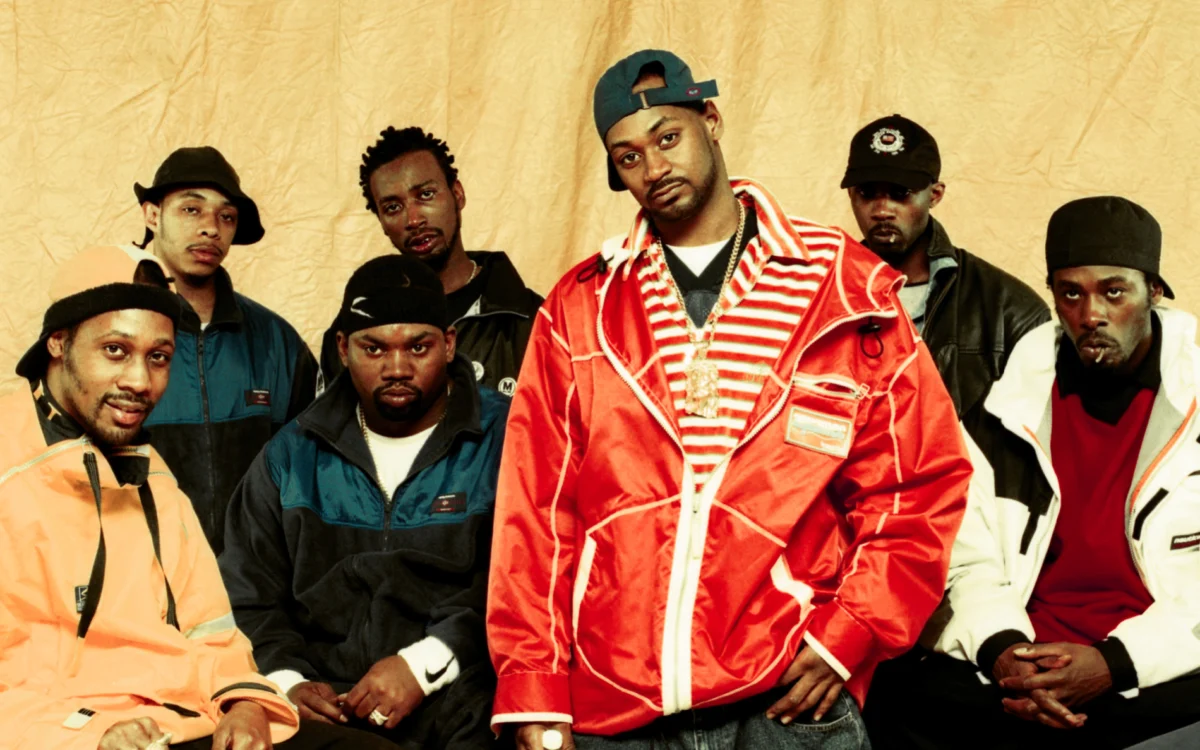
The iconic hip-hop collective Wu-Tang Clan has officially been voted into the Rock & Roll Hall of Fame as part of the prestigious Class of 2026. This significant announcement, made on Monday, April 13, recognizes the groundbreaking impact of the Staten Island group on music and culture, further solidifying hip-hop’s integral place within the broader history of popular music. The induction marks a pivotal moment, celebrating Wu-Tang Clan’s unique sound, intricate lyricism, and revolutionary approach to the music industry that reshaped the landscape of the genre.
The Illustrious Class of 2026
Wu-Tang Clan joins an eclectic and esteemed group of artists for the Class of 2026. The inductees span diverse genres and eras, reflecting the Rock & Roll Hall of Fame’s expansive interpretation of "rock and roll." Alongside the legendary rap group, other luminaries receiving the coveted nod include the enigmatic British soul sensation Sade, the smooth R&B icon Luther Vandross, the Britpop titans Oasis, heavy metal pioneers Iron Maiden, progressive rock and pop virtuoso Phil Collins, punk and new wave icon Billy Idol, and the seminal post-punk and synth-pop acts Joy Division/New Order (inducted as a dual entity reflecting their evolutionary lineage). This diverse roster underscores the Hall’s commitment to recognizing artists who have fundamentally influenced music regardless of strict genre boundaries.
Pioneering Voices: Early Influence Awards
In addition to the main inductees, the Rock & Roll Hall of Fame also announced special honorees for the "Early Influence" award, which acknowledges artists whose music and style have had a profound impact on the evolution of music and culture. This year, two trailblazing women in hip-hop, Queen Latifah and MC Lyte, will be recognized with this esteemed award. Their induction highlights their monumental contributions as pioneers, breaking barriers and setting new standards for female artists in the nascent stages of hip-hop. Queen Latifah’s fusion of rap with R&B, jazz, and reggae, alongside her powerful messages of female empowerment, and MC Lyte’s assertive lyrical prowess and distinct delivery, paved the way for countless artists and redefined the role of women in a male-dominated industry. Their recognition as "Early Influences" underscores the foundational significance of their work in shaping hip-hop’s trajectory and its broader cultural resonance.
The Ceremony and Broadcast
The formal induction ceremony for the Class of 2026, including Wu-Tang Clan, Queen Latifah, and MC Lyte, is scheduled for November 14 at the prestigious Peacock Theater in Los Angeles, California. This star-studded event, a highlight of the music calendar, promises to be a celebration of musical excellence and enduring legacy. For those unable to attend in person, the ceremony will be available for viewing in December, broadcast on ABC and accessible via the streaming platform Disney+. This multi-platform distribution ensures that a wide audience can witness the historic event and celebrate the achievements of these influential artists.
Reactions from the Clan: A Triumph for Hip-Hop
The news of their induction was met with profound gratitude and pride from the members of Wu-Tang Clan, who took to social media to share their elation. RZA, the group’s de facto leader and sonic architect, expressed a deep sense of accomplishment: “In all Humility. This announcement filled me with joy, proudness, profound achievement, and awe,” he wrote on Instagram. “I’m grateful to all my brothers and those who helped us on the path. Thank you Rock & Roll Hall of Fame. This is a true Triumph – Wutang Forever.” His words encapsulate the collective journey and the significance of this recognition not just for the group, but for the entire hip-hop movement they represent.
Raekwon, another pivotal voice within the Clan, shared his excitement with characteristic enthusiasm: “History books will know this club! this my grammy. what we talking bout! haaaaaaaaaaa. shout out to all our mothers who birth these men. they won tonite.” His statement reflects the profound personal and cultural validation that such an honor brings, equating it to the highest accolades in music and acknowledging the collective effort and support behind their success. GZA, known for his cerebral lyricism, offered a humble and expansive thanks: “We couldn’t have reached this milestone without our hip hop predecessors, fans, collaborators, friends and family. We thank you.” His acknowledgment highlights the communal aspect of hip-hop’s journey and the lineage of artists who paved the way for Wu-Tang Clan’s own achievements. These reactions collectively paint a picture of an organization deeply aware of its roots, its impact, and the broader cultural implications of its induction.
The Legacy of Wu-Tang Clan: A Revolutionary Force
Formed in the early 1990s in Staten Island, New York, Wu-Tang Clan emerged as a revolutionary force in hip-hop. Comprising RZA, GZA, Ol’ Dirty Bastard, Method Man, Raekwon, Ghostface Killah, Inspectah Deck, U-God, and Masta Killa, the group’s debut album, Enter the Wu-Tang (36 Chambers) (1993), remains a landmark recording that redefined the sound and aesthetic of East Coast hip-hop. The album’s raw, grimy production, infused with martial arts samples and intricate, often violent, lyrical narratives, presented a stark contrast to the prevalent G-funk sound of the West Coast. Their music was a visceral portrayal of urban life, delivered with unparalleled lyrical dexterity and a unique collective dynamic.
Beyond their groundbreaking sound, Wu-Tang Clan revolutionized the business model for hip-hop groups. RZA, with his visionary leadership, negotiated a deal that allowed individual members to sign solo record deals with different labels while maintaining the group’s collective identity and control. This strategy led to a cascade of highly successful solo albums throughout the mid-to-late 1990s, including Raekwon’s Only Built 4 Cuban Linx…, GZA’s Liquid Swords, Ghostface Killah’s Ironman, and Method Man’s Tical, each contributing to the expansive Wu-Tang universe. Their influence extended beyond music, impacting fashion, slang, and a DIY ethos that resonated deeply within youth culture. The Clan’s distinctive blend of street wisdom, Five-Percent Nation teachings, and pop culture references created a rich, immersive world that captivated millions and solidified their status as cultural icons. Their induction into the Rock & Roll Hall of Fame is not merely an acknowledgment of their musical prowess but a testament to their profound and lasting cultural footprint.
The Voting Process and Unsuccessful Nominees
The selection process for the Rock & Roll Hall of Fame is rigorous, involving an international voting body comprising more than 1,200 inductees, historians, and music industry professionals. This diverse panel casts votes based on artistic influence, innovation, musical excellence, and the length and depth of an artist’s career. For the Class of 2026, several other highly regarded artists were nominated but did not garner enough votes for induction this year. Among those who missed out were the acclaimed singer-songwriter Lauryn Hill, pop superstar Mariah Carey, and global icon Shakira. While their absence from this year’s list may disappoint their respective fanbases, their nominations underscore their significant contributions to music and suggest potential future consideration for induction.
Hip-Hop’s Growing Presence in the Hall: A Chronology
With the addition of Wu-Tang Clan, Queen Latifah, and MC Lyte, there are now 18 distinct hip-hop acts recognized in the Rock & Roll Hall of Fame. This steadily growing presence reflects the Hall’s evolving understanding of "rock and roll" as a spirit of innovation and cultural impact rather than a rigid genre definition.
The journey for hip-hop into the Hall began in 2007 with the induction of Grandmaster Flash and the Furious Five, who were pioneers in the genre, instrumental in developing DJing techniques and lyrical storytelling. Their induction marked a watershed moment, breaking down traditional barriers.
Following their lead, other foundational hip-hop acts have progressively joined the ranks:
- Run-DMC (2009): The first rap group to have a gold album, a platinum album, and to appear on MTV, they fused rock and rap, influencing countless artists.
- Beastie Boys (2012): A genre-bending trio that transitioned from punk to hip-hop, showcasing versatility and irreverence.
- Public Enemy (2013): Known for their politically charged lyrics and innovative production, they pushed the boundaries of social commentary in music.
- N.W.A (2016): Controversial and groundbreaking, they pioneered gangsta rap, giving voice to marginalized communities.
- 2Pac (2017): A prolific and influential rapper whose poetic lyrics and complex persona left an indelible mark despite his tragically short career.
- The Notorious B.I.G. (2020): An East Coast lyrical titan, his storytelling and flow remain unmatched.
- JAY-Z (2021): A rap mogul and lyrical master whose career spans decades of commercial success and critical acclaim.
- Carole King, Todd Rundgren, Foo Fighters, The Go-Go’s, Tina Turner (2021): While not hip-hop, this class also saw LL Cool J inducted for Musical Excellence, acknowledging his consistent innovation and longevity in hip-hop.
- Eminem (2022): One of the best-selling music artists of all time, his provocative lyrics and technical prowess solidified his place as a global phenomenon.
- Dolly Parton, Eurythmics, Duran Duran, Lionel Richie, Carly Simon, Pat Benatar (2022): This class also included Jimmy Jam & Terry Lewis (Musical Excellence) and Harry Belafonte (Early Influence), further diversifying the Hall.
- Missy Elliott (2023): A groundbreaking rapper, singer, songwriter, and producer, celebrated for her innovative music videos and futuristic soundscapes.
- Kate Bush, Sheryl Crow, George Michael, Willie Nelson, Rage Against the Machine, The Spinners (2023): This class also included DJ Kool Herc (Musical Excellence), recognizing him as the undisputed "Father of Hip-Hop" for his pioneering breakbeat techniques.
- OutKast (2024): The dynamic duo from Atlanta pushed the boundaries of hip-hop with their eclectic sounds and profound storytelling.
- A Tribe Called Quest (2025): Known for their intelligent lyrics, jazz-infused beats, and positive messages, they were central to alternative hip-hop.
- Salt-N-Pepa (2025): Inducted for Musical Excellence, they were trailblazers for women in hip-hop, achieving mainstream success with empowering anthems.
This evolving list demonstrates a clear trend: the Rock & Roll Hall of Fame is increasingly recognizing hip-hop not as a tangential genre, but as a core pillar of modern music history, rich with innovation, influence, and cultural significance.
The Evolving Definition of "Rock & Roll" and Future Implications
The consistent inclusion of hip-hop artists, now culminating in the induction of Wu-Tang Clan, Queen Latifah, and MC Lyte, signifies a broader redefinition of what "rock and roll" truly encompasses. The Hall’s mission statement emphasizes honoring "artists who have had a profound impact on the history of rock & roll," a term that has expanded over decades to include rhythm & blues, soul, folk, country, pop, punk, heavy metal, and now, definitively, hip-hop. This expansion reflects the interconnectedness of musical genres and the undeniable influence that hip-hop has exerted on global popular culture since its inception.
The implications of these inductions are far-reaching. They not only provide long-overdue recognition for artists who have shaped generations but also validate hip-hop’s artistic merit and historical importance in the eyes of a mainstream institution. This trend is likely to continue, opening the door for future nominations and inductions of other deserving hip-hop acts who have met the criteria of innovation, influence, and excellence. The ongoing dialogue around genre and legacy within the Hall itself remains vibrant, ensuring that the institution continues to evolve alongside the music it seeks to preserve and celebrate. The Class of 2026, with its diverse blend of sounds and stories, stands as a testament to the enduring power and ever-expanding legacy of music in all its forms.