 Johan Budi
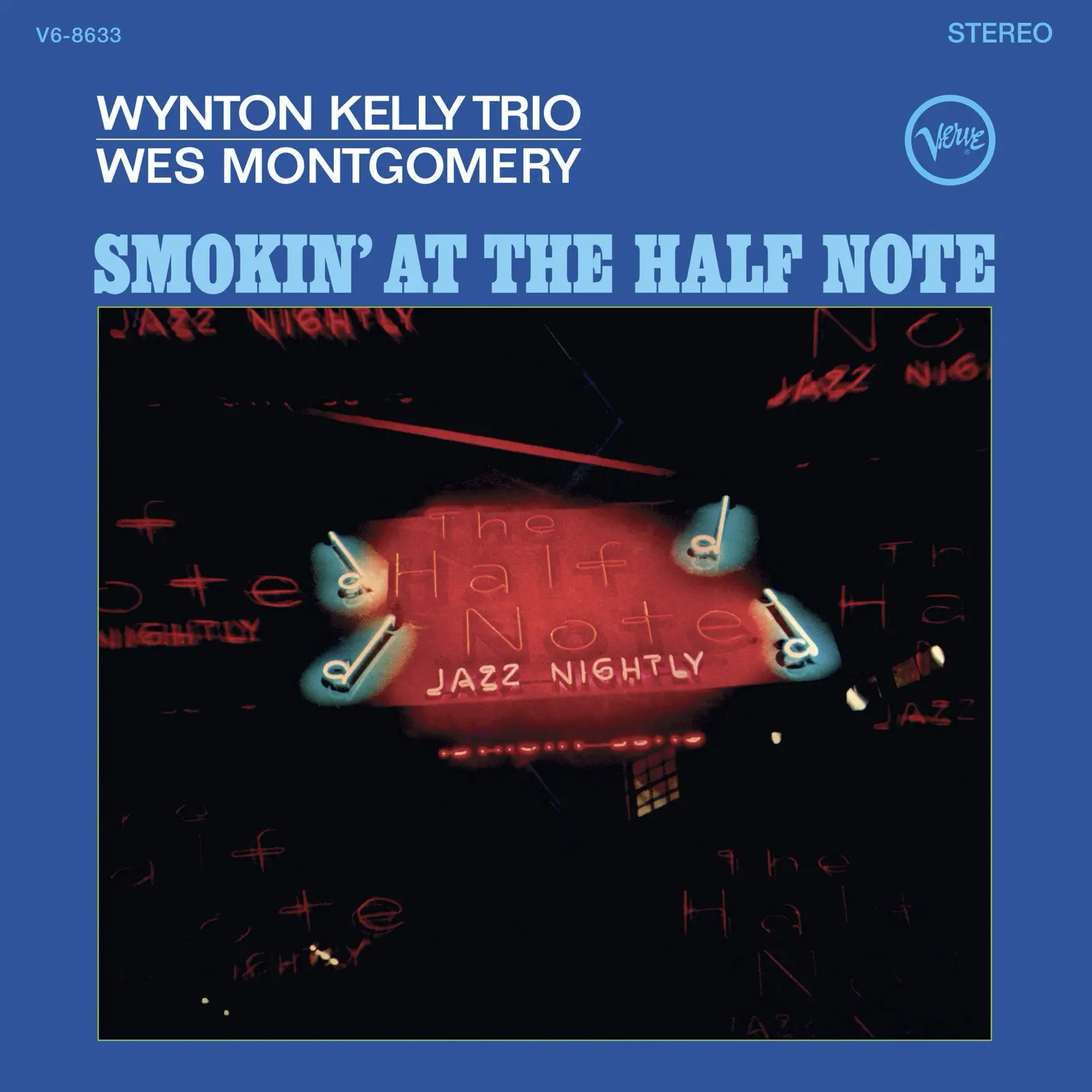
The release of Smokin’ at the Half Note by the Wynton Kelly Trio and guitarist Wes Montgomery under the Verve Records banner brings together two of the label’s most prominent exclusive recording artists. The album captures a prominent intersection of mainstream jazz artistry during the mid-1960s, pairing a legendary rhythm section with one of the most innovative guitarists of the twentieth century. Yet, contemporary critical evaluation of the LP reveals a complex reception regarding creative originality, studio versus live dynamics, and the commercial pressures facing jazz artists operating under major label contracts during a period of rapid industry evolution.
Main Facts and Production Background
Smokin’ at the Half Note presents a dual-location recording lineage that characterizes much of mid-century jazz production. Side one of the LP was recorded live at the Half Note club in New York City during June 1965, capturing the kinetic energy of a working jazz ensemble in front of an audience. Side two was recorded three months later, on September 22, 1965, at Rudy Van Gelder’s renowned studio in Englewood Cliffs, New Jersey.
The personnel features pianist Wynton Kelly, guitarist Wes Montgomery, bassist Paul Chambers, and drummer Jimmy Cobb. Kelly, Chambers, and Cobb famously formed the core rhythm section of the Miles Davis Quintet from 1958 to 1963, establishing a telepathic musical cohesion renowned for its driving swing and deep blues foundation. Montgomery, who rose to prominence through his landmark recordings for Riverside Records in the late 1950s and early 1960s, joined the Verve roster in 1964 following Riverside’s financial decline.
The resulting collaboration was viewed by industry observers as an inevitable pairing of major label stablemates. However, the blending of Kelly’s blues-drenched, hard-bop piano stylings with Montgomery’s signature octave-driven guitar phrasing yielded mixed artistic dividends upon its release on Verve (catalog number VLP 9118), retailing at the time for 32 shillings and sixpence.
Chronology of the Sessions and Repertoire
The chronology of the project highlights the pragmatic realities of jazz recording schedules in the 1960s. Live recordings often relied on portable remote equipment or club house feeds, which could occasionally yield inconsistent sonic balance.
- June 1965 (Live at the Half Note, New York City): The ensemble recorded live performances of "No Blues," a Miles Davis composition, and Tadd Dameron’s ballad "If You Could See Me Now."
- September 22, 1965 (Rudy Van Gelder Studios, Englewood Cliffs, New Jersey): The quartet reconvened in a controlled acoustic environment to record additional material, yielding studio renditions of Sam Jones’s "Unit 7," Montgomery’s modal vehicle "Four on Six," and the standard "What’s New?"
Critics and musicians analyzing the juxtaposition noted that the studio session frequently outshined the live club recordings in terms of precision, fidelity, and improvisational focus. While live jazz albums traditionally traded sonic clarity for raw atmosphere, the Half Note tracks occasionally suffered from extended durations that strained the thematic material.
Critical Analysis and Musical Evaluation
A granular examination of the tracks on Smokin’ at the Half Note reveals tensions between commercial accessibility and artistic innovation. The opening track, a nearly 13-minute reading of Miles Davis’s "No Blues," exemplifies the challenges of extended live improvisation in a club setting. Musicologists and contemporary reviewers pointed out that the extended timeframe forced the soloists to rely on familiar, well-worn clichés rather than sustained harmonic invention.
Similarly, Tadd Dameron’s classic composition "If You Could See Me Now" invites comparisons to Wynton Kelly’s recent studio work. The pianist had recorded a rendition of the same tune on his previous Verve album (VLP 9103), reviewed earlier in the year by critic Gerald Lascelles. The inclusion of the tremolo introduction and the overarching arrangement on the Smokin’ LP drew observations regarding self-repetition, a critique occasionally leveled against major artists who maintained heavy touring and recording schedules.
Rhythmically, the album highlights specific stylistic devices favored by the ensemble, some of which drew mixed reactions. On "If You Could See Me Now," drummer Jimmy Cobb executes an abrupt transition midway through Montgomery’s solo, shifting into a heavy chopping groove. While effective for heightening dynamic contrast in a live club environment, such tropes occasionally polarized listeners looking for fresher rhythmic paradigms during an era when free jazz and modal experimentation were reshaping the genre’s boundaries.
The studio side offers some of the album’s strongest instrumental moments. "Four on Six," a staple of Montgomery’s live repertoire, features robust improvisational interplay, showcasing his fluid single-note lines, chordal melodies, and trademark octaves. "Unit 7," composed by bassist Sam Jones, presents an interesting stylistic hybrid, combining modal harmonic structures with a bossa nova rhythmic undercurrent, executed through a hard-bop lens. Conversely, the standard "What’s New?" was critiqued in contemporary reviews for adhering too closely to conventional ballad interpretations, offering little harmonic or structural reinvention.
Broader Industry Impact and Historical Implications
The release of Smokin’ at the Half Note underscores the broader structural shifts occurring within the jazz recording industry during the mid-1960s. Independent labels that had defined the modern jazz boom of the 1950s—such as Blue Note, Riverside, and Prestige—were increasingly absorbed by major entertainment conglomerates like Metro-Goldwyn-Mayer (MGM), the parent company of Verve Records.
Under major label stewardship, artists were frequently encouraged to cross-pollinate their talents, resulting in packaged collaborations designed to appeal to a broad consumer base. While these pairings guaranteed a high baseline of professional execution, critics of the era frequently argued they lacked the raw, exploratory friction of earlier independent releases. In retrospect, jazz historians generally regard Wynton Kelly’s definitive small-group recordings as those captured on the Vee-Jay label during the early 1960s, while Wes Montgomery’s peak small-group artistic statements remain anchored to his Riverside catalog.
Despite these critical reservations, Smokin’ at the Half Note has endured in the public consciousness as an invaluable document of hard bop in its sunset era. It preserves the sound of master craftsmen at work in the clubs and studios of New York and New Jersey, providing a window into the professional realities of premier jazz musicians navigating the commercial demands of the major label era.