 Nana Wu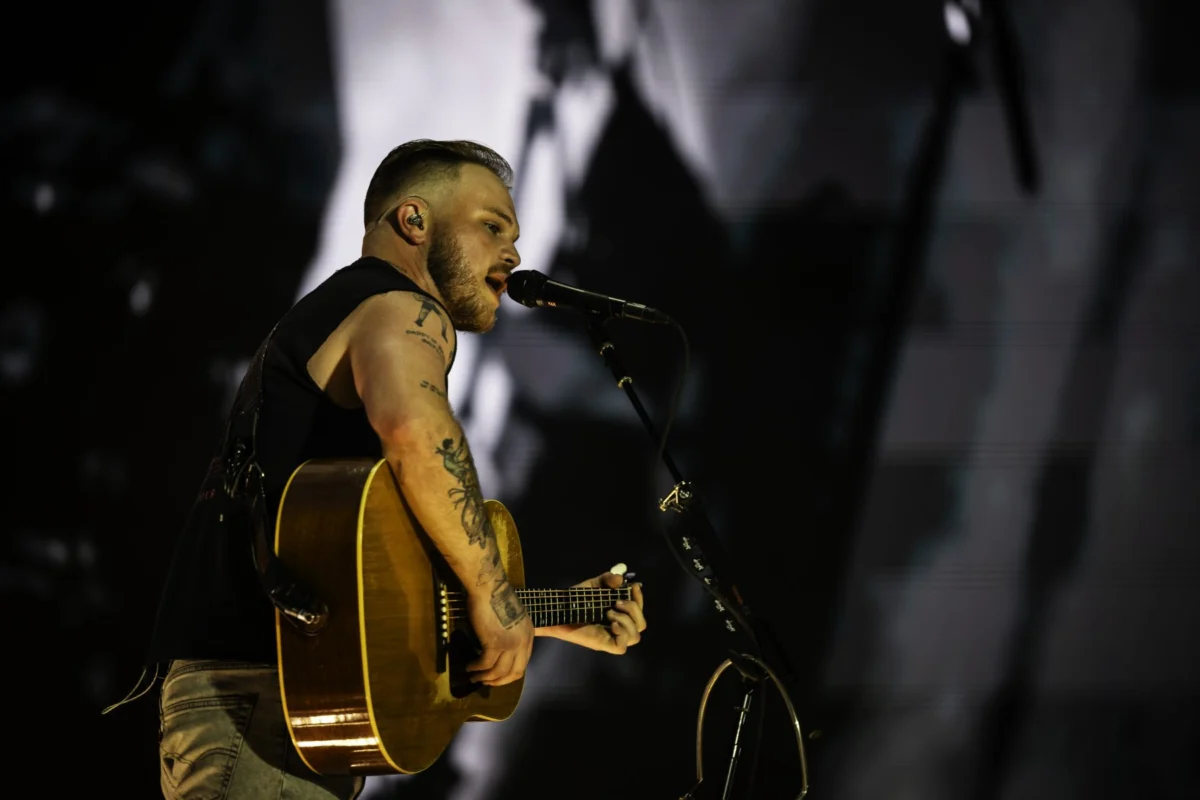
Grammy-winning country artist Zach Bryan ignited a firestorm of public discourse on Friday, October 2, when he appeared on stage at Gillette Stadium in Foxborough, Massachusetts, wearing a T-shirt emblazoned with the words "Free Palestine." The performance, which served as the first of a two-night residency for his ongoing With Heaven On Tour, saw not only the singer but also several members of his touring band donning identical apparel. While Bryan refrained from making any explicit verbal statements regarding the conflict in the Middle East during his set, the choice of wardrobe and the symbolic weight of the venue itself suggested a deliberate act of protest.
The incident occurred at a facility owned by the Kraft Group, headed by billionaire Robert Kraft. Kraft, a prominent philanthropist and supporter of Jewish causes, has played an active, documented role in the recent music industry fallout regarding pro-Palestinian sentiment. By choosing to wear the shirt at a stadium directly tied to a figure who recently spearheaded the exclusion of another major artist for similar political expressions, Bryan effectively challenged the boundaries of permissible speech within the corporate-controlled touring environment.
Chronology of the Macklemore-Sheeran Controversy
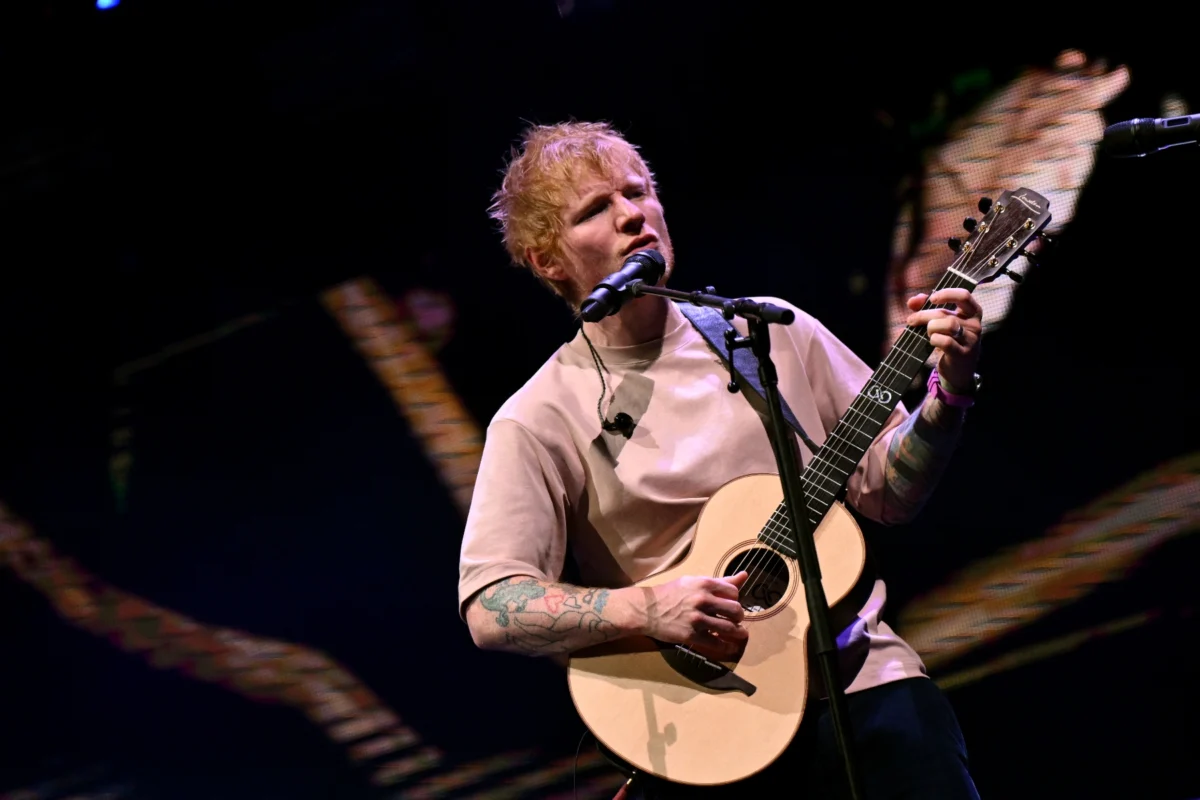
The tensions surrounding the intersection of major touring acts and the ongoing Israel-Hamas war reached a boiling point in early September 2026. On September 4 and 5, rapper Macklemore performed as an opening act for Ed Sheeran at MetLife Stadium. During these performances, Macklemore explicitly called for a "Free Palestine" and performed his viral protest track, "Hind’s Hall." His stage presence included an appeal to his Jewish fanbase, clarifying that his opposition to the actions of the Israeli government should not be conflated with antisemitism.
The reaction from industry stakeholders was immediate and severe. A coalition, led by the Israeli-American Council, initiated a campaign calling for the rapper’s removal from the remaining U.S. tour dates. Reports soon emerged that several owners of NFL stadiums, which host the massive, high-revenue events that characterize the Sheeran tour, threatened to cancel or pull future shows if Macklemore remained on the bill.
By September 14, the Messina Touring Group, which promotes the Loop Tour, confirmed that Macklemore would be removed from all subsequent U.S. dates. Robert Kraft publicly corroborated his influence in this decision, issuing a statement that framed his intervention as a stand against rising antisemitism, while simultaneously acknowledging the humanitarian crisis and the suffering of the Palestinian people. Ed Sheeran later clarified that the decision was imposed by the tour promoters, noting that he had engaged in direct, albeit unsuccessful, negotiations with venue owners to prevent the termination of the contract.
The Ripple Effect: Solidarity and Financial Consequences
The decision to drop Macklemore from the tour triggered a cascade of professional departures. High-profile supporting acts, including Finneas, Aaron Rowe, and Lukas Graham, withdrew from the tour in a move widely interpreted as a protest against the censorship of political speech. The Irish folk ensemble Beoga, a long-standing collaborator of Sheeran’s, similarly exited.
Macklemore utilized social media to detail the financial impact of his advocacy, citing the loss of lucrative brand partnerships, festival appearances, and private bookings. In an effort to maintain momentum, the artist pledged $1 million of his tour earnings to international Palestinian aid organizations and announced a dedicated "Free Palestine Tour," consisting of a series of shows in Dublin, Paris, and London. The success of this endeavor was underscored by an immediate sell-out of all scheduled dates, highlighting a significant segment of the concert-going public that aligns with his perspective.
Despite the controversy, the Ed Sheeran tour faced its own logistical complications. The two scheduled dates at Gillette Stadium, which were meant to proceed after the dust of the Macklemore dispute had settled, were ultimately canceled due to severe weather conditions in the region. This irony was not lost on industry observers, who noted that the venue had sacrificed an act to ensure "stability," only to see the entire production halted by forces beyond human control.

Contextualizing Zach Bryan’s Political Stance
Zach Bryan’s decision to wear the "Free Palestine" shirt at Gillette Stadium is part of a broader history of the artist engaging in sensitive political discourse. Unlike many of his contemporaries in the country music genre who maintain a strictly apolitical public profile, Bryan has frequently utilized his platform to address complex social issues.
In October 2025, Bryan released a teaser for his track "Bad News," which contained lyrics referencing the realities of Immigration and Customs Enforcement (ICE) raids. The song prompted a public rebuke from the Department of Homeland Security and then-Secretary Kristi Noem, who characterized the imagery as disappointing. Bryan responded with a public defense of his creative output, urging his audience to resist the polarization inherent in modern social media discourse. He maintained that the song was intended to capture the nuanced realities faced by families on both sides of the political spectrum. The track was subsequently featured on his 2026 album, With Heaven on Top, reinforcing his commitment to incorporating political themes into his artistic narrative.
Industry Implications and the Future of Concert Speech
The incident at Gillette Stadium raises fundamental questions regarding the power dynamics between performers, venue owners, and corporate sponsors. Historically, stadium tours were viewed as neutral commercial spaces. However, the increasing tendency for artists to leverage these high-visibility platforms to comment on global geopolitical events has created a collision course with the corporate entities that manage these spaces.
For venue owners like Robert Kraft, the primary objective is the preservation of a brand image that appeals to a broad, often conservative-leaning sports audience. For artists like Bryan and Macklemore, the stage serves as a vital medium for addressing moral issues they deem urgent.
The silence from the Kraft organization regarding Bryan’s appearance on Friday suggests a desire to avoid further escalation. Engaging in a public confrontation with one of the most popular touring artists in the country could prove more damaging to the venue’s reputation than allowing the incident to pass without comment. However, as the industry moves forward, the "Gillette precedent"—whereby stadium owners exercise veto power over an artist’s political messaging—is likely to become a central point of negotiation in touring contracts.
Analysis of Public and Institutional Response
To date, the response from the public has been polarized, reflecting the broader national discourse on the Middle East. While some fans have lauded Bryan for his courage in the face of institutional pressure, others have criticized the use of a concert stage for political signaling, arguing that such actions alienate segments of the audience.
From a legal and contractual standpoint, the ability of venue owners to dictate the content of an artist’s wardrobe or speech is largely governed by private "morality clauses" within rental agreements. These clauses often provide venue operators with broad discretion to terminate agreements if they determine that an artist’s behavior is contrary to the public interest or the reputation of the venue. Nevertheless, the reputational risk to the venue—specifically the perception of censorship—serves as a counter-balance to this power.
As Bryan prepares for his second night at the Foxborough venue, the industry remains in a state of observation. If the "Free Palestine" messaging continues, it will test the limits of what major venue operators are willing to tolerate in the name of free expression. If the imagery disappears, it may signal an artist bowing to the realities of commercial touring logistics. Regardless of the outcome, the incident at Gillette Stadium confirms that the stage remains one of the most significant, and contested, arenas for political expression in the 21st century. The intersection of global conflict, corporate governance, and celebrity influence continues to reshape the landscape of live entertainment, forcing artists and promoters to navigate an increasingly complex terrain of values and consequences.