Johan Budi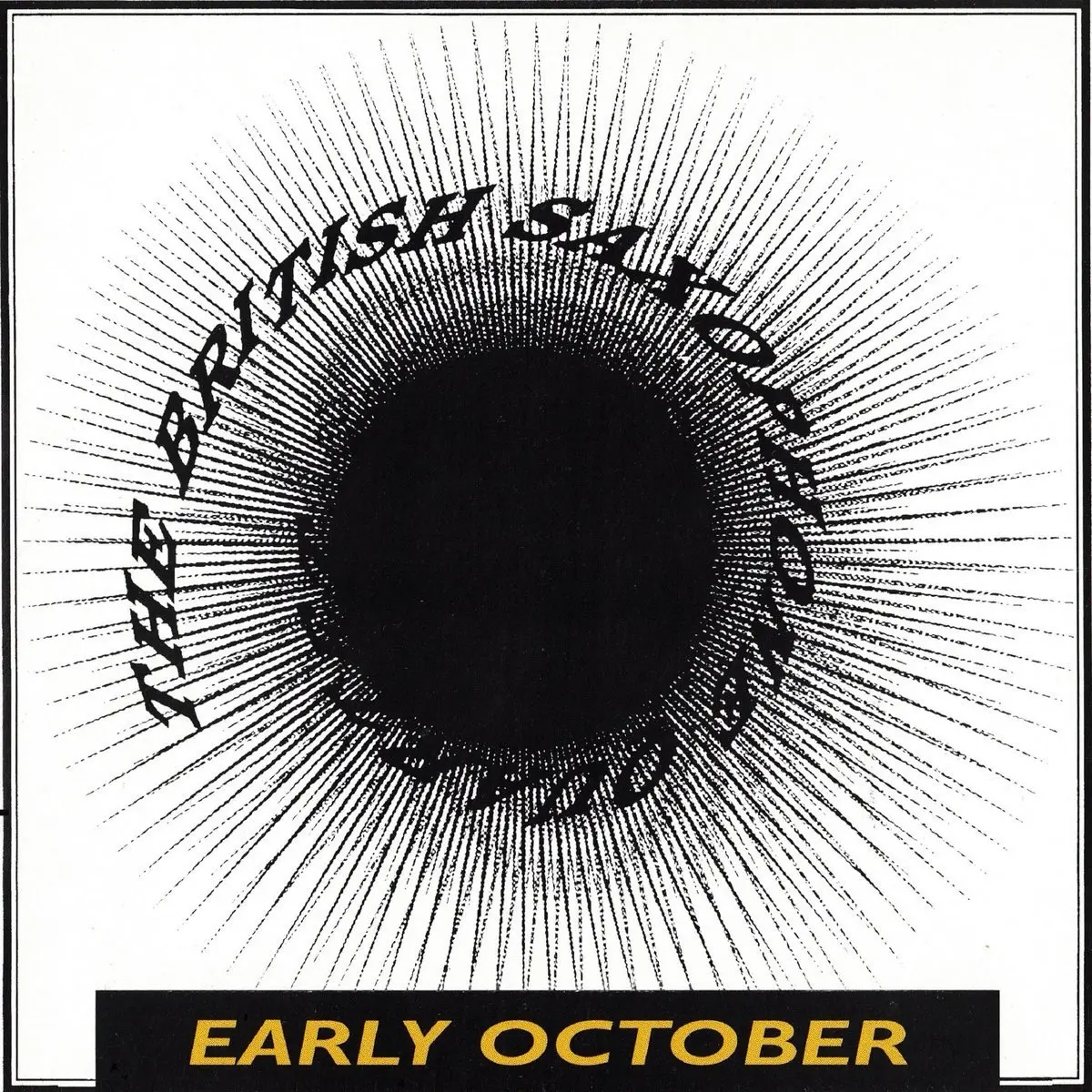
The landscape of contemporary jazz has long been dominated by the gravitational pull of American innovators, yet the emergence of the British Saxophone Quartet (BSQ) in the mid-1990s represented a significant departure from established transatlantic norms. Recorded on October 6, 1995, in Oxford and released as "Early October" on the Slam Productions label, the quartet—comprising Elton Dean, Paul Dunmall, Simon Picard, and George Haslam—offered a definitive rebuttal to the notion that the saxophone quartet format required a rigid adherence to American stylistic templates. While groups such as the World Saxophone Quartet and the Rova Saxophone Quartet had already expanded the boundaries of the medium, the BSQ introduced a uniquely British sensibility characterized by open counterpoint, collective autonomy, and a rejection of the traditional rhythmic hierarchies that had previously defined the genre.
The Architectural Shift in Saxophone Quartet Dynamics
Historically, the saxophone quartet in jazz was forced to reconcile the absence of a traditional rhythm section—bass and drums—by assigning specific structural roles to the various instruments. In many American ensembles, the baritone saxophone was frequently relegated to the role of the "calibrating pulse provider," essentially mimicking the walking bass lines of a double bass to maintain tempo and harmonic grounding. This was particularly evident in the hard-bop drive of the 29th Street Saxophone Quartet and the more traditional structures of the New York Saxophone Quartet.
The British Saxophone Quartet, however, intentionally dismantled this hierarchy. In the sessions that produced "Early October," George Haslam’s baritone was liberated from the burden of timekeeping. Instead, the baritone functioned as an equal solo voice, engaging in the same level of improvisational risk-taking as the higher-register instruments. This shift allowed for what critics at the time described as a "highly personal style," where the four players operated as a single, collective organism rather than a soloist backed by three accompanists. The result was a texture defined by "open, improvised counterpoint," a technique that requires immense listening skills and a shared understanding of internal pulse rather than an external beat.
Profiles of the Four Architects: A Convergence of British Avant-Garde
To understand the impact of the BSQ, one must examine the pedigree of its members, each of whom brought a distinct lineage of British experimental music to the ensemble.
Elton Dean: The Bouncing Alto
Elton Dean was already a legendary figure by 1995, having gained international fame as a member of the seminal fusion group Soft Machine during their most experimental period. His "bouncing alto" style was marked by a jagged, yet fluid lyricism. Dean’s presence in the BSQ brought a sense of historical weight; his ability to bridge the gap between the Canterbury Scene’s complexity and the raw energy of free jazz provided the quartet with a central, albeit unpredictable, anchor.
Paul Dunmall: The Keening Soprano and Tenor
Paul Dunmall, often associated with the group Mujician alongside pianist Keith Tippett, is widely regarded as one of the most powerful saxophonists of his generation. In the context of the BSQ, his "keening soprano" work provided a high-register intensity that often served as the emotional peak of the improvisations. Dunmall’s approach was rooted in a deep spiritual energy, characterized by long, soaring lines that challenged the other members to match his volume and vigor.
Simon Picard: The Squally Tenor
Simon Picard brought a more "squally" and abrasive edge to the group. A veteran of the London Jazz Composers Orchestra and a frequent collaborator with Charlie Watts in more straight-ahead settings, Picard’s versatility allowed him to navigate the BSQ’s more abstract passages with a sense of structural integrity. His tenor work often provided the friction necessary to prevent the music from becoming too ethereal, grounding the improvisations in a physical, tactile sound.
George Haslam: The Gruff Baritone and Curatorial Vision
George Haslam was not only the baritone voice of the group but also the founder of Slam Productions, the label responsible for documenting this movement. His "gruff baritone" was the bedrock of the quartet, but as previously noted, he eschewed the traditional "anchor" role. Haslam’s playing was characterized by a deep, resonant tone and a willingness to explore the extreme lower reaches of the instrument, providing a sonorous contrast to the lighter textures of Dean and Dunmall.
Chronology and Recording Context: The Oxford Sessions
The recording of "Early October" took place during a pivotal moment for British jazz. By the mid-1990s, the initial fervor of the 1980s "jazz revival" had cooled, leaving room for more uncompromising, avant-garde projects to find their footing. The session on October 6, 1995, in Oxford was a concentrated effort to capture the quartet’s evolving chemistry.
The resulting discography from that session includes three primary works: "Early October," "Neologie Musicale," and "Time To Go Now," totaling 67 minutes and 34 seconds of music. These tracks were not merely collections of solos but were explorations of "collective voice." Unlike the polished, highly rehearsed arrangements of the World Saxophone Quartet, the BSQ’s output felt more spontaneous, capturing the "live" energy of four masters reacting to one another in real-time.
Technical Analysis of the Slam CD 216 Release
The technical merits of the recording, released as Slam CD 216, were highlighted by contemporary critics for their clarity and balance. In a four-saxophone setting, frequency masking can often lead to a muddy sound, particularly when the tenor and baritone overlap. However, the production on "Early October" ensured that each voice was "finely judged."
- Spatial Separation: The recording allowed listeners to identify individual soloists by their tonal characteristics—Dean’s brightness, Dunmall’s piercing clarity, Picard’s grit, and Haslam’s depth.
- Rhythmic Internalization: Without a drummer, the quartet relied on "micro-timing," where the rhythm is felt through the phrasing of the horns. This created a sense of "elastic time," which is a hallmark of the British school of free improvisation.
- Harmonic Freedom: By ignoring the "straightahead" path of groups like the New York Saxophone Quartet, the BSQ utilized atonal clusters and microtonal inflections, pushing the instruments beyond the standard 12-tone scale.
Official Responses and Critical Reception
Upon its publication in Jazz Journal in May 1996, critic Barry McRae noted that the BSQ was a "saxophone quartet apart." The consensus among jazz journalists of the era was that the group had successfully avoided the "shadow of the giants." While American role models abounded, the BSQ was praised for producing a "highly personal style" that reflected the specific cultural and musical environment of the United Kingdom.
Statements from the musicians involved often emphasized the democratic nature of the ensemble. George Haslam frequently spoke of the quartet as an exercise in "equality of voice," where the distinction between lead and support was intentionally blurred. This philosophy resonated with the broader ethos of the British free improvisation scene, which valued individual expression within a communal framework.
Broader Impact and Implications for the Jazz Genre
The legacy of the British Saxophone Quartet and the "Early October" sessions extends beyond the specific recordings. Their work signaled a maturation of the British jazz identity. No longer content to simply emulate the hard-bop or avant-garde movements of New York or Chicago, British musicians were asserting a distinct aesthetic that was more closely aligned with European contemporary classical music and indigenous experimental traditions.
The Survival of Independent Labels
The success of the BSQ also underscored the importance of independent labels like Slam Productions. In an era where major labels were consolidating and focusing on "radio-friendly" jazz, Slam provided a vital outlet for uncompromising art. The fact that this recording is still analyzed decades later is a testament to the sustainability of the independent model when applied to high-quality, innovative music.
Influence on Future Ensembles
The BSQ’s approach to the baritone saxophone and collective counterpoint can be seen in the work of later European saxophone ensembles. By proving that a quartet could be both "gruff" and "bouncing" without a traditional rhythm section, they opened the door for future generations to explore the sonorous possibilities of the reed family.
In conclusion, the British Saxophone Quartet’s 1995 recording remains a landmark of improvisational independence. By rejecting the role models of the American establishment and forging a path based on mutual respect and radical equality, Dean, Dunmall, Picard, and Haslam created a work that is as vital today as it was thirty years ago. "Early October" stands not just as a CD in a discography, but as a manifesto for the power of the collective voice in jazz.