Johan Budi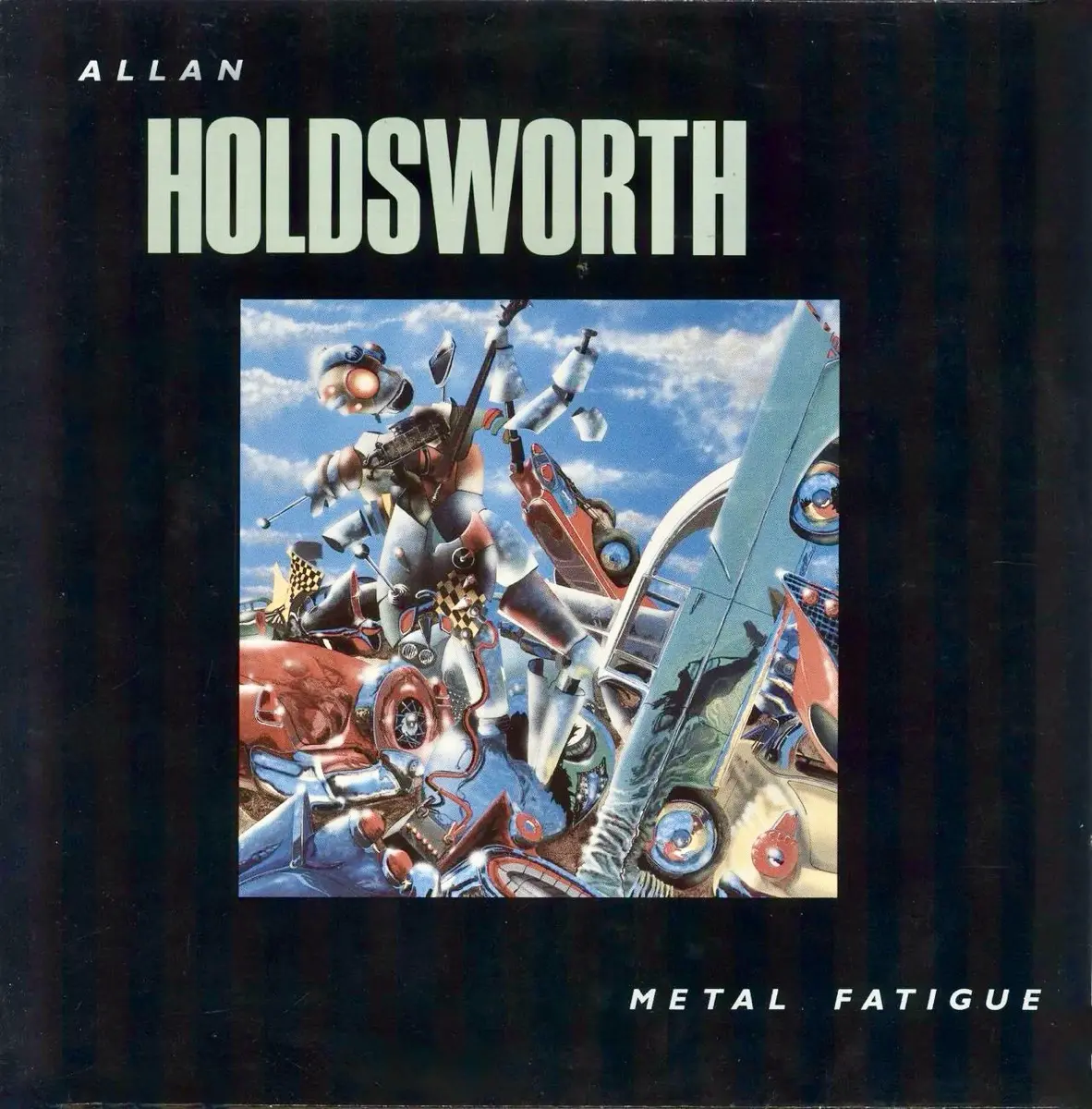
The release of Allan Holdsworth’s seminal album Metal Fatigue marked a transformative moment in the mid-1980s, solidifying the British-born guitarist’s reputation as one of the most enigmatic and technically proficient figures in contemporary music. Originally analyzed in the May 1986 issue of Jazz Journal by critic Mark Gilbert, the record represents a synthesis of high-energy rock aesthetics and sophisticated jazz harmonic structures. Holdsworth, a Bradford-born rhapsodist whose work has frequently been compared to the impressionist textures of composer Frederick Delius, managed to bridge the gap between the grit of heavy metal and the fluid improvisation of progressive jazz. While his commercial success often lagged behind his peers, his influence remains a cornerstone for a generation of guitarists across the musical spectrum, from top 40 pop sessions to avant-garde experimentalism.
The Evolution of a Virtuoso: Historical Background
Allan Holdsworth’s journey to the recording of Metal Fatigue was characterized by a relentless pursuit of a singular sonic identity. Emerging from the vibrant UK progressive rock and jazz-fusion scene of the 1970s, Holdsworth first gained international attention through his work with Soft Machine and Tony Williams’ New Lifetime. His tenure with Williams, in particular, was a crucible that forged his "sheets of sound" approach—a legato technique so fluid that it often mimicked the phrasing of a saxophone rather than a traditional fretted instrument.
By the early 1980s, Holdsworth had relocated from London to Los Angeles, seeking a more supportive environment for his experimental leanings. This transition was not merely geographical but also stylistic. In Southern California, Holdsworth found a community of session musicians and technical innovators who could accommodate his complex rhythmic demands. Before Metal Fatigue, his 1982 album I.O.U. and the 1983 Warner Bros. EP Road Games had established his solo voice, but it was the 1985 release of Metal Fatigue on Enigma Records that many critics believe captured the full breadth of his maturity as a composer and soloist.
Chronology of Production and Release
The production of Metal Fatigue occurred during a period of relative stability for Holdsworth, following several years of contractual disputes and financial uncertainty. The recording sessions took place roughly between late 1984 and early 1985, primarily at The Village Recorder and other Los Angeles studios.
- 1982-1983: Holdsworth moves to Los Angeles and releases Road Games, which receives a Grammy nomination but leaves him frustrated with major label interference regarding his vocal choices and song lengths.
- 1984: Seeking greater creative control, Holdsworth signs with the independent label Enigma Records. He begins assembling a rotating cast of world-class rhythm sections, including drummers Chad Wackerman and Gary Husband.
- 1985: Metal Fatigue is released. The album features a mix of instrumental tracks and vocal collaborations, aiming to balance Holdsworth’s esoteric improvisations with more accessible song structures.
- 1986: The album gains traction in jazz and rock circles, leading to extensive touring and the eventual recognition of tracks like "Devil Take the Hindmost" as modern fusion standards.
Technical Analysis and Supporting Data
Metal Fatigue is noted for its diverse instrumentation and its defiance of easy categorization. The album’s personnel list reads like a "who’s who" of high-level fusion musicianship. Drumming duties were shared among Chad Wackerman, known for his work with Frank Zappa; Gary Husband, a dual-threat pianist and drummer; and Mac Hine. Bassists Jimmy Johnson and Gary Willis provided the foundational fretless and fretted work necessary to anchor Holdsworth’s ethereal chord voicings.
The album consists of six tracks with a total running time of approximately 37 minutes. The A-side features "Metal Fatigue," "Home," "Devil Take the Hindmost," and "Panic Station," while the B-side is dominated by the sprawling "The Un-Merry-Go-Round" and "In the Mystery."
Harmonic Innovation
Holdsworth’s use of "closed" voicings—chords where the notes are packed tightly together—created a lush, symphonic effect. On the track "Home," he utilized gut-string acoustic work, demonstrating a pastoral sensitivity that contrasted sharply with the "cut-glass" heavy metal riffs found on the title track. Data from contemporary guitar analysis suggests that Holdsworth’s chordal vocabulary often bypassed traditional blues-based intervals in favor of scales derived from his own unique system of permutations.
The Legato Technique
A primary draw for listeners of Metal Fatigue was Holdsworth’s lead guitar work. On "Devil Take the Hindmost," his soloing reached a zenith of fluidity. Unlike most rock guitarists who rely on heavy plectrum use (picking every note), Holdsworth utilized a "hammer-on" and "pull-off" technique that allowed for incredibly fast, liquid-like runs. This approach minimized the percussive attack of the string, resulting in a tone that many compared to a violin or a breath-controlled wind instrument.
Industry Reactions and Peer Influence
Despite his "unsung hero" status in the mainstream press, Holdsworth’s impact on his peers was profound. During the mid-80s, guitar icons such as Eddie Van Halen and Steve Vai frequently cited Holdsworth as a primary influence. Van Halen was instrumental in getting Holdsworth his initial deal with Warner Bros., famously stating that Holdsworth was "the best, in my book."
Critics at the time, including Mark Gilbert in his 1986 Jazz Journal review, noted the irony of Holdsworth’s career: while his disciples often enjoyed significant commercial success by grafting elements of his style onto pop-metal or radio-friendly rock, Holdsworth himself remained committed to an "eccentric and esoteric vision." This commitment to purity over profit garnered him a cult-like following but often left him on the fringes of the financial "Top 40" success that his imitators achieved.
Broader Impact and Implications for Modern Music
The release of Metal Fatigue did more than just provide a platform for virtuosic guitar solos; it challenged the prevailing notions of what fusion could be. In the 1970s, fusion was often defined by the high-volume intensity of bands like the Mahavishnu Orchestra. By the mid-80s, the genre was at risk of becoming formulaic. Holdsworth’s infusion of "English art-rock" sensibilities—reminiscent of King Crimson or early Genesis—provided a new template for the genre.
The Quest for Collaboration
In the decades following the album’s release, the musical community echoed the sentiments expressed by Gilbert regarding potential collaborations. The suggestion that Holdsworth should record with the likes of Chick Corea, Jack DeJohnette, and Dave Holland reflected a desire to see Holdsworth’s unique language tested against the highest caliber of jazz improvisers. While Holdsworth did eventually collaborate with a wide array of masters, including Level 42 and various fusion supergroups, the specific quartet suggested in 1986 remained a "what if" of jazz history that continues to intrigue fans.
Legacy in the Digital Age
Today, Metal Fatigue is viewed as a foundational text for several modern subgenres. The "Math Rock" movement of the late 90s and 2000s owes a debt to the rhythmic complexity of tracks like "Panic Station." Furthermore, the rise of "Progressive Metal" (often termed ‘Djent’ in its modern iteration) frequently references Holdsworth’s non-linear soloing and sophisticated harmonic choices as a primary source of inspiration.
The album also serves as a testament to the importance of independent labels like Enigma in the 1980s. By providing a home for artists who did not fit the "MTV mold," these labels allowed for the preservation of high-art improvisation within a commercial framework.
Conclusion
Allan Holdsworth’s Metal Fatigue remains a landmark achievement in the history of the electric guitar. By successfully blending the raw power of rock with the intricate beauty of jazz and classical impressionism, Holdsworth created a work that sounds as innovative today as it did forty years ago. While he may have remained an "unsung hero" to the general public, his status as a "musician’s musician" is unassailable. The album stands as a definitive record of a period when the boundaries between genres were being dissolved by a handful of visionaries who refused to mellow their individuality, regardless of the commercial climate. For listeners seeking the intersection of technical perfection and emotional depth, Metal Fatigue continues to be an essential point of entry into the world of a truly original stylist.