Lana Akmaluna
The capital of Mexico transformed into a vibrant enclave of Colombian culture on Tuesday, June 16, 2026, as legendary performers Carlos Vives and Silvestre Dangond headlined a massive "Colombian Night" at the Estadio GNP Seguros. The event, which drew thousands of expatriates and traveling supporters, served as the official musical precursor to the Colombian National Team’s opening match in the 2026 FIFA World Cup, scheduled for the following evening against Uzbekistan. Accompanied by the Afro-Colombian fusion trio ChocQuibTown, the artists delivered a high-energy showcase of vallenato and cumbia, reinforcing the deep-seated connection between Colombian musical identity and the nation’s sporting ambitions.
The concert took place against the backdrop of an unprecedented North American World Cup, with Mexico City serving as one of the primary hubs for the tournament’s early stages. Despite a persistent downpour that swept across the metropolitan area, the enthusiasm of the crowd remained undiminished. The gathering at the Estadio GNP Seguros represented the culmination of a day-long celebration that highlighted the growing presence of the Colombian diaspora in Mexico and the unifying power of the country’s folk traditions.
Chronology of a National Celebration
The festivities began several hours before the first accordion notes echoed through the stadium. Early Tuesday evening, the iconic Ángel de la Independencia monument on Paseo de la Reforma became an impromptu staging ground for the Colombian faithful. Adorned in the national team’s signature yellow jerseys and traditional vueltiao hats—a symbol of the Caribbean coast—hundreds of fans gathered to sing chants and wave tricolor flags. This public display of national pride set the stage for the evening’s main event at the GNP Seguros Stadium.
By the time the gates opened, the atmosphere had reached a fever pitch. The concert was structured as a chronological journey through the evolution of Colombian tropical music, beginning with the urban-Pacific sounds of ChocQuibTown before transitioning into the heavy-hitting vallenato sets of Silvestre Dangond and Carlos Vives. The timing of the event was strategically aligned with the arrival of the Colombian national squad in Mexico City, creating a symbiotic relationship between the cultural and athletic representatives of the nation.
Performance Highlights and Artistic Collaborations
Silvestre Dangond, a modern titan of the vallenato genre who recently appeared on the cover of Billboard Colombia, opened the headline segment of the night. Dangond’s setlist was a curated mix of "New Wave" vallenato and traditional classics. He performed hits such as "Ya No Me Duele Más," "Dile," "La Difunta," and "Lo Ajeno Se Respeta." A particularly poignant moment occurred during his performance of "Cásate Conmigo," which he dedicated to a couple in the audience who used the occasion to renew their marriage proposal. Dangond also paid homage to the late Omar Geles with a rendition of "A Blanco y Negro," a staple of the genre that resonates deeply with the Colombian public.

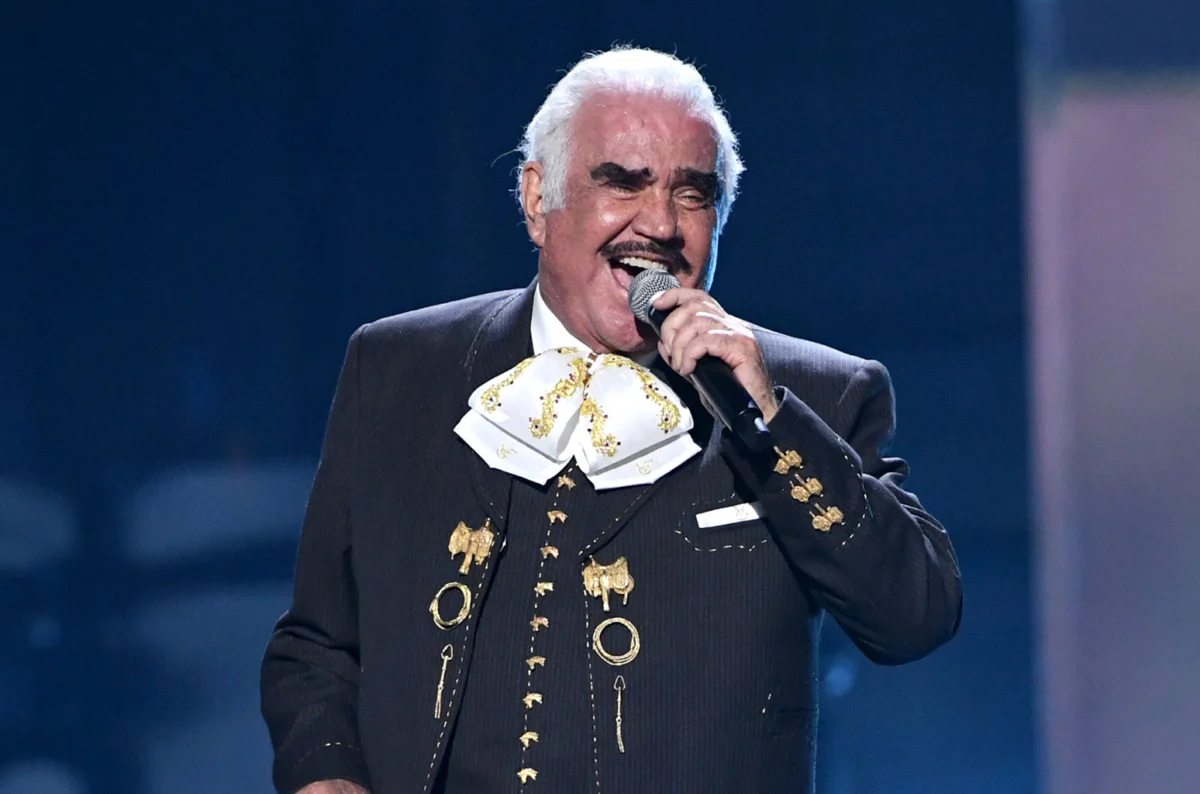
Following Dangond, Carlos Vives took the stage to a thunderous ovation. Vives, widely credited with globalizing vallenato in the 1990s through his "Clásicos de la Provincia" project, opened his set with "Volví a Nacer." He followed this with "La Bicicleta," his chart-topping collaboration with Shakira, and "Canción Bonita." Vives’ performance was not merely a solo effort; it was a collaborative celebration. He was joined by ChocQuibTown for "Nota de Amor," a track that blends vallenato with reggaeton and hip-hop.
The evening reached its peak when Vives and Dangond shared the stage. The duo performed a series of foundational vallenato standards, including "Matilde Lina" and "Jaime Molina," as well as "La Cañaguatera," a folk classic popularized by Alfredo Gutiérrez. "Good evening to the world! We’re in Mexico with everyone from all the Americas," Vives told the audience, visibly moved by the sight of thousands of Colombian jerseys. "Today we are one family, music and soccer, and we’re dancing cumbia."
Cultural Context: Vallenato as a National Symbol
The choice of vallenato as the primary soundtrack for the World Cup debut celebration is significant. Originating in the Caribbean region of Colombia, vallenato was declared an Intangible Cultural Heritage in Need of Urgent Safeguarding by UNESCO in 2015. It serves as a narrative tool, historically used by "juglares" (minstrels) to spread news and stories across the rural north. In the context of a global sporting event like the FIFA World Cup, the genre acts as a powerful marker of national identity, distinguishing the Colombian experience from its South American neighbors.
Carlos Vives’ personal history is intrinsically linked to this cultural intersection. During the event, references were made to Vives’ recent Billboard Español cover story, in which he discussed his upbringing in Santa Marta. Vives recounted that he was "born into a soccer team," as his father served as a director for the local club, Unión Magdalena. This lifelong immersion in both music and athletics has allowed Vives to become a de facto cultural ambassador for the Colombian national team, often appearing at major tournaments to provide the "sonic branding" of the country’s presence.
The 2026 FIFA World Cup: Strategic and Economic Impact
The 2026 FIFA World Cup marks a historic expansion of the tournament, featuring 48 teams and three host nations: Mexico, the United States, and Canada. For Colombia, the tournament represents a chance for redemption on the global stage, and Mexico City has become a temporary home for its primary support base. The match against Uzbekistan at the Estadio Ciudad de México (traditionally known as the Estadio Azteca, currently branded as Estadio Banorte for sponsorship purposes) is expected to be a sell-out event.
The economic impact of the "Colombian Night" concert and the subsequent match is substantial. Local hospitality industry data suggests a significant spike in hotel occupancy and restaurant revenue in the areas surrounding the GNP Seguros Stadium and the Estadio Ciudad de México. The influx of "football tourists" from Colombia, combined with the large resident expatriate community in Mexico, has created a lucrative market for cultural events that bridge the gap between entertainment and sport.

Official Reactions and Broader Implications
While the concert was a celebration, it also highlighted the logistical challenges of hosting large-scale events during a World Cup. Security was heightened around the stadium, and public transportation routes were extended to accommodate the influx of fans. Despite the rain, city officials reported no major incidents, praising the "festive and respectful" behavior of the attendees.
The event also underscored the "soft power" of Colombian music. In recent years, artists like Vives, Dangond, Juanes, Camilo, and Fonseca have dominated the Latin music charts, creating a global brand that is synonymous with joy and cultural diversity. By aligning this musical success with the World Cup, the Colombian government and cultural organizations are effectively leveraging their most successful export to enhance the country’s international image.
As the concert concluded with a medley of "La Hamaca Grande" and "La Gota Fría," the focus shifted from the stage to the pitch. The energy generated at the GNP Seguros Stadium is expected to carry over to the Estadio Ciudad de México, where the "Tricolor" will attempt to secure their first three points of the tournament. For the fans who danced in the rain on Tuesday night, the music was more than just entertainment; it was a declaration of presence and a rhythmic prayer for victory.
Conclusion and Outlook
The "Colombian Night" in Mexico City serves as a testament to the enduring link between music and national sentiment. In a world where global sports can often feel commercialized and detached from local roots, the performances of Carlos Vives and Silvestre Dangond provided a necessary grounding in tradition. As the 2026 FIFA World Cup progresses, the intersection of vallenato and soccer will likely remain a defining feature of the Colombian journey, proving that while the players provide the action on the field, it is the artists who provide the soul of the campaign. The debut against Uzbekistan is merely the first chapter in what promises to be a month of intense cultural and athletic exchange in the heart of North America.