Mia Khoirunisa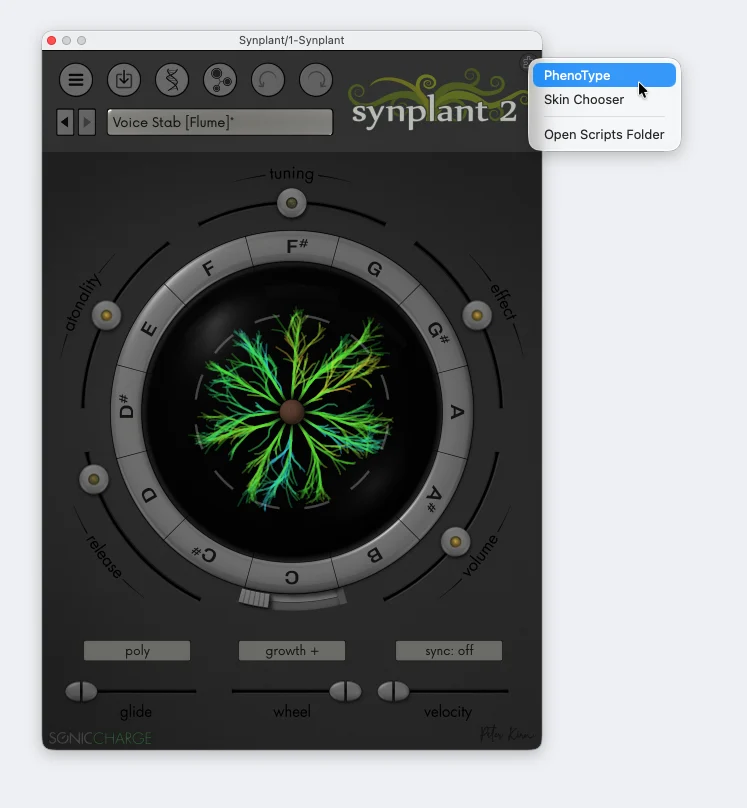
The landscape of artificial intelligence in creative software is often dominated by discussions of massive, cloud-based models capable of generating vast amounts of content. However, a recent development from Sonic Charge, the PhenoType feature for their Synplant 2 synthesizer, offers a compelling counter-narrative. This innovative tool utilizes local neural networks to empower users, not to automate creativity, but to precisely sculpt unique sonic textures through intuitive, word-based descriptions. Unlike the prevailing trend of large language models, PhenoType operates offline, demanding user engagement and offering a more intimate, intentional approach to sound design.
The Genesis of Intentional AI in Sound Synthesis
The conceptualization of PhenoType emerged from Sonic Charge’s exploration into describing existing Synplant patches using descriptive tags. This initial endeavor, focused on cataloging and understanding sonic characteristics, sparked a brainstorm: what if the process could be reversed? What if users could input descriptive tags and have the system generate corresponding synthesizer patches? This pivot marked the inception of a tool designed not to replace the sound designer, but to act as an intelligent assistant, translating abstract sonic ideas into tangible audio parameters.
The development journey, as alluded to by lead developer Magnus Lindström, involved the creation of a sophisticated algorithm capable of mapping linguistic descriptors to the intricate synthesis engine of Synplant. This engine, known as Genopatch, was previously detailed in an in-depth interview, highlighting its role in navigating the complex parameter space of Synplant 2. The core innovation lies in training a neural network on a substantial dataset of meticulously crafted Synplant patches. This training allows the network to understand the relationships between specific sonic qualities and the underlying synthesis parameters that produce them.
A Departure from Conventional "AI" Paradigms
It is crucial to distinguish PhenoType’s approach from the more widely publicized applications of artificial intelligence, particularly large language models (LLMs). The term "AI" has become an umbrella for a broad spectrum of technologies, and comparing PhenoType to current LLMs is akin to contrasting a bicycle with a gas-guzzling monster truck. The fundamental difference lies in the operational scope and the user’s role. LLMs typically rely on vast, often cloud-based datasets and can operate with a degree of autonomy, sometimes leading to predictable or homogenized outputs. PhenoType, conversely, functions entirely locally, ensuring user privacy and control. Furthermore, it requires a level of user input and specific keyword selection, fostering a more deliberate and thoughtful creative process.
This localized and user-centric approach stands in stark contrast to the pervasive influence of large generative text models that are currently shaping various digital landscapes. The implications of this distinction are significant. While cloud-based AI solutions necessitate constant connectivity and substantial computational resources, PhenoType’s local operation means that the processing power is borne by the user’s machine. This not only enhances privacy but also democratizes access to advanced AI-driven tools, removing the dependency on expensive server infrastructure.
The User Experience: Intentional Randomization
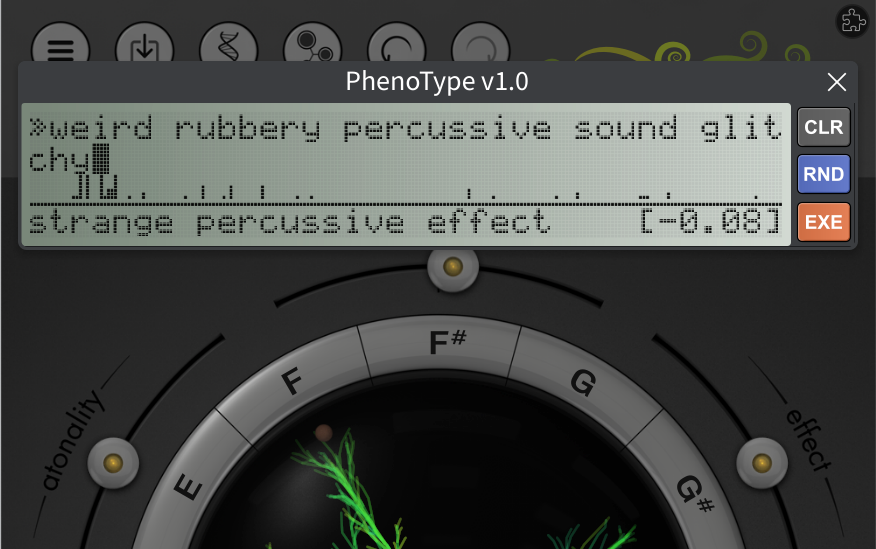
Early explorations with PhenoType reveal a nuanced interaction. Unlike the free-associative nature of some LLMs, PhenoType necessitates a degree of forethought. Users are prompted to articulate their sonic desires using specific keywords that the engine can interpret. This requirement encourages a more focused and deliberate approach to sound design, prompting users to pause and consider the precise qualities they wish to achieve. Once a starting point is established, the power of Synplant’s morphing capabilities comes into play, allowing users to evolve these initial patches into wildly new and unexpected sonic territories. This synergy creates an experience that can be described as "randomizer with intention."
The act of inputting descriptive terms, such as "dark, evolving, granular, metallic, atmospheric," prompts the neural network to analyze its trained data and generate a set of synthesis parameters that align with these descriptors. The engine then visualizes its internal workings, offering a glimpse into the algorithmic process. This transparency, even in its abstract representation, fosters a deeper understanding of how sonic characteristics are constructed. The ability to save and refine generated patches further enhances the iterative nature of sound design, allowing users to build upon their discoveries.
Behind the Scenes: The Neural Network’s Architecture and Training
The foundation of PhenoType is Genopatch, the neural-net-powered engine developed by Sonic Charge. Magnus Lindström elaborated on the scale of this undertaking: "We have over 200 tags in there (with around 1000 synonyms) and it has been trained on almost 60,000 patches (yep, all by myself hehe)." This massive dataset, meticulously curated by Lindström, forms the neural network’s knowledge base. The training process involved feeding these patches into the algorithm, allowing it to learn the complex relationships between descriptive terms and the underlying synthesis parameters.
The current iteration of PhenoType, while impressive, is acknowledged by its creator to have certain limitations. Lindström notes that "there are some obvious holes, e.g., knows very little about music genres and exotic instruments. But we will get there in time." This candid assessment points to a future roadmap for expanding the tag vocabulary and the network’s understanding of a wider range of sonic concepts. The continuous development suggests a commitment to refining the tool and broadening its creative potential.
Implications for the Future of Music Software
PhenoType represents a significant departure from the trend towards homogenization in music software, which can sometimes be exacerbated by overly simplistic or automated AI implementations. Instead, it champions a philosophy of retaining the "craft and personality" of instrument builders. By offering a tool that enhances, rather than replaces, human creativity, Sonic Charge is fostering a more intimate and rewarding relationship between musicians and their instruments.
The implications of this approach extend beyond individual users. It suggests a potential pathway for other developers to integrate AI into their tools in a manner that respects artistic intent and promotes learning. While some developers may opt to bolt LLMs onto existing software, PhenoType’s model offers a more "particular and interesting" alternative. The added effort required for this localized, intentional AI development is, as the article suggests, "a lot more rewarding."
This philosophy aligns with a broader call to "keep music software weird." In an era where generative AI can lead to predictable sonic palettes, Synplant, with features like PhenoType, stands as a testament to the enduring value of unique, experimental, and artist-driven tools. The ability to precisely define desired sounds through natural language, combined with the deep synthesis capabilities of Synplant, provides a powerful avenue for sonic exploration that is both accessible and deeply engaging.
A Call to Action and Future Potential
PhenoType is now available to all users holding a Synplant 2 license, making this cutting-edge sound design tool accessible to a wider audience. The availability of such an innovative feature encourages musicians and sound designers to explore new creative possibilities and to engage with AI in a more meaningful and empowering way.
The ongoing development of PhenoType, with plans to expand its tag library and understanding of musical concepts, signals a bright future for AI-assisted sound design. As Lindström indicated, the current version is just the beginning. The potential for further integration of advanced machine learning techniques, while remaining grounded in user control and local operation, promises to unlock even more creative avenues for musicians.
In contrast to the broad strokes of Big Data and Big Tech, PhenoType embodies a more focused and impactful application of machine learning. This mirrors trends observed in other areas of music technology, such as Native Instruments’ approach to Absynth 6, which also explores machine learning for sound design in a way that prioritizes user agency and creative depth.
The accessibility and power of PhenoType present a compelling argument for its adoption. For those seeking to push the boundaries of sound creation and engage with artificial intelligence in a manner that fosters creativity and preserves artistic intent, Synplant 2’s PhenoType offers a unique and rewarding experience. The commitment to "keeping music software weird" is evident in this innovative feature, solidifying Synplant’s reputation as a synthesizer that consistently challenges and inspires.