Mia Khoirunisa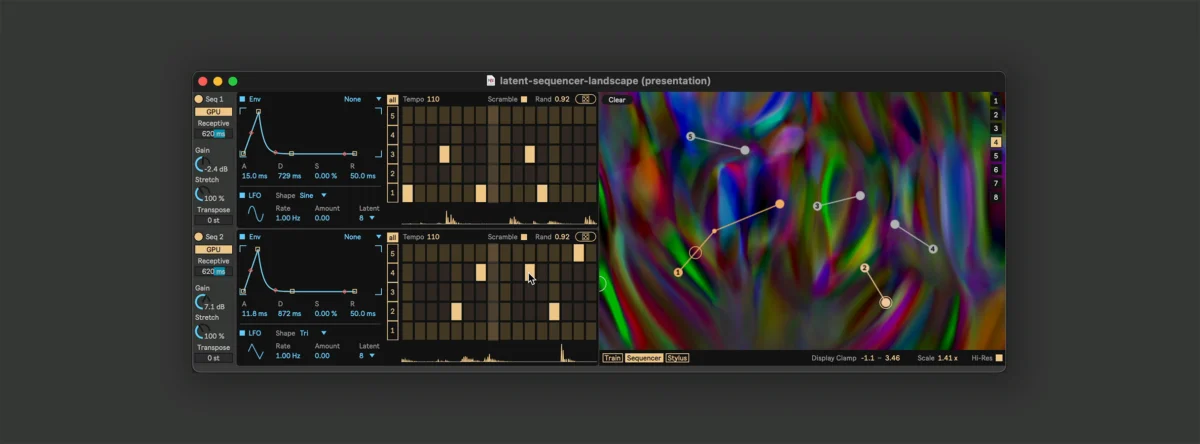
The realm of artificial intelligence in music production often conjures images of automated composition and predictive algorithms. However, a new wave of innovation, spearheaded by projects like Latent Terrain, is shifting the focus from AI as a content generator to AI as a malleable artistic tool. Jasper Shuoyang Zheng, the creator of Latent Terrain, articulates a core philosophy that diverges from the common narrative: "I’m not particularly interested in typing prompts to make stuff, I’m interested in breaking them and dissecting them." This perspective underpins Latent Terrain, an open-source Max external and user interface designed to democratize the exploration of neural audio codecs, transforming complex AI models into playable sonic instruments.
Unlike many contemporary AI music technologies that rely on vast, often proprietary, datasets and consume significant computational resources in remote data centers, Latent Terrain champions a more intimate and localized approach. The project emphasizes the use of a user’s own sounds as the raw material for transformation. This not only fosters a sense of ownership and personal connection to the sonic output but also positions the processing power directly within the artist’s environment, minimizing reliance on external infrastructure and its associated environmental impact. The resulting sonic textures are frequently described as "beautiful and weird," offering a departure from predictable or homogenized sounds, and inviting interaction through instrumental techniques.
This unique combination of accessibility, artistic control, and unconventional sonic exploration is resonating deeply within the musician and experimental sound artist communities. The allure lies in its ability to bring neural networks back to their foundational purpose: discovering novel timbres and sonic possibilities rather than merely replicating existing ones. By enabling artists to directly engage with and manipulate the latent spaces of neural audio models, Latent Terrain empowers them to sculpt entirely new sonic materials.
The Genesis and Architecture of Latent Terrain
Latent Terrain’s development stems from a desire to demystify and make accessible the intricate workings of neural audio codecs. These codecs, often employed for efficient audio compression and synthesis, represent a complex landscape of learned representations of sound. Zheng’s project provides a visual and interactive gateway into this "latent space"—a multi-dimensional representation where sonic characteristics are encoded.
The core of Latent Terrain is an elegantly designed, open-source Max external. Max/MSP is a visual programming environment widely used by musicians, sound designers, and researchers for creating interactive audio and multimedia applications. By integrating Latent Terrain into the Max ecosystem, Zheng ensures a degree of familiarity and accessibility for a substantial user base, particularly those already engaged with related tools like FluCoMa ( a toolkit for audio analysis and manipulation) or Data Knot (a platform for data visualization and interaction).
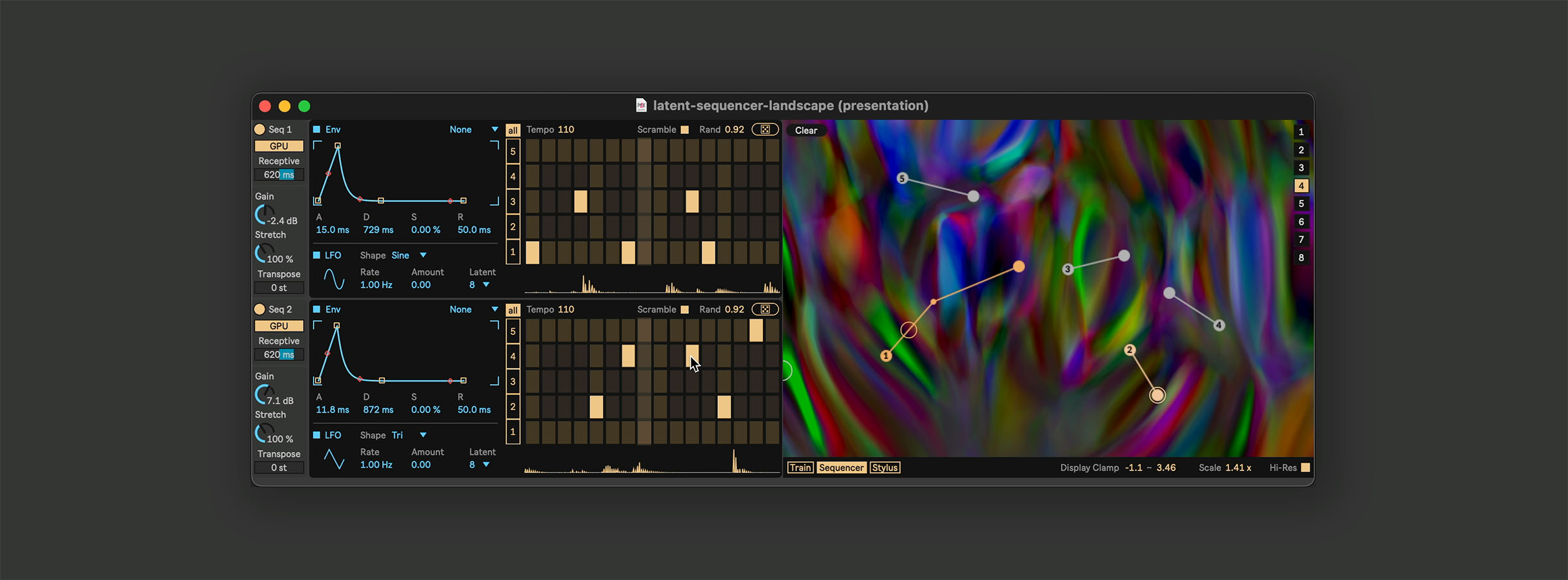
The external generates a visual map, often described as a "warped texture," which serves as a navigable representation of the neural network’s latent space. Users can traverse this terrain using various input devices, from a computer mouse to more sophisticated MIDI controllers, allowing for real-time manipulation of sonic parameters. This direct, tactile interaction transforms the abstract concepts of neural network representations into an intuitive performance interface.
A significant feature of Latent Terrain is its capacity for direct training of small neural networks within the Max environment. This allows artists to fine-tune the models using their own sonic data, observing firsthand how timbres can be "shattered, fractured, and meld into new materials." This capability extends to the meticulous construction of personal sound libraries and the charting of unique pathways through these curated sonic territories, fostering a deeply personalized creative process.
Artistic Exploration and Sonic Manifestations
The potential of Latent Terrain is vividly illustrated by the work of artists who are pushing its boundaries. Keigo Yoshida’s project, for instance, demonstrates the technology’s capacity to sonify complex data streams, utilizing EEG (electroencephalogram) readings to generate sonic landscapes. This application highlights Latent Terrain’s versatility beyond traditional audio manipulation, opening doors to interdisciplinary artistic endeavors where biological signals are translated into audible experiences. The resulting output, while perhaps abstract, offers a compelling example of how Latent Terrain can translate intricate data into evocative sound.
Beyond technical demonstrations, Latent Terrain is fostering artistic explorations that delve into sonic meaning and narrative. Jiatong Liu’s "nn/mémoire" is a prime example of this artistic application. Liu utilizes the technology to create a virtual gallery soundscape inspired by Beijing’s Hutongs, the traditional alleyway neighborhoods. These historical urban soundscapes are rapidly disappearing, and Liu’s project transforms archival recordings of these environments into an "ambient archive" that users can navigate spatially. In Liu’s words, a central design question was "learning to deal with the unpredictability" of the neural network, viewing it not as a flaw to be eliminated but as an inherent characteristic to be embraced and integrated into the artistic narrative. This perspective aligns with Zheng’s emphasis on dissecting and understanding rather than simply generating.
The artistic merit of these projects is underscored by their presentation at significant academic and artistic conferences. Latent Terrain is scheduled to be featured at NIME (The International Conference on New Interfaces for Musical Expression) in London, a prominent event that brings together researchers, artists, and engineers to explore the cutting edge of musical instrument design and performance. The inclusion of Latent Terrain at such a venue signifies its growing importance and recognition within the field of experimental music technology.
Technical Foundations and Accessibility
Latent Terrain is built upon established principles of machine learning, specifically focusing on autoencoders. Autoencoders are a type of artificial neural network used for unsupervised learning of efficient data codings. In the context of audio, they learn to compress input audio signals into a lower-dimensional latent representation and then reconstruct the signal from this representation. Latent Terrain leverages these learned latent spaces, allowing users to explore and interpolate between different sonic states encoded within the model.
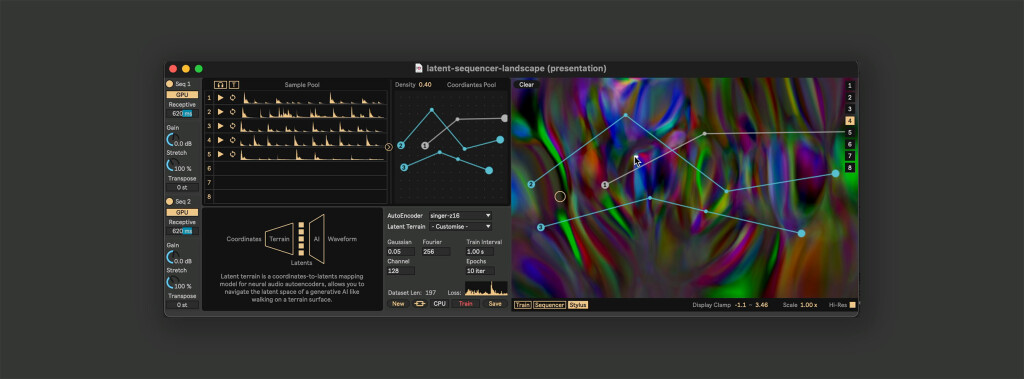
The project is designed with open-source principles at its forefront, promoting transparency, collaboration, and widespread adoption. The availability of the Max external and UI under an open-source license ensures that artists and developers can freely use, modify, and distribute the software. This commitment to "free as in freedom" is crucial for fostering a vibrant community around the technology.
The documentation for Latent Terrain is comprehensive, providing users with detailed guides and research materials. An article by Jasper Zheng, titled "Latent Terrain: Dissecting Neural Audio Codecs," offers an in-depth exploration of the work and its potential applications. A dedicated project page further elaborates on the research and development behind Latent Terrain, making the underlying principles accessible to a broader audience.
The project is currently available for download on macOS and Windows, with compatibility for both the standalone Max environment and Max for Live, the integrated version of Max within Ableton Live. This broad platform support enhances its accessibility for a wide range of users. While specific details about future support for other environments like Pure Data are not yet confirmed, the open-source nature of the project suggests that community-driven ports are a distinct possibility.
Broader Implications and Future Trajectories
The impact of Latent Terrain extends beyond its immediate utility as a creative tool. It represents a significant step in democratizing access to advanced AI audio technologies. By shifting the paradigm from prompt-based generation to interactive exploration and dissection, it empowers artists with a deeper understanding and more profound control over AI-driven sound design. This approach fosters a more critical and nuanced engagement with AI in the creative arts, moving away from passive consumption towards active manipulation and discovery.
The emphasis on local processing and user-provided data also has implications for sustainability and artistic autonomy. It offers an alternative to cloud-based AI services that can be resource-intensive and less transparent. This localized approach aligns with a growing movement within the creative technology sphere that prioritizes ethical considerations, environmental responsibility, and artist empowerment.
The ongoing development and increasing adoption of tools like Latent Terrain suggest a future where AI in music is characterized by greater interactivity, transparency, and artistic agency. As more artists experiment with and contribute to projects like this, we can anticipate the emergence of entirely new sonic languages and performance paradigms, born from a collaborative dance between human creativity and the intricate architectures of neural networks. The journey into the "weird world of neural audio codecs" has just begun, and Latent Terrain offers a compelling and accessible map for exploration. The project’s presence at NIME further solidifies its position as a significant contribution to the evolving landscape of musical expression and technological innovation.