Mia Khoirunisa
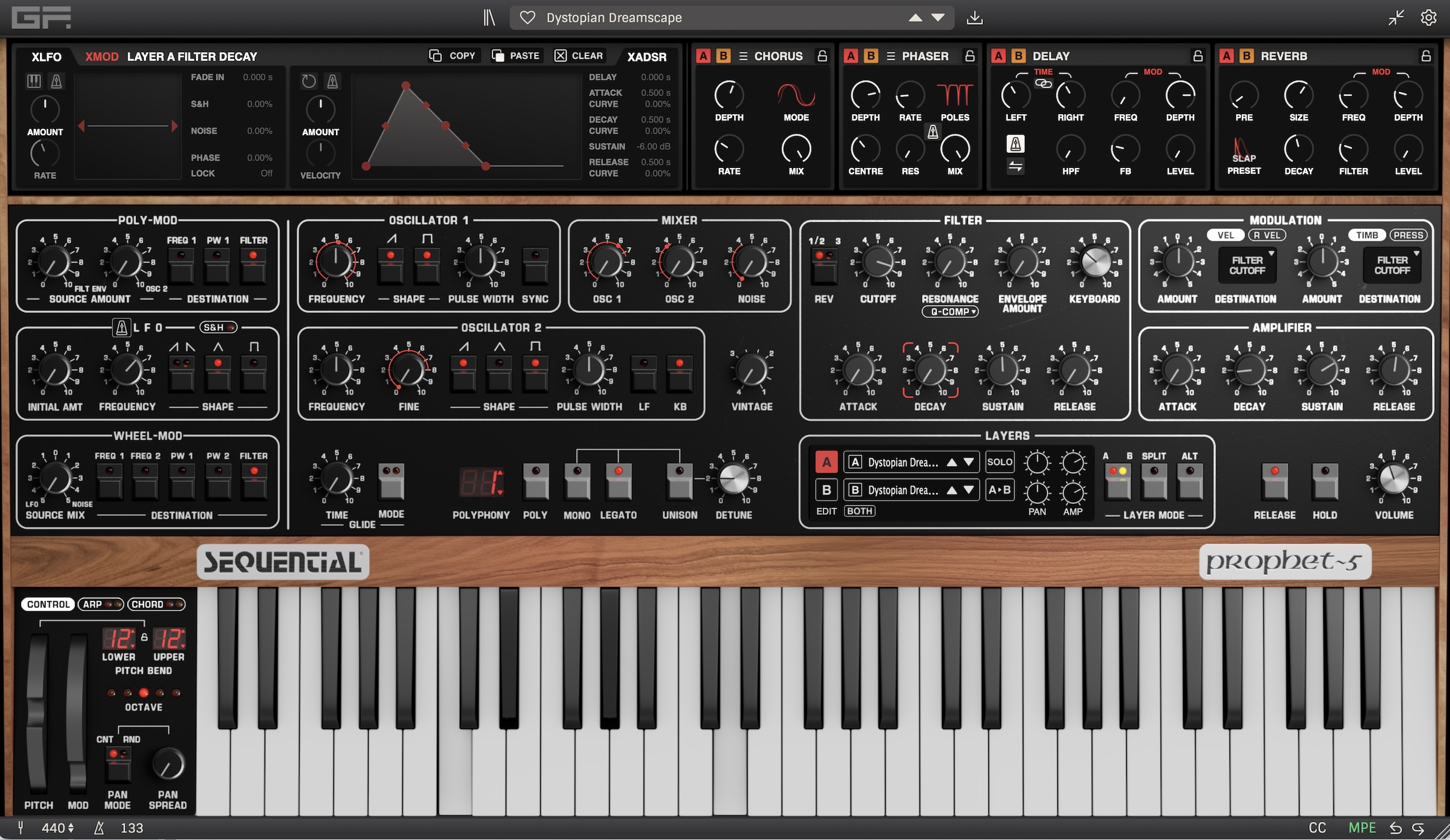
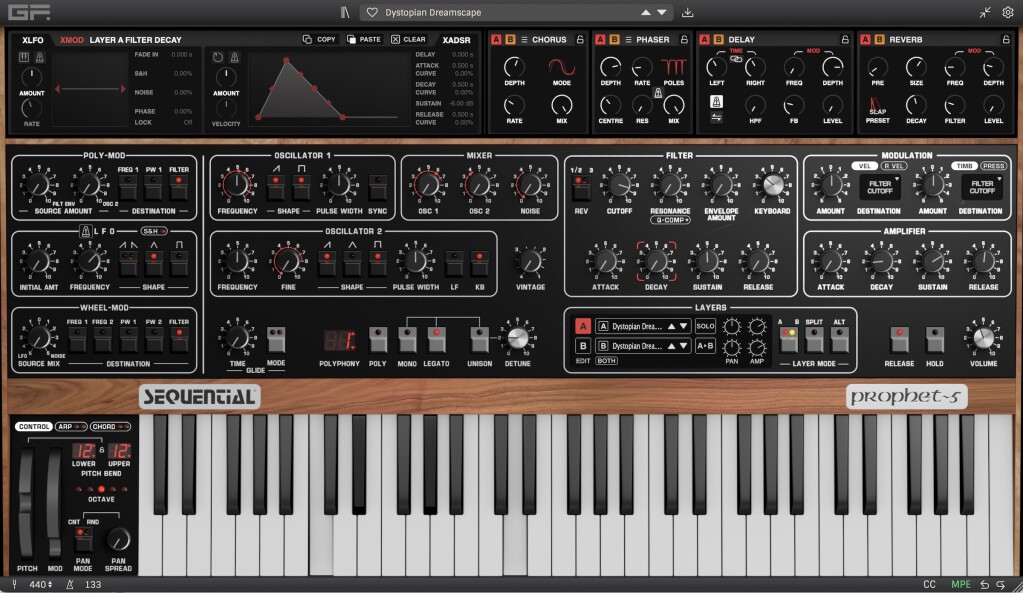
Following GForce Software’s acclaimed official renditions of iconic Oberheim instruments, the company has now unveiled a highly anticipated official software emulation of the legendary Sequential Prophet-5 synthesizer. This new plug-in represents a significant milestone, meticulously recreating the various historical revisions of the Prophet-5 while introducing modern enhancements such as MPE (MIDI Polyphonic Expression) support, a flexible dual-layer architecture, and a suite of sophisticated effects. Early testing reveals a profound dedication to sonic authenticity, complemented by a wealth of contemporary features designed to appeal to both vintage synth enthusiasts and modern sound designers.
This release marks the first time Sequential, the company founded by synthesizer pioneer Dave Smith, has officially sanctioned a software emulation of its most revered instrument. The Prophet-5, first introduced in 1978, has a storied history not only as a groundbreaking piece of hardware but also as a frequent subject of software emulation attempts throughout the evolution of digital audio. Early efforts, such as Native Instruments’ Pro-Five, played a pivotal role in popularizing the concept of accurately modeled vintage synthesizers and contributed significantly to the growth of brands like NI. However, the GForce Prophet-5 stands apart due to its official endorsement, promising a level of fidelity and collaboration unprecedented in the history of Prophet-5 plug-ins.
A Legacy Reimagined: The Genesis of the Prophet-5 and its Digital Descendants
The original Sequential Circuits Prophet-5 was a revolutionary instrument at its inception. Released in 1978, it was one of the first polyphonic, programmable synthesizers, offering musicians unprecedented control over sound creation. Its five-voice polyphony, dual analog oscillators per voice, voltage-controlled filters (VCFs), and voltage-controlled amplifiers (VCAs), coupled with a groundbreaking preset memory system, allowed for the creation of complex and dynamic sonic textures. This instrument quickly became a cornerstone of popular music, shaping the sound of countless hits across genres like pop, rock, electronic, and film scores. Its distinctive sound, characterized by its rich, warm analog character and powerful filter section, has remained highly sought after for decades.
The journey of emulating the Prophet-5 in software has been a long and complex one, mirroring the broader evolution of digital audio technology. Early attempts, while ambitious for their time, often struggled to capture the nuanced analog behavior and sonic warmth of the original hardware. These limitations were primarily due to the computational power available and the understanding of analog circuit modeling at the time. However, as technology advanced, so did the sophistication of software emulations. Developers began to leverage more powerful processing capabilities and refined modeling techniques to get closer to the authentic sound of classic hardware. The GForce Prophet-5, developed in close collaboration with Sequential, represents the culmination of this ongoing effort, aiming to bridge the gap between the tactile experience of hardware and the flexibility of software.
Meticulous Recreation Meets Modern Innovation
Upon launching the GForce Prophet-5, users are immediately struck by its vibrant and "alive" character, a hallmark of the original hardware. The developers have painstakingly recreated the various revisions of the Prophet-5, acknowledging the subtle yet significant sonic differences that distinguish them. This attention to detail ensures that users can experience the authentic voice of the instrument across its evolutionary stages.
Beyond the faithful recreation, the GForce Prophet-5 incorporates a suite of modern features that enhance its versatility and appeal:
-
MPE Support: The inclusion of MIDI Polyphonic Expression (MPE) is a significant advancement. MPE allows for per-note pitch bending, vibrato, and timbre modulation, offering a more expressive and nuanced performance capability. This feature enables users to achieve a level of expressiveness on a keyboard that closely mirrors the tactile control possible with acoustic instruments. The polyphonic pitch support via MPE also means the plug-in natively supports modern tuning systems, including Ableton Live’s tuning systems, bringing a 1978 instrument into parity with contemporary high-end hardware in terms of tuning flexibility.
-
Dual-Layer Architecture: The ability to stack or split sounds using a dual-layer architecture significantly expands the sonic palette. This feature is particularly beneficial for performance-oriented musicians, allowing for the creation of layered textures, complex splits, and intricate sound designs that would be challenging to achieve with a single instance of the original hardware. The intuitive interface for managing these layers further enhances its usability as a performance instrument.
-
Advanced Effects: GForce’s signature delay and reverb effects, already lauded for their quality, are now complemented by two user-selectable effect slots. These slots are not an afterthought; they are deeply integrated into the plug-in’s architecture, providing ample opportunity for sonic sculpting and adding depth and character to the synthesized sounds. This allows for further enhancement of the already rich Prophet-5 sound, enabling users to craft everything from subtle atmospheric textures to heavily processed soundscapes.
-
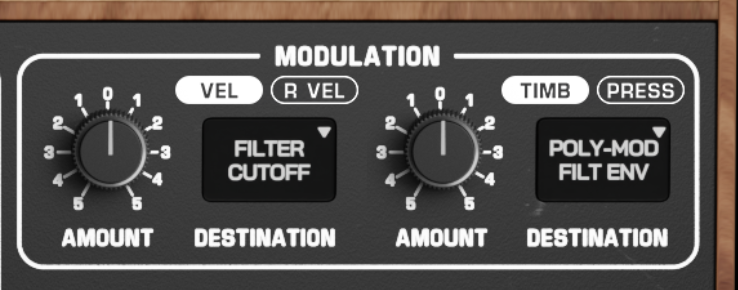
X-Modifiers: The introduction of "X-Modifiers" provides extensive modulation capabilities, allowing users to apply envelopes, LFOs, and other modulation sources to virtually any parameter. This granular control over modulation opens up vast possibilities for dynamic sound design, enabling the creation of evolving and complex timbres.
-
Comprehensive Preset Library: The plug-in comes with a full preset library, meticulously crafted to showcase the breadth of the Prophet-5’s sonic capabilities. This library serves as an excellent starting point for users and a testament to the instrument’s enduring sonic legacy. Initial comparisons with other Prophet-5 emulations suggest that the GForce version offers a more complete and detailed sonic experience, surpassing its predecessors in both sound quality and feature set.
Behind the Scenes: The Art and Science of Emulation
Remi Engelen at GForce Software provided invaluable insights into the intricate process of developing the Prophet-5 plug-in. Capturing the subtle sonic nuances of analog hardware is a complex endeavor that requires a deep understanding of both the underlying electronic components and the emergent sonic characteristics that arise from their interaction.
"The biggest factor in capturing the subtleties of hardware modeling is spending serious time with the hardware itself," Engelen explained. "In the case of the Rev1/2 vs Rev3, where the sonic differences are especially subtle, this is especially important." The development process begins with creating standard models of the individual components, such as the SEM chips and Curtis chips, which form the foundational sonic building blocks of the Prophet-5. This provides a robust starting point for the emulation.
The crucial step of capturing the "essence of the Prophet sound" involves an iterative process of comparing the modeled output to the original hardware and making continuous adjustments. "A large component of the modeling for us is mimicking the parameter ranges and non-linear curves that exist throughout the instrument," Engelen elaborated. "For example, the Rev1/2 filter has a slightly different minimum cutoff and curve across its cutoff range than the Rev3 filter, meaning that the same knob position for the two filters makes one sound slightly ‘brighter’ than the other. This is then accentuated when applying modulation to the filter, as the movement of the cutoff during the modulation will be slightly different and more obvious to the user’s ears."
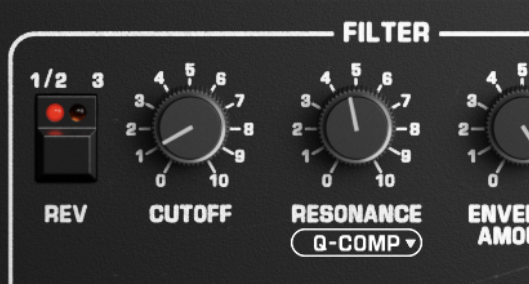
Furthermore, understanding how various characteristics of the instrument interact is paramount. "Another aspect is considering how various characteristics of the instrument interplay with each other," Engelen noted. "A key to the filter modeling is measuring how resonance, distortion, biasing, etc., change as parameters such as cutoff frequency and oscillator input level change. This can become a challenging balancing act between all these characteristics but when achieved, really allows the model to sound Prophet-like. Users can hear this as they sweep the filter cutoff with some resonance and pay attention to the volume and frequency of extra harmonics that appear."
Collaboration with Sequential: A Testament to Authenticity
The collaboration with Sequential was a pivotal element in achieving the exceptional authenticity of the GForce Prophet-5. This partnership allowed GForce access to invaluable insights and guidance directly from the source.
"It is a privilege to have been selected by Sequential to develop the first ever official Prophet-5 software instrument," stated Remi Engelen. "The brand is iconic and the instrument has shaped countless records over the year. It has been an incredible project to work on."
The collaboration process involved close consultation with Sequential, who provided crucial guidance on the more intricate and unique aspects of the instrument’s architecture. This collaborative approach ensured that the plug-in not only sounded authentic but also behaved in a manner consistent with the original hardware’s design philosophy.
"Working with Sequential pushed us to deliver the very best Prophet-5 software instrument possible, and we feel we’ve achieved that," Engelen continued. "We always take a leading role in the development process with our partners, investing the time needed to learn and explore every aspect of an instrument. Early in the project, our partners provided valuable guidance on the more unusual aspects of the instrument and its architecture."
The final review stage, where Sequential engineers and sound designers rigorously tested the plug-in, was crucial in validating its accuracy. "The key to a great emulation is spending time with the instrument itself, combined with extensive critical listening," Engelen emphasized. "Once we feel we have accurately recreated and captured its sound, we ask our partners to carry out a final review. They know every facet of their instrument better than anyone, and their involvement helps us reach an exceptional level of authenticity and accuracy."
Pricing and Availability
The GForce Prophet-5 is available as a premium software package with a retail price of £99.99 / $119.99 / €119.99. A special introductory offer provides a discount of £69.99 / $83.99 / €83.99 until the end of July. The plug-in is compatible with macOS and Windows operating systems and supports a wide range of formats, including standalone, AAX, VST2, VST3, and AU. GForce has also indicated an interest in future Linux support.
Implications for the Music Production Landscape
The release of an officially sanctioned Prophet-5 emulation by GForce Software, in collaboration with Sequential, has several significant implications for the music production industry. Firstly, it sets a new benchmark for hardware emulation. The level of detail, authenticity, and the inclusion of modern features demonstrate what is possible when developers work closely with the original instrument manufacturers. This sets a precedent for future software recreations of other iconic synthesizers.
Secondly, it democratizes access to a legendary instrument. For musicians and producers who cannot afford or maintain original vintage hardware, this plug-in offers an incredibly accurate and accessible way to incorporate the iconic Prophet-5 sound into their productions. The ability to manipulate and integrate the sound within a digital workflow, combined with the added expressive capabilities of MPE and advanced modulation, makes it a powerful creative tool.
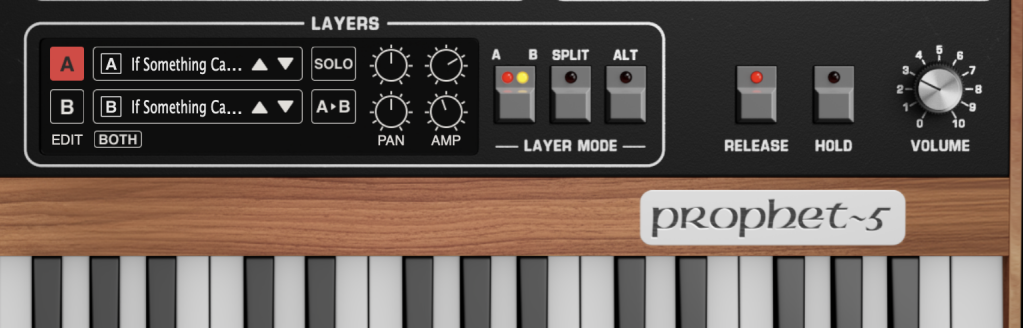
The inclusion of the original 38 factory patches from 1978, meticulously recreated, is a significant bonus for purists and historians alike. This provides direct access to the sonic landscape that defined an era. While other excellent Prophet-5 emulations exist, this official release is poised to become the go-to choice for many, especially given the pedigree of both GForce Software and Sequential.
The potential impact on sound design is also considerable. The detailed modeling of component behaviors and their interdependencies, as explained by Engelen, allows for a deeper understanding and manipulation of analog synthesis principles. This can inspire new creative approaches and sonic explorations, pushing the boundaries of what is achievable in digital music production.
Looking Ahead: A Continuing Legacy
The success of this collaboration fuels anticipation for future endeavors. While the focus has been on the Prophet-5, the legacy of Sequential and Dave Smith’s contributions to synthesis are vast. The possibility of future official emulations of other Sequential classics, or even interpretations of instruments from Sequential Circuits’ earlier history, remains an exciting prospect for the synthesizer community. As the article humorously notes, perhaps even a recreation of the iconic red jacket worn during the first MIDI connection could be on the horizon.
Ultimately, the GForce Prophet-5 is more than just a software instrument; it is a carefully crafted piece of digital history, a bridge between the past and the future of sound. It represents a triumph of modern technology and a deep respect for the enduring legacy of one of the most influential synthesizers ever created.
The GForce Prophet-5 is available for purchase from Plugin Boutique, with a special introductory discount of 30% until July 30th. For more information, visit the GForce Software product page.