 Mia Khoirunisa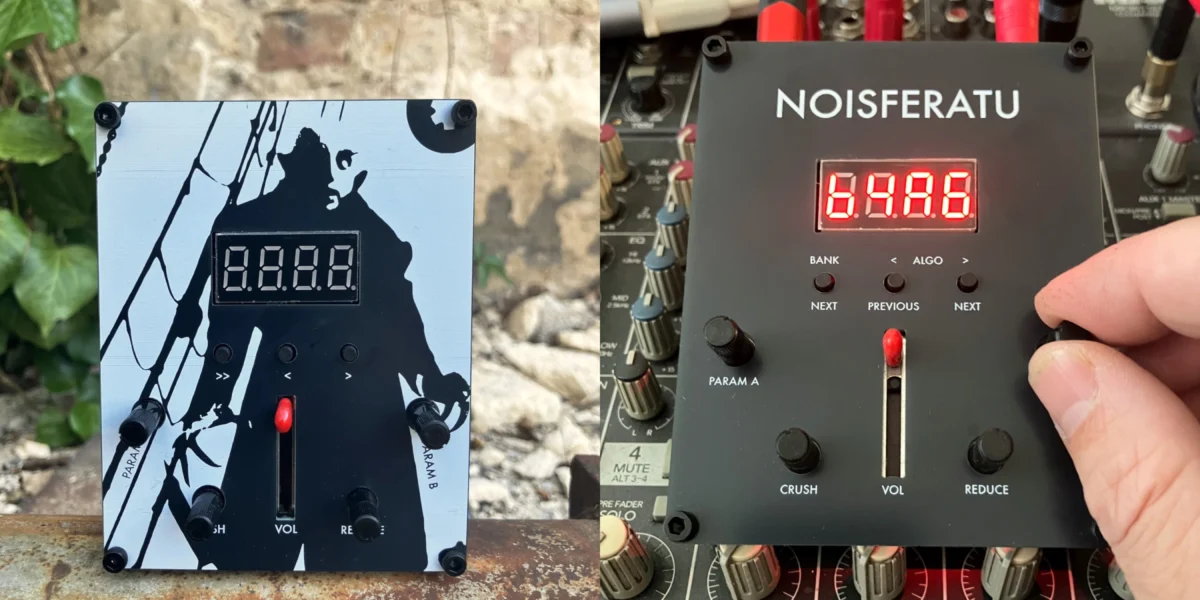
The digital sound design landscape is constantly evolving, with a persistent demand for innovative tools that push creative boundaries. In this vein, Rob Scape (also known by his project name, Scaepe) has introduced the Noiseferatu, a handheld, open-source generative texture synthesizer. This device, inspired by the eerie ambiance of F.W. Murnau’s classic silent film Nosferatu, aims to provide users with a powerful yet accessible platform for crafting complex and often chaotic sonic textures.
Genesis of the Noiseferatu: A Sonic Homage to Cinematic Horror
The Noiseferatu project draws its thematic inspiration directly from the unsettling atmosphere and narrative of Nosferatu, a seminal work of German Expressionist cinema. Released in 1922, Murnau’s film depicted the supernatural Count Orlok, a vampiric entity whose arrival in a German town precipitates an outbreak of plague and widespread dread. This narrative of unseen forces, creeping dread, and societal disruption serves as a conceptual framework for the Noiseferatu’s sonic capabilities. The device’s name itself, a portmanteau of "noise" and "Nosferatu," clearly signals its intention to explore the darker, more unpredictable corners of sound generation.
While the original Nosferatu is a historical landmark, the project’s developer explicitly notes that the inspiration extends to modern interpretations, suggesting a timeless quality to the film’s unsettling themes that resonates with contemporary artistic endeavors. The Noiseferatu aims to translate this sense of disquiet and the generation of unexpected, often disturbing phenomena into an auditory experience.
Technical Foundations: Open Source Hardware and Microcontroller Power
At its core, the Noiseferatu is built around the Seeed Studio XIAO SAMD21 microcontroller. This compact and powerful development board provides the computational horsepower necessary to run the device’s sophisticated algorithms. The choice of an open-source platform underscores a commitment to accessibility and community-driven development. Users are not merely consumers of a product but are invited to engage with its inner workings, modify it, and contribute to its evolution.
The Noiseferatu functions as a generative texture synthesizer, a category of electronic musical instrument designed to produce sounds that evolve and change over time, often without direct, continuous manipulation from the user. This generative nature is achieved through a variety of algorithmic processes. The device utilizes preset algorithms, offering a starting point for sonic exploration, but also emphasizes the ease with which users can create their own.
Algorithmic Exploration: Wavetables, Bitwise Operations, and Glitch Aesthetics
The sonic palette of the Noiseferatu is shaped by its manipulation of fundamental digital audio concepts. The device employs wavetables, which are essentially lookup tables containing waveform data. By cycling through these tables or interpolating between them, a wide range of timbres can be generated. Furthermore, the Noiseferatu leverages bitwise logic operations. These low-level operations, typically used in programming for tasks such as manipulating individual bits within a byte, can be applied to audio signals to create unique distortions and artifacts.
The synthesis approach is characterized by a "warping and glitching out" aesthetic. This implies a deliberate embrace of sonic imperfections, unexpected jumps, and digital artifacts. This approach aligns with the broader trend of "glitch music" and "generative music," genres that find beauty and expression in the breakdown and unexpected behavior of digital systems. The Noiseferatu’s design suggests an intentional channeling of these unpredictable elements to produce compelling and often unsettling textures.
User Experience and Creative Control: Beyond Presets
While the Noiseferatu comes equipped with preset algorithms, its design philosophy strongly encourages user customization. The developer highlights that the device is "exceptionally easy to create your own algorithms." This feature is particularly significant for those seeking deeper control and a more personalized creative workflow. The open-source nature of the project extends to its code, allowing for direct modification and experimentation.
A notable aspect of the Noiseferatu’s design is its integration with existing digital audio workstations (DAWs) and patching environments. The repository provides pathways for users to translate algorithms between the C and Arduino code used on the device and environments like VCV Rack, a virtual modular synthesizer, and Max/MSP’s gen~, a powerful visual programming environment for audio and multimedia. This interoperability allows for a seamless transition between hardware prototyping and software-based development, broadening the creative possibilities. The mention that Max/MSP now runs on Ableton Live’s "Move" platform further emphasizes the device’s potential integration into modern production workflows.
The developer’s sentiment regarding AI code assistance is particularly insightful. The desire to "get my hands dirty and break things," to "type in code and not know what I’m doing, and then have my arms gnawed on by some rats for a while," reflects a deep appreciation for the tactile and experimental nature of DIY electronics and coding. This perspective suggests that the Noiseferatu is not just about achieving a specific sonic outcome but about the process of creation, discovery, and the inherent, sometimes chaotic, learning that accompanies it. The whimsical, yet telling, statement "That’s not a bug, it’s a #RPFJHF gfsjkl dALJ*#&(R**(& fdhjkfjhfDHLJ!" encapsulates this embrace of the unexpected.
Accessibility and Availability: DIY Kits and Comprehensive Resources
The Noiseferatu is presented as a fully open-source project, meaning the firmware and specifications are publicly available. This allows ambitious users to build the device from scratch. For those who prefer a more streamlined approach, a full DIY kit is available for purchase from Thonk, a reputable retailer specializing in electronic music hardware and kits.
To support builders and users, a comprehensive manual is provided, detailing the device’s functionality, construction, and operation. This commitment to documentation is crucial for fostering a robust user community. The project’s repository on GitHub serves as the central hub for all technical information, code, and related resources, further solidifying its open-source ethos.
Broader Implications for DIY and Generative Music
The Noiseferatu project contributes to several significant trends in the electronic music and DIY hardware communities.
Democratization of Sound Design Tools
By making the design and software open-source, the Noiseferatu lowers the barrier to entry for individuals interested in creating their own unique sound design tools. This fosters a culture of innovation where users can not only utilize existing tools but actively contribute to their development and adaptation. The availability of a DIY kit further democratizes access, allowing hobbyists and aspiring sound designers to engage with advanced concepts without requiring extensive prior knowledge of electronics manufacturing.
The Power of Microcontrollers in Music Hardware
The use of the Seeed Studio XIAO SAMD21 microcontroller highlights the increasing power and affordability of embedded systems for creative applications. These compact processors are capable of running complex algorithms, enabling sophisticated sound generation and manipulation in portable and cost-effective hardware. This trend is evident across the DIY synth and effects pedal communities, where microcontrollers are becoming indispensable components.
Embracing Algorithmic and Generative Approaches
The Noiseferatu’s focus on generative textures aligns with a growing interest in algorithmic composition and performance. Generative systems offer a departure from traditional linear music creation, allowing for the exploration of emergent sonic structures and unpredictable outcomes. This approach can lead to unique sonic experiences and can be particularly valuable for sound designers seeking to create atmospheric, evolving soundscapes for film, games, or experimental music.
The "Hands-On" Ethos in the Digital Age
The developer’s personal reflections on coding and experimentation underscore a counter-trend to the often-abstract nature of digital creation. The desire to "get my hands dirty" signifies a yearning for tangible interaction with technology. DIY projects like the Noiseferatu provide this crucial element, bridging the gap between abstract code and physical, audible results. This hands-on approach can deepen understanding and foster a more profound connection with the creative process.
Future Outlook and Community Engagement
The success of projects like the Noiseferatu often hinges on the engagement of their communities. The open-source nature of the Noiseferatu provides a fertile ground for collaboration. Users are encouraged to share their custom algorithms, build variations of the device, and contribute to the overall codebase. This collaborative ecosystem can lead to the discovery of new sonic possibilities and the expansion of the Noiseferatu’s capabilities beyond its initial design.
The project’s connection to platforms like VCV Rack and Max/MSP suggests a future where hardware and software synthesis tools are increasingly integrated, allowing for a fluid workflow that leverages the strengths of both. As the capabilities of microcontrollers continue to advance, and as the open-source hardware movement gains further momentum, devices like the Noiseferatu are poised to play an increasingly significant role in shaping the future of sound design and electronic music creation.
The Noiseferatu stands as a testament to the ingenuity of independent developers and the power of open-source collaboration. It offers a compelling blend of technical sophistication, creative freedom, and a unique thematic inspiration, inviting users to explore the darker, more intriguing realms of sound generation. Whether one seeks to craft unsettling ambient textures, experimental sound effects, or simply delve into the fascinating world of generative algorithms, the Noiseferatu provides a potent and accessible gateway.