Lana Akmaluna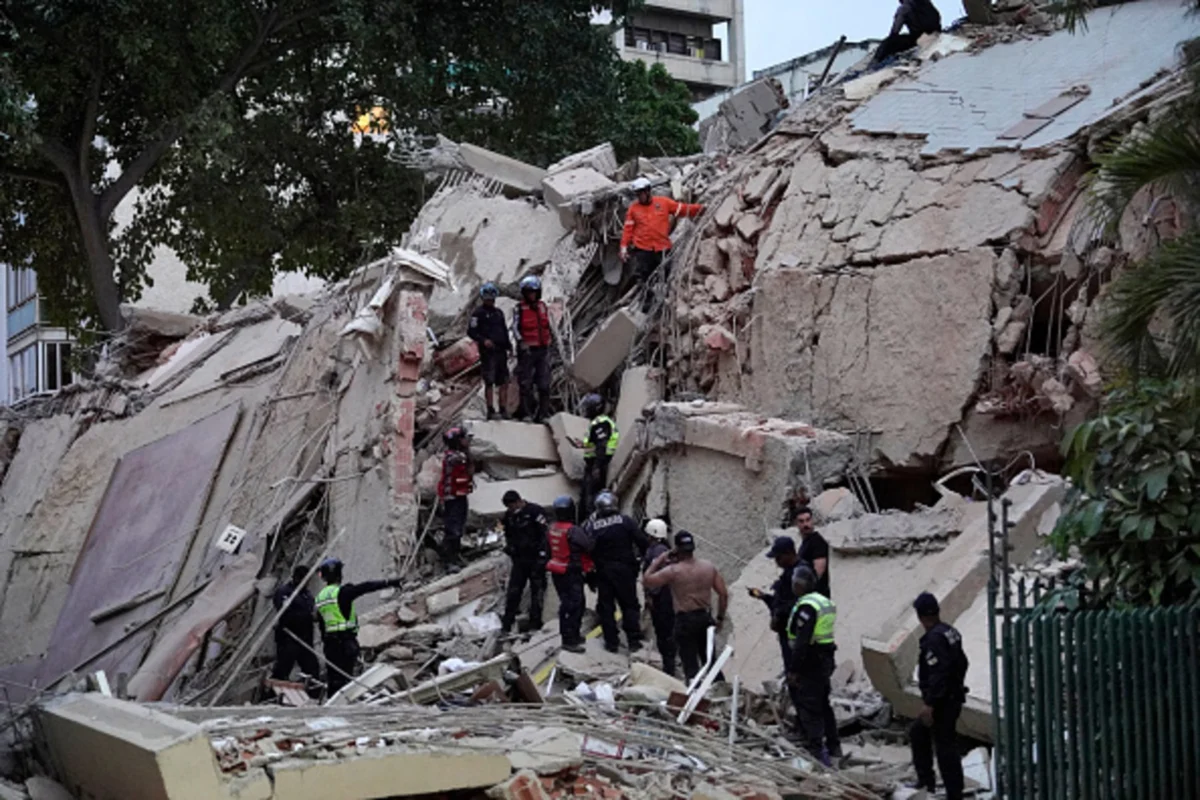
The seismic landscape of South America was irrevocably altered on the evening of Wednesday, June 24, 2026, when two powerful earthquakes struck the northern coast of Venezuela in rapid succession. The tremors, registering magnitudes of 7.2 and 7.5, represent the most significant seismic activity the nation has experienced in over a century. Centered near the coastal town of Morón, the quakes triggered the collapse of high-rise structures, residential complexes, and essential infrastructure, primarily affecting the capital city of Caracas and the neighboring coastal state of La Guaira. By the morning of June 25, the Associated Press and local authorities confirmed a staggering toll of at least 164 fatalities and nearly 1,000 documented injuries, with rescue teams still scouring the debris for survivors.
The disaster has prompted an unprecedented mobilization of the Venezuelan diaspora, led by high-profile cultural figures and recording artists. Utilizing their substantial global reach, these individuals have transformed their social media platforms into makeshift emergency response hubs, aiming to bridge the gap between international aid and local needs in a country already strained by years of socioeconomic instability.
Technical Analysis of the Seismic Event
According to the United States Geological Survey (USGS), the first earthquake, a magnitude 7.2 event, occurred at approximately 8:04 p.m. local time. The epicenter was located just west of Morón, a vital industrial and port area on the Caribbean coast, roughly 105 miles west of Caracas. This initial tremor originated at a depth of 14 miles. However, the situation escalated dramatically just sixty seconds later. At 8:05 p.m., a second, more powerful earthquake with a magnitude of 7.5 struck at a shallower depth of only 6 miles, with its epicenter located 10 miles southwest of Morón.
Seismologists note that the shallow nature of the second quake significantly amplified its destructive potential. Shallow earthquakes—those occurring less than 43 miles below the surface—typically cause more damage to man-made structures because the seismic energy is released closer to the surface with less attenuation. The proximity of the epicenters to major urban centers meant that the energy was funneled directly into the densely populated valleys of Caracas and the steep, vulnerable hillsides of La Guaira.
Chronology of the Disaster and Immediate Aftermath
The timeline of the disaster highlights the speed at which the crisis unfolded and the subsequent urgency of the humanitarian response.
- June 24, 8:04 PM: The magnitude 7.2 earthquake strikes. Tremors are felt as far away as Bogotá, Colombia, and the Caribbean islands. In Caracas, power grids begin to fail, and the first reports of structural damage emerge from the coastal region.
- June 24, 8:05 PM: The magnitude 7.5 earthquake occurs. This secondary shock causes the total collapse of several buildings already weakened by the first tremor. Communication lines are severed across much of north-central Venezuela.
- June 24, 9:00 PM – Midnight: Chaos erupts in urban centers. Social media becomes flooded with videos of residents fleeing shopping malls and residential towers. Self-organized volunteer groups begin digging through rubble in La Guaira using hand tools and flashlights.
- June 25, 2:00 AM: The first coordinated rescue units from the Venezuelan Civil Protection and Fire Departments reach the hardest-hit zones in Morón and Puerto Cabello.
- June 25, 7:00 AM: The Associated Press releases the first verified casualty figures: 164 dead and nearly 1,000 injured. Hospitals in Caracas report they are operating at overcapacity, hampered by chronic shortages of medical supplies.
- June 25, 10:00 AM: International aid offers begin to materialize, including a formal statement from the United States government.
Artist Mobilization and Digital Humanitarianism
In the absence of a fully functioning state infrastructure, Venezuelan artists living abroad have stepped into the role of information coordinators. Danny Ocean and Lele Pons, who together command a following of over 50 million people, launched a joint initiative on Instagram to facilitate real-time aid. Their strategy involved using their comment sections as a live bulletin board where victims could post their locations and specific needs, such as "immediate assistance required" or "missing person reports."
"Places that need immediate assistance, shout in the comments! People willing to collaborate… on whatever is needed, coordinate in the comments," the artists stated in their message. This approach leverages the "network effect," where the sheer volume of followers ensures that critical information can bypass traditional, often slower, bureaucratic channels.
Singer-songwriter Lasso also joined the effort, expressing the collective shock of the expatriate community. "My heart is shattered. I can’t believe the images coming in from the earthquake," he wrote, offering his platform for any information that could assist in the rescue and recovery efforts.
Institutional Support and Targeted Foundations
While social media serves as an immediate communication tool, long-term recovery requires financial and logistical backing. Several artists pointed their followers toward established non-governmental organizations (NGOs) that have maintained a presence in Venezuela throughout its recent crises.
Joaquina, a rising Venezuelan singer-songwriter, advocated for the "We Love Foundation," a non-profit that has operated within the country for over a decade. She highlighted a GoFundMe campaign designed to procure and deliver essential supplies: food, medicine, and emergency equipment. Similarly, the Montaner family—led by Ricardo Montaner and Marlene Rodríguez—activated "The House Project." This family initiative focuses on immediate, granular needs that are often overlooked by large-scale international aid, such as providing diapers for displaced families and tools for debris clearance.
"We are fundraising and determining where those donations will go," Marlene Rodríguez explained. "To the people helping clear debris, to those left homeless, to people with small children who need diapers—that immediate aid needed today."
Historical and Geological Context
To understand the magnitude of this event, it must be compared to Venezuela’s seismic history. The last earthquake of similar devastating impact occurred in 1967, when a 6.6 magnitude quake struck Caracas, resulting in 236 deaths and thousands of injuries. The 2026 dual quakes, however, released significantly more energy. A 7.5 magnitude earthquake is approximately 30 times more powerful in terms of energy release than a 6.6 magnitude event.
The northern coast of Venezuela sits on the boundary between the Caribbean Plate and the South American Plate. This transform fault system is known for producing significant seismic events, though rarely with the "double-hit" frequency observed on June 24. The vulnerability of the region is exacerbated by the lack of modern seismic building codes in the informal settlements—known as barrios—that ring Caracas and line the coast of La Guaira.
Socioeconomic and Political Implications
The earthquakes struck at a moment of extreme political transition and socioeconomic fragility. Earlier in 2026, the United States conducted a military operation that led to the capture of former president Nicolás Maduro. This has left the country in a state of administrative flux, with interim authorities and local governors struggling to maintain basic services.
The disaster has laid bare the catastrophic state of Venezuela’s healthcare system. Years of hyperinflation and underinvestment have left hospitals without reliable electricity, running water, or basic surgical supplies. Reports from the ground suggest that many of the 1,000 injured are being treated in hallways or makeshift outdoor clinics because the structural integrity of hospital buildings is in question.
Furthermore, the "coastal region of La Guaira," which bore the brunt of the damage, is a vital economic artery. It houses the nation’s primary airport (Simón Bolívar International) and its most significant seaport. Prolonged disruption to these facilities could paralyze the delivery of international humanitarian aid and further stifle the domestic economy.
International Response and "Disaster Diplomacy"
The international community has responded with cautious but firm offers of assistance. The United States, despite its recent military involvement in the country, has offered search-and-rescue teams and medical aid. This situation presents a complex diplomatic challenge: providing aid to a nation in political transition without appearing to overstep sovereign boundaries.
Neighboring countries, including Colombia and Brazil, have also signaled their readiness to provide logistical support. The United Nations and the Red Cross have begun mobilizing regional hubs to fly in "dignity kits," water purification tablets, and emergency shelter materials.
Analysis of Long-term Recovery Challenges
The road to recovery for Venezuela will be fraught with logistical and psychological hurdles. The immediate focus remains on the "golden hour" of search and rescue, but the following weeks will necessitate a massive housing and infrastructure reconstruction program.
- Infrastructure Integrity: Engineers will need to assess the thousands of buildings that remained standing but may have suffered internal structural failures. The "shallow" nature of the 7.5 quake suggests that many foundations may have shifted.
- Public Health: With water lines ruptured in La Guaira and Morón, the risk of waterborne diseases like cholera and hepatitis A increases exponentially.
- Migration and Displacement: This disaster could trigger a new wave of internal and external migration. Families who lost their homes in the barrios may seek refuge in neighboring countries, adding pressure to an already strained regional refugee framework.
The dual earthquakes of June 24, 2026, stand as a grim milestone in Venezuelan history. While the physical landscape has been scarred, the rapid response from the global Venezuelan community, led by its artists, provides a glimmer of resilience. As rescue efforts continue, the focus shifts from the rubble to the daunting task of rebuilding a nation already weary from years of hardship. The unity shown by figures like Danny Ocean, Lele Pons, and the Montaner family serves as a testament to the enduring bond of the Venezuelan people, regardless of where they reside in the world.