Aveline Kirana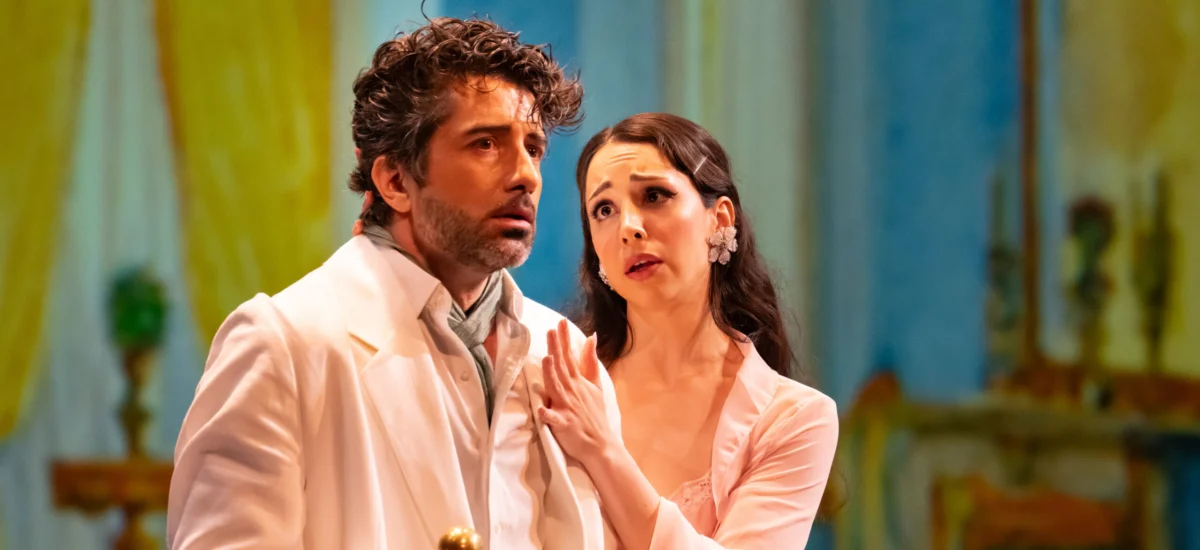
Teatro Nuovo’s ambitious semi-staged production of Gioachino Rossini’s “Il Turco in Italia” has brought a long-neglected opera back into the New York spotlight, offering a vibrant and often hilarious evening that underscores the work’s enduring charm and theatrical potential. The production, which premiered in 2026, marked the 200th anniversary of the opera’s initial, albeit infrequent, New York debut in 1826. While “Il Turco in Italia” has historically enjoyed a more robust presence on European stages, gracing houses like the Teatro alla Scala, the Royal Opera House, and Teatro Real, its American performance history has been sparse, limited to sporadic stagings by institutions such as the New York City Opera and The Juilliard School.
Rossini composed “Il Turco in Italia” in 1814, a mere two years before his universally acclaimed masterpiece, “Il Barbiere di Siviglia.” While the structural foundations of “Il Turco” undoubtedly paved the way for the later opera’s success, the earlier work possesses its own distinct comedic spirit and vocal fireworks. The opera’s narrative, a witty exploration of love, deception, and artistic creation, centers on the exotic Turkish traveler Selim and the capricious Italian wife Fiorilla, whose romantic entanglements ensnare her long-suffering husband Geronio and a host of colorful characters.
The Teatro Nuovo production, directed by [Director’s Name, if available, otherwise state "the production team"], employed a semi-staged format enhanced by evocative projections designed by Adam J. Thompson. This approach allowed the vocal performances to take center stage while providing a visual context that enriched the dramatic action. The evening was largely defined by its comedic brilliance, a testament to Rossini’s sophisticated musical wit and the performers’ adept comedic timing. Amidst a strong ensemble, two principal artists emerged as particular standouts, delivering performances that resonated with both vocal prowess and theatrical flair.
A Masterclass in Rossinian Virtuosity: Kresley Figueroa as Fiorilla
In the pivotal role of Fiorilla, soprano Kresley Figueroa made a significant company debut with Teatro Nuovo, undertaking her very first Rossini role. Her portrayal, however, belied her inexperience with the composer’s demanding style, exhibiting the confidence and polish of a seasoned Rossini interpreter. Figueroa navigated the treacherous vocal demands with remarkable agility and an innate sense of comic timing that animated every facet of her performance.
Her entrance aria, “Non si da follia maggiore,” immediately established her vocal credentials. Figueroa deployed a lighter, more agile vocal timbre, executing virtuosic florid runs with precision and demonstrating a nuanced understanding of stylistic ritardandos that lent lyrical depth to the rapid passages. This early display hinted at the vocal and dramatic range she would further unveil throughout the evening.
It was in her second act aria, “Squallida veste e bruna,” that Figueroa truly showcased the expansive color palette of her voice. The initial section of the aria, depicting Fiorilla’s feigned despair, was sung with a fuller, more lyrical timbre, emphasizing a gorgeous legato line seamlessly interwoven with dazzling coloratura phrases. Her upper notes in the aria’s final cadenza gleamed with power and brilliance. The subsequent cavatina, “Caro padre, madre amata,” allowed Figueroa to explore a more tender, yet still technically demanding, aspect of Fiorilla’s character. She relished the high notes and extended vocal lines, exhibiting a remarkable command of dynamics and a controlled, resonant middle voice, supported by impeccable breath control. The aria’s repeat saw Figueroa engage in inventive variations, showcasing her vocal agility as she ascended into her higher register and then fearlessly descended into a gutsy chest voice. Each variation built in intensity, with the soprano dispatching the intricate roulades with effortless ease, culminating in a thrilling, sustained high note that brought the audience to its feet.
Mattia Venni: The Endearing Geronio
Equally compelling was the performance of Italian bass-baritone Mattia Venni as Don Geronio. Venni embodies the quintessential characteristics of a buffo bass-baritone, combining an agile and engaging stage presence with impeccable diction and a flawless command of patter singing. His portrayal of Geronio, the increasingly exasperated husband attempting to manage his flighty wife, was a masterclass in comedic acting and vocal dexterity.
Venni’s Act Two aria, “Ah se nel Mondo,” served as a prime example of his artistry. In this aria, Geronio expresses his profound despair and longing for his wife’s return. Venni delivered the text with crystalline clarity, ensuring that not a single word was lost, even as he masterfully navigated an accelerated tempo toward the aria’s climax. His Act One aria, “Vado in Traccia d’una zingra,” also highlighted Venni’s booming vocal sound, a rich and resonant instrument, while simultaneously revealing a surprising delicacy in his lyrical phrasing.
Beyond his solo moments, Venni proved a formidable presence in ensemble numbers. His contributions to the Act One trio, featuring Don Narciso and Selim, and the Act Two bass-baritone duet with Selim, were marked by an inexhaustible supply of energy and expressive enunciation. His voice consistently burst forth with vibrant character and comedic insight.
However, it was in the Act One duet, “No mia vita, mio tesoro,” with Figueroa as Fiorilla, that Venni truly solidified his status as a star of the evening. The chemistry between Venni and Figueroa was palpable, their comedic timing so sharp and their interaction so fluid that they appeared less like performers and more like seasoned comics engaged in a spontaneous, hilarious exchange. This duet, which stops the show in many productions, was a highlight, making the audience forget the semi-staged nature of the performance. Figueroa embodied Fiorilla’s flirtatious wit, while Venni’s desperate pursuit of his errant wife provided endless comedic fodder. Their voices blended beautifully; Figueroa’s pure soprano navigating the roulades and legato lines with ease, while Venni’s accented notes provided a perfect, contrasting counterpoint. The prospect of seeing these two reunited in a fully staged production of “Il Turco in Italia” is a tantalizing one.
A Strong Supporting Cast and Period-Informed Musicality
The success of Teatro Nuovo’s production was further bolstered by a capable supporting cast, each member contributing to the opera’s intricate comedic tapestry.
Bass Vincent Graña portrayed Selim with considerable panache and a rich, commanding bass voice. His entrance aria, “Bella Italia alfin ti miro,” was sung with authoritative flair, demonstrating a dramatic crescendo from a delicate piano to a powerful fortissimo within the opening phrase. Graña’s vocal coloratura was accurate, and his timbre was consistently rich. While his stage presence initially appeared somewhat reserved, he grew increasingly comfortable throughout the performance, confidently navigating the Act One trio and quartet. His duets with Figueroa as Fiorilla were genuinely comic, characterized by their mutual responsiveness and vocally matched staccato lines and rapid-fire coloratura passages.
Hans Tashjian, as Prosdocimo, the poet observing and commenting on the unfolding events, delivered a solid performance. While he may have taken a few moments to vocally warm up, Tashjian eventually revealed a round, resonant sound in his recitative passages and ensemble work. His facial expressions effectively conveyed both comic absurdity and scheming intent, perfectly suiting the character’s role as the opera’s meta-narrative observer.
Tenor Max Alexander Cook brought a bright, ardent sound to the role of Don Narciso, a rival suitor for Fiorilla’s affections. Cook displayed virtuosic coloratura and patter skills in his ensemble work, which were particularly evident in his two arias, “Perche mai se son tradito” and “Tu seconda il mio disegno.” His smooth legato lines connected each phrase with warmth and musicality. A slight shakiness was noted in his higher range, where some notes sounded raspy and lacked complete clarity. However, his coloratura passages in the Act Two aria were executed with sharpness and commendable virtuosity.
David Freides, as Albazar, sang his aria, “Ah! Sarebbe troppo dolce,” with a suave tone and impeccable coloratura. Mezzo-soprano Sabatina Mauro impressed as Zaida, exhibiting a gutsy mezzo voice with fierce low notes and an appealing upper range. Her scene at the end of Act One, engaging in a comedic duel with Figueroa, was a highlight, and her voice rang out commandingly in the ensembles, suggesting considerable potential for larger roles within the company.
A hallmark of Teatro Nuovo’s artistic philosophy is its commitment to historically informed performance practices. This production was no exception, with the orchestra, led by concertmaster Elisa Citterio, embracing a period-appropriate approach to the score. The result was a well-paced orchestral performance that effectively built Rossini’s signature crescendos, particularly during the concertatos at the close of Acts One and Two, and the iconic overture. The cello recitative was also noteworthy, providing sensitive and perfectly timed accompaniment to the singers, its resonance filling the auditorium. One of the most refreshing aspects of this particular performance, as noted by critics and audience members alike, was the organic and refreshing quality of both the instrumental and vocal execution. In contrast to some previous Teatro Nuovo performances where variations and coloratura could occasionally sound exhausting or forced, every musical decision in this production felt natural and invigorating.
Re-evaluating a Rossinian Gem
While “Il Turco in Italia” may not possess the universal recognition of “Il Barbiere di Siviglia,” this Teatro Nuovo production makes a compelling case for its re-evaluation. The opera, with its intricate plot, memorable characters, and demanding vocal writing, offers a rich canvas for operatic artistry. In the hands of Kresley Figueroa and Mattia Venni, its comedic brilliance and musical sophistication shone through, making for an undeniably worthwhile theatrical experience. The production not only celebrated the 200th anniversary of the opera’s New York premiere but also demonstrated that, with inspired programming and exceptional talent, even lesser-known works can captivate modern audiences and reclaim their rightful place in the operatic repertoire. The success of this staging by Teatro Nuovo suggests a promising future for further exploration of Rossini’s less frequently performed operas.