
 Jia Lissa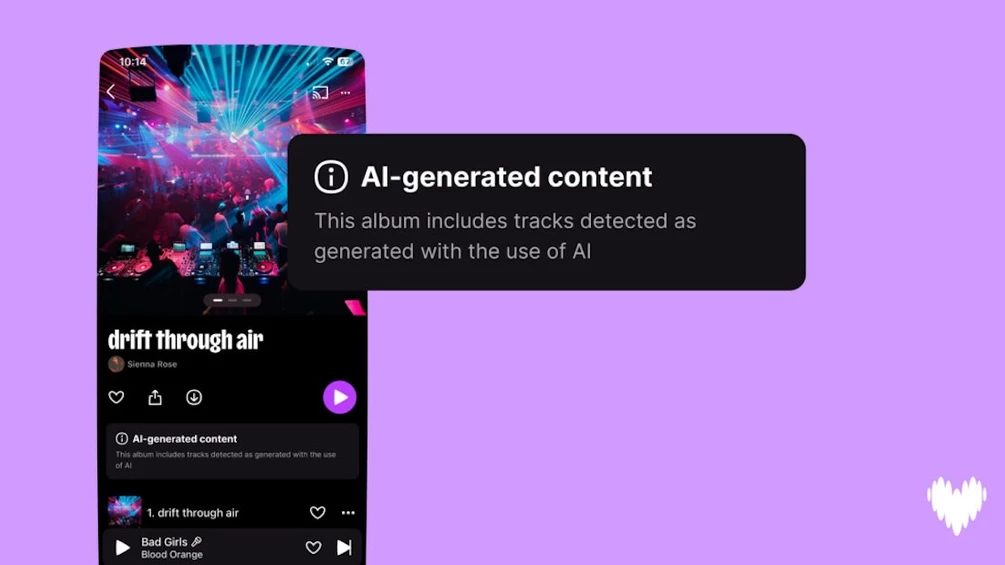
Paris, France – Deezer, the prominent global music streaming service, has announced a significant shift in its platform’s content landscape: AI-generated music now constitutes more than half of all tracks uploaded daily. This unprecedented milestone underscores the accelerating impact of artificial intelligence on the music industry, compelling streaming platforms to fortify their defenses against fraudulent content and ensure fair compensation for human artists.
The Alarming Ascent of AI in Music Uploads
The latest figures from the Paris-based streaming giant reveal that approximately 90,000 AI-generated tracks are submitted to its platform each day. This volume now accounts for over 50% of the total daily uploads, marking a critical inflection point where machine-created music has for the first time surpassed human-made content in terms of submission volume on Deezer. This surge represents a rapid escalation from just three months prior, in April, when Deezer reported around 75,000 AI-generated tracks daily, representing 44% of total uploads. The trajectory indicates an exponential growth curve, reflecting the increasing accessibility and sophistication of generative AI tools.
This dramatic increase is not merely a quantitative change but a qualitative challenge to the existing music ecosystem. While the total number of new tracks uploaded to streaming services globally has been steadily rising for years – with millions of tracks hitting platforms annually – the dominance of AI-generated content introduces complex questions regarding content quality, intellectual property, and artist remuneration.
Deezer’s Proactive Stance and Anti-Fraud Initiatives
In response to this escalating trend, Deezer has reiterated and intensified its commitment to combating the proliferation of low-quality or fraudulently uploaded AI music. The company confirmed its ongoing policy to actively remove and demonetize AI-generated tracks, a stance it first articulated in January. At that time, Deezer announced its intention to shun royalty payments on an estimated 85% of AI music identified through its proprietary detection tools.
Alexis Lanternier, CEO of Deezer, emphasized the company’s dedication to maintaining a fair and artist-centric environment. In a recent press statement, Lanternier asserted, “Deezer has been at the frontline of fighting fraud and reducing payment dilution related to AI music for almost two years. Now that half of all daily uploads are AI-generated tracks, we are taking additional steps to safeguard the rights of artists and songwriters, while maintaining focus on music that fans actually love.”
This statement underscores Deezer’s proactive strategy, which predates the current numerical dominance of AI content. The platform’s foresight in developing and deploying advanced AI detection tools has been a cornerstone of its approach. These tools, which were launched across 20 different streaming platforms in June, represent a collaborative effort to establish industry-wide standards for identifying and managing AI-generated content. This inter-platform deployment suggests a recognition that the challenge of AI music is not isolated to a single service but requires a collective industry response.
A Chronology of Industry Responses to AI Music
The music industry’s reckoning with AI is rapidly evolving, with various stakeholders adopting diverse strategies:
- January 2026: Deezer publicly outlines its initial policy to demonetize a significant portion of AI-generated music and commits to using AI detection tools. Around the same time, independent music platform Bandcamp announced a comprehensive ban on "wholly or substantially" AI-generated music, citing concerns over ethical implications, quality control, and the platform’s mission to support human artists.
- April 2026: Deezer reports 75,000 AI-generated tracks daily, accounting for 44% of uploads, signaling an imminent tipping point.
- May 2026: Spotify and Universal Music Group (UMG) announce a landmark licensing deal. This agreement, rather than outright banning, explores a different facet of AI integration by enabling fans to use AI to generate remixes and covers of UMG artists’ songs, provided it’s done with explicit artist permission and within a structured framework. This represents a more collaborative, permission-based approach to AI in music creation.
- June 2026: Deezer launches its AI music detection tools across 20 streaming platforms, aiming to provide a broader industry solution for content identification.
- August 2026: TIDAL, another high-fidelity streaming service, follows suit by announcing its new AI music policy. TIDAL’s stance explicitly excludes fully AI-generated music from royalty payments, aligning with Deezer’s demonetization efforts and emphasizing its commitment to artist-centric payments.
- Ongoing Initiatives: Other platforms are also exploring solutions. Traxsource, a leading digital music store for DJs, and Apple Music have both developed transparency tagging systems. These systems aim to disclose the use of AI in music production, allowing listeners and industry professionals to identify whether a track was entirely human-made, AI-assisted, or fully AI-generated. This approach prioritizes transparency and consumer choice.
This timeline illustrates a fragmented but evolving industry response, ranging from outright bans and demonetization to regulated integration and transparency labeling. The common thread, however, is the recognition of AI’s profound impact and the urgent need for policies to manage its presence responsibly.
The Broader Context: Generative AI and the Music Landscape
The rise of generative AI in music is not an isolated phenomenon but part of a broader technological revolution. Tools capable of composing melodies, generating beats, synthesizing vocals, and even mimicking specific artist styles have become increasingly accessible, often with user-friendly interfaces. These tools, powered by large language models (LLMs) and advanced machine learning algorithms, can produce vast quantities of music at minimal cost and speed, far outpacing human composition.
The ease of creation, combined with the low barrier to entry for distribution (thanks to numerous aggregators), has flooded streaming platforms with content. While some AI tools offer legitimate creative assistance to human artists, a significant portion of the AI-generated uploads are perceived as low-quality, derivative, or even designed to game royalty systems through "micro-streams." This influx contributes to "content pollution," making it harder for genuine artists to cut through the noise and reach audiences.
Economic Implications for Artists and the Industry
The economic implications of AI-generated music are profound and multifaceted. One of the most pressing concerns is the dilution of royalty pools. Most streaming platforms operate on a pro-rata payment model, where a total royalty pool is divided based on an artist’s share of overall streams. If a significant percentage of streams go to AI-generated tracks – especially those not designed for genuine listener engagement but rather for volume – it means a smaller share of the overall pie for human artists.
Independent artists, who already struggle to earn sustainable income from streaming, are particularly vulnerable. The sheer volume of AI content can further depress per-stream royalty rates, making it even harder to make a living from music. While Deezer and TIDAL’s demonetization policies aim to mitigate this, the ongoing "arms race" between AI generators and detectors means the problem is continuously evolving.
Furthermore, the rise of AI music introduces questions about the value of human creativity. If machines can endlessly generate music, what does that mean for the perceived artistic merit and economic worth of human compositions? Artist advocacy groups and unions have begun to vocalize concerns, calling for clearer legal frameworks around AI-generated content, robust copyright protections, and fair compensation models that prioritize human creators.
Creative and Ethical Dilemmas
Beyond economics, AI music raises significant creative and ethical dilemmas. Authorship and ownership are at the forefront. Who owns the copyright to a song generated by AI? Is it the programmer, the user who prompted the AI, or the AI itself? Current copyright laws are ill-equipped to handle these complexities, leading to legal ambiguities and potential disputes.
There are also ethical concerns regarding the use of existing copyrighted works to train AI models without proper consent or compensation. Many generative AI systems are trained on vast datasets of human-made music, raising questions of fair use and potential infringement. The specter of "deepfake" music, where AI mimics an artist’s voice or style without their permission, further complicates the ethical landscape.
From a creative standpoint, critics argue that the sheer volume of AI-generated content could lead to a degradation of artistic quality and originality. While AI can create technically proficient music, questions remain about its capacity for genuine emotional expression, innovation, and cultural resonance – qualities often associated with human artistry.
The Detection Arms Race and Listener Perception
The battle against unwanted AI content is also a technological arms race. As streaming platforms develop more sophisticated AI detection tools, those creating AI music are simultaneously working to make their creations indistinguishable from human-made tracks. This ongoing cat-and-mouse game requires continuous investment in research and development for detection technologies.
Compounding this challenge is the surprising reality of listener perception. A study conducted in November 2025 revealed that a staggering 97% of people cannot differentiate between AI-generated and human-made music. This finding has profound implications: if listeners cannot tell the difference, the incentive to generate vast quantities of AI music without concern for genuine artistry increases, and the challenge for platforms to curate meaningful content intensifies. It also raises questions about consumer expectations and the very definition of a "music experience."
Looking Ahead: Regulation, Collaboration, and the Future of Music
The situation on Deezer and across the industry highlights an urgent need for comprehensive solutions. These will likely involve a multi-pronged approach:
- Regulatory Frameworks: Governments and international bodies may need to establish clearer laws regarding AI-generated content, copyright, and intellectual property.
- Industry Collaboration: Continued collaboration among streaming platforms, record labels, artists, and aggregators is essential to develop unified policies, detection standards, and fair compensation models.
- Transparency and Labeling: Implementing universal transparency tags, as explored by Apple Music and Traxsource, could empower listeners to make informed choices and support human artistry.
- Artist Advocacy: Stronger collective bargaining and advocacy from artist organizations will be crucial to ensure creators’ rights are protected in this new era.
- Innovation in Curation: Streaming platforms may need to evolve their curation strategies, moving beyond mere volume to emphasize quality, authenticity, and human-led discovery.
The current trajectory on Deezer serves as a stark reminder of the profound transformations underway in the music industry. While AI offers exciting creative possibilities, its uncontrolled proliferation poses significant threats to the livelihood of artists and the integrity of the art form. The coming years will undoubtedly be a period of intense adaptation, as the industry grapples with how to harness the potential of AI while safeguarding the irreplaceable value of human creativity.