Jia Lissa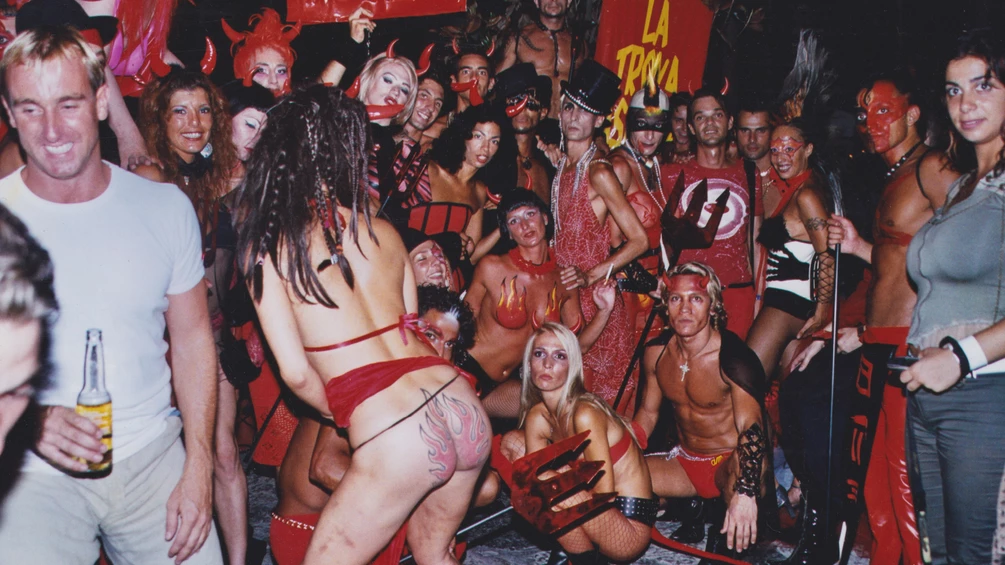
For over four decades, La Troya has stood as an unparalleled institution within Ibiza’s legendary nightlife scene, a vibrant testament to radical inclusivity and unbridled self-expression. Far from being merely another party, it has cultivated a unique identity, proudly outlasting countless clubs, transient trends, and the shifting eras it has navigated. At its core, La Troya embodies a philosophy where the dancefloor belongs to everyone, a principle conceived by its visionary founder, Brasilio de Oliveira, and meticulously upheld by his successor, Eduardo de Oliveira, the collective’s current director. This enduring spirit, defined by legacy, a profound sense of community, and the occasional sting of loss, continues to shape one of the island’s most fabled gatherings.
A Legacy Forged in Inclusivity
Central to La Troya’s enduring appeal is its foundational ethos of radical inclusivity, best encapsulated by a fabled list that circulates in the party’s lore. This isn’t a VIP roster or a DJ lineup, but a roll call of professions: Lawyer, Police officer, Butcher, Politician, Prostitute, Athlete, Builder, Model, Engineer, Librarian, Drag performer, Judge, Biker. The significance lies not in the individual titles, but in their collective presence on the same dancefloor, on the same night. This diverse tapestry of humanity, converging without judgment, is the very essence of La Troya.
Eduardo de Oliveira elaborates on this defining characteristic: "Brasilio [de Oliveira] created a party concept where everyone feels involved and thinks, ‘I am part of this, I identify with this.’ That’s why the La Troya crowd is so wonderful and colourful. When you say La Troya, you see all these people. Brasilio’s idea was not to create a class-based party, but the opposite. A party where everyone could enjoy themselves, express themselves, dress in the most creative and eccentric way, without feeling judged. That is La Troya." This statement underscores a deliberate, anti-hierarchical approach that has differentiated La Troya from many of its contemporaries, particularly in an environment often perceived as exclusive. This philosophy not only attracted a broad spectrum of attendees but actively fostered an environment where individuality was celebrated, making the party a sanctuary for many seeking authentic self-expression.
Brasilio de Oliveira: The Visionary Behind the Chaos
The genesis of La Troya is inextricably linked to Brasilio de Oliveira, a figure who arrived in Ibiza from São Paulo, Brazil, in the early 1970s and, captivated by the island’s bohemian spirit, never truly departed. Until his passing in 2020, Brasilio dedicated five decades to the art of party-throwing, transforming nightlife into an immersive, communal experience. His journey began at KU, the sprawling open-air club that would later evolve into Privilege – an emblematic venue that largely defined the opulent, excess-drenched era of Ibiza in the 1980s. It was under the starry Ibizan skies that Brasilio first began to craft the theatrical, carnival-infused spectacles that would eventually coalesce into La Troya.
The early manifestations of Brasilio’s vision did not bear the name La Troya. They began as "La Vaca Asesina" (The Killer Cow), a provocative and memorable moniker, before evolving through a series of legendary themed nights. These included "White Full Moon," "Babylonia," "The Temple of Love," and "The Psychiatric Hospital," each designed to transport attendees into a different fantastical realm. "It all started in the mythical KU nightclub in the 1970s," Eduardo recounts, highlighting the deep roots of the party. "La Troya has been built on long experience and a long journey, passing through many clubs and many countries." This extensive journey provided Brasilio with invaluable experience, allowing him to refine his concept and adapt it to various environments while maintaining its core identity. His brief detour to Rome, where he managed several of the city’s most fashionable venues like Gilda, Piper, Alien, and Frankie Go, further honed his skills in event production and crowd management, adding layers of sophistication to his return to Ibiza.
From KU to Club Chinois: A Chronology of Iconic Venues
La Troya’s trajectory through Ibiza’s clubland reads like a historical map of the island’s most iconic establishments. After its formative years at KU, the party followed Brasilio’s return from Rome, migrating to legendary venues such as Amnesia, Space, Heart, and, most recently, Club Chinois. This nomadic existence, far from diluting its identity, strengthened it. Each move demonstrated the resilience and adaptability of the La Troya concept, proving that its spirit transcended any physical location. As Eduardo notes, "The clubs changed but the spirit didn’t." This consistency, despite changing backdrops, cemented La Troya’s reputation as a cultural force rather than just another club night. Its presence has been a significant draw for tourists and locals alike, contributing substantially to Ibiza’s image as a global nightlife destination. The longevity of the party, particularly through periods of economic fluctuation and evolving music trends, stands as a testament to its enduring cultural relevance and robust organizational foundation.
The Carnival Spirit: La Troya’s Theatrical Heartbeat
The "colour, chaos, and collective experiences" that define La Troya are not accidental; they are meticulously orchestrated manifestations of Brasilio’s Brazilian heritage. "As everyone knows, Brasilio was born in Brazil – a country of a thousand colours, samba schools, telenovelas, a multiracial culture – so inspiration was never lacking," Eduardo explains. This rich cultural backdrop infused La Troya with its distinctive theatrical DNA: a riot of performers, elaborate costumes, and an atmosphere of organised chaos that envelops attendees from the moment they step through the doors.
This Brazilian lineage is evident in every facet of La Troya’s production. The "Sambowdromo nights," reminiscent of Rio’s carnival parades, featured elaborate floats and a vibrant parade culture that Brasilio famously exported from the club to the streets of Ibiza. Caravans of performers, adorned in flamboyant attire, would wind their way through the marina and Ibiza Old Town, transforming the island’s public spaces into extensions of the party. These spontaneous, joyous processions became, over time, one of the defining images of the Ibizan summer, captivating both residents and tourists. Brasilio’s genius lay in blurring the lines between performer and audience, bringing the carnival to the club, then to the street, and ultimately making the entire island a stage. Eduardo captures this perfectly when describing a first-timer’s experience: "The atmosphere, the characters, and the audience themselves being part of the experience." This emphasis on the audience as participant, rather than mere spectator, is the founding logic of the entire enterprise, a principle that remains central to La Troya’s identity today.
More Than a Party: Building a Community and Safe Haven
For a significant portion of La Troya’s history, the Cocoloco bar served as its undisputed nexus point. Beyond merely serving its signature drink, Cocoloco was "above all a meeting point where people from Ibiza – bar owners, restaurant owners, shop owners – came to socialise and introduce new friends," Eduardo recalls. It was a crucial hub for "new people who wanted to meet, people who were looking for old friends." In an era before mobile phones, particularly during the "hippie era" of its early days, Cocoloco facilitated genuine human connection. Attendees weren’t just there to dance; they were part of a "petit comité," a small, intimate gathering within the larger party. This concept of a structured yet organic community speaks volumes about Brasilio’s vision: he wasn’t just building a night out, but a social fabric with its own rituals, regulars, and profound sense of belonging. The music, while important, served as a vehicle for this deeper communal experience, not the sole protagonist.
Crucially, La Troya has consistently and explicitly championed the LGBTQ+ community throughout its entire history, standing as a proud beacon of acceptance and celebration. "We have always been different, embracing creativity, diversity, and individuality," Eduardo affirms. "That’s why people see La Troya as their home." This sense of belonging and safety is not incidental; it is the deliberate outcome of over 40 years of consistent messaging. This includes careful casting of performers, a visual language in its flyers that welcomes all, and a door policy that extends a genuine invitation to individuals who might feel marginalised elsewhere. "Everyone mixes freely – there are no divisions, and people feel safe because they understand the environment," Eduardo stresses. This commitment to a safe and inclusive space carries significant responsibility, one that Eduardo acknowledges: "We have a very big responsibility with the LGBTQ+ community on the island, and we also have the support of all the bars on Calle de la Virgen, the bars and restaurants in the Marina along the front line, and Chinois, which has given us its full support." This robust network of community and commercial partners further solidifies La Troya’s role as a vital social institution, extending its influence beyond the confines of the club itself.
Brasilio’s Enduring Legacy and the Dawn of a New Era
The vibrant narrative of La Troya was tragically interrupted in early 2020 with the passing of Brasilio de Oliveira. He was in São Paulo, his hometown, before his planned return to Ibiza in April to prepare for the upcoming season. However, he never made it back, succumbing to COVID-19 during the pandemic. His death sent shockwaves across the island, leaving many in a profound state of grief. For over 40 years, Brasilio had been an instrumental force in shaping Ibiza’s global identity. His contributions were immense and multifaceted: he had brought an estimated 200 international artists, from the legendary James Brown and disco queen Gloria Gaynor to pop icon Kylie Minogue, to perform on the island. He pioneered the concept of the street parade, revolutionised themed nights, and perfected the immersive party format that many Ibiza clubs now emulate. He had built an enduring legacy founded on a genuine, palpable love for the people on his dancefloor.
The sudden closure of clubs due to the pandemic prevented a proper period of collective grieving for Brasilio. When the venues eventually reopened, La Troya returned, carrying the dual mantle of a joyous party and a poignant memorial. Since then, it has entered a new era under the direction of Eduardo de Oliveira. While maintaining the party’s signature spontaneity, Eduardo ensures that "everything is carefully organised, but spontaneous moments enhance the experience." When asked how he preserves La Troya’s authenticity, his answer is concise and profound: "By staying true to Brasilio’s vision." This commitment to the founder’s ethos serves as a guiding principle, ensuring that the essence of La Troya continues to thrive.
The Sound of La Troya: Curating Euphoria for Four Decades
Musically, La Troya has always possessed a clear and consistent identity: house music, but distinctly on its own terms. During its peak years at Amnesia, resident DJs like DJ Oliver and César de Melero crafted the core sound – an uplifting, Iberian-inflected style that built into euphoric crescendos as the night progressed. This sonic signature, characterised by its joyous energy and melodic sensibility, perfectly complemented the visual spectacle and inclusive atmosphere of the party. The continuity of this sound is embodied by long-standing resident Oscar Colorado, who has been a fixture at La Troya since its Space years and continues to play at Club Chinois, often alongside Paul Darey and Felix da Funk.
The calibre and diversity of La Troya’s guest list over the decades reflect the party’s broad reach and influence within the global electronic music scene. It has hosted legends such as David Morales, one of house music’s most influential figures and a Grammy winner whose lineage stretches from the iconic Paradise Garage in New York to Pacha in Ibiza. Morales’s presence brought a direct connection to the roots of New York’s underground house scene, a lineage that resonates naturally with La Troya’s inclusive spirit. More recently, Bob Sinclar closed out the triumphant 2024 season at Club Chinois, while the same summer saw appearances from heavyweight acts like Fatboy Slim, Spencer Parker, Wally Lopez, Davina Moss, and Kerol Garcia. These artists, representing various facets of house and electronic music, underscore La Troya’s ability to attract top-tier talent while staying true to its musical foundations.
The 2026 Season: Upholding a Timeless Tradition
The 2026 season sees La Troya return to its fitting home at Club Chinois, nestled in the heart of Marina Botafoch Paseo Marítimo. This venue has quickly become a natural fit for the party’s vibrant energy and elaborate productions. While it is a new season, the core tenets of colour, chaos, and collective experience remain unchanged. The season officially kicked off with a special one-off show during IMS week in April, offering a tantalising pre-season teaser. This event featured resident Oscar Colorado alongside Rampini, Cristian Battaglia, and Ginevra Ramos on the decks, while multi-disciplinary performance artist Baby Marcelo and the extended La Troya family delivered their signature theatrical magic.
The roster for the 2026 season further extends La Troya’s breadth, seamlessly blending foundational figures with contemporary stars. Todd Terry, a pioneer who helped define the New York house sound in the late ’80s and ’90s, makes a welcome return. He is joined by David Penn and Groove Armada, whose own remarkable longevity in Ibiza mirrors that of La Troya itself. Importantly, the lineup also features artists like Jodie Harsh and Gok Wan, who channel the vibrant LGBTQ+ dancefloor energy that has always been an intrinsic part of the party’s identity. This carefully curated line-up, stretching from the very roots of house music in New York to the contemporary pulse of the island, serves as a neat summary of La Troya itself: a timeless celebration that bridges generations and diverse communities.
Enduring Impact and the Future of an Ibiza Institution
When asked how La Troya should be remembered, Eduardo de Oliveira’s answer is characteristically direct and unambiguous: "As a place of originality and unforgettable nights." This succinct statement captures the profound impact of a party that has defied fleeting trends and maintained an unwavering commitment to its core values. For four decades, across a hundred different venues and countless nights, La Troya has consistently delivered a dancefloor experience that somehow always felt the same: welcoming, liberating, and utterly unique. Brasilio de Oliveira built a party where everyone was genuinely welcome, a revolutionary concept in its time, and one that Eduardo de Oliveira is steadfastly ensuring remains the bedrock of La Troya’s future. Its continued success speaks not only to its vibrant past but to its enduring relevance as a vital cultural touchstone in Ibiza’s ever-evolving landscape. As the island continues to redefine itself, La Troya remains a powerful symbol of community, creativity, and the unwavering belief that the dancefloor is, and always should be, a space for all.