Mia Khoirunisa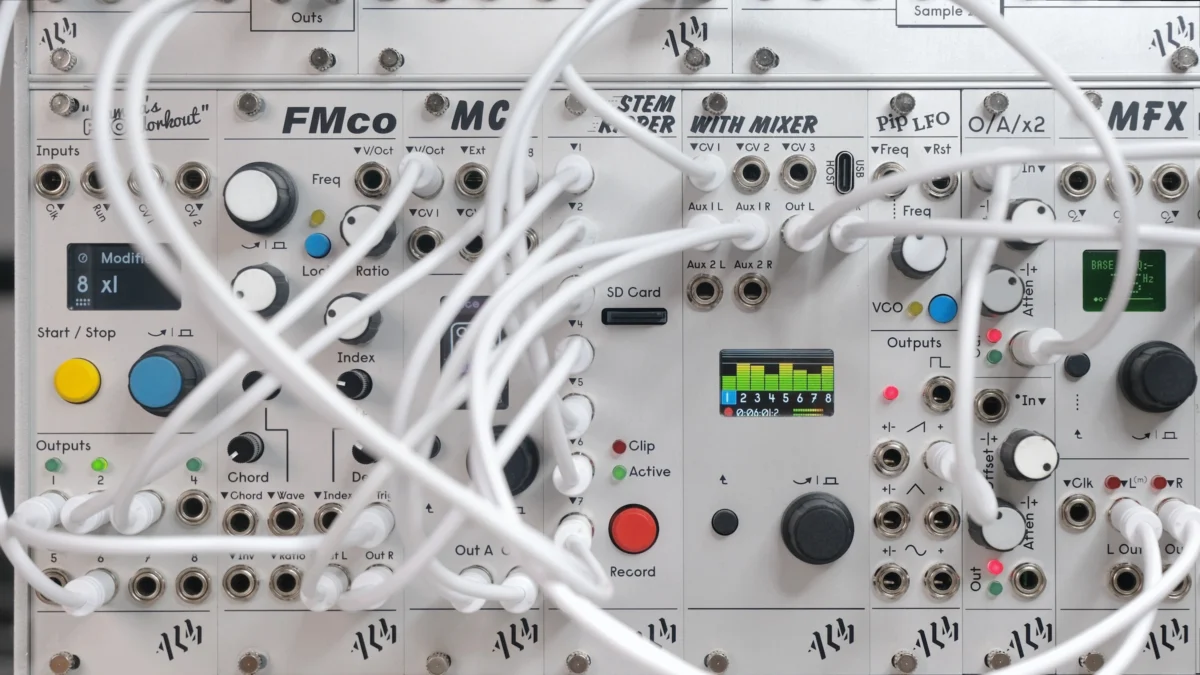
The landscape of Eurorack modular synthesizers has long celebrated the creative freedom of patch cables, random voltage generators, and self-contained sound generation. However, capturing these fluid, often unpredictable sonic explorations in high fidelity has traditionally presented a frustrating bottleneck. Musicians frequently face a stark choice: compromise on portability by routing signals into bulky external audio interfaces and computers, or sacrifice multitrack separation by summing complex stereo patches down to a single master output. London-based manufacturer ALM/Busy Circuits has systematically addressed this hardware dilemma with the introduction of the With Mixer expansion module, completing a modular recording ecosystem anchored by their popular Stem Ripper 8-channel audio recorder and the Thru output expander.
Designed to pack robust multitrack recording and comprehensive stereo mixing into a remarkably compact footprint, this modular trinity aims to redefine how electronic music producers handle live performance archiving and DAW-less production. By combining direct-to-SD-card multichannel recording with hands-on mixing controls, auxiliary sends, panning, and external USB MIDI integration, ALM/Busy Circuits offers a streamlined alternative to traditional computer-centric setups without sacrificing the immediacy that defines the Eurorack format.
Main Facts of the Ecosystem
The hardware architecture of the ALM/Busy Circuits recording ecosystem is divided into specific functional modules that prioritize space efficiency—a critical metric in a hobby and profession where every horizontal pitch (HP) of rack space is fiercely contested.
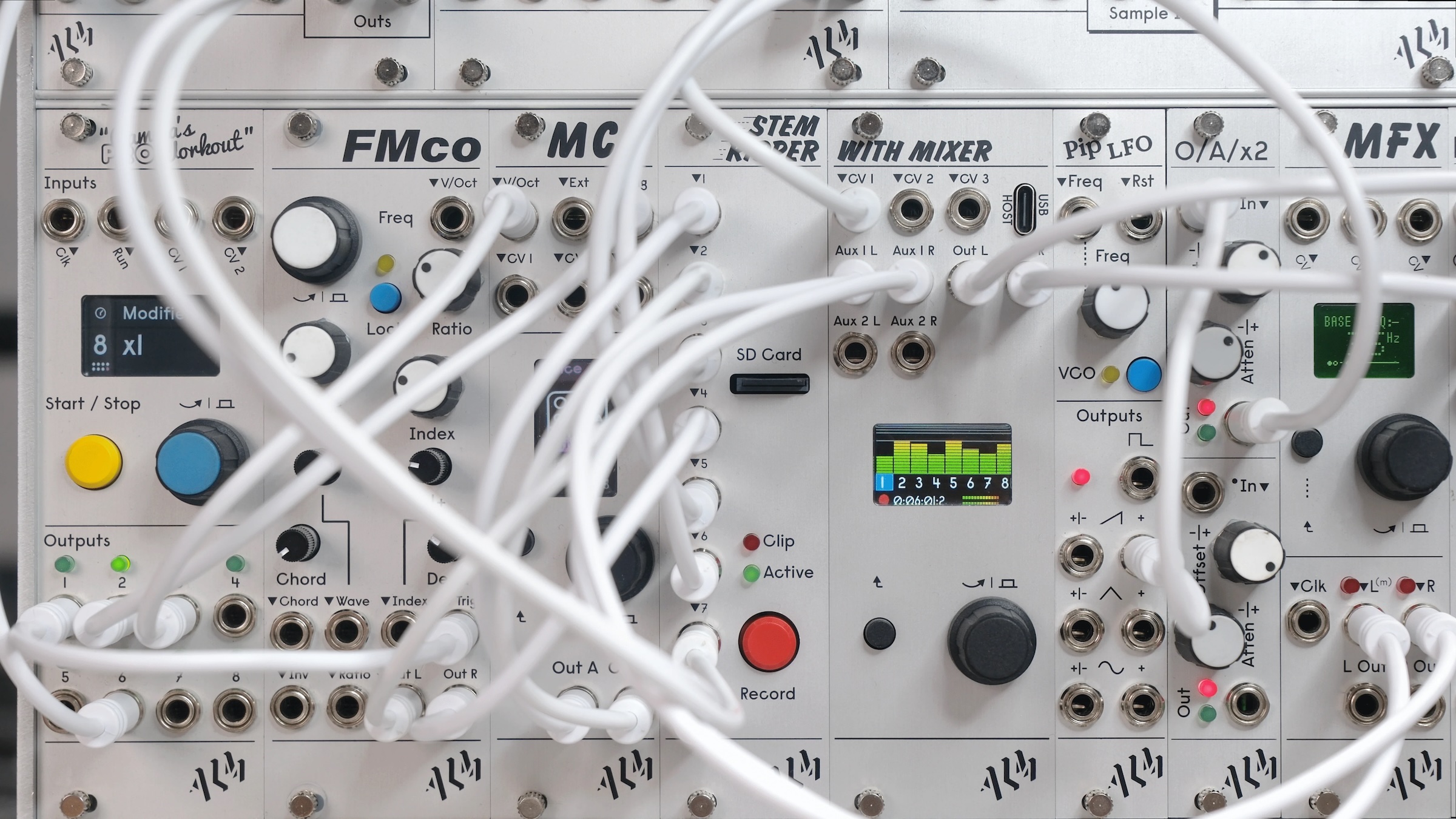
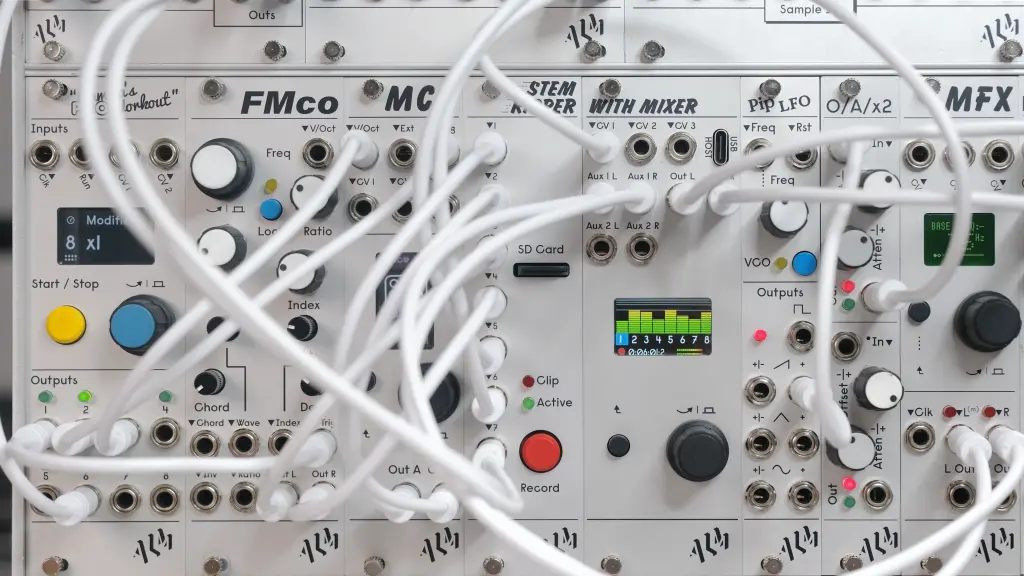
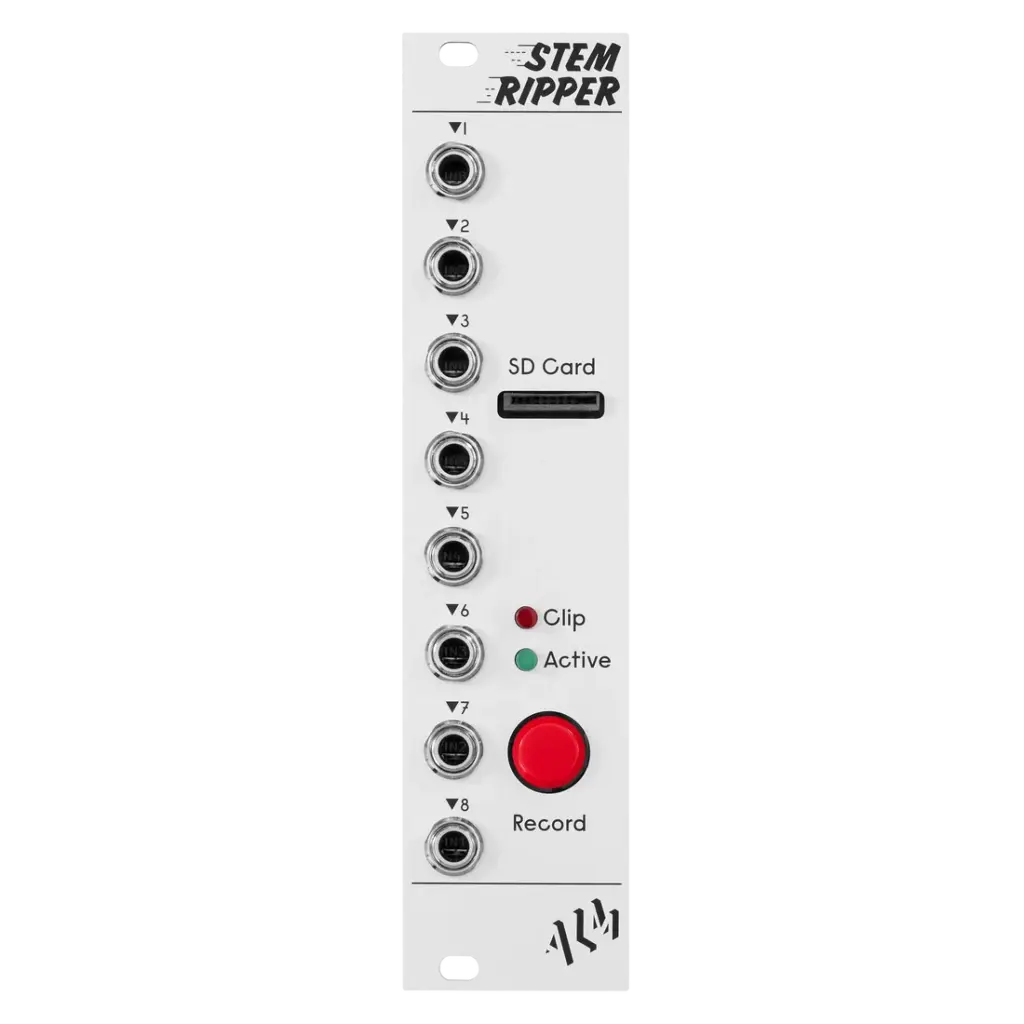
The core of the system is the Stem Ripper, a 6HP module that enables users to patch in up to eight channels of audio—handling both mono and stereo configurations—and record multichannel WAV files directly to a Secure Digital card. The unit comes bundled with a 64GB SD card and boasts comprehensive format support, allowing users to record at up to 48kHz and 32-bit floating-point resolution. It features automatic date-stamping for file organization, high headroom margins to prevent unwanted clipping, visual clip indicators, and compatibility with high-capacity storage cards of up to 1TB.
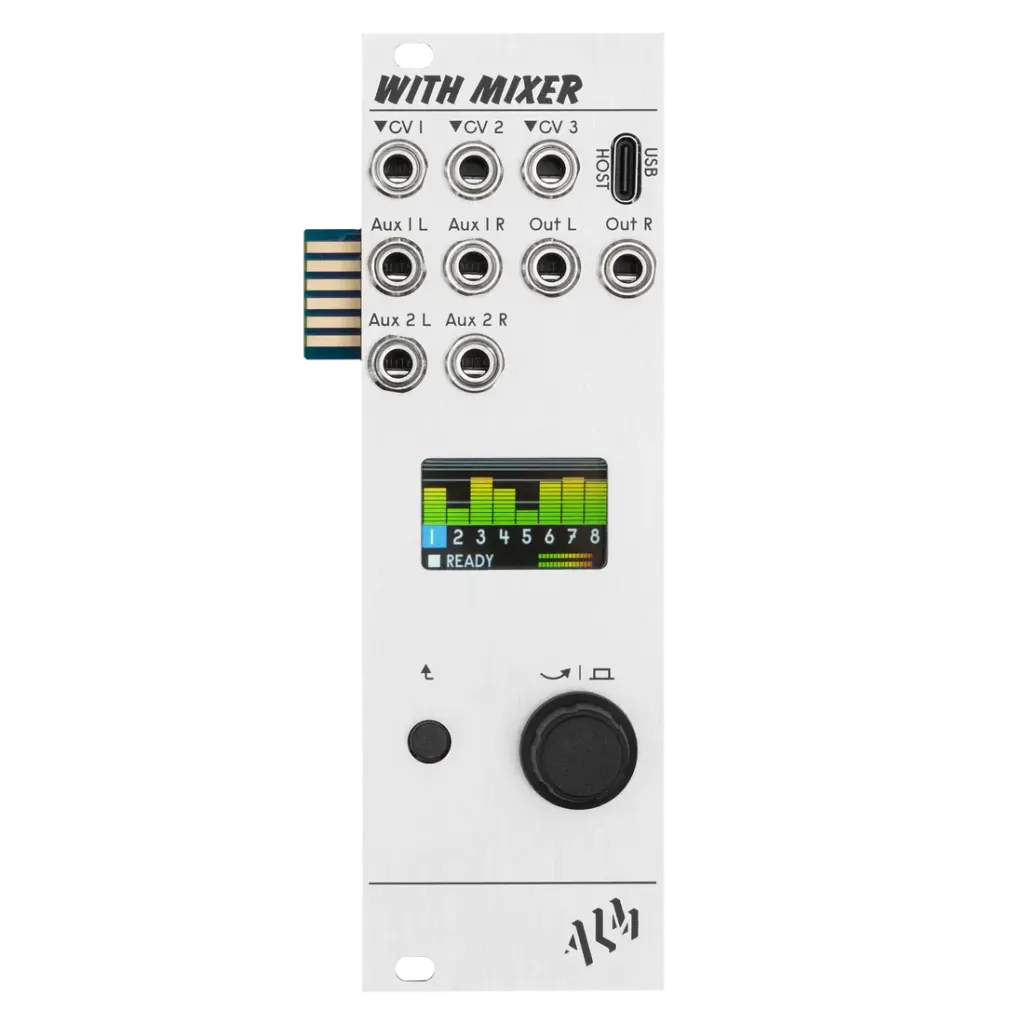
To complement the core recorder, ALM developed two distinct expansion modules. The first is the Thru output expander, a minimalist 2HP module that provides eight unbuffered duplicate outputs of the incoming signals, allowing users to effortlessly pass audio through to other destinations in their modular system. The second, and most recent addition, is the With Mixer module. Occupying 8HP of rack space, With Mixer transforms the Stem Ripper setup into a comprehensive 8-channel stereo mixing console. It incorporates a graphical display for visual monitoring of levels and parameters, dedicated controls for auxiliary sends and panning, three CV (control voltage) inputs that are expandable up to seven, and the ability to save and recall custom mix snapshots. Crucially, the module features a USB-C host connection, enabling direct integration with class-compliant USB MIDI controllers such as the Novation LaunchControl XL MK3, thereby alleviating the ergonomic limitations of menu-diving on tiny Eurorack screens.
Chronology and Development of the Platform
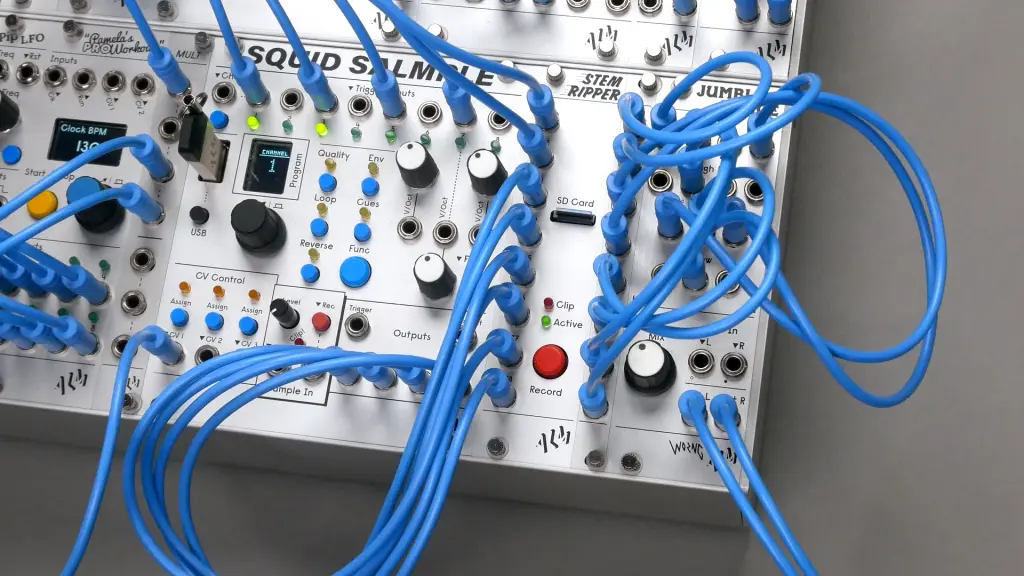
The evolution of ALM’s modular recording solution reflects a calculated, phased approach to product design and market feedback. The journey began roughly a year prior to the introduction of the mixer expander with the initial launch of the Stem Ripper. Upon its debut, the Stem Ripper was widely recognized by modular enthusiasts as a breakthrough in space-saving utility, successfully packing an 8-channel multitrack recorder into a space previously reserved for basic utility modules or simple dual-channel filters.
As producers integrated the Stem Ripper into live performance rigs and studio patch configurations, a clear demand emerged for more comprehensive signal management directly on the hardware interface. While the initial release successfully solved the problem of getting raw stems off the modular rack and onto an SD card, users frequently required tactile mixing capabilities—such as volume faders, panning, and auxiliary effects routing—without having to patch through separate, dedicated mixing modules that would quickly consume valuable cabinet space.
Responding to this user feedback, ALM/Busy Circuits developed the Thru expander for signal routing flexibility and ultimately culminated the platform’s development cycle with the release of With Mixer. By staggering the release of these components over a twelve-month period, the manufacturer allowed the modular community to adopt the core recorder first, subsequently offering a tailored upgrade path for those wishing to expand their hardware mixing capabilities. All three components—the Stem Ripper, the Thru Expander, and the With Mixer—are currently available through major modular retailers such as Perfect Circuit, with introductory promotions accompanying the core recorder and Thru module.
Technical Specifications and Workflow Integration
Analyzing the technical specifications of the ALM ecosystem reveals a deliberate focus on balancing studio-grade fidelity with mobile performance requirements. The Stem Ripper’s capability to handle 32-bit float recordings ensures that performers working with highly dynamic modular patches do not have to obsess over minor gain-staging errors, as the system provides immense headroom that virtually eliminates digital clipping during live tracking sessions. Furthermore, the inclusion of date-stamped file generation addresses a common administrative headache associated with hardware recorders: identifying which take corresponds to which experimental patch hours after a recording session has ended.
The integration of the With Mixer module fundamentally alters the operational paradigm of the rig. In standard Eurorack configurations, mixing multiple stereo voices requires dedicated output modules, attenuators, and external mixers that can easily consume 30 to 40 HP of rack space. By condensing full 8-channel stereo mixing, panning, auxiliary sends, and preset storage into an 8HP expansion module, ALM has achieved a high density of features per square inch.
The inclusion of USB MIDI host capabilities is a particularly noteworthy design choice. Eurorack modules are historically constrained by front-panel acreage, often forcing manufacturers to rely on cryptic menu-diving or multi-function encoder knobs to access deep parameter sets. By enabling users to plug a standard USB MIDI controller directly into the With Mixer, ALM bridges the tactile gap between traditional mixing consoles and compact modular gear. Producers can map physical knobs and faders to mixer parameters, effectively bypassing the tiny graphical display for real-time performance adjustments while still utilizing the screen for precise metering and system status updates.
Comparative Context in the Modular Market
The launch of ALM’s recording and mixing ecosystem arrives in a competitive market segment populated by alternative hardware solutions aimed at DAW-less music production. Among the most prominent competitors in the dedicated Eurorack multitrack recording space are hardware offerings from manufacturers like 1010music, whose compact touch-screen-driven modules have long been favored by mobile electronic musicians.
Industry analysts and product reviewers have noted that while alternative systems—such as those recently updated by 1010music—often include advanced onboard effects processing like sidechain compression and direct USB audio streaming interfaces, they frequently come at a higher financial and spatial cost. Furthermore, manufacturers like Noise Engineering offer robust analog mixing solutions that provide unparalleled hands-on control and tactile feedback, yet these systems are inherently designed for larger studio cases, making them impractical for musicians prioritizing ultra-portable, travel-friendly performance setups.
The ALM/Busy Circuits approach carves out a distinct niche by offering a middle ground that prioritizes cost-efficiency, low HP consumption, and seamless interconnection. While it relies on external MIDI controllers for physical fader control rather than incorporating massive rows of analog potentiometers on the faceplate, its modular architecture allows users to scale their system precisely to their needs—starting with the basic 6HP Stem Ripper for quick field and studio tracking, and expanding with the Thru and With Mixer modules as performance requirements grow.
Broader Industry Implications and Future Outlook
The maturation of products like the Stem Ripper and With Mixer underscores a broader technological shift within the electronic music instrument industry. As computer-based digital audio workstations (DAWs) continue to dominate professional studio production, a robust counter-movement of musicians increasingly seeks the tactile immediacy, serendipitous signal flow, and hardware-bound reliability of modular synthesizers. However, the friction point between the spontaneous nature of modular patching and the structured requirements of multitrack mixing and distribution has historically discouraged artists from taking modular rigs out of the studio.
By lowering the barrier to entry for high-channel-count, standalone recording and mixing within a standard Eurorack enclosure, manufacturers are enabling a new standard of self-sufficiency for live electronic music. Artists can now construct a self-contained performance case that generates sound, processes signals, mixes stems in stereo, and outputs pristine multi-channel WAV files to a pocket-sized SD card without ever booting up a laptop or routing audio through an external audio interface.
As ALM/Busy Circuits establishes this complete hardware ecosystem, industry observers anticipate that other boutique synthesizer developers may follow suit, increasingly integrating advanced digital signal processing, USB host capabilities, and flexible expansion protocols into traditionally analog or semi-modular formats. For the working modular artist, the development represents a significant step forward: a professional-grade production studio that fits comfortably inside a portable flight case, ready to record the unpredictable nuances of voltage-controlled sound at a moment’s notice.