Nayara Elvina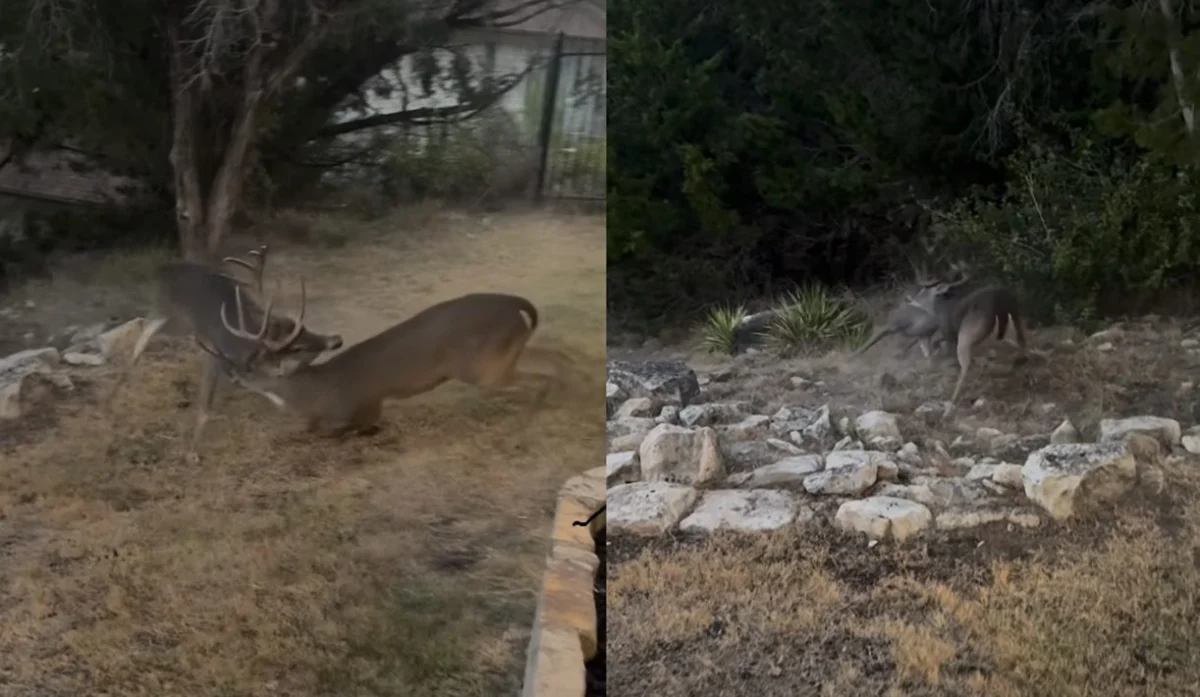
The serenity of suburban living near the scenic shores of Lake Travis, Texas, was briefly disrupted by a raw display of nature’s rawest impulses when two impressively sized white-tailed bucks engaged in a ferocious territorial battle directly in a residential yard. Captured on video by local resident Lynn Smith, the footage highlights the intense behavioral changes that occur during the seasonal rut, bringing the often-unseen drama of wildlife competition into direct contact with human property. The encounter, which featured locked antlers, high-speed maneuvers, and a dangerously close brush with a parked vehicle, has since drawn widespread attention across social media platforms, underscoring both the fascinating and hazardous nature of close wildlife encounters.
Main Facts of the Encounter
The incident occurred outside the residence of Lynn Smith, an area known for supporting a robust local population of white-tailed deer. In the footage, two evenly matched, heavy-antlered bucks can be seen aggressively lowering their heads and crashing their head-mounted weapons together with formidable force. The confrontation was characterized by relentless pushing, shoving, and circling as each animal vied for dominance.
Throughout the intense exchange, the combatants maneuvered through the yard, navigating around various lawn items and yard toys before coming dangerously close to a vehicle parked on the property. The car, protected only by a soft cover, faced a potential threat from the swinging, razor-sharp points of the deer’s antlers. Fortunately, the animals managed to temporarily lock and unlock their racks without causing catastrophic structural damage to the vehicle or sustaining permanent injury to themselves. After several tense moments of combat, the adrenaline-fueled bucks broke apart and dashed away into the brush, leaving behind a bewildered homeowner and astonished online spectators.
The Biology and Mechanics of the White-Tailed Deer Rut
To understand the severity of the altercation captured near Lake Travis, one must examine the biological catalyst driving the behavior: the rut. The white-tailed deer mating season is a complex biological period governed primarily by photoperiodism—the decreasing amount of daylight as autumn transitions into winter. During this time, rising testosterone levels in bucks trigger dramatic shifts in behavior, transforming typically docile herbivores into highly competitive, aggressive rivals.
The primary objective of the rut is the establishment of dominance hierarchies. Bucks use their size, body weight, and antlers to spar with rivals, ensuring that only the strongest, most resilient males earn breeding rights with receptive does. Antlers, composed of true bone grown and shed annually, serve as both offensive weapons and defensive shields. However, this evolutionary adaptation carries inherent risks. During violent sparring matches, intricate branching points on opposing antlers can become hopelessly intertwined.
When antlers lock securely, the consequences are frequently fatal. Biologists and wildlife agencies regularly document instances where locked bucks are unable to separate, leading to prolonged exhaustion, dehydration, starvation, or predation by carnivores such as coyotes and mountain lions. In the Lake Travis incident, the bucks narrowly avoided this lethal trap, successfully disengaging after a momentary snag that could have easily turned tragic.
Chronology of the Whitetail Mating Season
While the public often perceives the rut as a brief, isolated event, wildlife biologists categorize the mating season as an extended seasonal timeline spanning several months. For white-tailed deer across North America, the general window of rutting activity stretches from late summer through late winter, typically encompassing the months of August through February.
However, this expansive timeframe is broken down into distinct phases that dictate deer movement and aggression levels:
- Pre-Rut (Late September to October): Bucks begin rubbing velvet from their antlers against tree trunks, depositing scent from their forehead glands, and establishing scrapes to signal their presence to does and rival males. Sparring during this phase is generally low-intensity and exploratory.
- Peak Rut (Mid-November to Early December in many regions): Testosterone levels reach their annual maximum. Bucks abandon typical feeding patterns, traveling extensively in search of estrous does. Encounters during this period, such as the one recorded by Smith, are characterized by high-intensity, zero-tolerance aggression toward rival males.
- Post-Rut (Late December to February): Bucks are physically exhausted, having lost a significant portion of their body weight. Aggression declines sharply as surviving animals focus on foraging and regaining physical condition before harsh winter weather sets in.
Based on the explosive intensity and unrelenting aggression displayed in the Lake Travis video, wildlife observers noted that the confrontation occurred precisely during the peak rutting window, when hormones dictate every action and survival instincts are temporarily overridden by the drive to reproduce.
Expert Analysis and Wildlife Safety Implications
Incidents involving aggressive wildlife in residential areas highlight the complex intersection of human infrastructure and natural animal habitats. As suburban developments expand into previously rural or semi-wild ecosystems, encounters between humans and large mammals like white-tailed deer have become increasingly common.
Wildlife management professionals consistently advise residents to maintain a safe distance from large, agitated animals, particularly during mating seasons. While deer generally avoid human contact, bucks experiencing peak testosterone levels lose much of their natural wariness and can perceive humans, pets, or domestic objects as competitors or threats. Charging deer possess significant mass and sharp antlers capable of inflicting severe, potentially life-threatening injuries to bystanders.
Furthermore, experts discourage the artificial habituation of wildlife. While providing food or leaving certain objects in yards may attract animals for viewing purposes, it can concentrate wildlife populations in confined residential zones, escalating the frequency of aggressive territorial disputes near homes, driveways, and vehicles.
Public Reaction and Broader Social Media Impact
The footage shared by Lynn Smith quickly generated substantial engagement across digital platforms, resonating with outdoor enthusiasts, hunters, and suburban residents alike. Commenters expressed awe at the raw power and resilience of the white-tailed species, noting the sheer tenacity required to endure such physical punishment without backing down.
Common sentiments shared among online viewers included observations regarding the unyielding nature of the animals during hormone-driven periods. Observers remarked that once the rut takes hold, bucks display single-minded determination, ignoring external hazards such as human presence, fences, and vehicles in favor of settling territorial disputes.
The widespread distribution of the video serves as a reminder of the dynamic wildlife activity thriving just beyond the threshold of American backyards. As suburban sprawl continues to overlap with natural migration and mating corridors, residents are increasingly afforded a front-row seat to the dramatic realities of the natural world—a spectacle best observed from a safe, prudent distance.