Nayara Elvina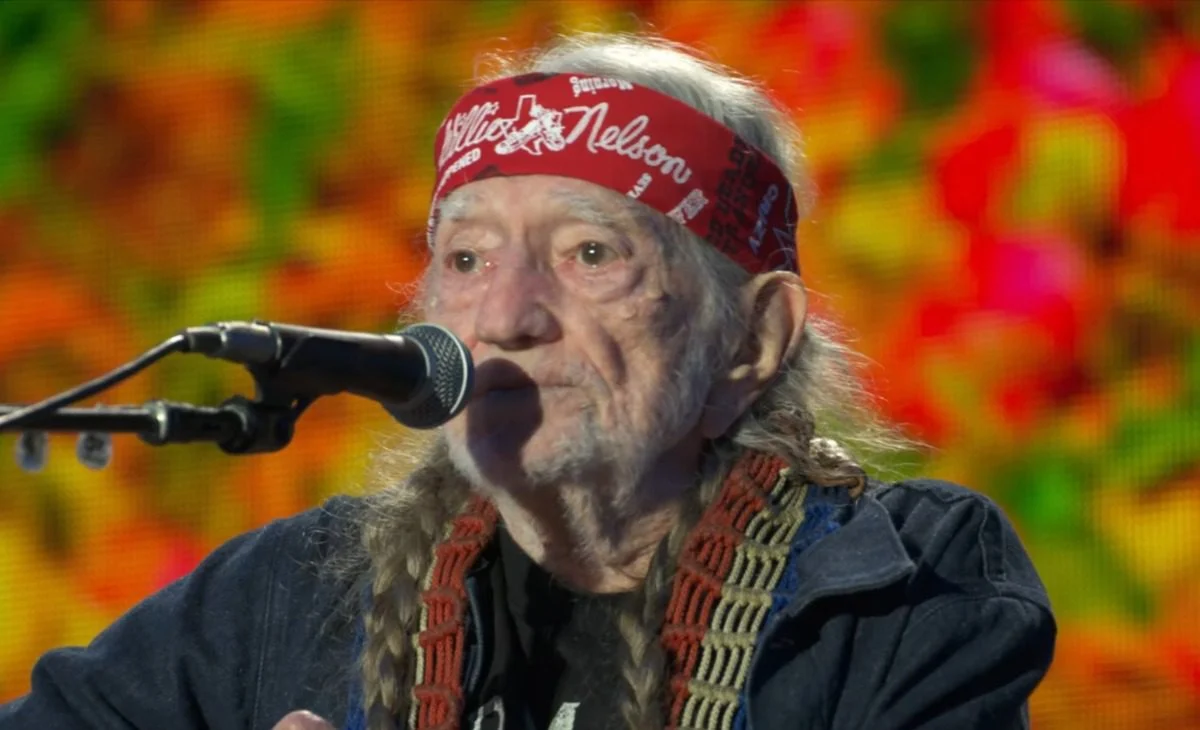
At 93 years old, country music icon Willie Nelson remains an indomitable figure in American culture, maintaining a grueling creative and touring schedule that defies conventional expectations of aging. However, recent revelations from a comprehensive CNN interview with Anderson Cooper underscore just how close the legendary songwriter came to losing his life during a severe bout with COVID-19 in 2022. As Nelson prepares for the November 10 release of his upcoming book, The Last Leaf: Reflections on Late-Life Creativity—and My Longest Love Affair, new details have emerged regarding the private medical emergency that nearly silenced one of music’s most enduring voices, and the pivotal role played by his wife of more than three decades, Annie D’Angelo.
The forthcoming publication serves as both a meditation on late-life artistic endurance and a deeply personal tribute to D’Angelo. According to Nelson, the memoir is fundamentally anchored in their four-decade partnership, tracing their relationship from its origins on the set of the 1986 film Stagecoach, where D’Angelo worked as a makeup artist, to her decisive intervention during his life-threatening brush with the coronavirus.
A Medical Crisis Behind Closed Doors
While the severity of Nelson’s 2022 health scare was not widely publicized at the time, subsequent profiles in The New York Times Magazine and his recent sit-down with Cooper have brought the harrowing details to light. D’Angelo described transforming their home into a fully equipped intensive care unit as the virus severely compromised Nelson’s respiratory system, which was already sensitive due to a lifetime of smoking and rigorous road travel.
"I had a nebulizer on the bus. I started everything I could at that point, including Paxlovid. He had the monoclonal antibodies. He had steroids," D’Angelo recalled. "We turned the house into a hospital. There were a couple of times when I wasn’t sure he was going to make it."
Nelson, who has been remarkably candid about the psychological and physical toll of the illness, admitted that the experience brought him to the absolute brink. Describing the profound weakness and discomfort caused by the virus, the Redheaded Stranger confessed that the physical agony was so intense that he actively desired to let go.
"Oh god yeah, it was terrible. I wanted to punch out, I wanted to go," Nelson told Cooper. "Yes, I could tell that I was dying… I wanted to die. It was the worst feeling I’ve ever had."
It was D’Angelo’s fierce resolve, however, that ultimately altered the trajectory of the illness. Demonstrating the no-nonsense tenacity that has characterized their decades together, Nelson recounted his wife’s uncompromising ultimatum when he signaled his readiness to surrender to the disease: "She wouldn’t let me. She said, ‘If you die, I’ll kill you.’"
Nelson credits that intervention entirely for his continued existence and the subsequent years of productivity that have followed. "The backbone of this book is a love story," Nelson writes in the memoir. "The heroine is my wife, Annie, who kept me alive when I was sure I was gone. COVID nearly got me. I was hurting so bad I wanted out. But Annie wouldn’t let me go. The years I’ve lived since then are because of Annie. And so is this book."
Remarkable Resilience and the Refusal to Retire
Despite the gravity of the 2022 health scare, Nelson’s recovery was notably rapid by medical standards. Following a regimen of advanced therapeutics, he recovered within six days and returned to live performances just two weeks later. For a musician accustomed to the relentless cadence of life on the road, the mandatory isolation felt exceptionally restrictive. He noted that spending extended periods confined at home felt akin to "a prison sentence," at times driving him to sit inside his tour bus parked at home simply to experience the sensation of transit.
The respite, brief as it was, did little to dampen his appetite for performing. Nelson recently wrapped another extensive summer concert tour and released his 79th solo studio album, Dream Chaser, in May. This prodigious output highlights a career trajectory that has spanned over seven decades, beginning in the honky-tonks of Texas and the songwriting rooms of Nashville before evolving into a defining voice of the American counterculture and outlaw country movement.
Speculation regarding Nelson’s eventual retirement is a perennial topic among fans and industry observers, yet D’Angelo notes that the reality of stepping away from the stage remains entirely theoretical.
"At the end of every tour, Will talks about retiring," D’Angelo explained. "But then we’ll have a conversation: ‘Well, what would you do if you retired?’ We both know the answer: Just lay down and die. It’s impossible to imagine him not being out there."
Perspectives on Mortality and Reincarnation
Alongside reflections on his marriage and health, The Last Leaf delves into philosophical territory, addressing Nelson’s views on mortality and the afterlife. During his conversation with Cooper, an excerpt from the book was discussed in which the singer outlines his steadfast belief in reincarnation. Rejecting conventional notions of a permanent conclusion to existence, Nelson articulated a cyclical view of the soul.
"Yeah. No, you keep coming back. I believe in reincarnation. We leave, we’ll be right back. Don’t go nowhere," Nelson said. When Cooper pressed him on what form he hopes to assume in a future life, the Texas native did not hesitate, stating simply: "A rodeo cowboy."
Honoring a Lifelong Friendship with Dolly Parton
The media appearances surrounding Nelson’s book release have also provided a platform to pay tribute to longtime peers and collaborators, most notably the late Dolly Parton. Reflecting on Parton’s recent passing, Nelson expressed profound admiration for the legendary entertainer and revealed that the two had conducted a joint interview shortly before her death—a project undertaken while Parton was privately managing undisclosed health challenges.
"Oh, she was great. I loved her. No, I had no idea. I did an interview with her shortly before that, and she seemed fine," Nelson said, noting that Parton maintained strict privacy regarding her medical status, keeping details shielded even from extended family members.
The bond between Nelson and Parton spans decades, tracing back to their early days in the industry and their mutual appreciation for television showcases like The Porter Wagoner Show, which featured Parton prominently in the late 1960s and early 1970s. Nelson remarked on the unique musical synergy they shared, acknowledging the challenges other artists typically faced when attempting to harmonize with his distinct, improvisational phrasing.
"Well, my phrasing is a little crazy, you know. And I don’t do it the same way every time, so that’s difficult," Nelson explained, praising Parton’s intuitive ability to navigate his unorthodox timing.
Demonstrating that his creative momentum shows no sign of slowing, Nelson disclosed that his most recent recording sessions included a cover of Parton’s signature anthem, "I Will Always Love You," describing the composition as a "very positive song" worthy of renewed interpretation.
Broader Implications and Legacy
As The Last Leaf prepares to hit shelves on November 10, the convergence of these personal reflections offers a rare glimpse into the private life of an American institution. By detailing his near-fatal encounter with COVID-19 alongside chronicled milestones of a legendary musical career, Nelson highlights the fragile intersection of human vulnerability and artistic drive.
The narrative ultimately reinforces the central role of his domestic partnership in sustaining one of the most prolific careers in modern entertainment history. Through the steadfast support of D’Angelo, Nelson continues to write, record, and tour, ensuring that his distinct voice remains a fixture of the cultural landscape—at least until his next chapter as a rodeo cowboy begins.