 Johan Budi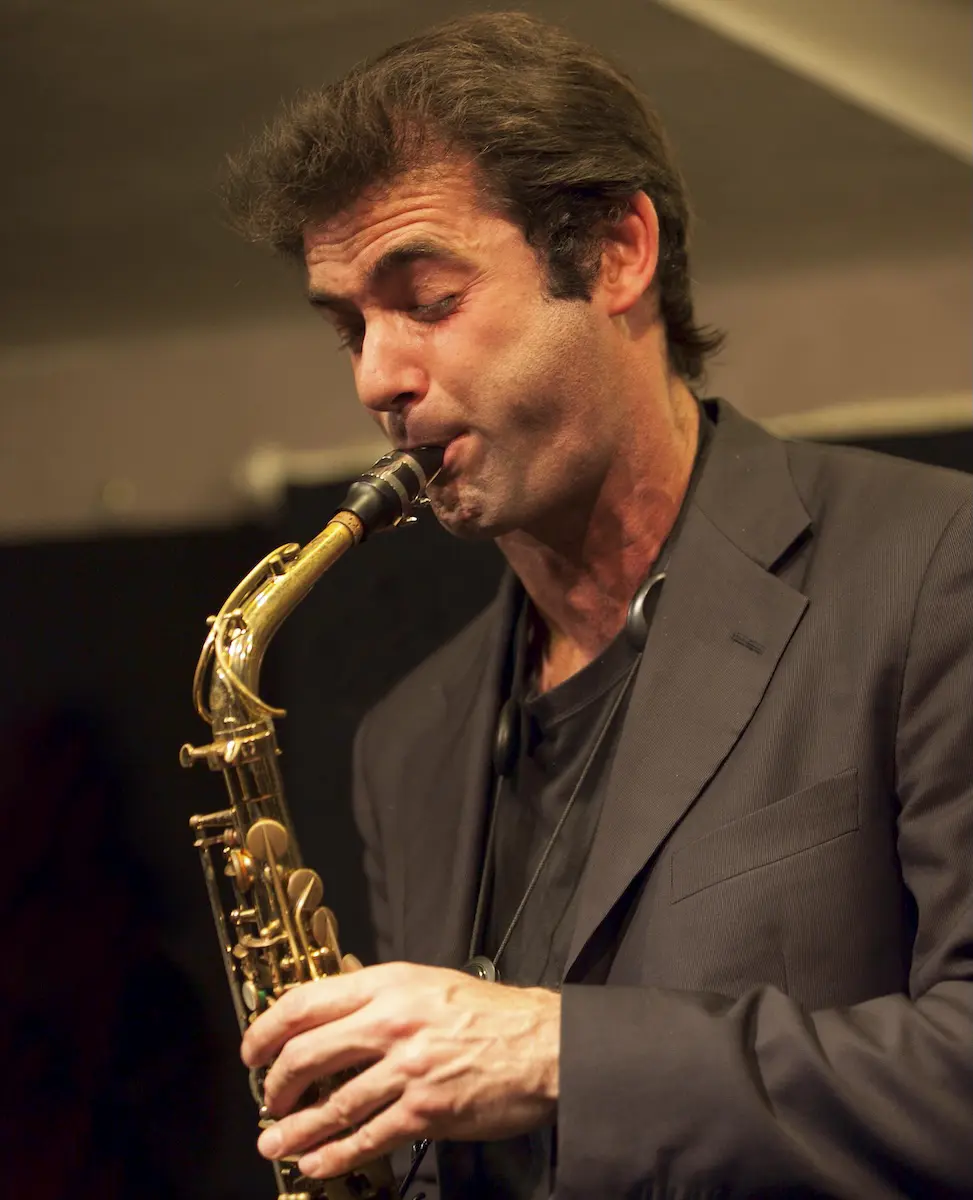
The contemporary European jazz landscape continues to thrive through a diverse array of new recordings, highlighted by recent releases from Milan-born tenor saxophonist Tommaso Starace and Czech guitarist Libor Šmoldas. Both artists have captured critical attention with distinct projects that bridge historical jazz traditions with modern sensibilities. Starace’s latest release documents an energetic live performance in the United Kingdom alongside his organ trio, while Šmoldas offers a historically cheeky yet musically rigorous exploration of the repertoire associated with jazz icon Miles Davis. These projects illustrate the ongoing vitality of acoustic jazz ensembles in Europe, demonstrating how contemporary performers engage with mid-century idioms while maintaining distinct artistic identities.
Tommaso Starace Organ Trio Captures Live Energy at The Beaver Inn
On May 13, 2025, the Tommaso Starace Organ Trio delivered a high-energy performance at The Beaver Inn in Appledore, set against the dramatic backdrop of the Torridge cliffs. The resulting album, Live At The Beaver Inn, released via Dodicilune (Ed619), showcases the Milanese tenor saxophonist alongside organist Martin Jenkins and drummer Pip Harbon. Starace, who has been naturalized in England since 1994, has frequently drawn comparisons to peers such as Eric Alexander, channeling the robust tone, harmonic sophistication, and exploratory spirit characteristic of 1950s and 1960s tenor giants.
The 57-minute recording captures an engaged and responsive local audience reacting to a dynamic setlist. The trio navigates complex compositions with technical precision and emotional intensity, stretching out on Thelonious Monk’s We See and Cedar Walton’s Firm Roots. A standout moment of the performance occurs during a fervent rendition of Kenny Barron’s Voyage, which features a spontaneous, high-energy exchange between Starace’s tenor saxophone and Harbon’s drums.
Balancing these intricate modern jazz standards are crowd-pleasing numbers that demonstrate the ensemble’s stylistic versatility. The trio performs Blue Mitchell’s calypso-infused Fungii Mama alongside a tasteful, ballad-driven interpretation of Erroll Garner’s Misty. Rounding out the seven-track discography—which also includes Groovy Samba and Stablemates—Starace’s sound displays a balance of melodious clarity and robust authority. The live recording provides listeners with an authentic document of the trio’s rapport in an intimate coastal setting, cementing Starace’s reputation as a formidable presence in contemporary British and European jazz.
Libor Šmoldas Quartet Explores Jazz History with Sorry, Miles!
Shifting from the rugged English coastline to Central Europe, Czech guitarist Libor Šmoldas offers a conceptually sharp and historically grounded project with the release of Sorry, Miles! Recorded on November 6 and 7, 2025, in Svarov and issued on Bivak Records (017), the 44-minute album tackles complex jazz history with a mixture of irony and deep musical reverence.
The premise of Sorry, Miles! centers on a curated selection of compositions historically attributed to or popularized by Miles Davis, juxtaposed with original compositions by Šmoldas written in the stylistic vein of Davis’s legendary groups. Rather than presenting a straightforward tribute, the project leans into historical anecdotes surrounding the provenance of certain jazz standards. The liner notes highlight tales such as the background of Richard’s Regret, referencing Richard Carpenter, a figure from jazz lore associated with the financing and crediting of the composition Walkin’.
Musically, the quartet—comprising Šmoldas on guitar, pianist Mikuláš Pokorný, bassist Tomáš Baroš, and drummer Jesse Simpson—delivers a performance rooted in post-bop traditions. The title track establishes a vintage post-bop atmosphere characterized by intricate group interaction and fluid momentum, echoing the interplay of Davis’s acclaimed Second Great Quintet. The ensemble navigates sophisticated arrangements on tracks such as Dig, Four, Square Head, Donna Lee, Tune Up, Prima Dancers, and Sonny (Solar), as well as the ballad Smooch. Pianist Pokorný and leader Šmoldas engage in delicate yet articulate musical conversations, particularly evident on the fugue-like lines of Richard’s Regret.
Background Context and Historical Perspectives
The trajectory of both artists reflects broader trends within the international jazz community, where musicians frequently draw upon mid-20th-century American idioms while infusing them with contemporary European perspectives. Tommaso Starace’s affinity for the organ combo format places him in a lineage that traces back to classic Blue Note recordings of the 1960s, where saxophonists regularly collaborated with Hammond organ and drum setups to create a driving, blues-infused soundscape. By transporting this configuration to a coastal English pub venue, Starace highlights the viability of presenting sophisticated acoustic jazz in non-traditional performance spaces.
Conversely, Libor Šmoldas approaches jazz history through a lens of critical deconstruction and playful homage. The reexamination of jazz standards and their historical attributions has become an increasingly popular avenue for modern improvisers seeking to contextualize the standard repertoire. By transparently acknowledging the complex and sometimes contentious origins of tunes associated with Miles Davis, Šmoldas and his quartet invite listeners to engage with the music on both an intellectual and an aesthetic level, bridging the gap between historical awareness and contemporary execution.
Implications for the Contemporary European Jazz Scene
The release of these two distinct albums by Dodicilune and Bivak Records underscores the robust health of independent European jazz labels in documenting regional scenes that maintain global standards of excellence. Both recordings demonstrate that musicians operating outside the major commercial centers of New York or London are producing work of significant artistic merit.
For Starace, the live recording at The Beaver Inn validates the artistic chemistry of his trio with Jenkins and Harbon, offering a blueprint for modern touring ensembles aiming to capture raw stage energy within a physical release. For Šmoldas, Sorry, Miles! exemplifies how conceptual framing can elevate a standard-based recording into a cohesive artistic statement, proving that historical inquiry and high-level improvisation can successfully coexist.
As both albums circulate among critics and jazz enthusiasts, they contribute to an ongoing dialogue about authenticity, reinterpretation, and performance practice in modern jazz. Whether through the visceral, high-volume interplay of a seaside organ trio or the cerebral, historically nuanced post-bop of a Central European quartet, Starace and Šmoldas demonstrate that the foundational idioms of jazz remain fertile ground for creative exploration.