 Mia Khoirunisa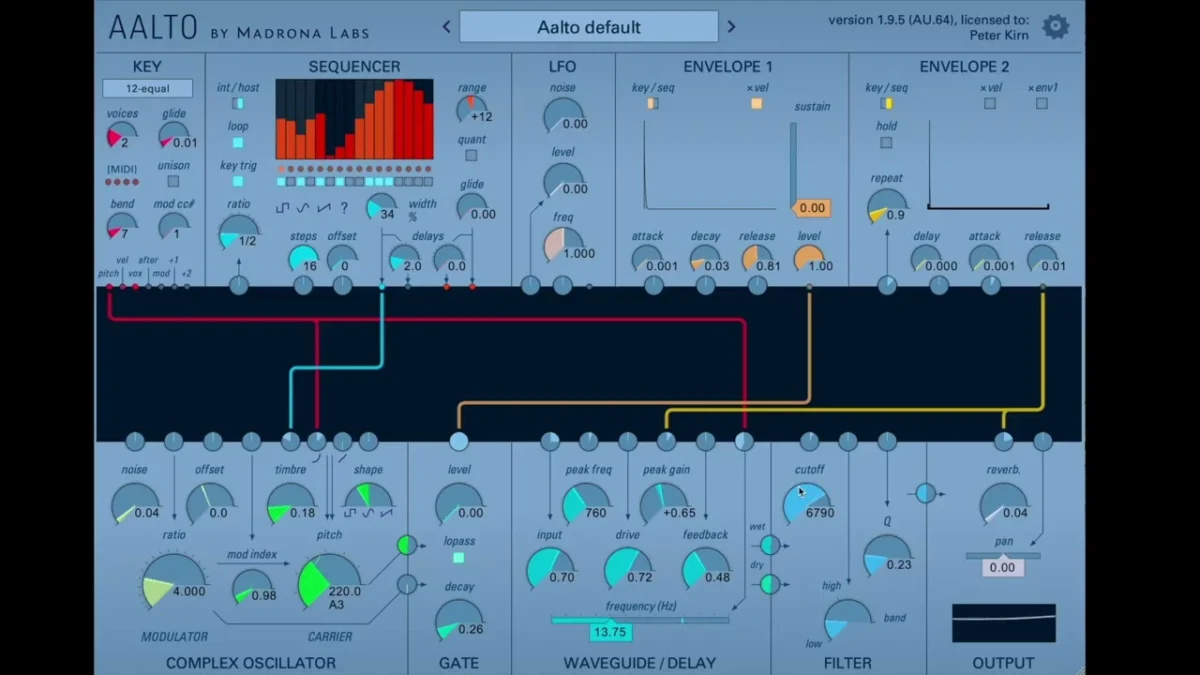
Independent electronic music software developer Madrona Labs has officially announced the upcoming release of Aalto 2, the long-awaited major iteration of its flagship patchable, West Coast-style software synthesizer. Slated for release this fall, Aalto 2 will introduce native support for macOS, Windows, and—for the first time in the developer’s history—Linux. Alongside this major announcement, Madrona Labs has launched a public beta test for Aaltoverb on Linux, signaling a broader strategic shift toward open-format compatibility, upcycled hardware utilization, and cross-platform accessibility for independent music producers.
The announcement arrives at a pivotal juncture in the digital audio workstation (DAW) ecosystem, as a growing segment of producers seeks alternatives to proprietary operating systems and major tech conglomerates. By embracing community-driven open standards and expanding its footprint beyond traditional desktop giants, Madrona Labs is positioning its instruments as enduring, sustainable tools designed for long-term use in professional and experimental sound design studios alike.
Evolution of a Modern Classic: Background and Context
First introduced in 2011, Madrona Labs’ Aalto established a distinct reputation in the virtual instrument market. Combining the exploratory, complex routing paradigms of West Coast synthesis—reminiscent of historic Buchla instruments—with a uniquely playable software interface, Aalto quickly cultivated a dedicated following. Unlike conventional subtractive soft synths that rely on rigid signal paths, Aalto utilizes a semi-modular, patchable architecture that encourages deep sound exploration and physical-sounding modulation.
Furthermore, Madrona Labs has historically played a pioneering role in expressive MIDI technologies. The developer was an early advocate and technical driver for MIDI Polyphonic Expression (MPE), a protocol that allows individual notes to respond dynamically to multi-dimensional touch, pressure, and slide gestures. This deep integration of instrumental expression has made instruments like Aalto and its sibling plug-ins, Kaivo and Virta, essential staples for experimental sound designers utilizing MPE-enabled hardware controllers such as those from Roger Linn Design and ROLI.
Despite its critical acclaim, the ecosystem surrounding Aalto has traditionally been restricted to macOS and Windows platforms using standard plugin formats. The decision by Madrona Labs founder Randy to bring the product line to Linux marks a significant milestone for both the company and the open-source audio community.
Chronology and Technical Roadmap: The Linux Expansion and CLAP Integration
The path toward full Linux integration began with practical experimentation. Founder Randy recently adopted a pre-owned ThinkPad T480 running Ubuntu and Linux Mint, utilizing affordable upcycled hardware to test the viability of low-cost, highly reliable mobile production rigs. This hardware choice highlighted a broader philosophical alignment with the Linux audio community: maximizing utility through hardware longevity and software freedom.
Following these internal tests, Madrona Labs released a public beta of Aaltoverb—the reverb companion derived from the synth’s internal processing engine—for Linux users via the company’s community Discord server. This beta phase serves as a testing ground for community feedback, drawing on the expertise of Linux audio specialists running various distributions.
Crucially, Madrona Labs is adopting a CLAP-first development approach for its Linux integration. CLAP (CLang Audio Plug-in), an open standard initiated and backed by developers such as Bitwig and the Surge Synth Team, offers advanced features like sample-accurate automation, polyphonic modulation, and robust multithreading capabilities. By prioritizing CLAP alongside traditional formats, Madrona Labs is aligning itself with the modern open-source plugin ecosystem.
Following the initial Linux and CLAP rollouts, the developer plans to expand VST3 support across its entire suite, including upcoming updates for Kaivo and Virta, ensuring seamless integration into enterprise-grade digital audio workstations like Steinberg Cubase and Bitwig Studio.
What to Expect in Aalto 2
Aalto 2 represents a complete structural overhaul built upon Madrona Labs’ newly engineered development framework. According to the company’s official development communications, the upcoming release introduces a wide array of workflow enhancements designed to modernize the user experience without sacrificing the instrument’s core character:
- Native Linux operating system support.
- Native support for the CLAP plug-in format.
- A newly implemented undo widget and comprehensive keyboard shortcut support (including undo/redo, navigation via arrow keys, and escape functionality for popups).
- Enhanced graphical user interface (GUI) settings, featuring toggleable numerical readouts and improved scroll behaviors.
- A redesigned file chooser equipped with a functional scroll bar.
- Detachable LFO and modulation learn popups, allowing users to move between parameters while modulation windows remain active.
- Finer precision dials and slower rate options for Low-Frequency Oscillators (LFOs), allowing for more nuanced, evolving ambient soundscapes.
Industry analysts note that Aalto 2 will be issued as a complimentary, free upgrade for all existing registered users of Aalto 1. This customer-centric upgrade policy is expected to drive strong initial demand and reward long-term supporters of the independent brand.
Industry Implications and Broader Market Impact
The shift toward Linux and open plug-in standards by established boutique developers like Madrona Labs reflects a shifting paradigm within the electronic music industry. While major software manufacturers increasingly tie their products to subscription models and proprietary cloud ecosystems, a counter-movement is emphasizing digital sovereignty, hardware preservation, and open-source synergy.
By lowering the barrier to entry—exemplified by running robust audio applications on affordable, upcycled enterprise laptops—independent developers are demonstrating that professional-grade sound design does not necessitate high-cost hardware cycles. Furthermore, the adoption of the CLAP format reduces reliance on proprietary licensing bottlenecks, ensuring that creative software tools remain accessible and maintainable over decades rather than years.
For producers considering a transition away from mainstream operating systems, the availability of a foundational desert-island soft synth like Aalto 2 on Linux provides a critical piece of the puzzle. It validates Linux not merely as an experimental operating system for hobbyists, but as a viable, high-performance environment for serious music production.
Availability and Community Participation
Aalto 2 is scheduled for commercial release across macOS, Windows, and Linux platforms in the fall. Current owners of Aalto 1 will receive the version 2 update at no additional charge.
The Aaltoverb Linux beta is currently accessible to community testers via the official Madrona Labs Discord server. Company representatives have emphasized that beta testing requires active engagement, technical patience, and methodical bug reporting rather than serving as an early access mechanism for finished software.
As the autumn release window approaches, Madrona Labs continues to finalize compatibility testing across major Linux distributions, paving the way for a robust, cross-platform future for independent electronic music production.