 Mia Khoirunisa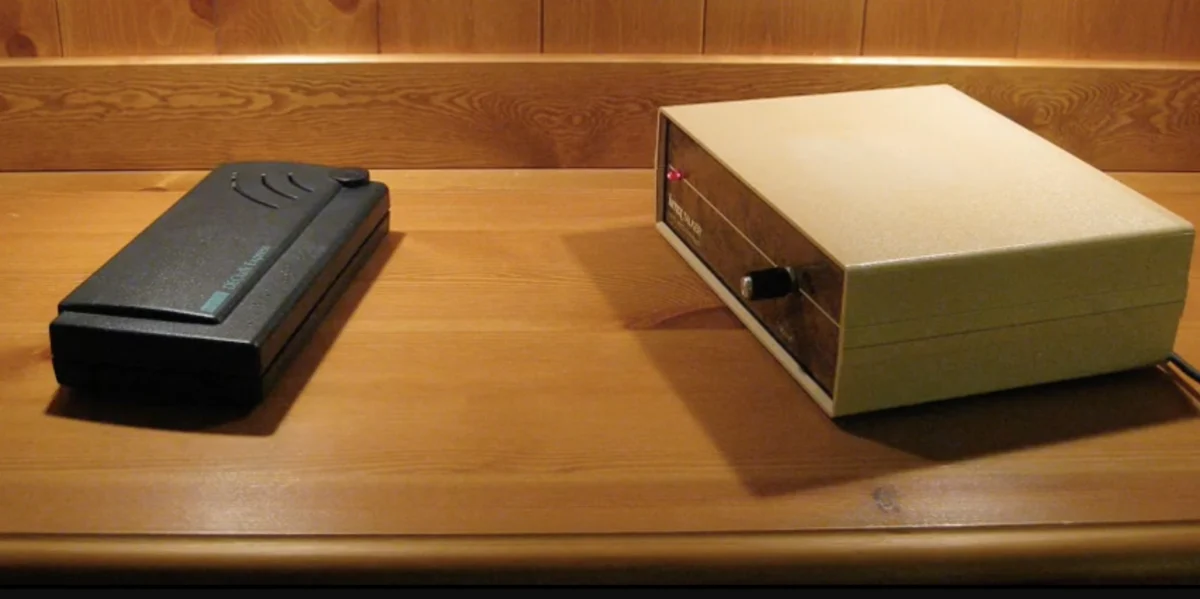
The intersection of classic British comedy and obsolete digital hardware has yielded a uniquely captivating piece of internet culture: a faithful recreation of Monty Python’s iconic Argument Sketch performed entirely by vintage speech synthesizers. In this unusual digital rendition, a DECtalk Express hardware unit stands in for actor Michael Palin, while an Intex Talker—powered by a Votrax SC-01A chip—takes on the role of John Cleese. While these legacy systems produce audio that lacks the pristine clarity of modern neural text-to-speech engines, their distinct mechanical cadence, robotic resonance, and historical charm offer an aesthetic experience that many audio enthusiasts argue simply sounds better.
This creative viral video highlights a broader cultural and technical fascination with early voice synthesis. Far from being mere relics of computing history, these vintage voice generators represent a foundational era when human speech was first successfully synthesized through electronic engineering, laying the groundwork for modern digital communication, assistive technologies, and electronic music production.
The Pioneers of Digital Speech: Klatt, Gagnon, and the Roots of Synthesis
To understand the cultural resonance of devices like the DECtalk and the Votrax, one must examine the pioneering researchers and engineers who made electronic speech possible. Dennis Klatt, a prominent researcher at the Massachusetts Institute of Technology (MIT), played a monumental role in the development of the original MITalk project. Klatt’s research directly informed the architecture of the DECtalk, a text-to-speech system developed by Digital Equipment Corporation in the 1980s.
Among the DECtalk’s synthesized personas was "Perfect Paul," a deep, resonant voice that audio engineers often compare to the Minimoog of speech synthesis due to its iconic status and distinct sonic footprint. For generations of North Americans, particularly those living in the United States, this specific synthetic voice is intimately familiar; it served for years as the automated vocal identity of the National Oceanic and Atmospheric Administration (NOAA) Weather Radio broadcasts, reading urgent meteorological updates with unflagging robotic composure.
Concurrently, developments in speech technology were unfolding in Michigan. Votrax, which famously began its corporate life as the vocal division of Federal Screw Works in Detroit, engineered its synthesis models based on the intellectual property of inventor Richard T. Gagnon. The Votrax architecture was remarkably versatile for its era, finding commercial application across a diverse array of consumer and industrial electronics. Votrax chips and voice boards provided audio feedback for classic arcade cabinets, Gottlieb System 80 pinball machines, specialized talking computer terminals, the Commodore VIC-30 home computer, and even the Kurzweil Reading Machine for the Blind, a groundbreaking device that converted printed text into spoken audio for visually impaired users. Although the original corporate entity is now defunct, digital archives and online preservation sites continue to document the company’s pivotal contributions to the history of human-computer interaction.
Speech as an Instrument: The Historical Evolution of Expressive Synthesis
A defining characteristic of early speech synthesis models—and one that separates them from contemporary automated systems—is their capacity for musical expressiveness. Unlike modern artificial intelligence models that process text through opaque neural networks to generate human-sounding speech automatically, vintage hardware synthesizers required explicit performance parameters. Operators and composers could manipulate pitch, duration, inflection, and formant frequencies in real-time, effectively treating the speech synthesizer as a musical instrument.
This instrumental approach to vocal synthesis has deep historical roots. Anthropologists and musicologists have long theorized that human speech evolved alongside, or perhaps directly out of, musical communication systems. Complex percussion communication methods found across various cultures—such as the talking drum traditions across the African continent—demonstrate an ancient human understanding of how rhythmic and tonal modulation can convey linguistic meaning across generations.
This philosophy of expressive vocal generation was publicly demonstrated decades before the digital revolution. In 1939, AT&T Bell Telephone Laboratories introduced the Voder (Voice Operation Demonstrator) at the New York World’s Fair. Operated manually by a specially trained technician using a complex keyboard and a foot pedal to control pitch, the Voder was capable of synthesizing intelligible human speech live. Archival recordings of early Voder demonstrations explicitly highlight the concept of "expression," illustrating that the machine was not merely repeating pre-recorded phrases, but was being performed live much like a pipe organ or a synthesizer.
Modern Interpretations and the Legacy of Algorithmic Composition
The ethos of playing speech synthesizers like musical instruments has survived into the modern digital audio workstation era, championed by software developers and electronic musicians. A prominent example is Chipspeech, a virtual instrument plugin developed by Plogue. Chipspeech emulates the sound architecture of vintage voice synthesis models from the 1980s, transforming obsolete hardware algorithms into playable software instruments.
Electronic musicians and sound designers have utilized these tools to bridge the gap between historical computer science and contemporary music composition. For instance, audio producer and technologist Peter Kirn previously utilized a pre-release version of Chipspeech to compose a musical track for a software launch compilation, using text drawn from Claude Shannon’s seminal 1948 work, A Mathematical Theory of Communication. By keying the vocal data manually via a MIDI keyboard—utilizing modulation wheels to control vibrato in the style of historical Voder operators—musicians can recapture the tactile, performative nature of early electronic voice generation. Such compositions have occasionally been performed live in experimental music venues, demonstrating that the distinct sonic artifacts of early speech synths retain a vibrant place in modern underground electronic culture.
Implications for Contemporary Audio and Artificial Intelligence
As artificial intelligence continues to advance, the contrast between modern neural voice synthesis and vintage hardware methods offers important perspective for the audio engineering community. Modern AI text-to-speech systems prioritize hyper-realism, successfully eliminating robotic artifacts to create voices that are virtually indistinguishable from human speakers. While this technological leap is invaluable for accessibility, navigation, and automated customer service, it risks homogenizing the auditory landscape.
Audio purists and media historians argue that the deliberate imperfections, mechanical constraints, and performative requirements of vintage speech synthesizers offered a unique artistic medium that automated AI tools cannot replicate. When a user must manually program phonemes, adjust pitch contours, or play a voice model via a keyboard, the resulting audio carries the distinct fingerprint of human effort and creative interpretation.
Ultimately, viral homages like the Monty Python synthesizer sketch serve as more than mere nostalgia. They function as a bridge connecting the formative decades of computer engineering with modern digital art, reminding creators of a time when the synthetic human voice was an uncharted frontier waiting to be played.