 Mia Khoirunisa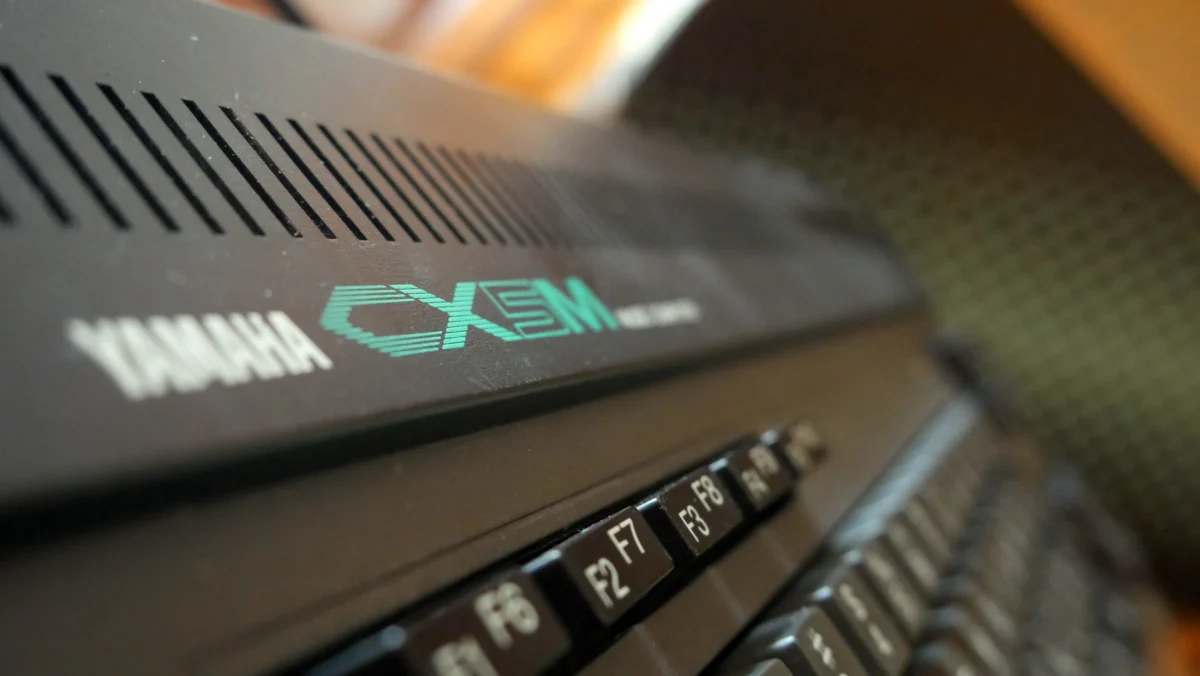
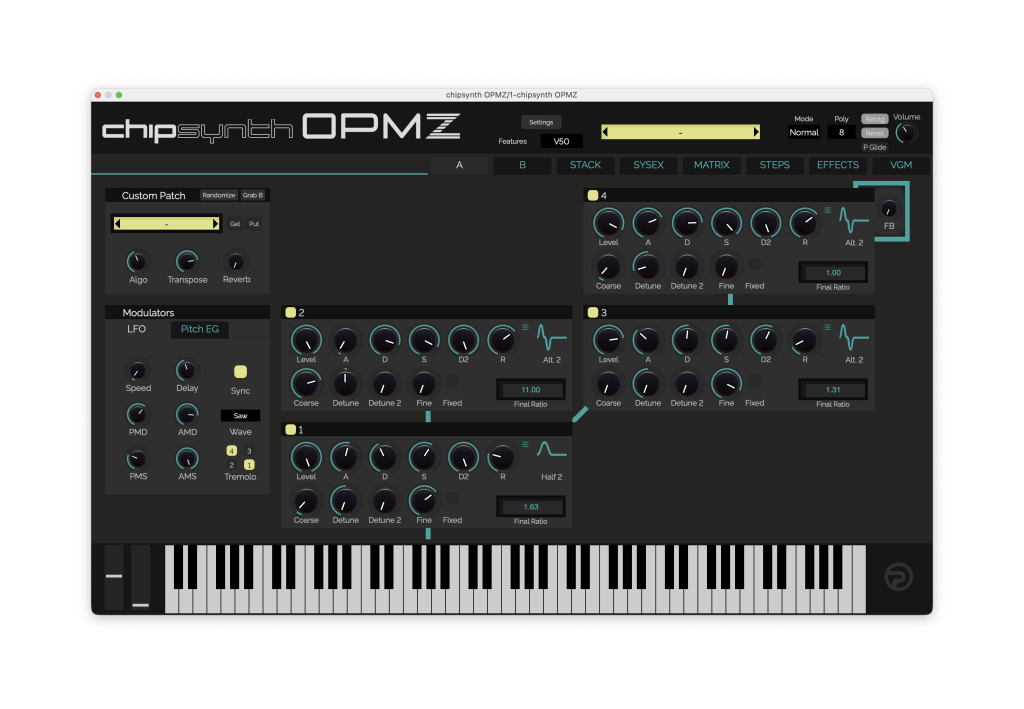
The landscape of software-based audio production has seen a continuous influx of digital emulations, ranging from basic software approximations of vintage analog circuits to complex phase-modulation synthesizers. However, the release of chipsynth OPMZ by software developer Plogue introduces a level of physical hardware archiving and circuit modeling that sets a new benchmark in the sector. Functioning simultaneously as a deep, flexible software instrument and an ultra-authentic playback engine for classic video game soundtracks, the plug-in accurately recreates the Yamaha OPM, OPP, and OPZ sound chips that defined the sonic identity of 1980s arcade cabinets, home computers, and hardware synthesizers.
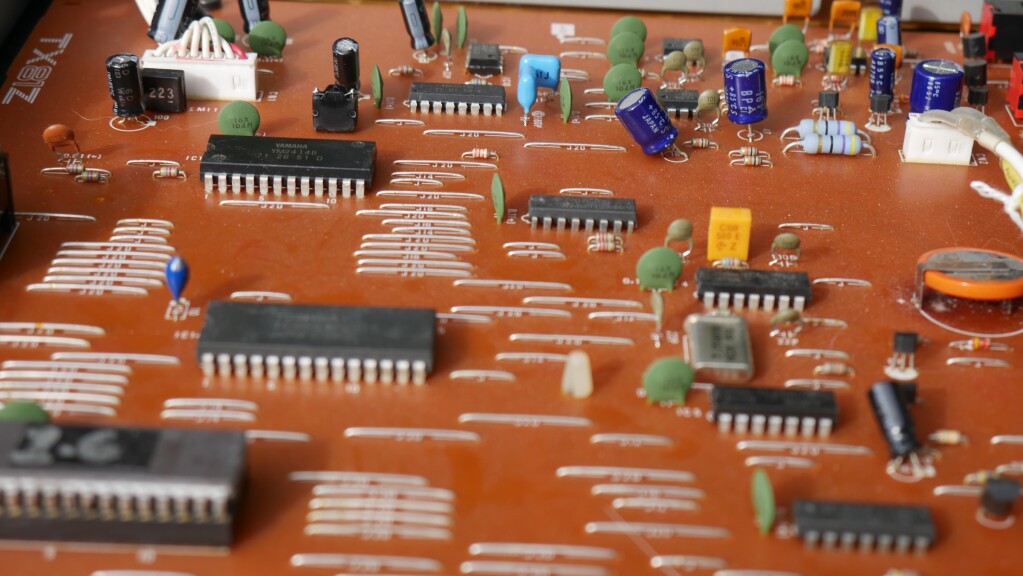
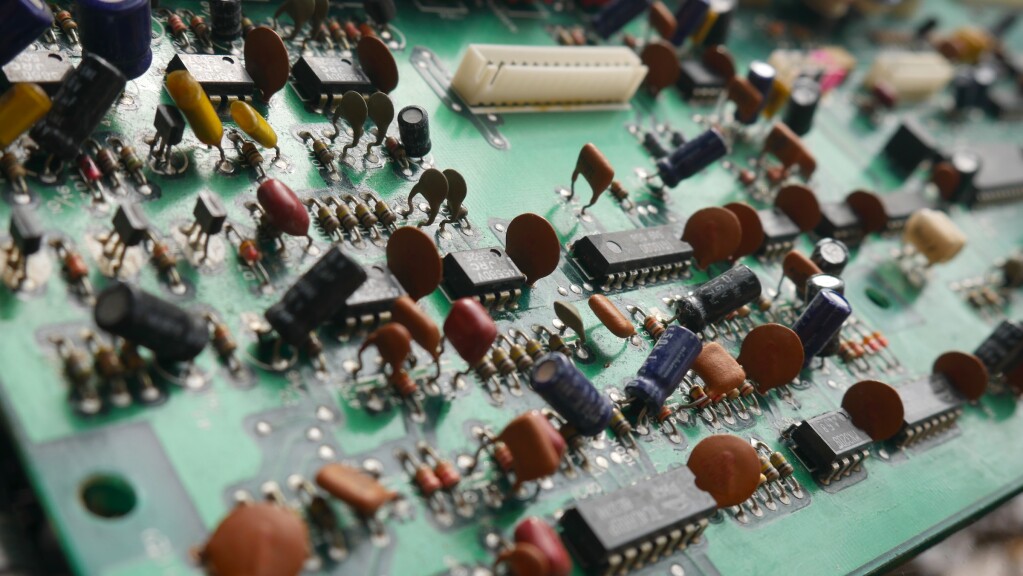
The development of chipsynth OPMZ marks a departure from purely theoretical software design. Rather than relying solely on abstract mathematics or high-level algorithmic guesses, the creation of the plug-in was rooted in physical engineering. Plogue’s development team utilized a hands-on workbench methodology, examining rare vintage gear, original manufacturer documentation, circuit board layouts, and physical hardware variants. This laborious hardware-first approach ensured that the software captures not just the general timbre of Yamaha’s FM synthesis, but the precise behavioral quirks, amplitude envelopes, digital-to-analog converter (DAC) traits, and modulation limitations of the original silicon.
Historical Context and the Yamaha Silicon Legacy
To understand the significance of chipsynth OPMZ, one must examine the pervasive influence of Yamaha’s FM sound generation chips throughout the 1980s and early 1990s. Yamaha’s OPP (YM2164), OPM (YM2151), and OPZ (YM2414) integrated circuits formed the backbone of both legendary musical instruments and iconic arcade game hardware.
On the music production side, these chips powered classic hardware synthesizers such as the Yamaha DX21, DX100, TX81Z, and TQ5. Furthermore, Yamaha collaborated with other major manufacturers, leading to the deployment of these sound engines in instruments like the Korg DS8, the Korg 707, and Korg’s pioneering Z3 guitar synthesizer. The distinct character of these digital engines—characterized by specific phase-modulation algorithms, unique amplitude scaling, and a gritty yet musical low-bit digital character—provided a bridge between cold computer logic and expressive acoustic-like textures.
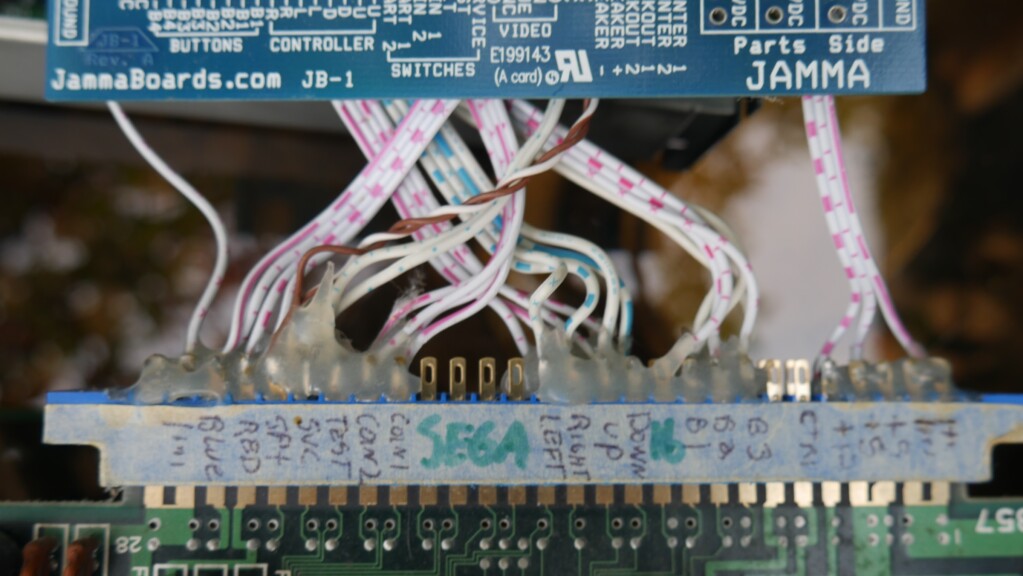
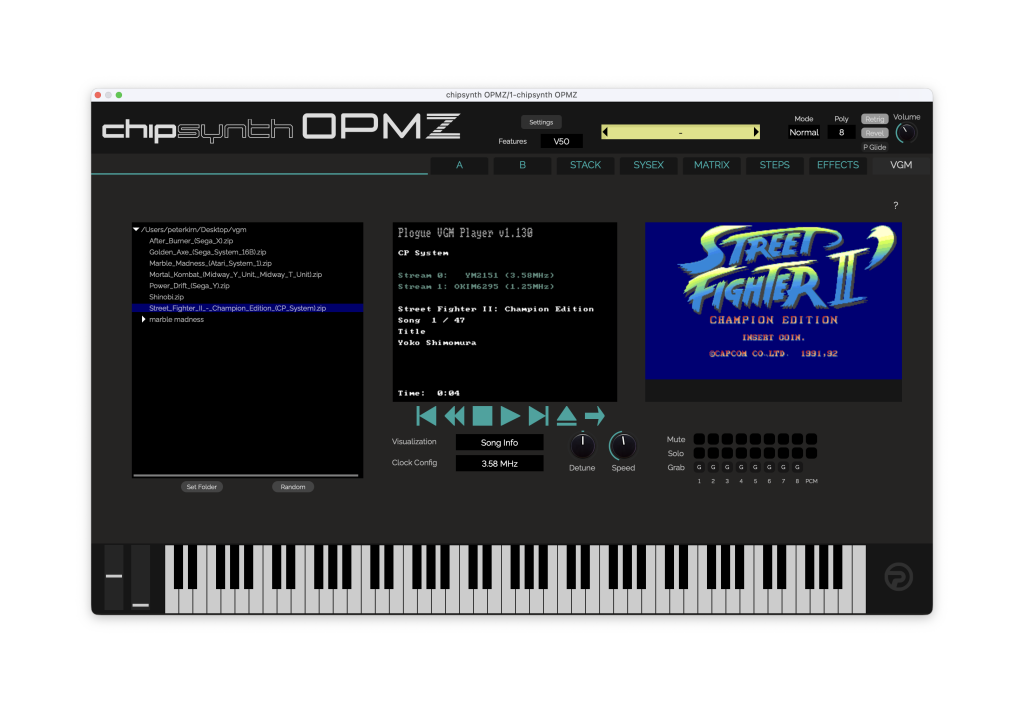
Simultaneously, these exact silicon architectures revolutionized the arcade and home console gaming industries. The Yamaha sound chips served as the sonic engine behind legendary coin-op and home video game masterpieces, including Street Fighter II, Mortal Kombat, Marble Madness, Shinobi, After Burner, and Power Drift. Renowned composers like Yoko Shimomura utilized the constraints and capabilities of these chips to craft timeless musical compositions that remain celebrated within the chiptune and video game music (VGM) communities.
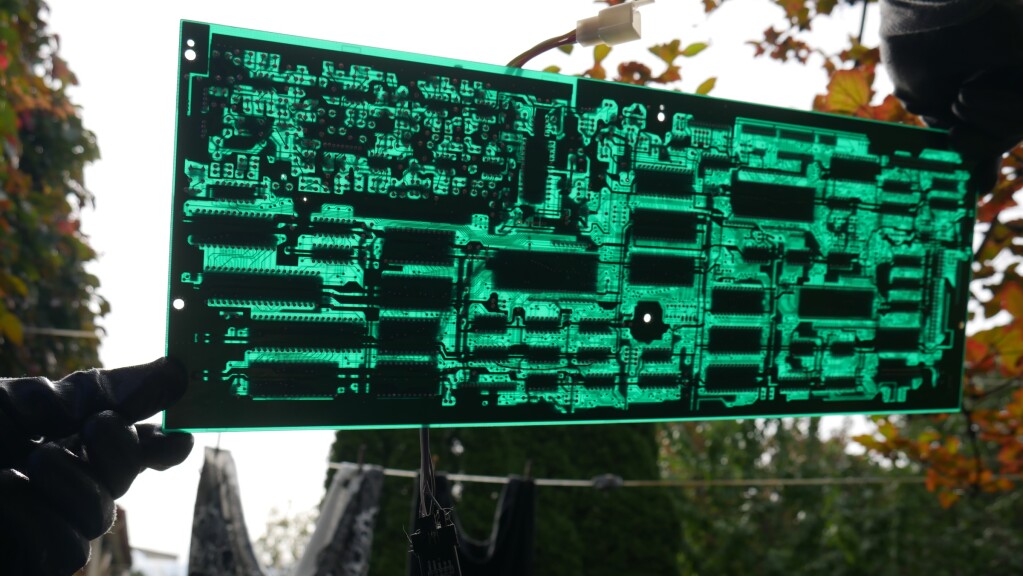
The 1984 Yamaha CX5M: A Pioneer of Computer Music
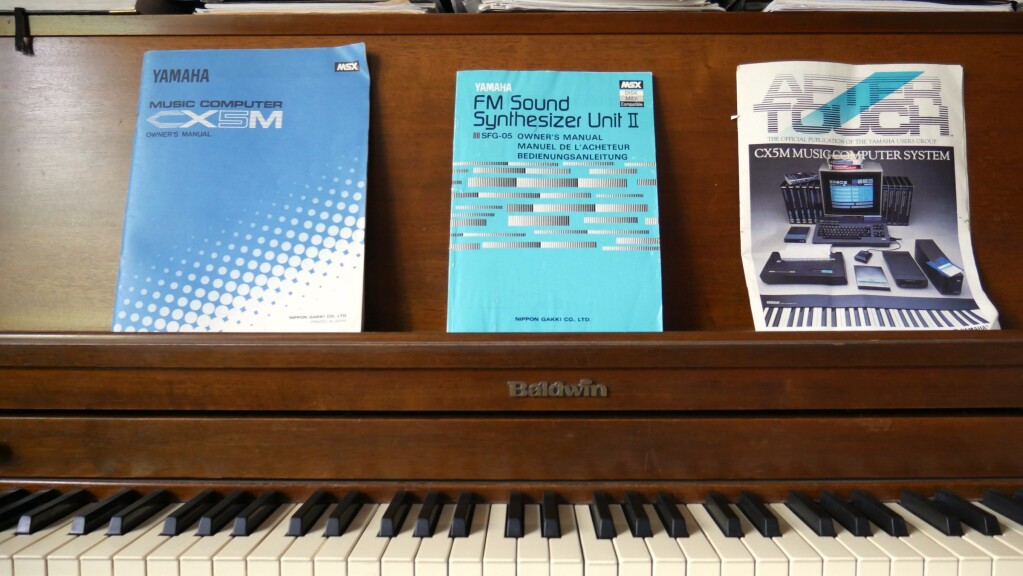
A crucial chapter in the history of this architecture is the 1984 release of the Yamaha CX5M computer. Operating on a Zilog Z80 processor running MSX standards, the CX5M was a visionary hybrid device that integrated an eight-voice FM synthesizer module directly into a personal computer alongside early support for the MIDI standard. Complete with dedicated music creation software such as the Voice Editor and Music Composer, the CX5M anticipated modern computer music production by decades.
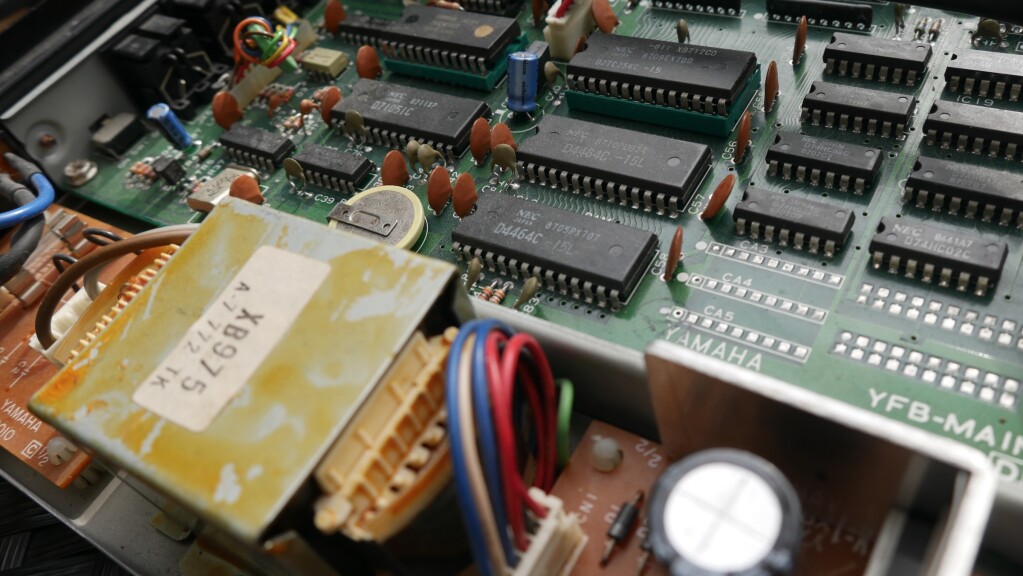
While original CX5M units and related hardware like the Yamaha V50 synthesizer have become rare collector’s items prone to component degradation, chipsynth OPMZ effectively archives this hardware ecosystem, allowing modern producers to access the exact computational and sonic capabilities of these vintage machines within contemporary Digital Audio Workstations (DAWs).
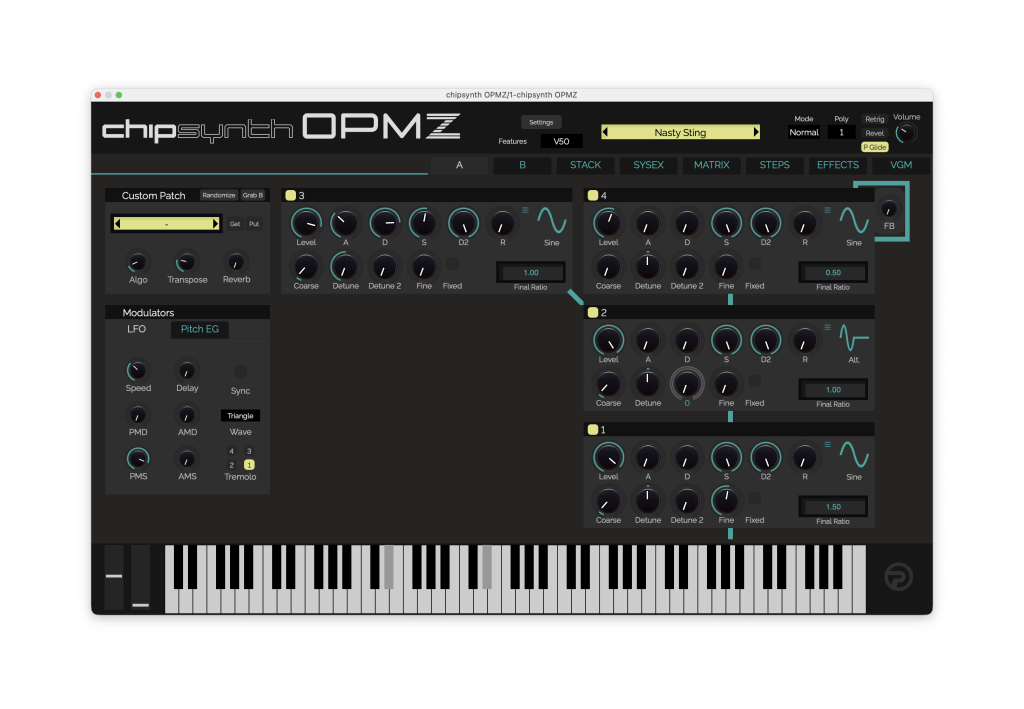
Technical Architecture and Feature Set
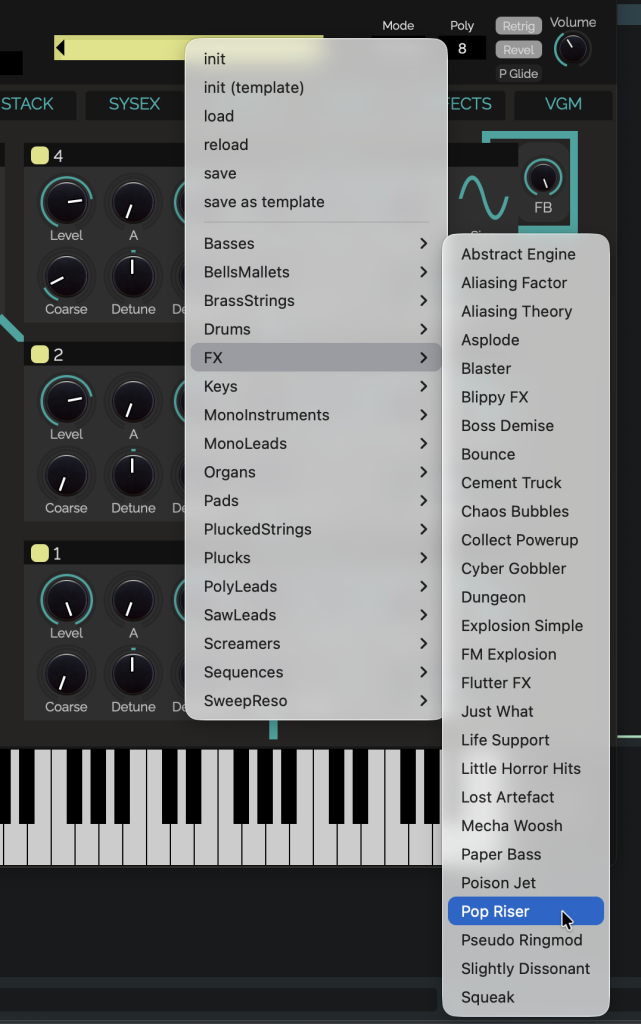
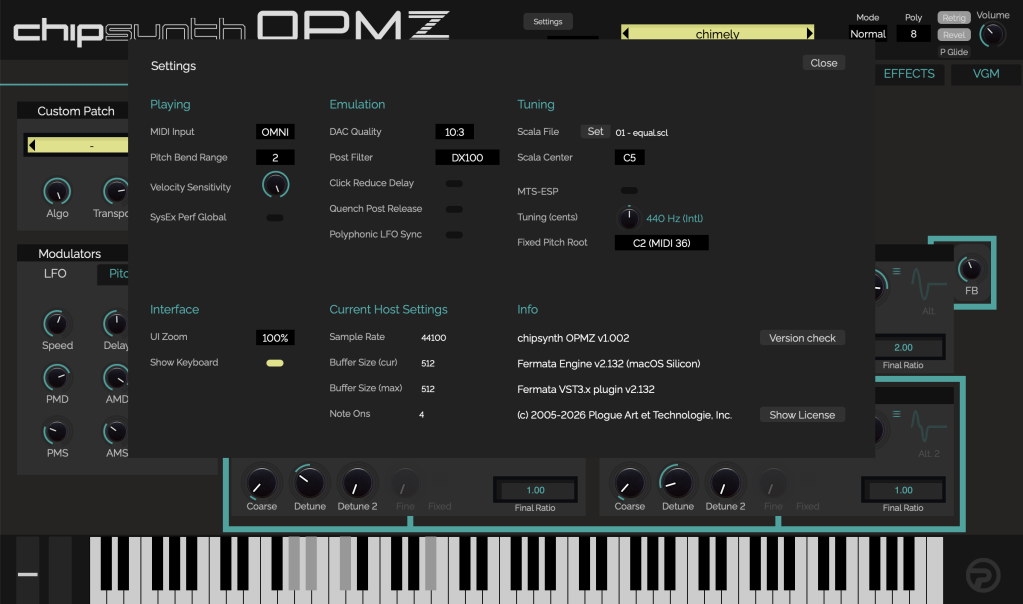
From a software engineering perspective, chipsynth OPMZ shares a common engine architecture with Plogue’s established product lineup, ensuring consistent implementation of crucial user-facing features such as MIDI mapping, polyphony management, and microtuning support via Scala and MTS-ESP files. Additionally, the software features native MPE (MIDI Polyphonic Expression) capabilities, accessible directly through the interface mode settings.
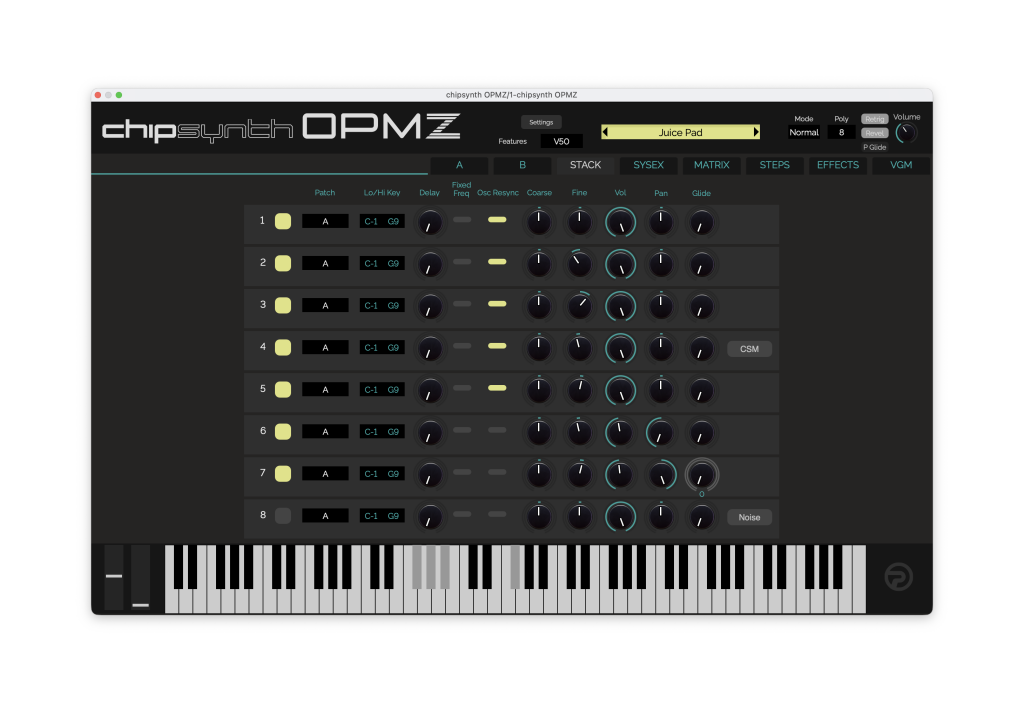
The instrument provides profound depth for sound design, featuring:
- Nine-voice OPM cores with authentic modulation and algorithm routing.
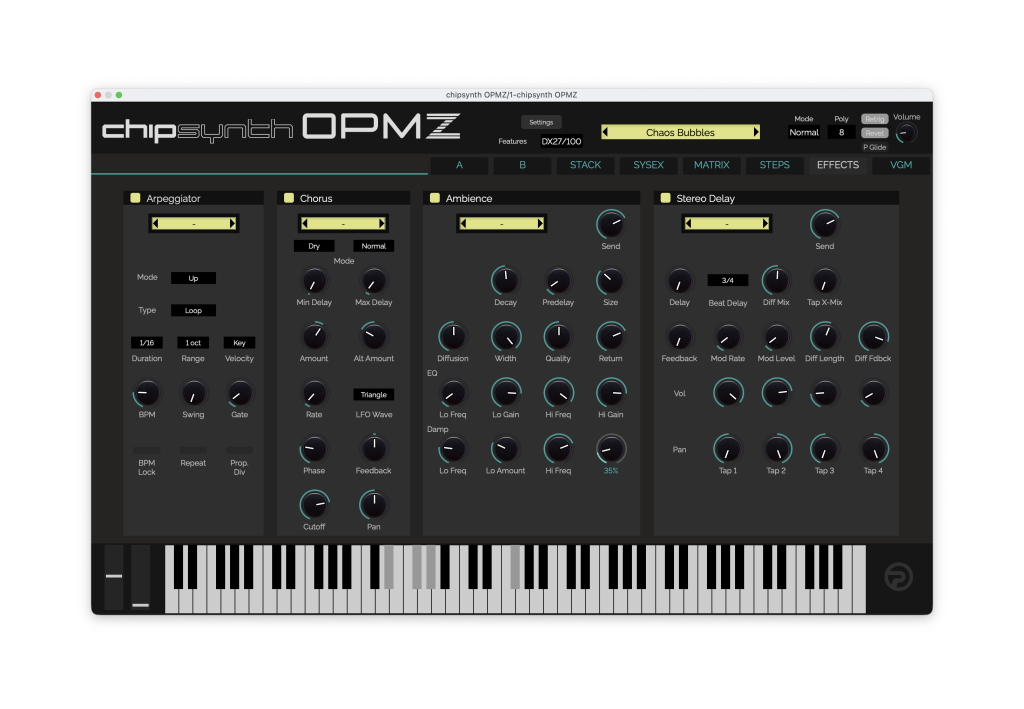
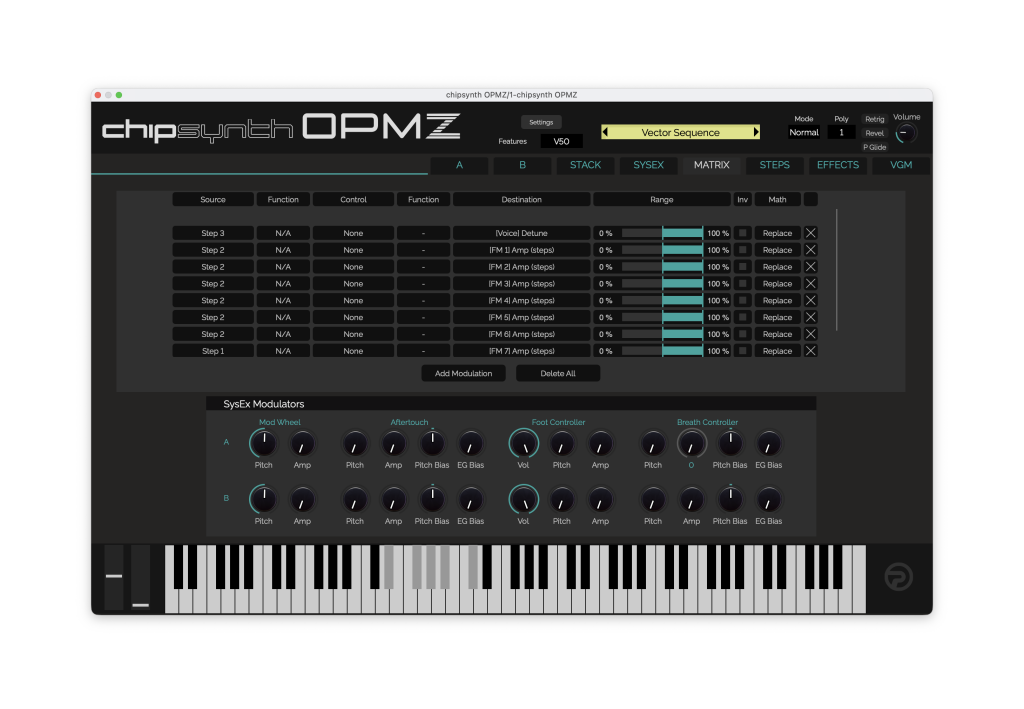
- A comprehensive modulation matrix, built-in arpeggiator, and a versatile multi-effects section.
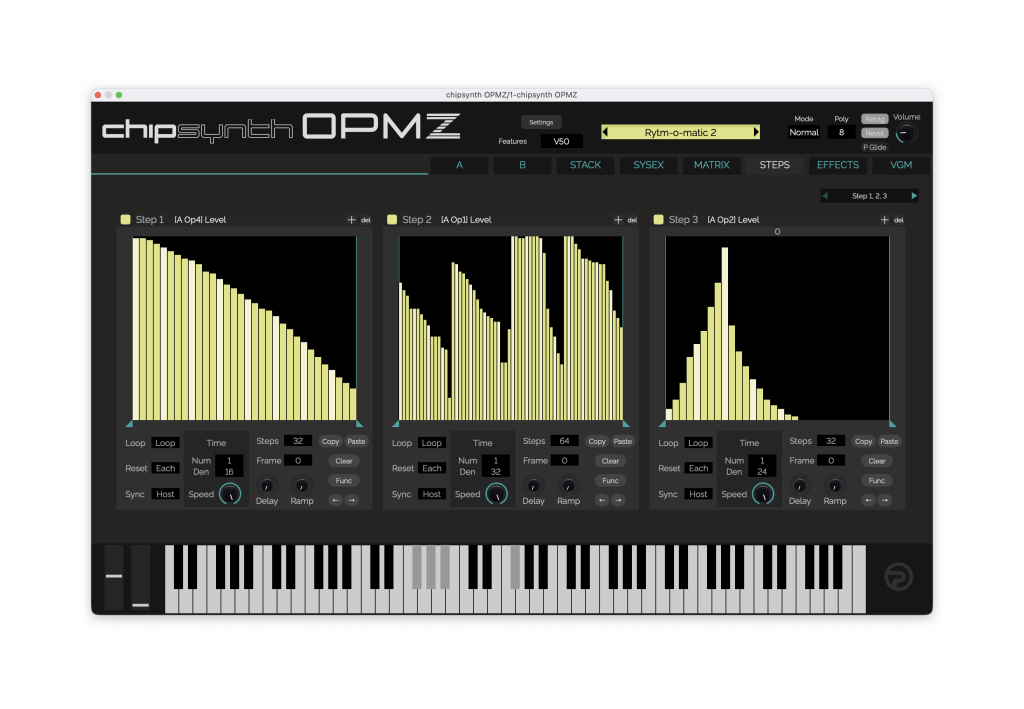
- An integrated step editor for rapid pattern composition directly within the patch interface.
- Selectable DAC options, allowing users to toggle between different hardware emulation profiles that replicate the exact digital conversion artifacts of specific vintage devices.
- A functional hardware librarian with full System Exclusive (SysEx) support for users who still operate original physical Yamaha hardware.
Beyond its application as an original software instrument loaded with an extensive preset library, chipsynth OPMZ functions as a dedicated player for standard VGM-format video game soundtrack files. By utilizing the "Registers" visualization mode, users can observe the exact register-level data processing of the sound chip in real time while listening to complete, uncompressed arcade and console soundtracks.
Industry Implications and Availability
The release of chipsynth OPMZ arrives at a time when the software instrument market is frequently saturated with generic digital modeling and subscription-based sample libraries. By prioritizing rigorous hardware archiving, physical circuit restoration, and archival preservation over automated approximation, Plogue’s latest offering underscores the enduring cultural and technical value of vintage hardware.
The software is available immediately for macOS, Windows, and Linux operating systems. It supports major industry-standard plug-in formats, including VST3, CLAP, AAX (for Windows and macOS), and Audio Units (AU) for macOS, ensuring seamless integration into both modern professional recording studios and retro-focused production setups.