 Mia Khoirunisa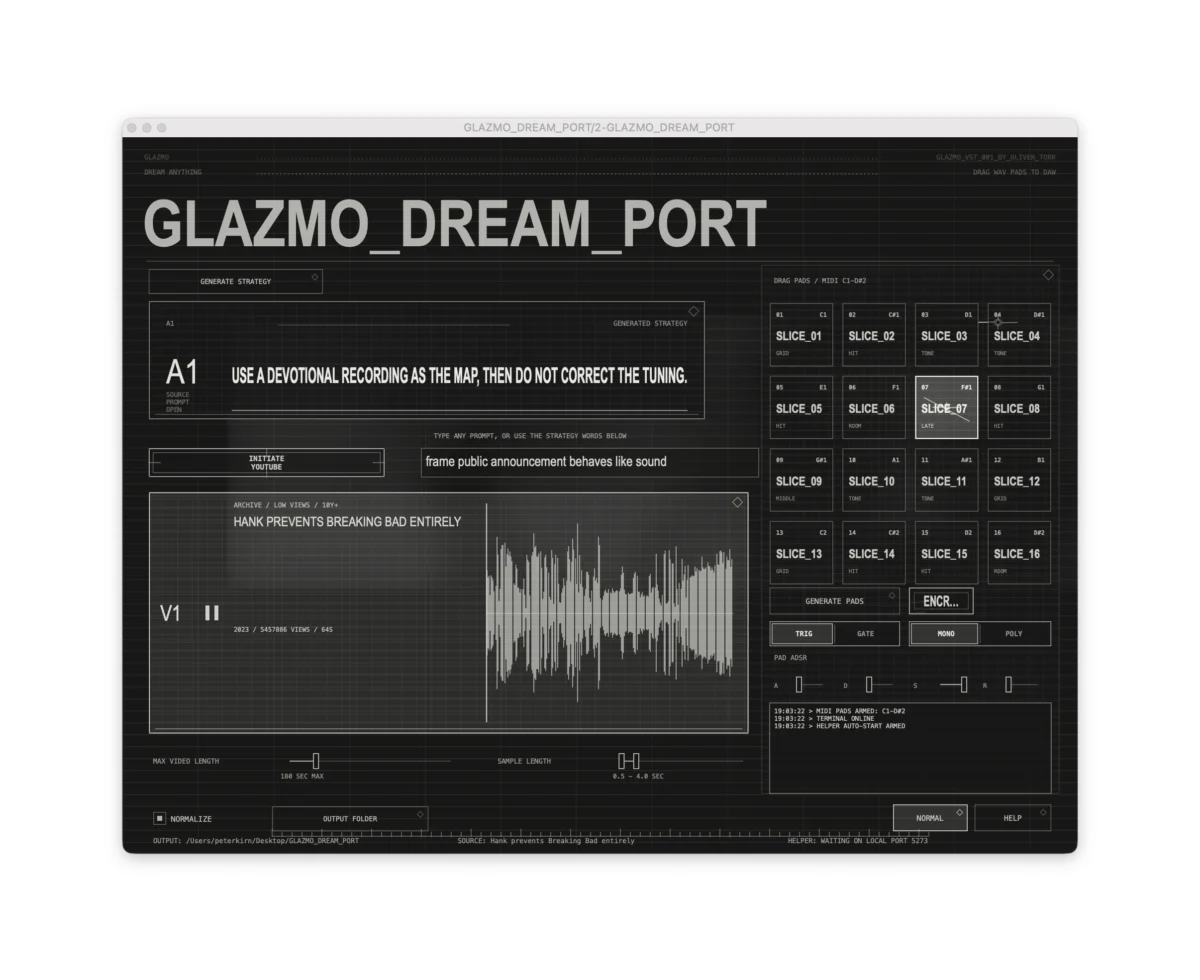
The landscape of experimental electronic music production is undergoing a significant transformation, driven by artists who merge deep acoustic research with modern computational tools. Sound designer and Glazmo Network founder Oliver Torr, alongside the acclaimed experimental duo MIRA新伝統, has released two specialized software utilities: Agitator, a dynamic Max for Live tempo-mapping device, and GLAZMO_DREAM_PORT, an artificial intelligence-assisted sampling plugin. These releases reflect a growing movement among avant-garde producers to open-source their specialized workflows, offering the broader music community access to unconventional synthesis techniques previously restricted to closed experimental circles.
Main Facts and Technological Overview
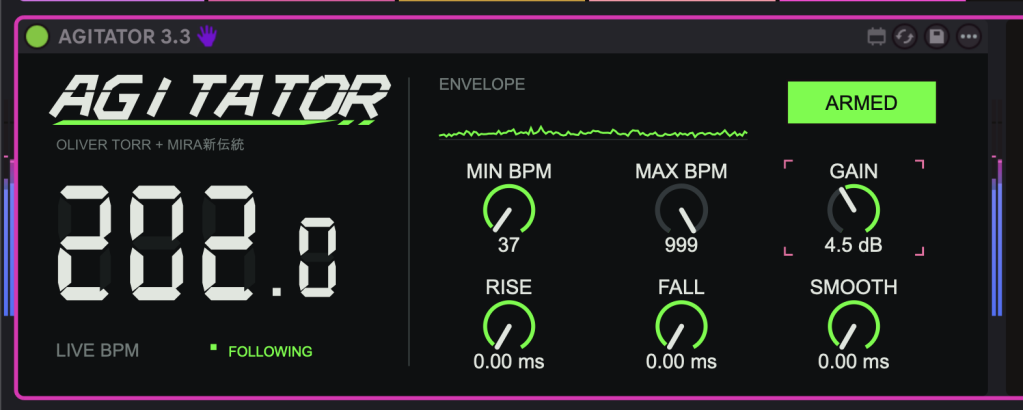
The newly introduced tools cater specifically to producers working within genres defined by uncertainty, glitch aesthetics, and dynamic time manipulation. Agitator, developed in collaboration with Coriolis Lab, operates as an advanced project tempo controller for Ableton Live 12. Unlike standard envelope followers that modulate internal parameters such as filter cutoffs or volume, Agitator takes incoming audio signals and dynamically drives the overall tempo of the host project. Equipped with slew controls for smoothing, rise, and fall times, alongside user-defined minimum and maximum boundaries, the device essentially turns any audio track into a master clock driver, opening up fluid rhythmic modulation that standard digital audio workstations (DAWs) natively restrict.
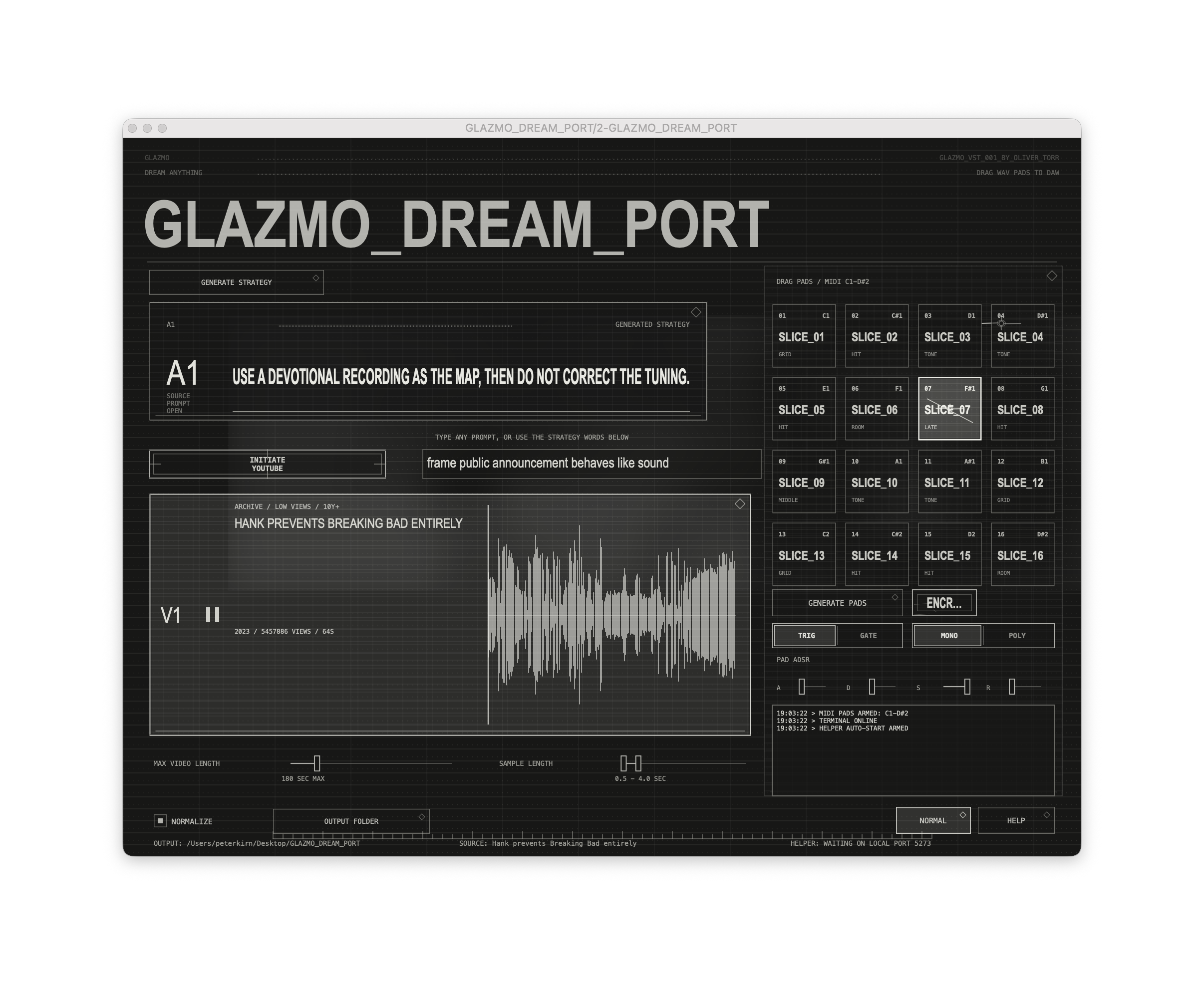
Simultaneously, GLAZMO_DREAM_PORT addresses the chaotic intersection of generative AI and physical sampling. Designed for macOS environments supporting Apple Silicon and Intel architectures as a VST3 plugin, the tool utilizes a text-to-query pipeline. Generated textual concepts—referred to by the developers as koans—are translated into automated YouTube search queries. The resulting audio is subsequently retrieved, sliced, and mapped into usable drum kits and ambient pads. The plugin also features an "Encrypt" function to inject stochastic distortion and digital degradation into the sample pool, alongside rudimentary authorship tracking aimed at addressing copyright provenance before commercial release.
Chronology and Development Context
The genesis of these tools traces back to the broader evolution of the European experimental modular and software synthesis community. Oliver Torr, initially recognized for his hardware contributions and associations with Bastl Instruments, transitioned his focus toward software architecture and deep auditory research following his relocation to Athens. Through the Glazmo Network Discord channel, Torr began dismantling and sharing archaic sound design processes that formed the foundation of his recent artistic output.
This collaborative ethos deepened through his partnership with MIRA新伝統, a duo whose previous software contributions included HyperSplash—a Max for Live device praised for generating complex glitch and foley percussion layers. The iterative development of Agitator and GLAZMO_DREAM_PORT represents a logical progression from hardware-adjacent experimentation to algorithmic software design. Over the past year, both entities have tested these systems internally, culminating in the public release of the utilities alongside their respective full-length studio albums: MIRA新伝統’s Mythoplaxy and Torr’s Headstock Comforts.
Supporting Data and System Requirements
Both tools are tailored for specific production environments, reflecting the niche requirements of modern experimental sound design:
- Agitator: Requires Ableton Live 12 or higher and Max for Live. Distributed via Gumroad on a pay-what-you-want model starting at 3 EUR, with proceeds supporting ongoing research at the Glazmo Network and Coriolis Lab.
- GLAZMO_DREAM_PORT: Formatted as a VST3 plugin exclusively for macOS (compatible with both Apple Silicon and Intel processors). It features drag-and-drop DAW integration and automated metadata generation for sample management.
- Aesthetic Accoutrements: Accompanying visual themes in demonstration media are provided by DeafMan, with physical merchandise design handled by Kristyna Kulikova in support of the artists’ latest releases.
Industry Implications and Producer Reactions
The release of Agitator and GLAZMO_DREAM_PORT highlights a philosophical shift within the electronic music software market. While many commercial software developers rely on proprietary encryption and closed ecosystems to protect intellectual property, Torr and MIRA新伝統 have opted for transparency. By distributing their proprietary production tools at nominal costs, the creators demonstrate confidence that the uniqueness of an artist’s sound relies not on secret tools, but on individual execution and creative intent.
From an analytical perspective, tools like GLAZMO_DREAM_PORT contribute to the ongoing debate surrounding artificial intelligence in creative industries. By automating the retrieval and destruction of public domain and user-generated media from platforms like YouTube, the plugin forces a reexamination of copyright boundaries in sampling culture. While the integration of automated authorship metadata offers a pragmatic safeguard for producers concerned with legal compliance, critics and legal analysts note that the legal status of derivative AI-sampled media remains complex. Nevertheless, the tool’s capacity to streamline the creation of unpredictable, textured sonic landscapes provides a compelling practical benefit for producers working within cinematic, ambient, and IDM genres.
Similarly, Agitator bridges a long-standing functional gap in live performance and studio composition. Traditional DAW architecture is built around rigid, static grids designed to maintain consistent clock signals. By allowing incoming audio—such as acoustic drums, erratic modular synthesizer patches, or vocal performances—to dictate the macro tempo of a project in real time, Agitator revives the human micro-timing variations characteristic of unquantized analog recordings while retaining digital synchronization.
Broader Impact on Experimental Sound Design
As electronic music production continues to democratize, the influence of localized research networks such as the Glazmo Network is increasingly felt globally. By bridging the gap between academic sound theory, generative algorithms, and accessible DAW plugins, developers like Torr and MIRA新伝統 are expanding the technical vocabulary available to contemporary producers.
The integration of these tools into recent releases such as Headstock Comforts and Mythoplaxy illustrates the practical efficacy of their software design philosophy. These albums present an uncompromising digital psychedelica characterized by intricate micro-editing, spatial depth, and rhythmic instability. Rather than relying on standard preset libraries, the music showcases the potential of algorithmic disruption when placed in the hands of disciplined practitioners.
Looking forward, the ongoing development of the Glazmo Network suggests that further utilities will emerge at the intersection of machine learning, physical modeling, and live control systems. For producers willing to embrace uncertainty and relinquish traditional grid-based rigidity, these tools offer a robust foundation for pushing the boundaries of contemporary sound design.