Aveline Kirana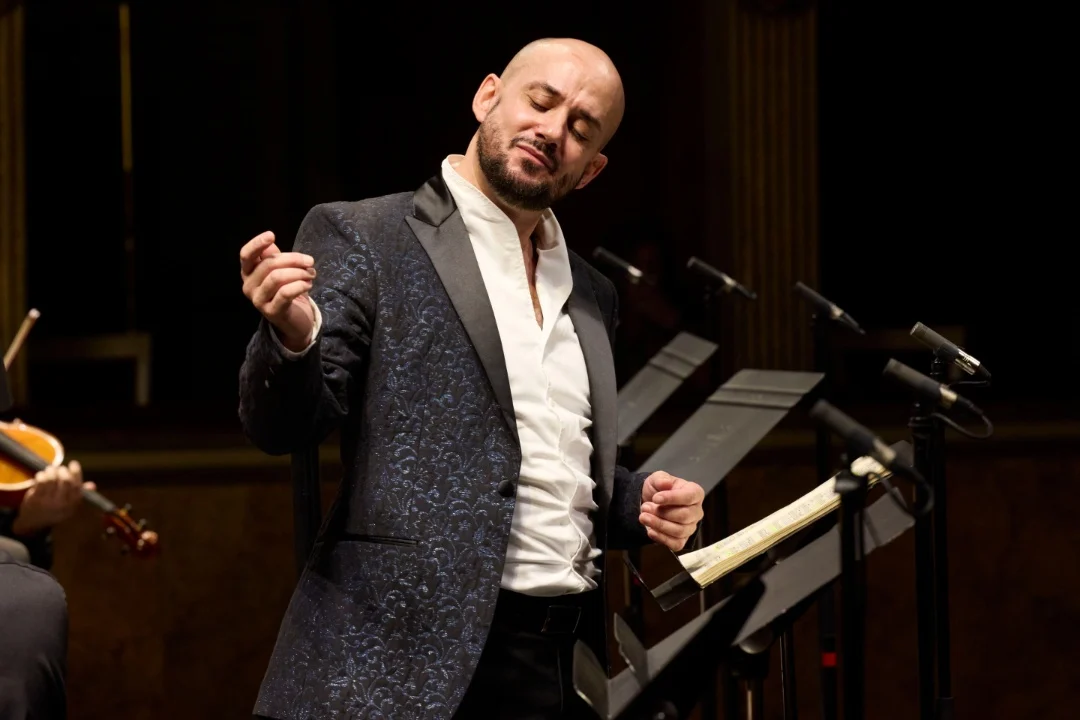
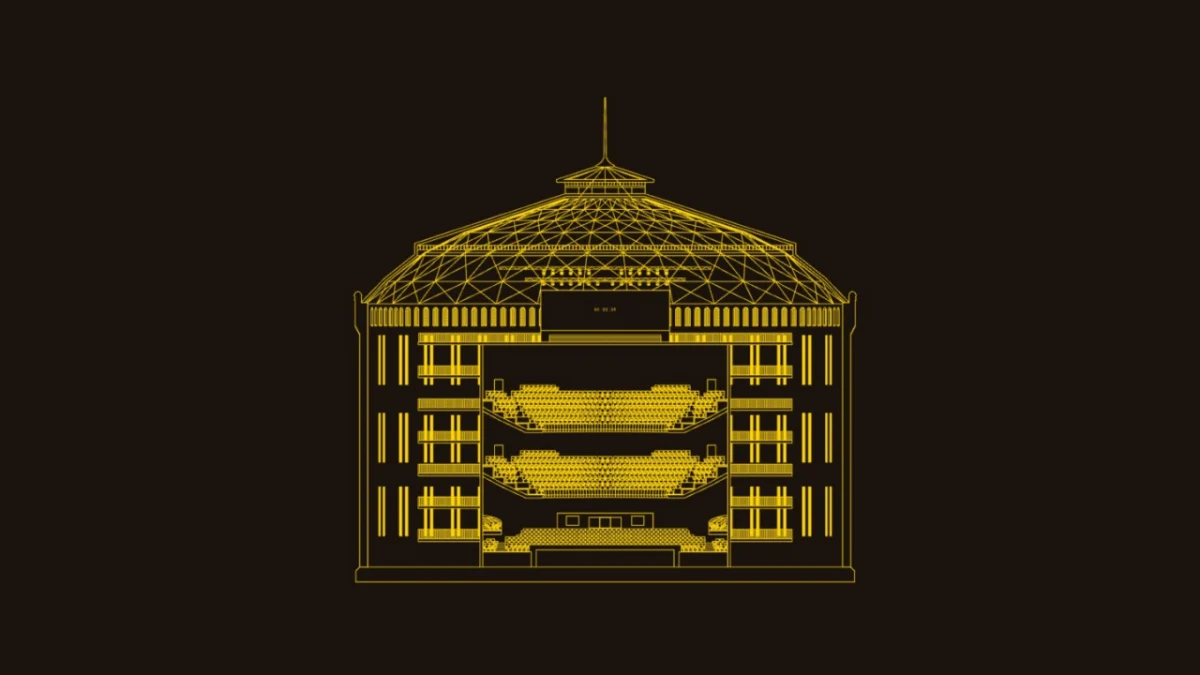
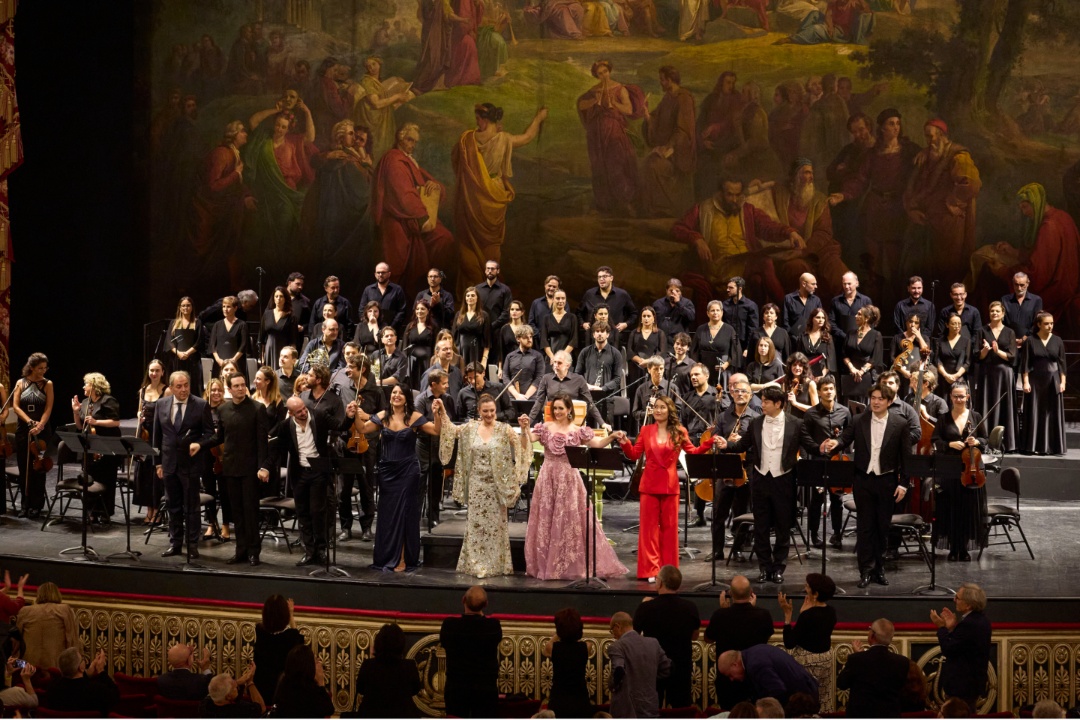
For centuries, Teatro di San Carlo—the oldest continuously active opera house in the world, founded in 1737—has stood as a bastion of Italian bel canto, hosting the premieres of legendary works by Rossini, Donizetti, and Verdi. Yet, in a curious historical omission, the theater had never staged a full-scale production of an opera by George Frideric Handel. That long-standing absence was finally rectified on October 7, 2026, as the company presented the composer’s 1735 masterpiece, Alcina, in a concertante performance that signals a potential paradigm shift in the theater’s programming strategy.
Historical Context and Theatrical Significance
The exclusion of Handel from the San Carlo repertoire is not merely a matter of omission but a reflection of the evolving landscape of European musicology. While Handel was the dominant force in 18th-century London opera, his works fell into relative obscurity following his death, only to be rediscovered during the "Handel Renaissance" of the mid-20th century. During the decades when Teatro di San Carlo was solidifying its reputation as a home for the heavy-hitting Romantic repertoire, the Baroque movement was still in its infancy, often confined to specialized festivals rather than grand institutional stages.
The decision to bring Alcina to Naples is indicative of a broader industry trend toward expanding the canon. By selecting Alcina, the theater chose perhaps the most theatrical and psychologically complex of Handel’s operas. Based on the 16th-century epic Orlando Furioso by Ludovico Ariosto, the narrative explores themes of illusion, the transience of beauty, and the moral awakening of the protagonist, Ruggero. As the narrative unfolds, Ruggero finds himself trapped on an island ruled by the sorceress Alcina, who maintains her youthful power through magical artifice. The subsequent arrival of his fiancée, Bradamante, disguised as the knight "Ricciardo," serves as the catalyst for a reality-shattering intervention that strips the island of its enchantment, revealing the bleak, desolate rock beneath the sorceress’s glamour.
The Performance and Orchestral Dynamics
The concert performance, led by conductor Iván López Reynoso, offered a study in the intersection of modern orchestral practices and the specific demands of Baroque ornamentation. Unlike specialized ensembles that utilize period-correct instruments—such as gut strings and harpsichords tuned to lower pitch standards—the San Carlo Orchestra performed with its standard modern complement.
The orchestra operated at a modern pitch of 440 Hz, a choice that created a more brilliant, if less historically authentic, tonal profile. While the ensemble navigated the score with precision, critics noted a lack of the nuanced "affetti"—the distinct emotional states that characterize the Baroque style—across the various arias. Although the orchestra provided moments of exquisite instrumental detail, such as the evocative violin solo during Morgana’s "Ama, sospira" and the poignant cello work in "Credete al mio dolore," the overall performance occasionally struggled to escape a slightly monotonous interpretive tone. The introduction to "Sta nell’ircana," featuring the horns, lacked the razor-sharp focus expected in the most rigorous Baroque interpretations.
Last-Minute Casting and Vocal Triumphs
The production faced a significant hurdle just 72 hours before opening night when the lead soprano, Lisette Oropesa, was forced to withdraw due to illness. The arrival of Mariangela Sicilia to take on the title role of Alcina was widely viewed as a triumphant recovery. Fresh from her success at the same venue in Mozart’s Mitridate, Sicilia demonstrated remarkable vocal agility. Her performance of "Ah, mio cor" was widely cited as the evening’s emotional anchor, balancing technical precision with a profound, mellow core in the middle register that captured the sorceress’s complex transition from regal authority to vulnerable, jilted lover.
Alongside her, Erin Morley, in the role of Morgana, provided a masterclass in vocal brilliance. Her delivery of the high-octane "Tornami a vagheggiar" served as the production’s technical peak, characterized by a silvery, shimmering upper register that resonated clearly throughout the historic hall.
Franco Fagioli, also returning to the San Carlo following his appearance in Mitridate, delivered a performance as Ruggero that felt both more refined and more emotionally resonant than his previous outings. Despite the challenges posed by the higher orchestral pitch, which necessitated minor transpositions for comfort, Fagioli’s command of the countertenor repertoire was evident. His rendition of the melancholic "Verdi prati" provided the audience with a profound meditation on the necessity of shedding illusion to achieve maturity.
Structural Critiques and Production Choices
While the vocal performances were largely lauded, the decision to present the work as a strict concertante—without any of the semi-staged elements that have become common in contemporary Baroque productions—drew mixed reactions. In a concertante format, the lack of spatial interaction between characters meant that performers were often required to vacate the stage during their colleagues’ arias.
However, Fagioli and Varduhi Abrahamyan (Bradamante) attempted to overcome these static conditions through deliberate physical gesture and acting, providing a sense of dramatic continuity. Abrahamyan’s performance was marked by a bronzed, seamless mezzo-soprano and remarkable breath control, though the production’s extensive cutting of the score meant that the final reconciliation between Bradamante and Ruggero was excised, a decision that left the narrative arc feeling somewhat truncated for those familiar with the complete libretto.
Supporting roles offered a varied experience. Tianxuefei Sun’s portrayal of Oronte was noted for its power, though some felt the tenor’s delivery leaned toward the heroic, potentially overshadowing the lighter texture of the Baroque score. Yunho Eric Kim’s Melisso provided a stentorian bass presence, though a momentary lapse in entry during "Pensa a chi geme" highlighted the complexities of performing such dense, unfamiliar repertoire under pressure. Sayumi Kaneko, tasked with the brief but essential role of Oberto, brought a warm, velvet-like quality to the stage.
Broader Implications for Teatro San Carlo
The successful, albeit imperfect, introduction of Handel to the San Carlo marks a significant milestone in the theater’s ongoing evolution. By engaging with the Baroque repertoire, the institution is positioning itself to attract a broader demographic of operatic enthusiasts who have historically looked to London, Paris, or specialized European festivals for such works.
The financial and artistic implications of this shift are considerable. Programming Baroque works requires a significant investment in specialized training for musicians accustomed to the later 19th-century repertoire that typically dominates the San Carlo’s season. Furthermore, the decision to use modern instruments suggests a strategic middle-ground approach: integrating the Baroque canon into the theater’s standard operating model rather than creating a separate, siloed historical ensemble.
As the theater looks toward future seasons, the question remains whether Alcina will be a singular curiosity or the beginning of a dedicated Baroque initiative. The audience response—characterized by high attendance and critical interest—suggests a robust appetite for such programming in Naples. Should the management at Teatro San Carlo choose to formalize this integration, they may well find that the "spell of the libretto" is equally effective in revitalizing the theater’s own institutional identity.
In conclusion, while the production featured some unevenness regarding stylistic uniformity and orchestral transparency, the fundamental achievement of bringing Handel to the stage of the San Carlo cannot be overstated. By breaking the 289-year streak, the company has effectively challenged its own traditionalism, proving that even the most historic houses can find new life in the rigorous, complex, and deeply moving structures of the 18th-century Baroque. The performance serves as a reminder that the evolution of opera is not merely found in the commissioning of new works, but in the courageous, and occasionally challenging, re-evaluation of the old.