 Johan Budi
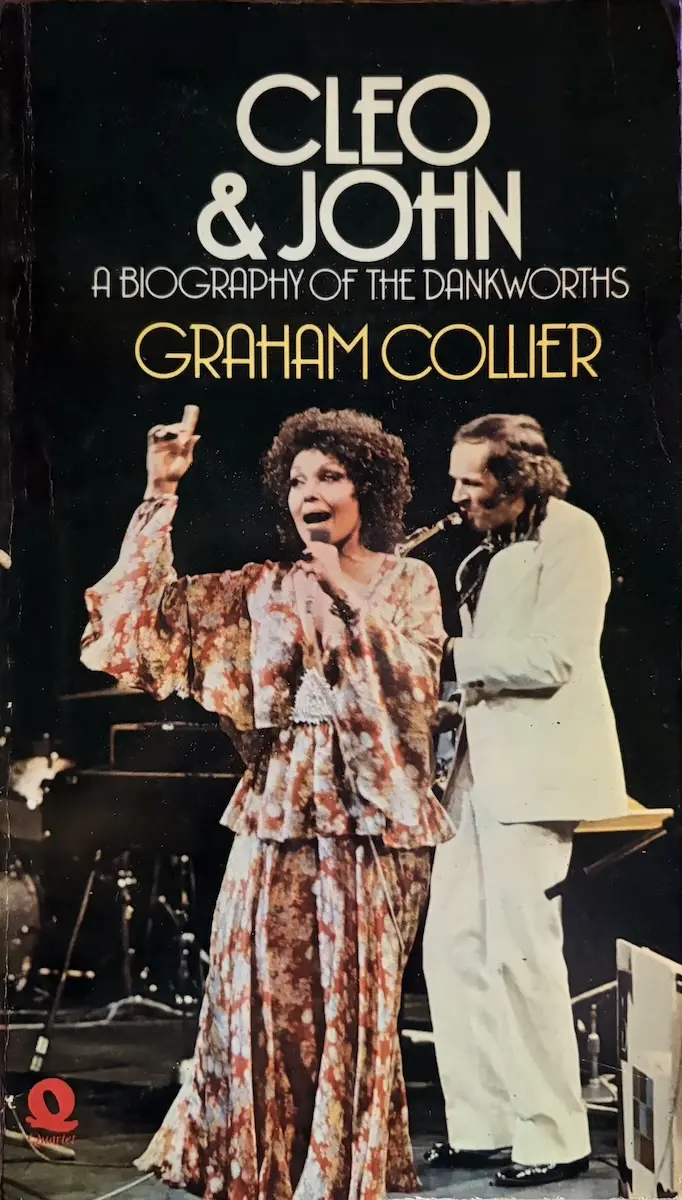
Published by Quartet Books in London, Graham Collier’s biographical work explores the lives and enduring cultural footprint of composer-bandleader John Dankworth and vocalist Cleo Laine. Priced at £4.95 in a 187-page hardback edition complete with 45 photographs and a four-page index, the book navigates the complex intersection of British jazz history, social mobility, and artistic integrity. Despite being constructed largely from archival press cuttings and direct quotations from the subjects and their peers—including figures like Don Rendell, Dudley Moore, and the author himself—the volume achieves a rare level of critical objectivity. Rather than succumbing to hagiography or treating the couple as unassailable cult figures, Collier presents a grounded, factual chronicle that honours their contributions while critically evaluating their public personas.
Main Facts and Composition of the Biography
At its core, Collier’s work examines how John Dankworth and Cleo Laine ascended from the post-war British jazz circuit to international prominence. The narrative traces Dankworth’s musical education, his early influences, his pioneering work with the Dankworth Seven, his prominent big bands, and his extensive contributions to the film-music industry. Furthermore, the book documents Laine’s artistic evolution, highlighting how Dankworth’s guidance transformed her from a capable band singer with a restricted range into a globally recognised vocal phenomenon.
The volume also addresses the couple’s transition into the British cultural establishment. This social ascent is illustrated through photographs and accounts of royal patronage, Dankworth receiving the CBE in 1974, and speculative chapters exploring their status within British public life. Throughout the text, Collier employs a balanced approach, allowing both subjects to speak for themselves. Dankworth’s own words reveal rigorous self-criticism regarding his instrumental abilities and offer amusing anecdotes about his early encounters with the commercial film-scoring landscape.
Historical Chronology and Career Milestones
To understand the weight of Collier’s biographical subjects, one must examine the chronology of the British jazz scene from the late 1940s onward. John Dankworth emerged as a leading figure in modern jazz in the UK, distinguishing himself by refusing to mimic American bebop styles wholesale. Instead, his work remained firmly rooted in his own British upbringing and experiences, a musical honesty that defined his career.
Key chronological milestones detailed in the biography include:
- 1940s–1950s: Dankworth’s foundational work with small groups, leading to the formation of the influential Dankworth Seven. This ensemble became a cornerstone of modern British jazz, a legacy soon to be highlighted by the re-issue of eight original Seven recordings on a new Esquire LP.
- 1959: The purported recording of the live album Dankworth At Newport. Archival corrections noted by contemporary reviewers reveal that this recording, released on Top Rank, was actually captured during a concert at Hammersmith after the original Newport tapes were deemed technically substandard.
- 1974: John Dankworth is appointed a Commander of the Order of the British Empire (CBE) in recognition of his services to music, marking a definitive milestone in the couple’s integration into mainstream British arts culture.
- Decades of Collaboration: The continuous evolution of the Dankworth big bands and Cleo Laine’s ascent as a peerless interpreter of jazz, musical theatre, and classical crossover repertoire.
Critical Analysis and Journalistic Commentary
Collier’s methodology relies heavily on assembling historical documentation, yet his critical lens prevents the book from becoming mere publicity. By incorporating candid assessments from associated musicians, the author dismantles the uncritical adoration often directed at established musical icons. For instance, Collier’s evaluation of Dankworth’s artistic authenticity reinforces a vital principle in jazz journalism: the necessity for artists to draw from their genuine cultural experiences rather than adopting inauthentic personas.
However, the book is not without minor editorial and factual discrepancies that have drawn scrutiny from long-standing observers of the scene. Reviewers familiar with the era have pointed out specific historical misattributions, such as the placement of saxophonist Ronnie Chamberlain with Ted Heath’s orchestra in 1949, when he was actually performing alongside Vic Lewis. Additionally, the omission of figures like Mike Butcher—who managed the Dankworth Seven and previously wrote for jazz publications—represents a notable gap in the archival network constructed by the author. From a stylistic standpoint, Collier’s occasional use of contractions outside of direct quotations introduces an informal tone into an otherwise rigorous historical text.
Broader Impact and Cultural Implications
The release of Cleo And John – A Biography Of The Dankworths arrives at a time when the documentation of British jazz history is gaining critical academic and popular attention. The book serves as a case study in how indigenous jazz scenes developed outside the United States during the mid-twentieth century. By charting Dankworth’s steadfast refusal to adopt fabricated personas—such as pop vocalists affecting foreign accents—the biography underscores the value of cultural authenticity in the arts.
Furthermore, the publication highlights the symbiotic nature of the Dankworth-Laine partnership. Their careers demonstrate how artistic collaboration, mutual critique, and disciplined reinvention can elevate performers from regional club circuits to international acclaim while navigating changing social landscapes. Despite minor editorial flaws and historical corrections noted by contemporary critics, Graham Collier’s work stands as an indispensable resource for understanding the mechanics of British jazz royalty, preserving the trials, triumphs, and realities of two defining figures in twentieth-century music.