 Aveline Kirana
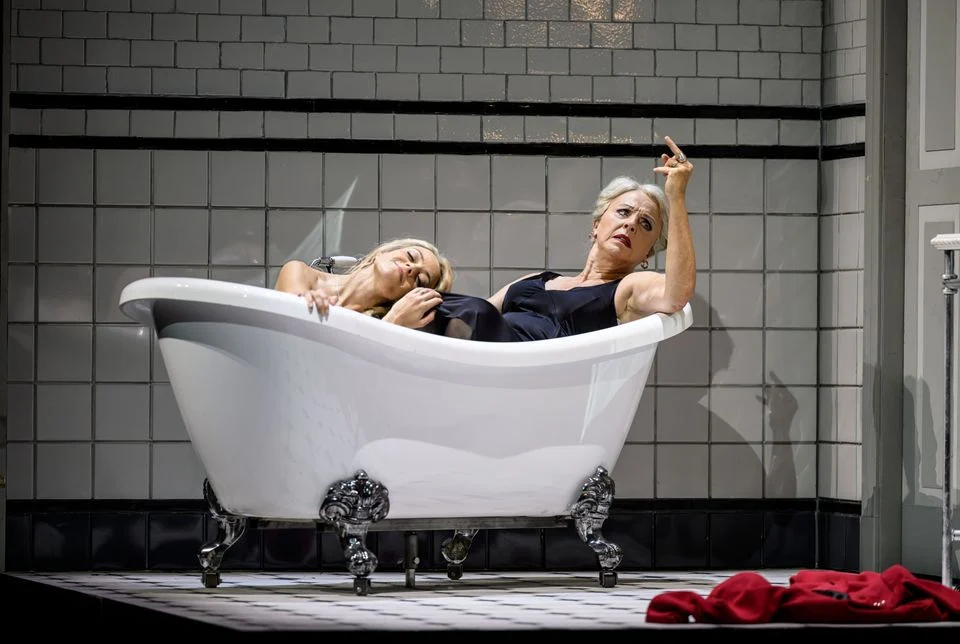
The Royal Swedish Opera’s decision to reprise its 2023 production of Melancholia for the 2026-27 season underscores a significant shift in contemporary operatic programming, where the boundaries between cult cinema and grand stage production continue to blur. Composed by Mikael Karlsson with a libretto by Royce Vavrek, the work is a direct adaptation of Lars von Trier’s 2011 psychological disaster film. While operatic adaptations of cinematic source material are historically common, the specific challenge of translating von Trier’s slow-burn, nihilistic masterpiece into a live, three-dimensional medium required a meticulous synthesis of orchestral innovation and vocal performance.
The Genesis and Evolution of the Production
The project originated from a desire to explore the intersection of extreme psychological states and cosmic dread. Premiering in 2023 at the Royal Swedish Opera, the production was met with critical acclaim for its refusal to deviate from the source material’s bleak narrative trajectory. By maintaining the film’s central conceit—the collision of a rogue planet with Earth—Karlsson and Vavrek avoided the temptation to "soften" the story for a theatrical audience.
The production timeline saw a lengthy development phase, as the creative team worked to distill von Trier’s visual language into musical motifs. The 2026-27 revival suggests that the piece has secured a place in the company’s permanent repertoire, signaling that the work serves as a cornerstone of the Royal Swedish Opera’s commitment to modern, challenging compositions. The logistical complexity of the 2023 staging, which required advanced electronic integration and precise spatial audio, set a high bar that the upcoming season aims to maintain or exceed.
Narrative Architecture and Character Pathology
The narrative centers on the divergent reactions of two sisters, Justine and Claire, to an existential threat. Justine, suffering from severe clinical depression, finds a twisted solace in the arrival of the planet Melancholia, viewing the end of the world as a logical conclusion to her own internal emptiness. Conversely, Claire, who equates security with order and domestic control, experiences a violent dissolution of her personality as her attempts to manage the unfolding crisis fail.
The opera meticulously tracks the wedding day, the subsequent social collapse of the family unit, and the final, quiet arrival of the rogue planet. Key characters—including the controlling husband John and the self-absorbed mother Gaby—serve as foils to the sisters’ internal struggles. The adaptation maintains the structural integrity of the film, ensuring that the emotional weight remains firmly rooted in the sisters’ relationship while the external threat of the rogue planet acts as a psychological accelerant.
Technical Composition: An Atmospheric Score
Mikael Karlsson’s score functions as the primary vehicle for the production’s psychological intensity. Eschewing traditional operatic tropes, the composition utilizes a blend of tonal and atonal shifts to mirror the sisters’ mental states. A defining feature of the work is the use of electronic vibrations—engineered to be felt physically within the auditorium—which signal the proximity of the rogue planet.
The orchestral palette is intentionally expansive, incorporating percussive elements that drive the "manic" dance sequences choreographed by Charlotta Öfverholm. These sequences are designed to externalize the madness inherent in the characters’ acceptance of annihilation. The use of glissandi serves to destabilize the listener’s perception of reality, echoing the thematic "slippery" nature of existence that defines the narrative. The integration of a chorus that acts as a Greek-style observer, passing judgment through chanting and stylized movement, provides a necessary layer of societal critique that complements the intimacy of the soloists’ performances.
Cast and Vocal Performance Analysis
The 2023 production featured a cast specifically chosen for their ability to navigate complex vocal lines without resorting to stereotypical operatic gestures. Kerstin Avemo’s portrayal of Justine was characterized by a "hollowed-out" vocal quality that effectively communicated the character’s detachment. Her performance was noted for its versatility, transitioning from a vacant, monotone delivery to bursts of intense, high-register passion during her confrontation with her employer.
Ida Ränzlöv, cast as Claire, faced the challenge of transitioning from a composed, anxious socialite to a woman entirely undone by the realization of her own mortality. Her performance was supported by nuanced monologues that tracked her descent from control to isolation. Similarly, the supporting cast provided essential depth to the narrative. Anne Sofie von Otter’s portrayal of Gaby was lauded for its unapologetic selfishness, with her dismissive aria regarding the wedding ceremony serving as a thematic pivot point for the family’s dysfunction. The inclusion of Andreas Romanitan as Leo, the young nephew, added a necessary human anchor, with his vocal exposure in the final duet with Justine representing the final remnant of innocence in the face of destruction.
The Role of Staging and Visual Aesthetics
Director Sláva Daubnerová, collaborating with scenographer Boris Kudlička and lighting designer Tom Visser, adopted a bifurcated aesthetic approach. The first act, set within the confines of a wedding reception, utilized a realistic, tiered set design that allowed for the simultaneous portrayal of public social performance and private, intimate dysfunction. The mechanical movement of rooms on stage served to reinforce the claustrophobia of the environment.
The second act, transitioning to an outdoor setting, utilized more abstract, minimalist elements. The use of projection mapping, particularly the growing, menacing presence of the planet Melancholia, served to shrink the scale of the characters, emphasizing their helplessness. The climax of the opera is widely considered the technical centerpiece of the production; the use of a black, rotating circle that physically engulfs the characters on a rising platform provided a definitive visual conclusion that matched the intensity of the score.
Implications for Modern Opera
The success of the Melancholia production points toward a broader trend in the performing arts: the viability of high-concept, intellectually demanding adaptations of modern cinema. By prioritizing the emotional and psychological state of the characters over traditional plot-driven spectacle, Karlsson and Vavrek have demonstrated that the operatic medium is uniquely suited to explore the philosophical depths of nihilism.
From an institutional perspective, the Royal Swedish Opera’s commitment to this work reflects an effort to engage a younger, cinephile-oriented demographic. The production is not merely an adaptation; it is a reinterpretation that benefits from the unique capabilities of live performance—specifically, the visceral impact of live acoustic and electronic sound. The reliance on electronic sound design and contemporary movement vocabulary suggests that the company is willing to experiment with "total theater" approaches to maintain relevance in a modern cultural landscape.
While the production is not without its challenges—notably the linguistic clarity of the English-language libretto in certain registers—the overall consensus among critics and audiences remains that the work successfully bridges the gap between the film’s cold, intellectual aesthetic and the visceral, heart-centered requirements of the opera house. The upcoming 2026-27 season will likely serve as a litmus test for the long-term sustainability of the piece, but its current trajectory suggests it will be remembered as a pivotal work in the 21st-century operatic canon.
The integration of technology, from the electronic soundscape to the precise lighting design, marks a shift away from static period pieces. It forces the audience into a state of active participation, as the physical sensation of the music and the visual dominance of the planet demand a high level of sensory engagement. In this sense, Melancholia is less of a passive viewing experience and more of a confrontation with the inevitability of the subject matter. As the production moves into its next season, it remains a testament to the fact that when cinema and opera are bridged with genuine structural care, the result is an experience that transcends the limitations of either individual form.